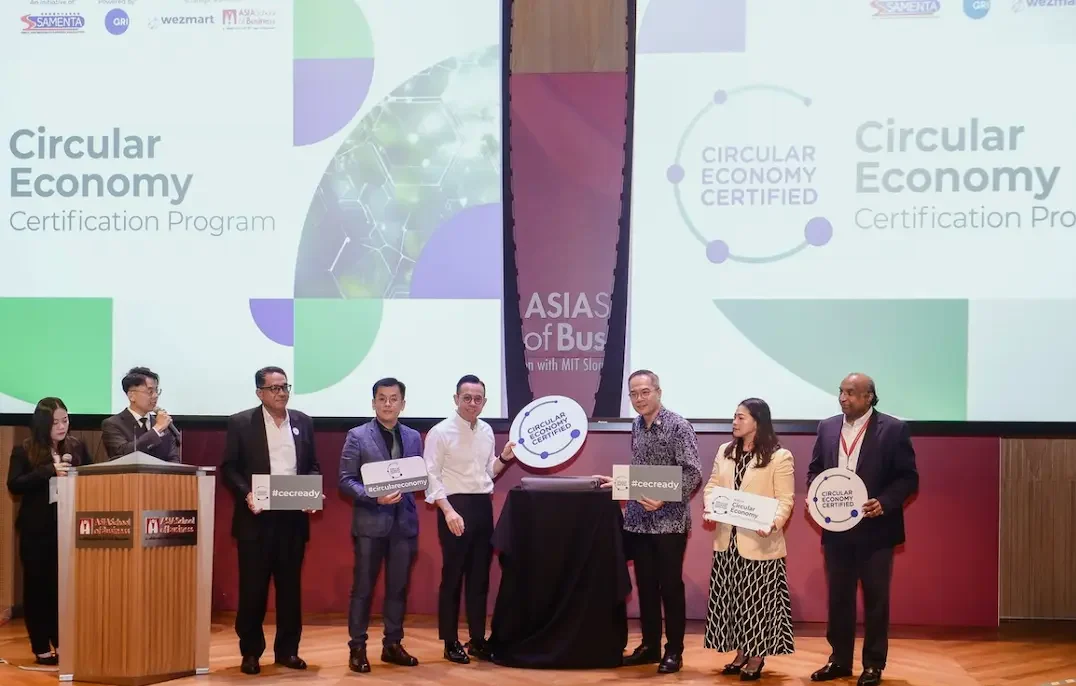
The Small and Medium Enterprises Association of Malaysia (Samenta) has launched the ASEAN Circular Economy Certification (CEC), the first certification of its kind in the region, aimed at helping small and medium enterprises (SMEs) adopt sustainable business practices and strengthen competitiveness.
Samenta national president Datuk William Ng said the certification is a major step towards helping SMEs transition from the traditional linear “take-make-waste” model to a more sustainable circular economy approach.
He said the initiative supports goals under the 13th Malaysia Plan, which focuses on scaling up micro, small and medium enterprises while encouraging the adoption of environmental, social and governance (ESG) practices.
Ng noted that the current global energy crisis has increased business costs and disrupted supply chains, making circular economy practices more important than ever. He added that circularity is no longer optional but a strategic necessity for businesses.
The programme was officially launched by Entrepreneur Development and Cooperatives Minister Steven Sim.
According to Ng, the global circular economy market is projected to reach US$578 billion by the end of 2026 and could generate up to US$4.5 trillion in economic output by 2030.
He said SMEs that adopt circular economy principles can reduce dependence on limited resources, lower energy use and protect themselves from volatile commodity prices.
Developed with support from the Global Reporting Initiative, the certification offers SMEs a structured and internationally aligned framework to minimise waste and improve resource efficiency.
Samenta plans to expand the programme across the region through the ASEAN SME Caucus, with the aim of harmonising sustainability standards for around 70 million SMEs in Southeast Asia.
Ng said the certification will also help SMEs prepare for future extended producer responsibility regulations, which will require producers to be accountable for the full lifecycle of their products.
He added that early adoption would allow SMEs to redesign products, build waste data systems and create new income opportunities by converting waste into usable raw materials.
Samenta aims to bring 15,000 SMEs into the circular economy over the next three years, potentially generating more than RM3 billion in additional revenue and cost savings.
To support the initiative, Samenta signed a memorandum of understanding with Malaysian Industrial Development Finance Bhd and Credit Guarantee Corporation Malaysia Bhd to provide certified SMEs with access to green financing and subsidised interest rates from as low as four per cent.
A total of 20 SMEs received the CEC certification at the launch event, becoming the first businesses in Malaysia to receive the recognition.