Qmed Asia today announced a strategic collaboration with Intel to accelerate the development of intelligent healthcare infrastructure for hospitals. As healthcare systems become increasingly connected, critical patient information often remains fragmented across multiple medical devices and clinical systems, limiting visibility and timely clinical insights. Qmed’s Unified Patient Monitoring Solution addresses this challenge by consolidating patient monitoring data into a centralised platform, enabling more efficient care delivery, informed clinical decision-making, and a stronger foundation for data-driven healthcare.
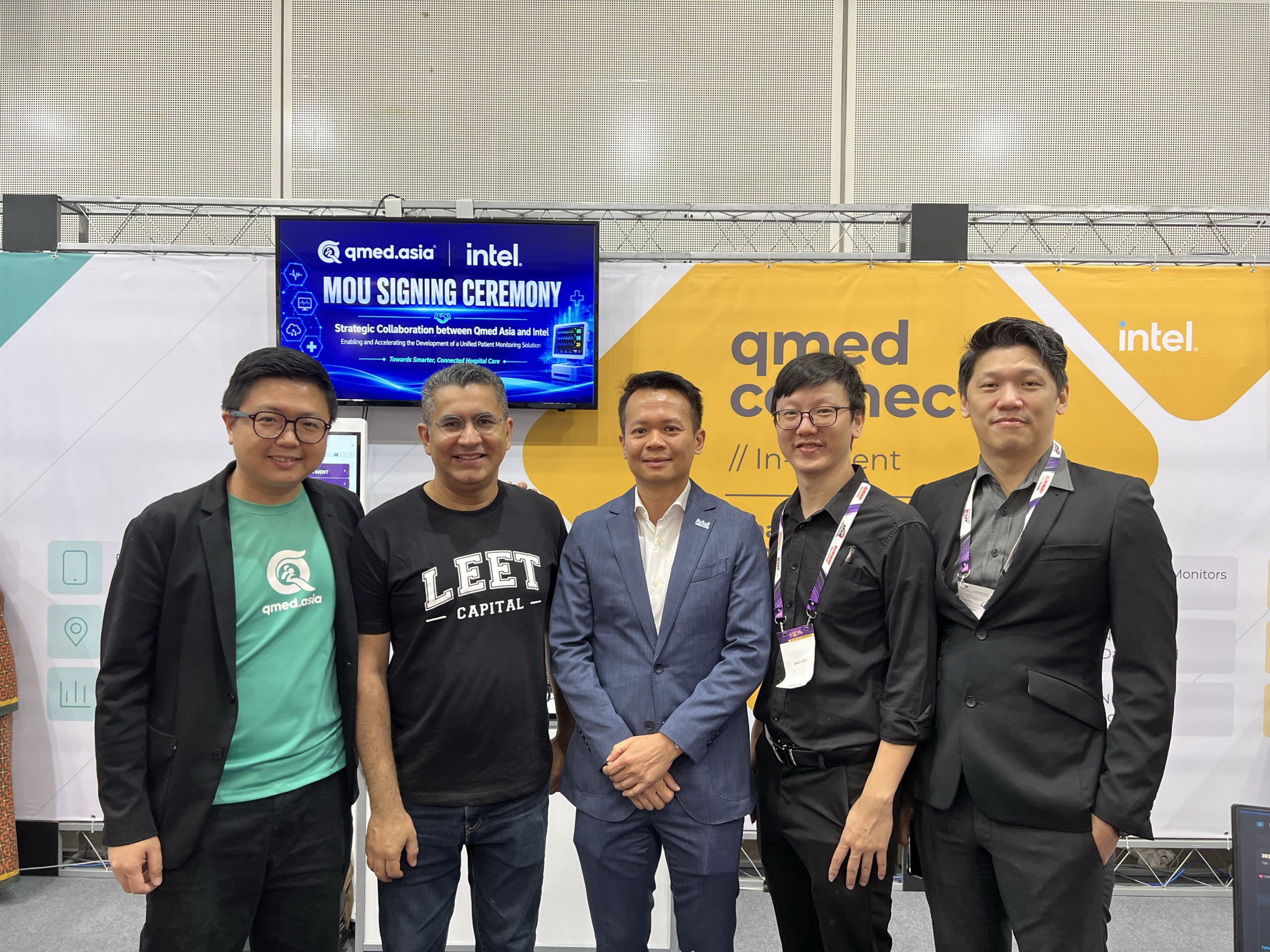
(L-R): Dr Kev Lim, CEO and Co-Founder of Qmed Asia; Bikesh Lackmichand, CEO of Leet Capital; James Tan, Director of Health and Life Sciences and Cognitive Cities, Intel;, Dr. Tai Tzyy Jiun, Chief Medical Technology Officer and Co-founder of Qmed Asia; Nic Tai, Chief Operating Officer and Co-founder of Qmed Asia.
As part of this collaboration, Intel has made its Patient Monitoring Hub Reference Implementation (RI) available to Qmed Asia. Leveraging this reference implementation and optimised on Intel Core Ultra platforms, Qmed Asia’s Patient Monitoring Solution brings together continuous patient monitoring, medical device integrations and clinical workflows into a unified platform. The collaboration combines Intel’s scalable reference architecture with Qmed Asia’s healthcare software expertise to help hospitals accelerate digital transformation while establishing a foundation for future AI-enabled clinical innovation.
The Unified Patient Monitoring Hub securely aggregates patient monitoring data from connected bedside medical devices into a centralized Smart Ward dashboard. The solution supports vendor-neutral medical device integration, continuous patient monitoring, a centralized Smart Ward dashboard with Early Warning Score (EWS) alerts with scalable edge computing. Through this collaboration, Qmed Asia and Intel aim to accelerate the adoption of connected Smart Ward solutions that enhance clinical visibility, streamline clinical workflows, and provide a scalable, enterprise-ready digital healthcare infrastructure for hospitals across Malaysia and the region.
“Healthcare systems across the region face growing pressure to streamline clinical operations and eliminate data silos that delay critical care. By pairing Intel’s robust reference architecture and edge computing power with our deep clinical domain expertise, we are delivering a truly connected Smart Ward ecosystem. This collaboration enables us to provide hospitals with real-time actionable insight, improving patient outcomes, easing the burden on healthcare workers, and accelerating the region’s transition into data-driven medicine,” said Dr. Tai Tzyy Jiun, Co-founder, Director and Chief Medical Technology Officer, Qmed Asia.
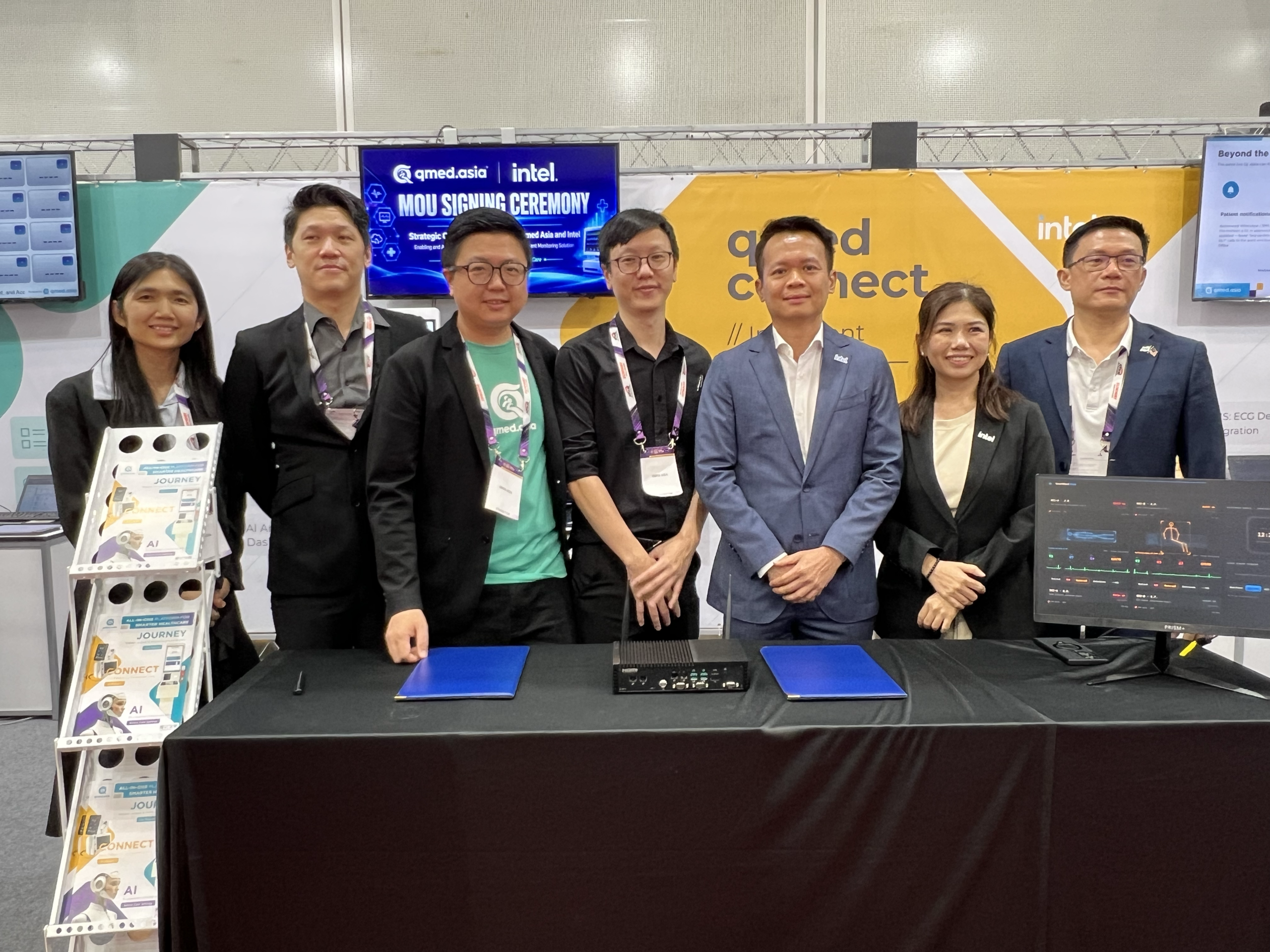
(L-R): Dr.Sim Hui Xin, Chief Medical Officer of Qmed Asia; Nic Tai, Chief Operating Officer and Co-founder of Qmed Asia; Dr Kev Lim, CEO and Co-Founder of Qmed Asia; Dr. Tai Tzyy Jiun, Chief Medical Technology Officer and Co-founder of Qmed Asia; James Tan, Director of Health and Life Sciences and Cognitive Cities, Intel; Erica Chen, Solution Manager, Health and Life Science and Cognitive Cities; Health and Life Science and Cognitive Cities, Intel.
“Healthcare providers are looking for interoperable and scalable digital infrastructure that can support both today’s operational needs and tomorrow’s AI-enabled workflows. By making Intel’s Patient Monitoring Hub Reference Implementation available to ecosystem partners such as Qmed Asia, and optimizing solutions on Intel Core Ultra platforms, we are helping accelerate the development of connected care environments that improve access to patient data, streamline clinical workflows, and provide a foundation for future healthcare innovation,” said Renu Navale, Vice President, Health and Life Sciences and Cognitive Cities, Intel.
The rollout is already underway in hospitals across Malaysia. Qmed Asia says the Smart Ward setup is designed to scale beyond the country, into other healthcare systems across the region facing the same fragmented-data problem.