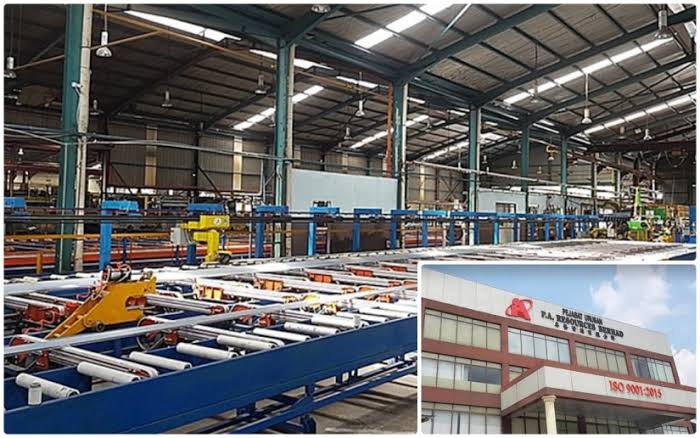
Packaging is easy to overlook when everything goes right. But as products become more valuable and supply chains more demanding, companies such as Clean Pack are turning protection into an increasingly sophisticated part of manufacturing.
Packaging is designed to disappear.
Once an electronic component, piece of furniture or manufactured product reaches its destination safely, the foam, carton and protective materials surrounding it have largely completed their job. Few customers stop to consider what went into protecting the product along the way.

Director of Clean Pack Sdn Bhd – Kok Keng Tong.
But when packaging fails, everybody notices.
A damaged component can mean rejected shipments, replacement costs, production delays and dissatisfied customers. Multiply that across thousands of products moving through increasingly complex supply chains, and packaging becomes less of a consumable and more of a business risk.
That is the space occupied by Malaysian manufacturer Clean Pack Sdn Bhd.
The company designs and manufactures industrial packaging including EVA, PE and PU foam, die-cut components, bubble bags, corrugated cartons and anti-static materials for sectors including electronics, furniture, apparel and other manufacturing industries.
Its real business, however, is protecting value.
More Than a Box
Industrial packaging is becoming increasingly technical.
Different products respond differently to impact, vibration, pressure and static electricity. Standard packaging may be cheaper initially, but if it fails to protect what is inside, the eventual cost can be considerably higher.
Clean Pack therefore works with manufacturers to develop packaging around individual product requirements, taking into account materials, dimensions, densities and protection levels.
This changes the relationship between manufacturer and packaging supplier.
The question is no longer simply how many cartons or foam inserts are required. It becomes: What are you transporting? What could damage it? How much protection does it actually need? And can that protection be achieved more efficiently?
Increasingly, that final question matters.
Engineering Out the Excess
Manufacturers today face simultaneous pressure to control costs, improve efficiency and reduce environmental impact. Packaging sits directly at the intersection of all three.
Over-engineering creates unnecessary material, cost and waste. Under-engineering exposes valuable products to damage.
Finding the balance requires more than simply using less packaging.
It requires better design.
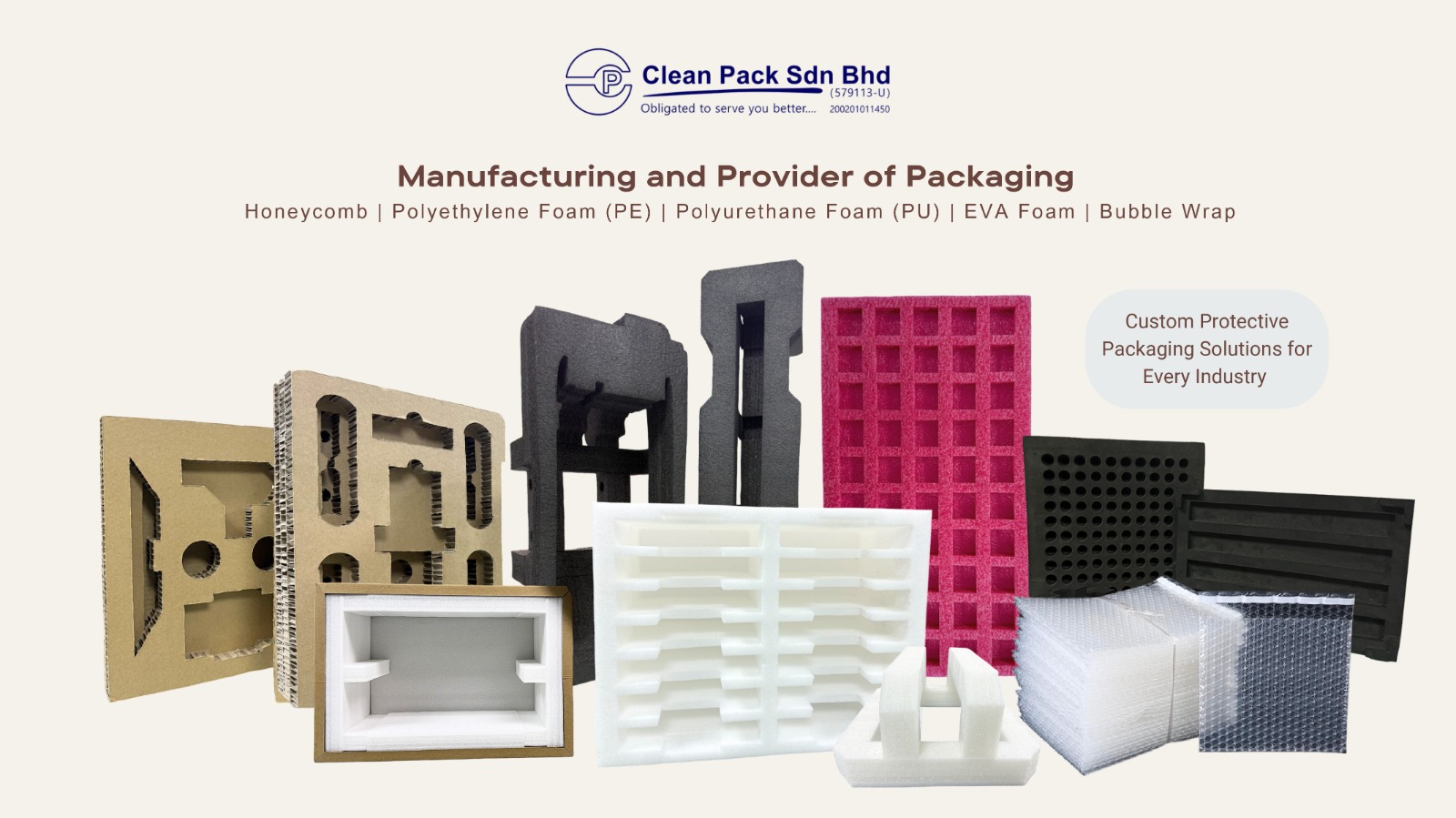
Clean Pack’s approach is to create packaging that is fit for purpose — providing sufficient protection without adding material unnecessarily. Better-designed packaging can also improve storage, handling and logistics efficiency, making packaging part of the broader supply-chain equation.
Over the past 12 to 18 months, the company has placed greater emphasis on material utilisation, manufacturing efficiency and waste reduction.
Instead of focusing exclusively on higher production output, Clean Pack has invested resources in improving material yield, quality control and production processes to minimise scrap and rework.
There is an environmental benefit, but also a clear commercial one.
Every piece of unnecessary material represents cost. Every rejected component consumes resources without creating value. And every product damaged because of inadequate packaging can generate another round of manufacturing, transportation and waste.
Efficiency and sustainability increasingly point in the same direction.
Managing the Complexity of Growth
Clean Pack’s own expansion has created another challenge: maintaining responsiveness and consistency as operations become more complex.
As customer requirements, product varieties and production volumes increase, businesses can no longer depend primarily on individual knowledge.
Clean Pack has responded by strengthening standardised processes, quality management and delegation across the organisation. Its ISO 9001 quality management standards support that emphasis on consistency, while investments in automation, manufacturing capabilities and employee development are preparing the company for increasingly sophisticated customer demands.
Leadership has evolved alongside the business, with greater responsibility given to managers and teams to solve problems and drive continuous improvement.
That transition is particularly important in customised manufacturing.
More customers and designs mean more variables to manage. The organisation behind the factory must therefore become more sophisticated alongside the products it makes.
Protecting More Than the Product
Clean Pack’s next ambition is to move beyond being viewed simply as a packaging manufacturer.
It wants to become a more integrated solutions provider, using engineering, automation, process improvement and data-driven decision-making to help customers address protection, efficiency and sustainability simultaneously.
That ambition reflects how industrial packaging itself is changing.
As manufacturing becomes more sophisticated, the companies supporting manufacturers must evolve with it. Packaging suppliers increasingly need to understand materials, logistics, product characteristics and environmental performance — not merely manufacture something to put around a product.
Because what Clean Pack ultimately protects is larger than what sits inside the box.
It protects the manufacturer’s investment in making it, the cost of transporting it, the reputation attached to it and the customer’s expectation that it will arrive exactly as intended.
Those are things manufacturers cannot afford to lose.