Shanghai Enflame Technology Co made a strong debut on the Shanghai stock market, with its shares jumping 179% after the Chinese artificial intelligence (AI) chipmaker raised approximately 6.12 billion yuan (US$911 million or RM3.71 billion) through its initial public offering (IPO).
The company’s shares closed at 397 yuan on Friday, significantly higher than its IPO price of 142.18 yuan per share. During early trading, the stock surged as much as 234%, reflecting strong investor demand for Chinese AI chip companies.
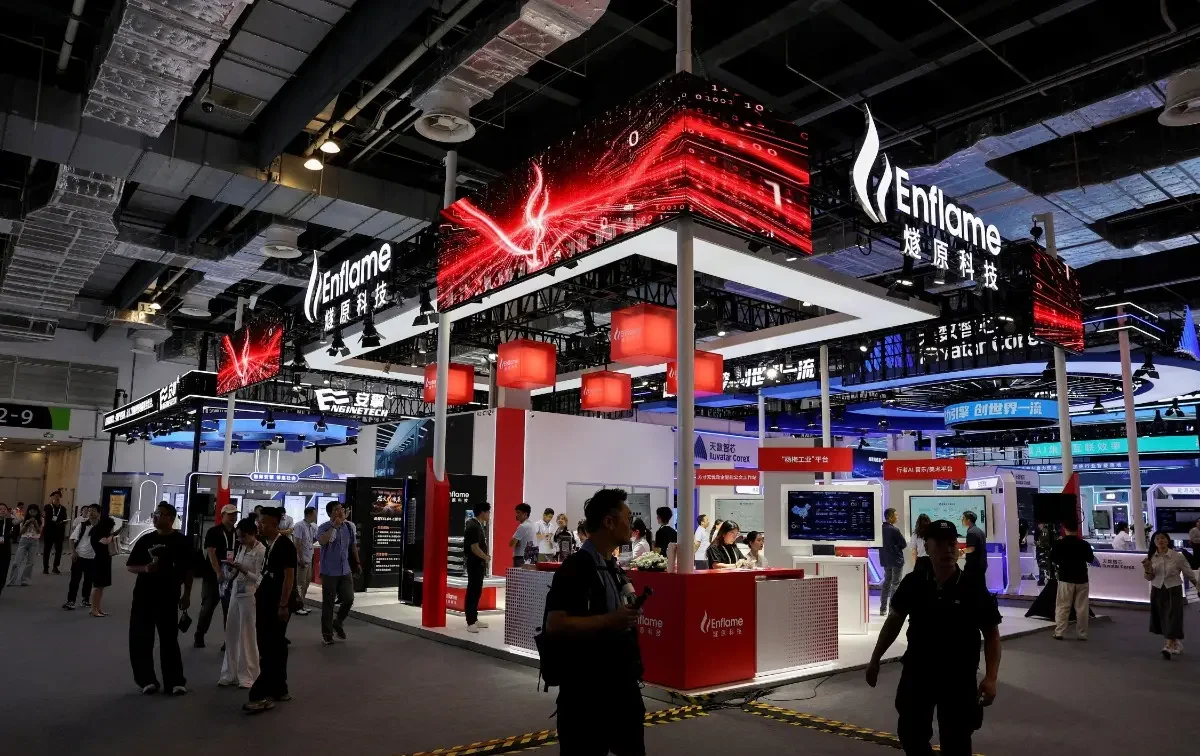
The stock closed 179% higher at 397 yuan, compared with its IPO price of 142.18 yuan apiece after surging as much as 234% in early trading on Friday.
Enflame sold 43 million shares in its IPO, attracting overwhelming interest from retail investors. Applications from individual investors exceeded the number of shares available to them by approximately 4,000 times.
The company is the last of China’s so-called “four little dragons” of AI chipmakers to go public, following Moore Threads Technology Co, Biren Technology Co and MetaX Integrated Circuits.
Although these companies initially experienced strong demand during their market debuts, their share prices have since declined significantly.
Moore Threads, which recorded a 425% increase during its debut in December, has fallen more than 60% from its record high. Meanwhile, MetaX and Biren have each dropped more than 40% from their respective peaks.
Despite these declines, investor interest in China’s AI semiconductor industry remains strong, supported by rising demand for advanced computing technology and continued investment in AI infrastructure.
Enflame is among several Chinese technology companies developing domestic AI chips to support the country’s growing demand for computing power.
The company specialises in AI accelerators used in cloud computing and data centres. Its chips support applications such as AI chatbots, recommendation systems and generative AI services.
While Enflame remains smaller than major Chinese technology companies such as Huawei Technologies Co and Cambricon Technologies Corp, it has established a position in China’s expanding AI chip market.
Tencent Holdings Ltd plays a major role in Enflame’s business, holding a 20% ownership stake while also serving as one of its largest customers.
According to analysts at Huajin Securities, Enflame’s close relationship with Tencent is one of its key strengths.
“The appeal of the company lies in its position as one of China’s leading cloud AI chipmakers, as well as Tencent’s dual role as both a key customer and major shareholder,” analysts including Li Hui said in a research note.
However, the analysts also highlighted that Enflame continues to lag behind some competitors in revenue size and gross profit margins.
Tencent’s contribution to Enflame’s revenue has increased substantially in recent years.
In 2025, sales to Tencent accounted for approximately 84% of Enflame’s total revenue, compared with around 38% in 2024.
Tencent uses Enflame’s technology across its internet and cloud computing operations, particularly in large data centres supporting AI applications and digital services.
Despite its rapid expansion, Enflame has yet to achieve profitability.
The company reported a net loss of 1.2 billion yuan in 2025, an improvement from the 1.5 billion yuan loss recorded in the previous year.
For the first nine months of 2026, Enflame expects its net loss to be no more than 860 million yuan as it continues investing in technology development and business expansion.
Revenue is also expected to increase significantly, with the company forecasting more than threefold year-on-year growth during the same period.
Enflame previously recorded compound annual revenue growth of more than 80% between 2023 and 2025, reflecting growing demand for its AI computing products.
The strong stock market debut highlights continued investor confidence in China’s AI chip industry, even as concerns remain over profitability, competition and the high costs of developing advanced semiconductor technology.
For Enflame, its future performance will depend on maintaining strong customer demand, expanding its business beyond major clients such as Tencent and improving profitability as China’s AI industry continues to develop.