For GK AQUA Sdn Bhd, the next stage of growth depends on getting one location right. At its grow-out operation in Rompin, Pahang, the Malaysian biotechnology and aquaculture company is testing whether its hatchery technology, farming protocols and market strategy can deliver consistent results before it expands elsewhere.
Established in 2016, GK AQUA has built its business around the Giant Freshwater Prawn, better known locally as udang galah. Its activities span hatchery production, farming solutions, technical training and value-added food products, serving farmers, entrepreneurs, food businesses, distributors, retailers and consumers.
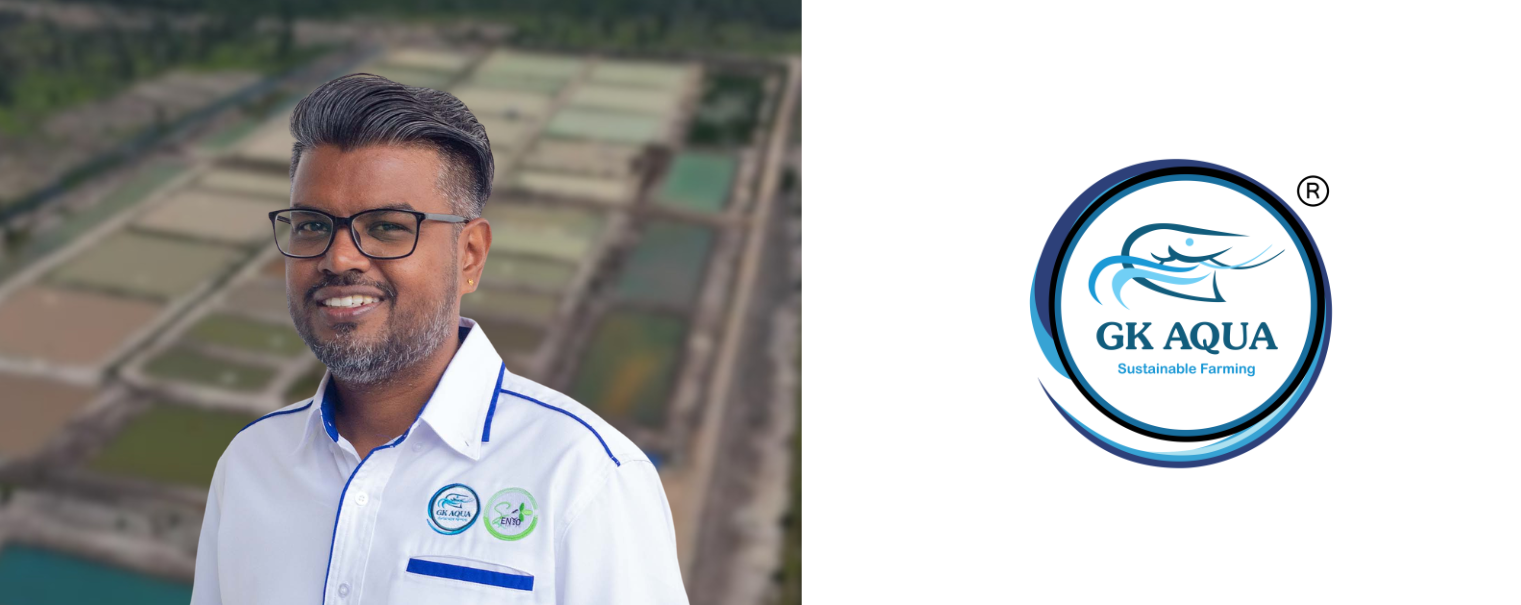
Founder and CEO of GK AQUA Sdn. Bhd. – Giva Kuppusamy.
The company says it has shipped 500 million post-larvae, or PL, since its establishment and worked with 50 farms across Asia. It is best known for its all-male prawn technology, which it says produces more uniform, faster-growing crops than mixed-sex stock.
Yet its commercial proposition extends beyond supplying young prawns. GK AQUA wants to make pond performance more predictable, addressing inconsistent seed quality, uneven growth, uncertain farm practices and unreliable market access.
“A farmer who can predict a harvest can finance it, plan it and price it,” the company says.
That thinking reflects how its understanding of the market has changed. Initially, the most obvious constraint was access to reliable seed. Quality varied between suppliers and batches, while farmers who lost a production cycle often lacked the technical support to understand what had gone wrong.
GK AQUA developed its hatchery and all-male technology to address that problem. As those capabilities improved, other constraints became more prominent: farm efficiency, skilled manpower, working-capital management and dependable buyers.
The company also sees demand moving towards traceable, consistently graded and convenient products. Its response has been to connect seed supply and farming support with processing, product development and distribution.
Rompin is central to that strategy. The operation gives GK AQUA a place to test production assumptions under the same conditions its customers face. It also creates a practical benchmark for advice on stocking, feeding, water quality and harvest planning.
The company remains involved after supplying PL, offering guidance throughout the farming cycle, troubleshooting growth problems and reviewing results after harvest. Those relationships provide feedback that can inform hatchery practices and farming protocols.
Turning that knowledge into consistent execution has become a management challenge. GK AQUA describes a transition from founder-led decision-making towards clearer responsibilities across hatchery, grow-out, processing and sales. The objective is to build teams capable of making sound operational decisions without depending on one individual.
Its approach to expansion is similarly selective. Management is prioritising yield per hectare, hatchery reliability and margins, while avoiding additional locations before Rompin becomes repeatable. It is also resisting product diversification that would weaken its focus on freshwater prawns and volume commitments it cannot reliably fulfil.
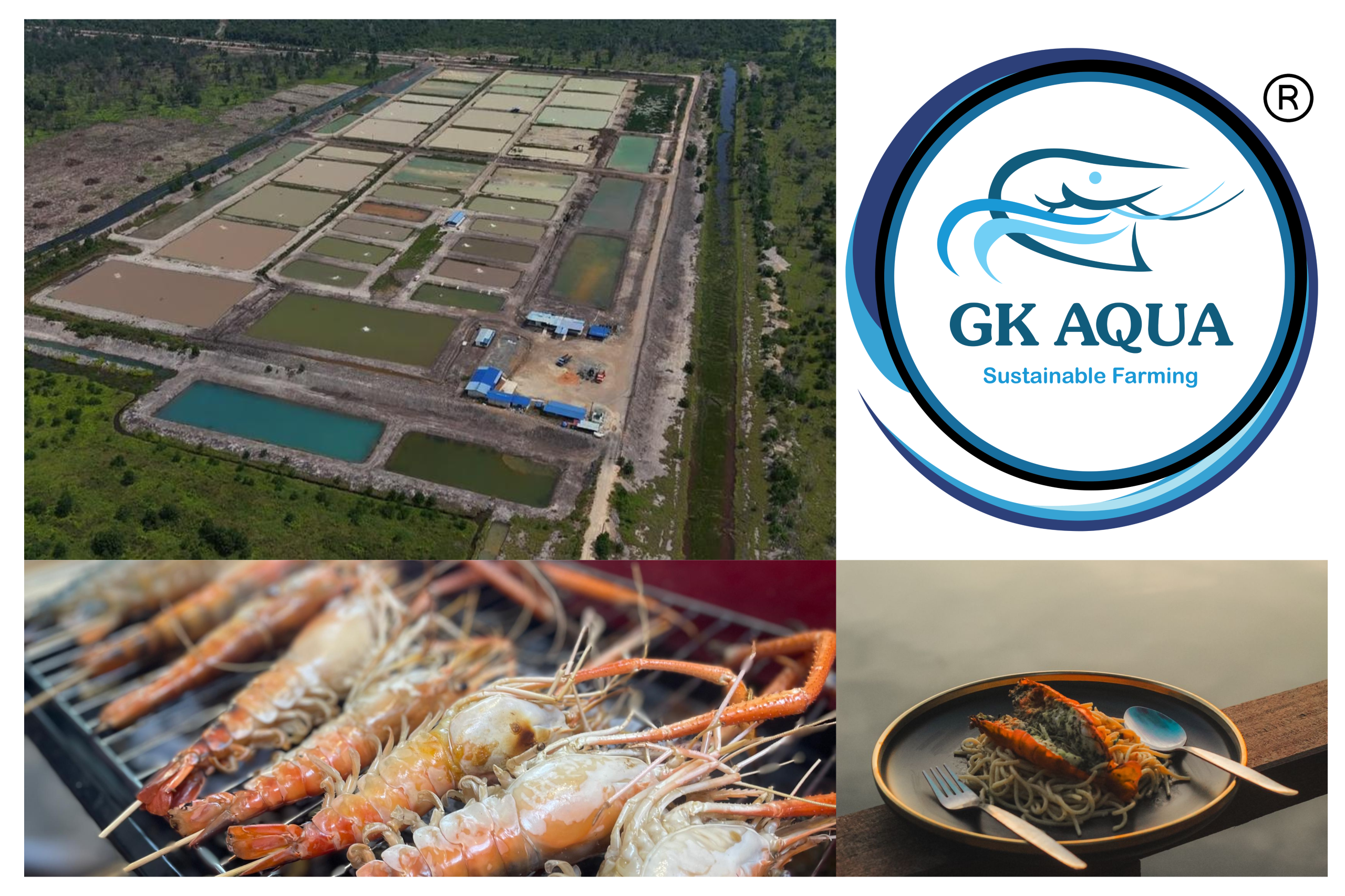
The company links this discipline to responsible resource use. Water management, stocking density, feed efficiency and waste loads are considerations in deciding whether a farming process is ready to scale. Its stated priority is to optimise the existing operation before multiplying it.
The next milestone is a production model with sufficiently consistent output, survival rates, costs and product quality to be replicated elsewhere. Achieving that will require cycle-by-cycle production and cost records, documented procedures and trained farm managers.
It will also require closer coordination across the value chain, matching hatchery output to pond capacity and harvest schedules to committed demand. For GK AQUA, expansion will follow evidence that these parts work together. Rompin must first demonstrate that a successful harvest can become a dependable business process.