Author name: admin

News

Hong Kong Regulator Bars Ex-Citi Asia Equities Chief For Past Rule Breaches

Hong Kong’s Securities and Futures Commission (SFC) has imposed a five-year ban on Richard Charles Heyes, the former head of pan-Asia equities at Citigroup, citing regulatory breaches during his tenure over five years ago. The SFC noted that between 2008 and 2018, Citigroup Global Markets Asia (CGMAL) had sent misleading messages to clients, exercised weak oversight, and misrepresented trade activities. The firm was fined HK$348.3 million (US$44.76 million) in 2022 for these violations. Heyes was held personally responsible for the breaches, with the SFC stating that he failed to properly manage his team while pressuring trading desks to grow market share. This lack of oversight allowed subordinates to misrepresent facilitation trades as agency trades to clients, fostering a culture that prioritized revenue over client interests and honesty. “By exerting pressure on trading desks while ignoring warning signs in emails and reports, Heyes neglected his managerial duties, enabling misconduct to persist within CGMAL,” said Christopher Wilson, SFC executive director of enforcement. Heyes is now barred from returning to the financial industry until September 2030. Citigroup declined to comment directly on the ban but said it has “implemented significant remedial measures to strengthen compliance and internal controls to address this legacy issue from 2019.” (Exchange rate: US$1 = HK$7.7813)

Energy & Technology

JERA Of Japan Nears US$1.7b Deal For US Shale Gas Assets

NEW YORK, Japan’s largest power producer, JERA, is close to securing a deal to acquire U.S. natural gas assets worth about US$1.7 billion, sources familiar with the matter said, underscoring Japan’s growing push into America’s energy sector. According to the sources, JERA has emerged as the leading bidder for assets owned by GEP Haynesville II — a joint venture between Blackstone-backed GeoSouthern Energy and pipeline operator Williams Companies. Banks recently invited offers, and JERA’s bid outpaced several U.S. energy companies. While advanced, the discussions remain private and a final agreement has yet to be reached. GEP could still consider other suitors or cancel the sale. If completed, the deal would mark JERA’s first direct move into U.S. shale gas production, giving the company — one of the world’s biggest liquefied natural gas (LNG) importers — greater control over its supply chain. The shift comes as Japan braces for a sharp rise in electricity demand driven by data centers powering artificial intelligence development. Japan, which relies heavily on imported energy, has intensified efforts to diversify supplies since Russia’s invasion of Ukraine disrupted global markets. Washington has also encouraged Asian allies to increase U.S. energy purchases, with Tokyo recently committing US$7 billion annually under a new trade agreement. JERA, a joint venture between Tokyo Electric Power Co and Chubu Electric Power, has already stepped up its U.S. LNG involvement this year, including signing a letter of intent for potential supplies from Alaska’s proposed US$44 billion LNG export project. Japan has also engaged consultancy Wood Mackenzie to study the viability of the 1,300km Alaska pipeline and LNG plant. The Haynesville shale basin, spanning Texas and Louisiana, is among the U.S.’s top natural gas producers, prized for its proximity to Gulf Coast LNG export facilities. GEP Haynesville II currently produces about 317.5 million cubic feet per day (mcfd) and is expected to nearly double output to 614 mcfd by 2028, according to Rystad Energy. Private equity-backed GEP previously sold assets from the same basin to Southwestern Energy in 2021 for US$1.85 billion, capitalising on a surge in U.S. gas prices at the time. Neither JERA, GeoSouthern, nor Williams responded to requests for comment.

News

Petronas Subsidiary’s Appeal Dismissed In Oil & Gas Patent Case

PUTRAJAYA, Kingtime International Ltd has won its appeal against Petronas Carigali Sdn Bhd in a patent dispute involving the use of a mobile offshore production unit (Mopu), overturning a 2023 High Court ruling that had dismissed its claim. A mobile offshore production unit is a converted offshore oil rig used for oil and gas production. The Court of Appeal not only reinstated Kingtime’s infringement suit but also struck out Petronas Carigali’s counterclaim seeking to invalidate two of Kingtime’s patents. Justice Faizah Jamaludin, delivering the unanimous decision, said Petronas Carigali was bound by a 2018 High Court judgment which found that Petrofac E&C Sdn Bhd — the contractor that built the Mopu — had infringed Kingtime’s patents and failed to invalidate them. She stressed that Petronas Carigali, which had commissioned Petrofac for the Sepat oil field project about 200km off Kuala Terengganu, could not relitigate the matter. “The High Court erred in dismissing Kingtime’s suit and in allowing Petronas Carigali’s invalidation action. This warrants appellate intervention,” she said. The appellate bench, chaired by Justice Lee Swee Seng with Justices Faizah Jamaludin and Choo Ka Sing, sent the case back to the High Court for damages assessment. Petronas Carigali was ordered to pay Kingtime RM950,000 in legal costs and refund RM800,000 previously paid following the 2023 High Court decision. Kingtime first sued Petronas Carigali in 2018, alleging that its use of the Sepat Mopu built by Petrofac infringed its patents. Petronas Carigali later filed a separate suit to invalidate the patents, which the High Court had allowed before today’s reversal. Kingtime was represented by a team of seven lawyers, while Petronas Carigali was represented by senior counsel Cyrus Das and his team.

Investment & Market Trends

Powertechnic Group Inks Underwriting Agreement With TA Securities

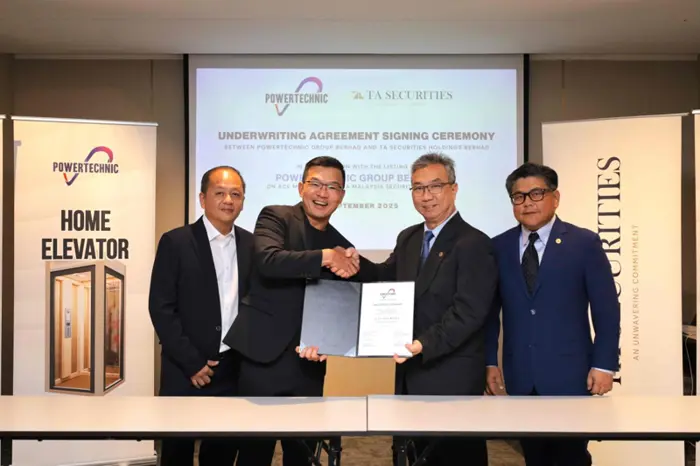
KUALA LUMPUR, Powertechnic Group Bhd has signed an underwriting agreement with TA Securities Holdings Bhd ahead of its planned initial public offering (IPO) on the ACE Market of Bursa Malaysia Securities Bhd. The crane, hoist, and elevator systems provider said the IPO will comprise a public issue of 63 million new ordinary shares — equivalent to 20.3% of its enlarged issued share capital — along with an offer for sale of 21 million existing shares, or 6.77% of the enlarged share base. From left: Powertechnic Group Bhd executive director Choo Chee Yong, Powertechnic managing director Ivan Na Keh Chai, TA Securities Holdings Bhd executive director – operation Tah Heong Beng and TA Securities head of corporate finance Ku Mun Fong. Of the 63 million new shares, 15.6 million will be allocated to the Malaysian public, 10 million to eligible directors, employees and contributors, and 19.6 million through private placement to selected investors. Meanwhile, the 21 million existing shares will be offered via private placement to Bumiputera investors approved by the Ministry of Investment, Trade and Industry (MITI). Under the agreement, TA Securities will underwrite the 15.6 million new shares reserved for the Malaysian public and pink form applications. It will also serve as the principal adviser, sponsor, underwriter and placement agent for the IPO. Powertechnic Group managing director Ivan Na Keh Chai said proceeds from the listing will be channelled into automation for fabrication processes, as well as the establishment of new product showrooms and sales offices with storage facilities in Penang and Sarawak. “These initiatives will help us strengthen our brand presence in key markets such as northern Peninsular Malaysia, East Malaysia, Singapore and Indonesia, ensuring we continue to provide reliable lifting solutions to customers,” he said.

ESG

Straits Energy Breaks Malaysia Record By Planting 12,275 Gelam Trees In One Day

KUALA LUMPUR, Straits Energy Resources Bhd, through its subsidiary Benua Hijau Sdn Bhd, has set a new entry in the Malaysia Book of Records by planting 12,275 Melaleuca cajuputi (Pokok Gelam) saplings in a single day — the largest tree-planting event of its kind in the country. The effort is part of Benua Hijau’s long-term reforestation programme to restore degraded areas in the Setiu Wetlands State Park, one of Peninsular Malaysia’s largest natural wetlands. The project aims to plant 100,000 Pokok Gelam trees over five years, rehabilitating about 200 acres of forest with this native species. From left: Yayasan DiRaja Sultan Mizan board of trustees member Datuk Dr. Che Ab Rahim Nik, Majlis Pengurusan Taman Negeri Terengganu director Datuk Tengku Mohd Arifin Tengku A. Rahman, The Malaysia Book of Records official representative Megat Faris Hussein Megat Muzaffar Shah, Terengganu State Committee on Tourism, Culture, Environment and Climate Change chairman Datuk Razali Idris, Straits Energy Resources Bhd chairman Datuk’ Seri Tengku Baharuddin Ibni Almarhum Sultan Mahmud and Benua Hijau Sdn Bhd project director Dr. Paul Yap Poh Onn. The record-breaking initiative took place during the Festival Setiu Wetlands 2025, organised by the Terengganu State Parks Management Council with support from Straits Energy and its NYSE American-listed unit, TMD Energy Ltd. The event was designed to raise awareness about the importance of conserving wetlands. Close to 500 volunteers — including local residents, students, NGOs and government agencies — joined the planting activities, covering 20 acres of degraded wetland, an area roughly the size of 11 football fields. Since the launch of the Gelam Research Centre & Nursery in October 2024, more than 7,800 trees have been planted with help from students and community groups. “With today’s achievement of 12,275 saplings planted, Benua Hijau is on track to meet its goal of 20,000 Gelam trees annually,” said chairman Datuk Seri Tengku Baharuddin Ibni Sultan Mahmud Al-Muktafi Billah Shah. He added that the milestone marks an important step forward in the company’s large-scale reforestation vision, demonstrating how collaboration between government agencies, corporations and communities can deliver lasting environmental and social benefits.

Property

Mayland Plans RM1.15b Worth Of New Launches In Market Return

KUALA LUMPUR, Malaysia Land Properties Sdn Bhd (Mayland) is making a comeback with two new residential launches in Kuala Lumpur worth a combined RM1.15 billion in gross development value (GDV). The developer is also targeting to nearly double its sales to RM680 million this year, compared with RM380 million in 2024. The first project, Majestic @ Kiara Reserve (Majestic Kiara), is a 4.8-acre freehold development in Desa Sri Hartamas comprising villas, parkhomes and condominiums. With a GDV of RM551 million, the project will be rolled out in two phases, beginning in 4Q2025 with 79 villas and 57 parkhomes. The second launch, Royal Garden, is the final phase of the Sri Putramas master plan along Jalan Kuching. Spanning 2.3 acres of freehold land, the RM600 million project will feature 600 condominium units across two adjoining towers of 30 and 31 storeys. Meanwhile, Armani Group reported that Armani Hallson KLCC has achieved 70% take-up since its August debut. Built on the former SJKC Lai Meng site along Jalan Ampang, the 2.61-acre freehold development comprises a 68-storey tower with 775 SoHo units and two towers of 78 storeys housing 1,440 SoVo units. This week’s issue also features insights from 17 property industry leaders on their Budget 2026 expectations, including calls for a review of the expanded sales and service tax, the revival of the Home Ownership Campaign, measures to rejuvenate ageing assets and policies to support an ageing population. At the recent RICS-MIPFM International Property Conference 2025 on Sept 9, Kuala Lumpur mayor Datuk Seri Maimunah Mohd Sharif stressed the need for an ecosystem approach to future-proof cities and extend the lifespan of the built environment. Industry experts also discussed property and facilities management trends, with a focus on sustainability, ageing infrastructure and technology adoption across the asset lifecycle.

Media OutReach

NHG Health And Tanoto Foundation Jointly Launch “I Can’t Believe It Tastes So Good” Healthy Cookbook

Empowering residents and patients with details on calorie count and macronutrients for every dish SINGAPORE – Media OutReach Newswire – 21 September 2025 – Today, NHG Health and Tanoto Foundation jointly launched a cookbook titled, ‘I Can’t Believe It Tastes So Good’ – featuring 100 healthy recipes inspired by Chinese, Malay, Indian, Western and other cuisines, a nod to Singapore’s rich cultural diversity as the nation celebrates SG60. In conjunction with the cookbook launch, NHG Polyclinics, the primary care arm of NHG Health, organised a cooking demonstration, which brought together residents and patients to learn about healthier cooking tips from dietitians and patient advocates, as well as healthy lifestyle habits. (Left to right) Associate Professor Karen Ng, Chief, Primary Care, Population Health, NHG Health, Chief Executive Officer, NHG Polyclinics; Mr Ong Ye Kung, Minister for Health and Coordinating Minister for Social Policies, Adviser to Sembawang GRC GROs (Sembawang Central); Ms Belinda Tanoto, Member, Board of Trustees, Tanoto Foundation; and Professor Benjamin Seet, Group Chairman Medical Board (Research) and Co-chair, Academic Partnership Office, NHG Health, launching the healthy cookbook ‘I Can’t Believe It Tastes So Good!” at NHG Sembawang Polyclinic. 2 The event was graced by Mr Ong Ye Kung, Minister for Health, Coordinating Minister for Social Policies, and Adviser to Sembawang Group Representation Constituency Grassroots Organisations (Sembawang Central). It was held at the NHG Sembawang Polyclinic Health and Wellness Studio located within Bukit Canberra, an integrated sports and community hub. 3 Launching the ‘I Can’t Believe It Tastes So Good’ cookbook, Minister Ong Ye Kung, said, “Healthy eating is one of the best forms of preventive care. When residents and patients make better food choices together, we not only improve personal well-being but also form friendships and strengthen community bonding. I hope this cookbook can play a positive part in this process.” 4 ‘I Can’t Believe It Tastes So Good’ cookbook is jointly funded by NHG Health Fund and Tanoto Foundation under the NHG Health Diabetes Reversal Programme. Its recipes are specially curated by clinicians and dietitians from NHG Polyclinics and nutritionists from Temasek Polytechnic, based on feedback from patients and community volunteers who participated in tasting sessions or tried these recipes at home. The cookbook offers practical easy-to-follow meals for every occasion and for everyone, especially those managing diabetes and other chronic conditions. 5 “This collaborative cookbook shows how primary care professionals, patients and the community can come together to promote healthy living and build a healthier Singapore. Designed and curated as a key resource for residents and patient empowerment, the cookbook is more than just a collection of healthy recipes; it serves as a bridge connecting families through the shared joy of cooking and creating memories together,” said Associate Professor Karen Ng, Chief of Primary Care, Population Health, NHG Health, and Chief Executive Officer, NHG Polyclinics. 6 “Diabetes is one of the biggest health challenges in Singapore today,” said Belinda Tanoto, Member of the Board of Trustees, Tanoto Foundation. “We’re excited to launch this cookbook with NHG Health to show that healthy food can be simple, tasty, and easy to prepare. With small changes, we hope more Singaporeans can enjoy healthier meals and build lasting habits.” 7 “Diabetes remains a major health challenge for Singapore. The goal of NHG Health is to not only bring the disease under control and to prevent its complications, but to empower individuals to better manage their health. This cookbook is an example of how we bring real-world solutions directly into homes and kitchens, and our commitment to adding years of healthy life for our population,” said Professor Benjamin Seet, Group Chairman Medical Board (Research), NHG Health. 8 Serving as a resource, the ‘I Can’t Believe It Tastes So Good’ cookbook provides useful details of key nutrients for every dish. Each recipe has been thoughtfully planned to include ample protein, vitamins and fibre (e.g. colourful vegetables), and lower saturated fat, sugar and sodium content to suit different levels of calorie intake required at every stage of life, including those managing chronic conditions like diabetes and high blood pressure, while preserving the flavours of the dishes. The recipes also use simple, fresh ingredients paired with herbs and spices to create meals that are both nutritious and full of flavours, a key highlight of the cookbook. 9 With its launch, NHG Polyclinics’ family physicians, dietitians and nurses will use the cookbook to guide patients to specific recipes to reinforce the importance of healthy eating as part of their patient’s health and treatment plan. Patients will be taught how to plan their meals by mixing and matching the recipes to suit their nutritional needs for better health goals. For instance, the elderly will be guided on choosing recipes that are higher in protein and rich in fibre, and lesser in saturated and trans-fat and sodium to support muscle health, digestion and overall vitality while those with weight concerns will be guided to select the low-calorie recipes. The recipes will also be used at cooking workshops conducted by the Patient Advisory Council members and patient volunteers at the Health Studios located at NHG Polyclinics. It is available to members of the public at https://for.sg/2025-healthy-cookbook to inspire more people to share healthier home-cooked meals with family and friends. 10 “As a dietitian, I often see patients who struggle to eat a balanced meal. One of the reasons is not knowing how to choose healthier ingredients and their limited understanding of food nutrients that the body requires. With this cookbook, it makes it easy for those with dietary restrictions to plan their daily meals. We hope the cookbook can create a rippling effect, inspiring more people to cook their own meals and eat healthier,” said Pauline Xie, Principal Dietitian and Assistant Director of Clinical Services, NHG Polyclinics. Name Glossary Associate Professor Karen Ng Chief, Primary Care, Population Health, NHG Health; Chief Executive Officer, NHG Polyclinics 黄明燕副教授 总主任,基层医疗,国民保健, 国立健保集团; 行政总裁 国立健保集团综合诊疗所 Belinda Tanoto Member of the Board of Trustees, Tanoto Foundation 陈昱廷 董事会成员 陈江和基金会 Professor Benjamin Seet Group Chairman

ESG

High Costs, Cautious Consumers Put Pressure On Vietnam’s Eco-Friendly Firms

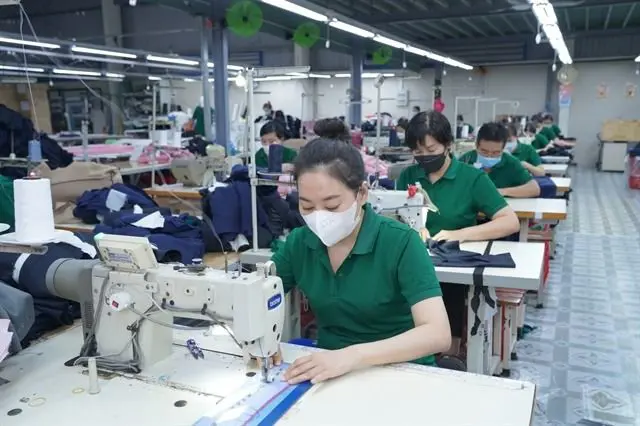
HANOI, In recent years, more companies in Vietnam have ventured into the green economy, producing sustainable goods such as biodegradable packaging, organic foods, and eco-friendly fashion. While growing environmental awareness has boosted consumer interest, green businesses face persistent challenges — especially high production costs — which make it difficult to compete on price or scale up in the domestic market. Inside a factory of Faslink, a firm committed to sustainable fashion for over 15 years. Experts say that despite positive momentum, eco-friendly products often remain significantly more expensive than conventional alternatives, leaving many Vietnamese consumers unwilling or unable to make the switch. One example is the Song Hong agricultural cooperative in Hanoi, which produces vegetable-based drinking straws. Despite their environmental benefits and health-friendly design, most of these products are exported to developed markets including Germany, the UK, Japan, and South Korea, as local demand is limited by price sensitivity. Vietnam consumes an estimated 5.3 billion plastic straws annually — about 50 times its population. Even if only 1–2% are improperly disposed of, the environmental impact is severe. Yet, eco-friendly options remain beyond the reach of most domestic consumers. The challenge extends beyond straws. Fuwa Biotech, a Thanh Hoa-based company producing enzyme-based dishwashing liquid from pineapple peels, also struggles with affordability. A 3.8-litre bottle of its chemical-free product retails for VNĐ335,000 (US$13) — two to three times higher than standard alternatives. “High prices are the biggest barrier to reaching more customers,” said Vo Van Luat of Fuwa Biotech, who stressed the need for more forums and awareness campaigns to encourage sustainable consumption. In the fashion industry, long-established players such as HCM City’s Faslink face similar struggles. Deputy general director Nguyen Bech Dien noted that while the company has pioneered fabrics made from recycled and natural fibres, such as pineapple leaves, the high cost of research and production keeps prices elevated. “Consumers remain hesitant to pay more for eco-friendly fabrics when conventional options like polyester or cotton are much cheaper,” she said. A Deloitte Vietnam survey cited by sustainability director Pham Minh Huong found that while up to 50% of consumers express interest in green products, fewer than 30% are willing to pay a premium. “This highlights the gap between awareness and actual behaviour,” Huong said. Industry players argue that lowering production costs is key to making green goods more accessible. But the hurdles are considerable: substantial upfront investments, strict environmental standards, and the need for clean raw materials make scaling up risky and expensive. National Assembly vice chairman Ta Dinh Thi echoed these concerns, noting that many companies are reluctant to expand beyond small-scale experiments because of doubts over profitability and competitive pressure, despite existing government support. Meanwhile, Faslink’s Dien highlighted the difficulty of commercialising new recycled materials. Promising ideas — such as fabrics from banana stems or composting mushrooms — often stall at the lab stage due to technology and supply chain gaps. Recycling plastics remains particularly costly. At Duy Tan Recycling, recycled plastic costs 20–30% more than virgin plastic, driven by expensive collection, sorting, and processing. “Encouraging waste segregation at source could reduce costs and help lower prices,” said the company’s sustainable development head, Le Viet Dong Hieu. Experts agree that innovation and affordable technology will be critical to driving down costs. But small and medium-sized enterprises — which form the backbone of Vietnam’s green sector — face difficulties accessing financial support and resources. Many are now calling for targeted incentives, funding schemes, and public education campaigns to help them transition towards sustainable production at scale.

News

Loke: Extra Railway Track Planned To Ease Congestion At Penang Port

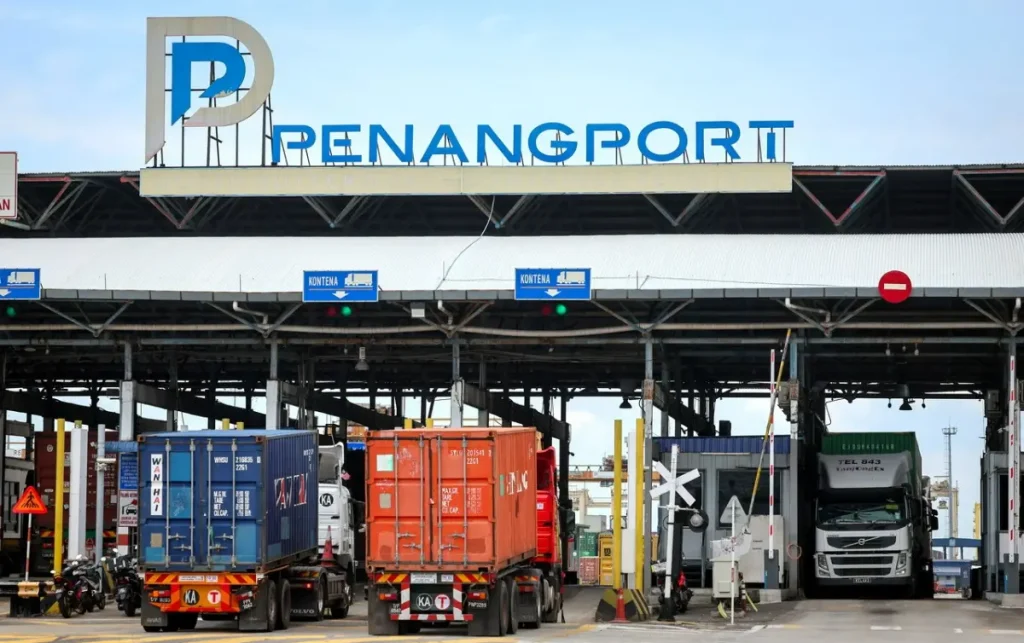
BUTTERWORTH, The Ministry of Transport (MOT) plans to build an additional railway track at Penang Port to boost logistics efficiency and ease traffic congestion in surrounding areas. Transport Minister Anthony Loke said the project involves extending the current 500-metre track to 1,010 metres, enabling all carriages or wagons to be fully loaded within the port’s premises without spilling over onto public roads. “This proposal is being finalised. Our main priority is to expedite the project to achieve two objectives: first, to improve container loading efficiency by having the full track inside the port, and second, to prevent traffic disruptions caused when carriages extend onto nearby roads. “Right now, the track can only fit about 30 out of 50 carriages, with the remaining 20 left outside the port, causing congestion during the loading process,” he told reporters after launching the Professional Advancement in Trucking and Haulage (PATH) Programme here on Saturday. Also present at the event was Human Resources Minister Steven Sim. The PATH Programme, spearheaded by the Human Resources Ministry (Kesuma) through HRD Corp in partnership with MOT, aims to upgrade driver skills in the trucking and haulage sector. Loke noted that conventional methods requiring budget approval and tendering often delay projects. To speed things up, MOT will pursue a strategic partnership model, working with port operators such as MMC Ports and Penang Port to share implementation costs. The Railway Assets Corporation (RAC) will also contribute by supplying reusable materials and assets, such as old tracks and sleepers, to help lower construction expenses. On the PATH Programme, Loke said it was introduced to expand the pool of certified haulier drivers nationwide, including at Penang Port. The government has allocated RM2.5 million for the initiative, which is expected to benefit over 1,000 participants nationwide. Of these, 200 at Penang Port will undergo intensive training covering the E Licence, Joint E GDL, safety, and work ethics modules. “This programme addresses the shortage of haulier drivers and enhances port efficiency by producing more skilled lorry drivers. It will also facilitate smoother cargo delivery while creating job and income opportunities, particularly for youth and local workers in the fast-growing logistics sector,” he said. Currently, port drivers can operate trucks within controlled areas without an E licence but are not permitted to drive on public roads. Loke said the high cost of obtaining the licence has been a major obstacle. “This programme is designed to remove that barrier,” he added.

Investment & Market Trends

Khazanah’s Cambrian Fund Makes First Investment In Nvsion

KUALA LUMPUR, Cambrian Fund, backed by the founders of ViTrox Corp Bhd, has made its first investment in Nvsion Sdn Bhd, a Malaysian startup specialising in artificial intelligence (AI)-driven automated optical inspection (AOI) solutions. In a statement, Nvsion announced it has closed a multi-million ringgit funding round with Cambrian Fund as the sole investor. The Cambrian Fund also lists Khazanah Nasional Bhd as its investor through its RM1 billion Dana Impak. Launched in July, Cambrian Fund was established by Penang-based ViTrox’s founders in partnership with regional SME-focused private equity firm Southern Capital Group. The fund is managed by Southern Capital and also counts Khazanah Nasional Bhd as an investor via its RM1 billion Dana Impak programme. Nvsion develops advanced AOI solutions designed to deliver high precision, better quality control, and improved efficiency for the outsourced semiconductor assembly and test (OSAT) and electronics manufacturing services (EMS) sectors. The company also sees opportunities in advanced electronics, automotive, and medical device manufacturing. Its proprietary Synthia Vision AI Platform combines AI with rule-based algorithms to power high-speed industrial applications. The fresh capital will be used to scale Nvsion’s growth in product development, talent recruitment, and customer expansion. “Securing this first round of funding is a defining milestone for Nvsion,” said managing director and founder Jeffrey Chung. “With Cambrian Fund’s support, we are confident in delivering stronger innovation, expanding our global customer base, and contributing to Malaysia’s role in advanced manufacturing.” Southern Capital CEO Kenneth Tan added that Nvsion’s software-first approach to machine vision is well-positioned to drive impact in the fast-growing Industrial 4.0 space. “We are confident in their potential to scale into a market leader and look forward to supporting their journey,” he said.

Scroll to Top

Subscribe
FREE Newsletter