Author name: admin

News

Fresh Chapter Ahead As FGV Prepares To Leave Bursa Malaysia

KUALA LUMPUR, FGV Holdings Bhd’s upcoming delisting from Bursa Malaysia on Thursday will mark the start of a new phase for the plantation giant as it returns fully under the control of the Federal Land Development Authority (Felda). In a statement, FGV said the move is part of its long-term transformation journey, allowing it to operate with greater flexibility while reinforcing its role as a leading agri-business and Malaysia’s national food company. FGV Holdings Bhd’s delisting from Bursa Malaysia on Thursday is set to mark the beginning of a new chapter for the plantation giant. FGV stressed that its delisting does not signal the end of its growth story since its 2012 listing but rather a strategic step towards delivering stronger and more sustainable value to stakeholders. Current operations, commitments to partners, and community initiatives will continue without disruption. “This is a strategic alignment with Felda that enables us to sharpen our focus on sustainable growth, operational excellence, and long-term value creation. We remain fully committed to advancing with Felda for the benefit of our employees, settlers, and the communities we serve,” said group chief executive officer Fakhrunniam Othman. Once celebrated for staging one of the world’s largest palm oil IPOs in 2012, FGV is now set to be fully delisted at 9am on Aug 28. The exit follows Felda’s acquisition of a 94.97% stake after its takeover offer closed on Aug 15, prompting Bursa Malaysia to suspend FGV’s trading on Aug 22. Felda has also issued a notice to dissenting shareholders, giving them until Jan 15 next year to sell their shares at RM1.30 each. FGV reaffirmed that strong governance, integrity, and transparency will remain central to its future direction. More than 70% of its fresh fruit bunches (FFB) are sourced from Felda settlers and smallholders, with Fakhrunniam describing them as long-term partners in a legacy built on trust and shared responsibility. As it transitions into this new chapter, FGV is also spotlighting the people behind its success. In conjunction with Merdeka and Malaysia Day, it has released Warkah Dari Ladang, a short film honouring plantation workers as the unsung heroes of Malaysia’s agri-business. The film, showcasing the nation’s diversity and unity, will be featured across FGV’s social media channels and official websites.
Investment & Market Trends

Indonesia, Japan Roll Out Cross-Border QR Payment Link

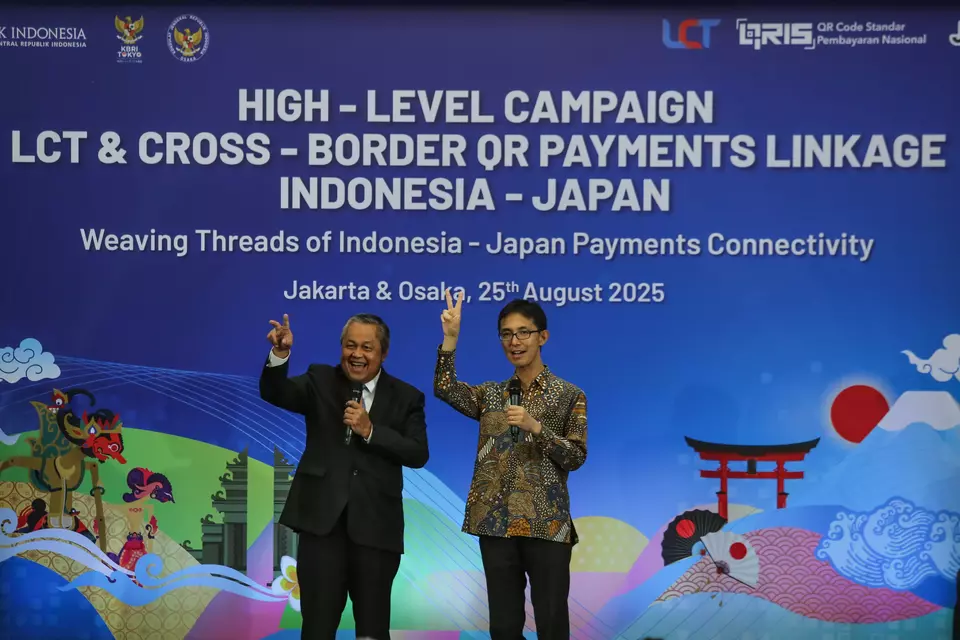
JAKARTA, Indonesia and Japan have officially launched a cross-border QR code payment system, allowing consumers in both countries to make seamless transactions in rupiah or yen without the need for currency exchange. The initiative marks a significant step forward in strengthening financial integration between two of Asia’s largest economies. Bank Indonesia Governor Perry Warjiyo, left, and Ueda Hajime, a Japanese senior diplomat for economi and development affairs, count down the launch of the Indonesia-Japan QRIS digital payment system in Jakarta, Monday, Aug. 25, 2025. The system, which uses the Quick Response Indonesian Standard (QRIS) in Indonesia, went live on August 17, 2025. It enables travellers and businesses to conduct instant digital payments by simply scanning a QR code, streamlining cross-border spending. Bank Indonesia Governor Perry Warjiyo said the collaboration builds on similar arrangements Indonesia has already established with Malaysia, Singapore, and Thailand. “Indonesian tourists in Japan no longer need to carry cash in rupiah or yen. With just their mobile phone, they can scan and pay – whether in Shibuya or Okachimachi,” Perry noted during the launch event in Jakarta. He emphasized that the system not only improves convenience but also enhances security and efficiency in digital transactions, contributing to broader economic and financial connectivity. Japan’s Commitment to Regional Financial Links Japanese Finance Minister Katsunobu Kato welcomed the initiative, highlighting its role in supporting Asia’s expanding trade and financial flows. “As cross-border transactions grow, reliable and efficient payment infrastructure becomes increasingly vital. This initiative represents a step toward deeper economic integration, making trade and services between Japan and Indonesia more dynamic,” Kato said. The rollout of the Indonesia-Japan QR payment link is expected to boost tourism, business activity, and long-term cooperation in the region’s fast-evolving digital economy.

Property

Thomson Medical Introduces Johor Bay Project

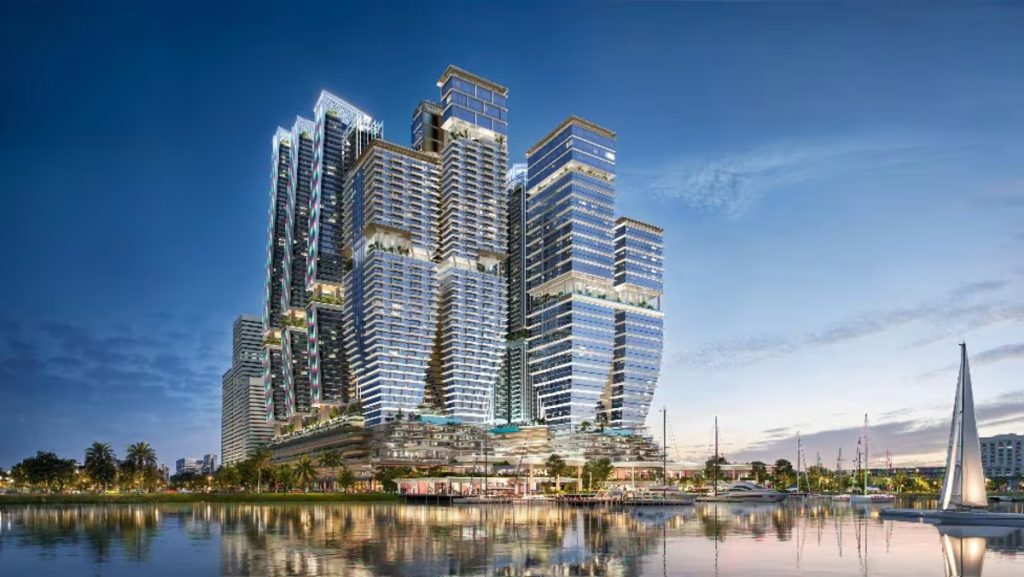
PETALING JAYA, Thomson Medical Group (TMG) has officially launched Johor Bay, an RM18 billion gross development value (GDV) project that is poised to become a transformative landmark within the Johor-Singapore Special Economic Zone (JS-SEZ). Spanning 26 acres of freehold land, the integrated master plan will be spearheaded by the upcoming Thomson Hospital Iskandariah, which will serve as the development’s healthcare nucleus. The hospital will be complemented by specialist medical suites, aged care and assisted living facilities, ensuring a comprehensive healthcare ecosystem that caters to the region’s growing cross-border demand. Beyond healthcare, Johor Bay will feature luxury residences, a five-star hotel, commercial zones, and lifestyle precincts, positioning the project as a world-class urban destination. Market observers have already likened the development to becoming the “Marina Bay of Johor,” reflecting its ambition to redefine the region’s skyline and investment landscape. Strategically located just 1.2 km from the upcoming Bukit Chagar rapid transit system (RTS) station, Johor Bay is designed as a holistic ecosystem that integrates healthcare, urban living, and long-term investment opportunities — making it a key anchor in the JS-SEZ blueprint. The project’s first phase, with a value of RM3.1 billion, will include the flagship hospital and a 47-storey luxury residential tower offering 180 exclusive units. This phase alone is expected to generate more than 1,200 new jobs, contributing meaningfully towards the JS-SEZ’s wider objective of creating 20,000 skilled jobs within five years. TMG executive vice-chairman Kiat Lim said the timing was ideal for the launch. “The time is right — economic tailwinds, infrastructure momentum, and demographic shifts are converging. Johor Bay will not only reshape the skyline but also play a defining role in the long-term growth of the JS-SEZ.”

Investment & Market Trends

Mercedes-Benz Pension Trust Plans To Divest 3.8% Stake in Nissan

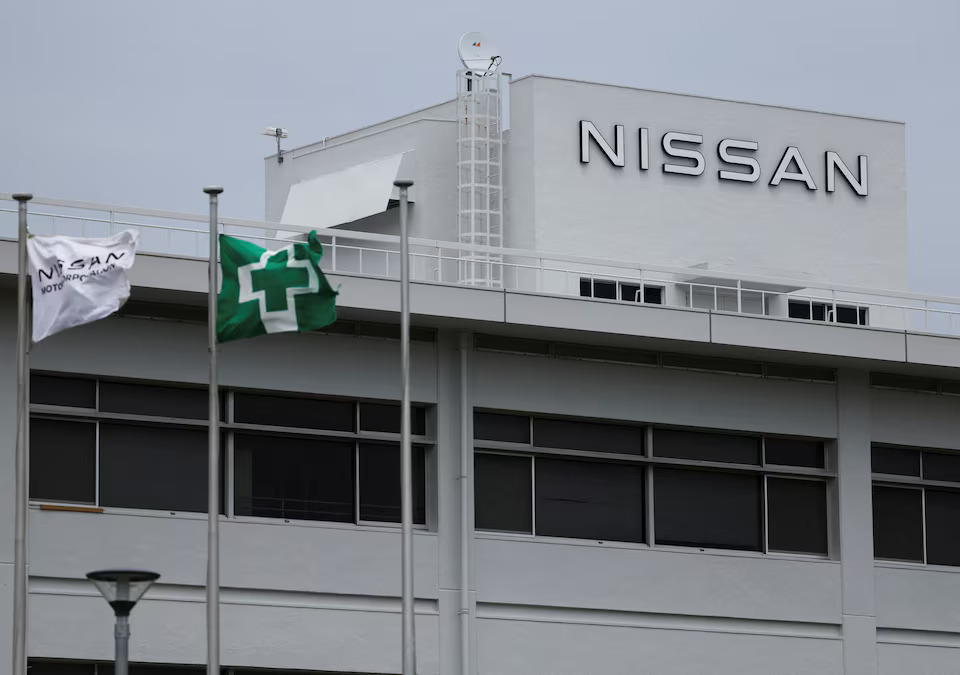
TOKYO/BERLIN, The pension trust of Mercedes-Benz (MBGn.DE) said it plans to sell its 3.8% stake in Nissan Motor (7201.T), worth around $346 million, a move that is expected to add further pressure on the Japanese automaker’s already weakened share price. Nissan, Japan’s third-largest carmaker, has seen its shares tumble about 24% so far this year, dragged down by declining sales, restructuring efforts, and the impact of U.S. tariffs. The divestment comes as investors increasingly question the outlook for the company’s turnaround strategy, which involves cutting costs through plant closures both at home and abroad in a bid to restore profitability. A spokesperson for Mercedes-Benz confirmed that the Nissan shares, which were transferred to its pension fund in 2016, are no longer considered strategically important. The divestment, the spokesperson said, is part of an effort to streamline and clean up the portfolio. The share offering will be priced between 337.5 yen and 345 yen per share, representing a discount of 4.96% to 7.02% against Nissan’s closing price of 363 yen on Monday, according to the term sheet. Pricing is scheduled to be finalized before the Tokyo Stock Exchange opens on Tuesday, with settlement expected on Thursday. Nissan, which sold its own 1.5% stake in then-Daimler AG back in 2021 to raise funds amid financial strain, did not immediately comment on the sale.

News

Ivory Properties’ Shares Flat Following CEO’s Resignation

KUALA LUMPUR, Ivory Properties Group Bhd’s share price remained unchanged at half-a-sen in mid-morning trade on Monday, with 10.63 million shares exchanged, following news of the resignation of its group chief executive officer (CEO) and executive director, Datuk Low Eng Hock. In a filing to Bursa Malaysia on Sunday, the Penang-based property developer announced that Low, 62, officially stepped down from the board on Aug 22, 2025, citing personal reasons for his departure. Low, who has been a key figure in Ivory Properties’ leadership and growth strategy, directly owns 84.54 million shares, representing a 17.25 per cent stake in the company, in addition to an indirect interest of 28.23 million shares, or 5.76 per cent. With his resignation, Low will relinquish all executive and board responsibilities, including his role as group CEO. The company has yet to announce a successor. Bursa Malaysia had earlier suspended trading of Ivory Properties’ securities from 9 am to 10 am on Monday, Aug 25, 2025, in line with regulatory requirements following the announcement. Despite the leadership change, Ivory Properties’ stock showed little reaction, suggesting that investors may already have priced in the news or are awaiting clarity on the company’s next steps in its leadership transition.

Investment & Market Trends

Dr Pepper Challenges Nestlé With $18 Bln Bid For Dutch Coffee Giant

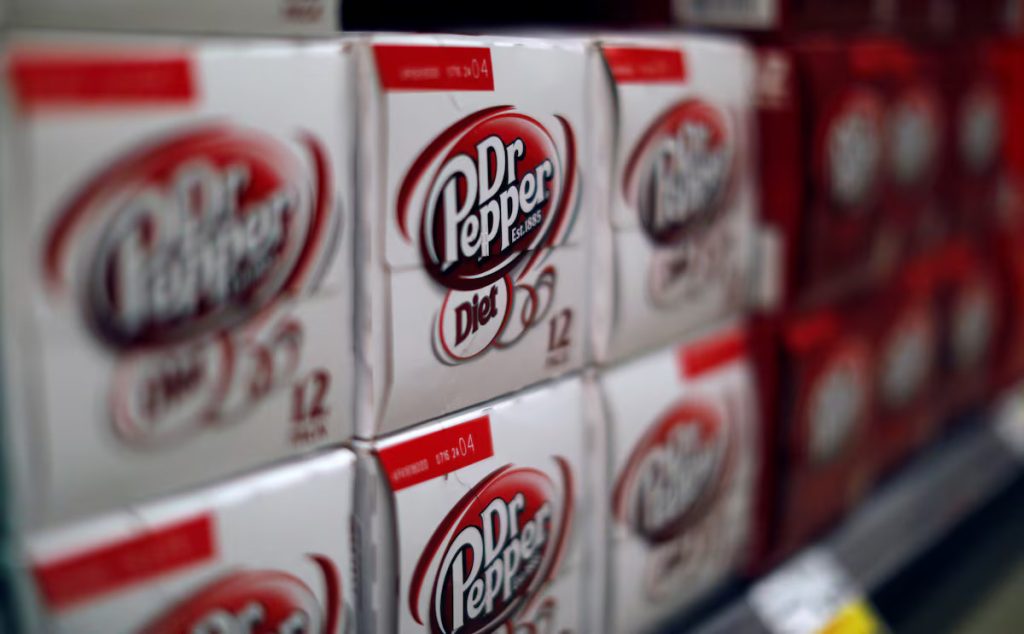
U.S. beverage giant Keurig Dr Pepper (KDP) has agreed to acquire JDE Peet’s, the world’s largest pure-play coffee company, in an $18 billion deal that marks Europe’s biggest acquisition in more than two years. The move positions Keurig to go head-to-head with market leader Nestlé in the global coffee sector. The agreement, announced Monday, values JDE Peet’s at a 20% premium over its last closing price and will see the Dutch company delisted from Amsterdam’s stock exchange. Following the acquisition, Keurig plans to separate its beverage and coffee operations into two new U.S.-listed companies: Global Coffee Co and Beverage Co. Strategic Impact The merger is expected to generate $400 million in annual cost savings and strengthen both companies against challenges from rising tariffs on coffee imports and ongoing trade tensions. Analysts estimate the combined coffee business will rival Nestlé’s, each holding roughly 20% of the global packaged coffee market. The deal comes as coffee prices hit record highs, fueled by droughts in Brazil and Vietnam and the U.S. decision to impose a 50% tariff on Brazilian beans. Keurig’s strong footprint in North America will be paired with JDE Peet’s dominant position in Europe, providing a platform for growth in emerging markets where coffee demand is accelerating. “Bringing these two coffee businesses together reduces JDE Peet’s reliance on Europe while giving Keurig global exposure,” said Jon Cox, an analyst at Kepler Cheuvreux. Post-Acquisition Structure The separation of Keurig’s businesses effectively unwinds part of the 2018 merger that created Keurig Dr Pepper by combining Keurig Green Mountain with Dr Pepper Snapple. Global Coffee Co, with around $16 billion in annual net sales, will focus on the $400 billion global coffee market. Beverage Co, generating more than $11 billion annually, will target the $300 billion North American refreshment drinks market. The two entities will be led by Keurig CEO Bob Cofer and CFO Sudhanshu Priyadarshi, respectively. Market Reaction Shares of JDE Peet’s surged 17.5%, their biggest single-day gain on record, while Keurig’s shares slipped about 7% in U.S. trading. At Friday’s close, JDE Peet’s was valued at €12.76 billion, while Keurig’s market cap stood at around $48 billion, according to LSEG data. JDE Peet’s, whose brands include Jacobs, L’Or, Tassimo, and Douwe Egberts, is majority-owned by JAB Holding, the investment firm of Germany’s billionaire Reimann family. JAB has committed to tendering its 68% stake in JDE Peet’s. The firm also owns a 4.4% stake in Keurig and will hold nearly 5% in each of the two new entities once the deal and split are completed. Timeline The acquisition is expected to close in the first half of 2026, with the spin-off into two separate companies planned by the end of that year. ($1 = €0.8544)

Property

Haily Secures Residential Project In Gelang Patah

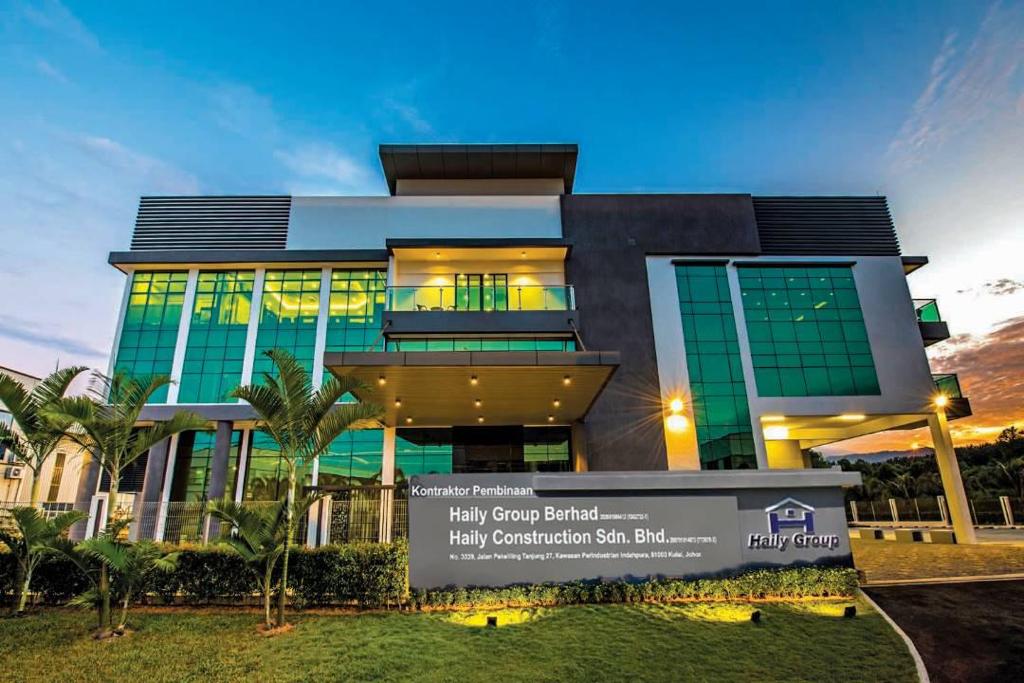
KUALA LUMPUR, Haily Group Bhd, through its wholly-owned subsidiary Haily Construction Sdn Bhd, has bagged a RM50.08 million subcontract from Mandy Corp Sdn Bhd, a subsidiary of Gadang Holdings Bhd, for the development of a new residential project in Gelang Patah, Johor. In its statement, Haily said the contract involves the construction and completion of Laman Citra Phase 3, which will feature 91 units of double-storey terrace houses, another 45 units of double-storey terrace houses, as well as a Tenaga Nasional Bhd (TNB) substation. The scope of works under the agreement includes main building and external works, in addition to mechanical and electrical services required to complete the project. The development is scheduled to be completed within 20 months. This latest contract win further strengthens Haily’s order book, pushing its total secured contract value for 2025 to RM68.11 million. The company also highlighted that its portfolio now encompasses 25 active projects across various segments, with a combined contract value of approximately RM1.05 billion. According to Haily, the new project not only enhances its presence in Johor’s growing property market but also reinforces its role as a reliable construction partner for established developers. The group believes the steady stream of project wins will continue to support its growth trajectory and contribute positively to earnings visibility in the coming years.

Investment & Market Trends

Affin, CGC Sign MoU To Offer RM500m Financing For MSMEs And Mid-Tier Firms

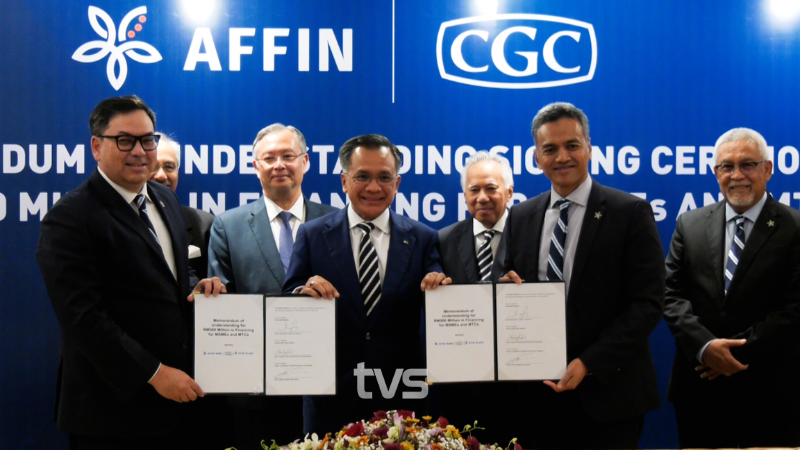
KUCHING, Affin Group and Credit Guarantee Corporation Malaysia Bhd (CGC) have entered into a Memorandum of Understanding (MoU) to provide RM500 million in financing aimed at supporting micro, small and medium enterprises (MSMEs) as well as mid-tier companies (MTCs) across Malaysia. The collaboration represents a major step forward in both organisations’ efforts to expand financing opportunities for businesses nationwide. By focusing on financial inclusion and sustainable growth, the partnership seeks to address funding gaps, empower businesses to scale and innovate, and strengthen their role in driving Malaysia’s economic development. Through the MoU, Affin and CGC will introduce a broad suite of financing options, including guarantee-backed facilities for established companies, customised funding for start-ups and early-stage ventures, and working capital solutions to improve cash flow. The initiative also supports Malaysia’s transition towards a low-carbon economy by promoting sustainable financing practices. Importantly, the programme aims to reach underserved and underbanked segments, ensuring that more entrepreneurs across different regions, including Sarawak and Sabah, gain access to much-needed financial resources. Affin Group president and group chief executive officer (CEO) Datuk Wan Razly Abdullah said the partnership underlines Affin’s long-term commitment to financial inclusion and sustainable growth while contributing to national development. “By leveraging our combined strengths, we are not only widening access to financing but also providing innovative solutions that help MSMEs and MTCs grow, compete, and thrive. This MoU reflects our commitment to empower the backbone of Malaysia’s economy and create lasting value for businesses, communities, and the nation,” he said. Speaking at a press conference, Wan Razly noted that the RM500 million allocation serves as a starting point to meet the needs of the fast-growing MSME sector and could be increased if demand requires. Although the programme is structured as a five-year initiative, he expressed optimism that the funds could be fully disbursed within just three years. Meanwhile, CGC president and group CEO Datuk Mohd Zamree Mohd Ishak highlighted the importance of extending financing access nationwide, with a strong focus on Sabah and Sarawak. “While our mandate covers the whole country, signing this agreement in Kuching demonstrates the potential we see in Sarawak and Sabah. We are committed to expanding financing access and enhancing the resilience and sustainability of local enterprises,” he said. The MoU was signed by Datuk Wan Razly, Affin Islamic Bank Bhd CEO Datuk Syed Mashafuddin Syed Badarudin, and Datuk Mohd Zamree, with Sarawak Financial Secretary Datuk Seri Dr Wan Lizozman Wan Omar witnessing the ceremony.

ESG

AirTrunk Lands $10.4b Refinancing To Fuel Asia-Pacific Expansion

Australian data centre operator AirTrunk has completed a massive A$16 billion (US$10.4 billion) sustainability-linked refinancing to support its expansion across the Asia-Pacific region. The refinancing package includes a S$2.25 billion green loan dedicated to its Singapore data centre, positioning AirTrunk as the largest issuer of sustainable financing in the APAC data centre sector, according to the company’s statement. AirTrunk said it received strong backing from 60 banks and financiers, underscoring investor confidence in its long-term growth and sustainability strategy. With this latest deal, the company’s total financing across the region, including its operations in Japan, has surpassed A$18 billion. The refinancing follows AirTrunk’s A$24 billion acquisition by Blackstone and Canada Pension Plan Investment Board (CPPIB) in late 2024, which marked one of the largest data infrastructure deals in the region. AirTrunk founder and CEO Robin Khuda said the move reflects the company’s ambition to scale up while keeping sustainability at the heart of its strategy. “Following AirTrunk’s A$24+ billion acquisition by Blackstone and CPPIB in 2024, we have expanded our debt financing platform to enable rapid growth across the region,” Khuda noted. AirTrunk was among the first data centre firms in the region to adopt sustainability-linked loans (SLLs) back in 2021, tying its financing directly to environmental and social performance targets. The latest refinancing further strengthens its position as a leading hyperscale data centre provider committed to green financing. At current exchange rates, US$1 is equivalent to 1.5389 Australian dollars.

News

China Evergrande Delisting Marks End Of Troubled Run For Investors

HONG KONG, China Evergrande Group was officially delisted from the Hong Kong stock exchange on Monday, closing one of the most dramatic rises and collapses in China’s property market history. The world’s most indebted developer, burdened with over US$300 billion (RM1.26 trillion) in liabilities, had its shares suspended since Jan 29 after a court ordered the company to be liquidated when it failed to repay debts and restructure. This suspension paved the way for its removal from the exchange. Once a giant in China’s property boom, Evergrande’s 2009 Hong Kong listing was the largest for a Chinese private developer. Its market value soared from US$9 billion at debut to a peak of US$51 billion in 2017. However, by early 2024, it had plunged to just US$282 million. Shares that once traded at HK$31.39 fell to HK$0.163 before trading stopped. “The delisting marks a milestone, symbolising the end of Evergrande’s dramatic rise and fall, as well as the fading of China’s debt-fuelled property growth model,” said Alec Tseung of KT Capital Group. The downfall mirrors the fate of its founder, Hui Ka Yan, who rose from a poor rural background to become one of China’s richest men. Hui was later banned from the securities market for life, fined 47 million yuan, and accused of inflating financial results and fraud. He has since been detained by authorities while liquidators pursue court cases to recover billions in assets. Evergrande’s collapse also highlights wider troubles in China’s property sector, which has been battling a deep liquidity crunch since 2021. Earlier this month, China South City became the first state-backed developer to face a liquidation order, joining several private peers. Although Beijing is trying to revive the sector through stimulus and easing property rules, analysts remain doubtful about a strong rebound, pointing to weak household demand and strained finances among buyers. Evergrande’s liquidation is expected to drag on for a decade, with creditors unlikely to recover much. So far, liquidators have managed to raise about US$255 million from selling offshore assets, a tiny fraction of the US$45 billion in claims. For many investors and homebuyers, the collapse has been devastating. “I chose Evergrande because I thought such a big developer would never fail. I was wrong,” one buyer wrote on social media while waiting for his unfinished home.

Scroll to Top

Subscribe
FREE Newsletter