Author name: admin

Energy & Technology

PETRONAS Secures Oman’s Block 18 Rights

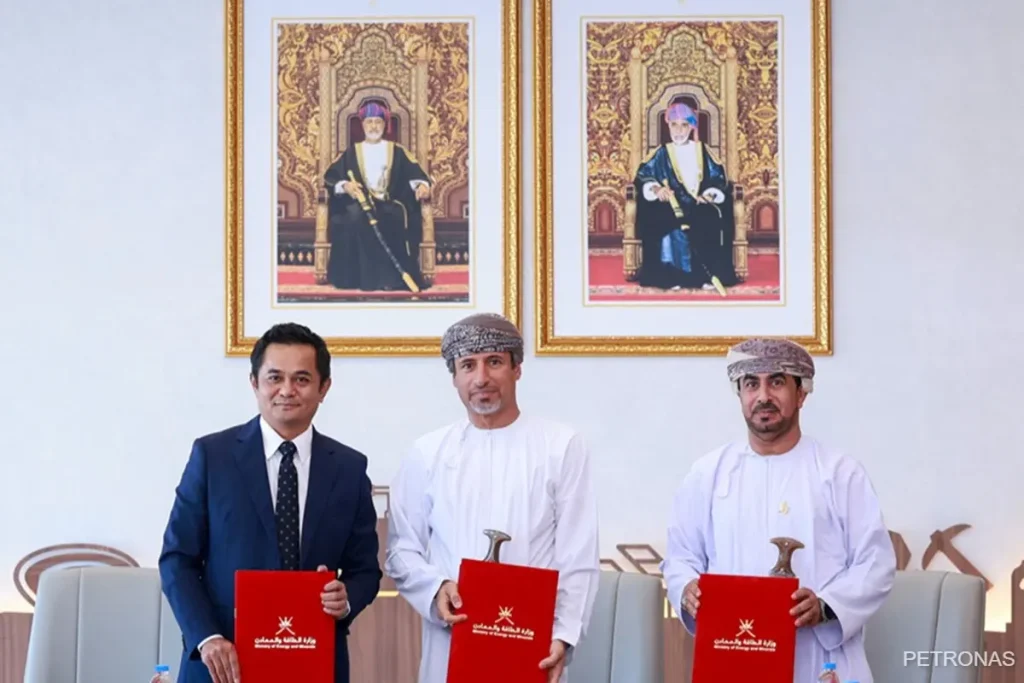
Petroliam Nasional Bhd (PETRONAS) announced that its wholly owned unit, PC Oman Ventures Ltd, has signed a concession agreement with the Omani government and OQ Exploration and Production Batinah Offshore LLC (OQEP) to explore oil and gas in Block 18, located in the Sea of Oman. The offshore concession spans 21,000 sq km in Northeast Oman, covering a wide range of geological settings from shallow to ultra-deep water, and offers significant exploration potential, PETRONAS said. (From left) Mohd Redhani Abdul Rahman, CEO of PETRONAS Carigali International Ventures and PETRONAS vice president of International Assets, Sultanate of Oman Minister of Energy and Minerals Salim bin Nasser Al Aufi and OQ OQ Exploration and Production CEO Mahmoud Al Hashmi at the signing ceremony. The agreement builds on a memorandum of understanding (MOU) signed between PETRONAS and OQEP in October, marking an important milestone in strengthening the strategic partnership between the two companies and reinforcing PETRONAS’ long-term presence in Oman. “The partnership enhances PETRONAS’ upstream portfolio by combining our offshore exploration expertise with OQEP’s regional knowledge, laying the foundation for a mutually beneficial venture,” PETRONAS said. Block 18, one of Oman’s largest offshore concession blocks, was launched in 2024 as part of the country’s renewed investment approach in the oil and gas sector. The framework allows for concession fees and supports integrated gas exploitation projects. PETRONAS Vice President of International Assets Mohd Redhani Abdul Rahman said: “Building on our technical strengths and past successes, PETRONAS continues to expand exploration into new frontiers. With innovative exploration approaches and OQEP’s basin expertise, we aim to unlock the potential of Block 18 and contribute to Oman’s long-term energy security.” The acquisition aligns with PETRONAS’ disciplined portfolio expansion strategy, providing strategic options across its international operations. The announcement follows a string of discoveries in 2025, including Malaysia’s Lebah Emas and Suriname Block 52. “As a global energy and solutions partner, PETRONAS remains committed to pursuing international opportunities while deepening collaboration with strategic partners,” the company said.

News

Three Directors Exit DFCITY After EGM

DFCITY Group Bhd has removed three directors from its board following an extraordinary general meeting (EGM) held on Thursday. The directors removed, effective immediately, are non-independent non-executive director Datuk Dr Li Wei, executive director Zhang Dandan, and independent non-executive director Chong Yuen Shuen, according to a filing with Bursa Malaysia. The resolutions for their removal were passed by voting shareholders during the EGM. The EGM was convened at the request of three shareholders — Liew Lee Chin, Fong Yik Hon, and Marcus Tan Kok Wee — who collectively hold a 12.09% stake in DFCITY. Ahead of the EGM, Li and Zhang had filed an application at the High Court to block the meeting. The court dismissed the application, allowing the EGM to proceed as scheduled. The move comes amid an ongoing boardroom tussle at DFCITY. Substantial shareholder and managing director Low Kim Kiat, along with his spouse Liew Lee Chin, has been involved in a separate legal dispute with Li and Zhang concerning the validity of Kim Kiat’s redesignation from executive director to managing director in August 2025. The High Court dismissed that suit, which is now pending appeal at the Court of Appeal. On Aug 4, 2025, Liew ceased to be a substantial shareholder after Paddingtons Hospitality Sdn Bhd, owned by their son Low Yew Kuan, sold an 11.37% stake in the company. Kim Kiat also disposed of his 3.23% direct stake. On the same day, Samoa-based PWK Co Ltd emerged as a substantial shareholder with a 13.6% stake. Shares in DFCITY were untraded on Thursday. The stock was last traded on Feb 5 at 37 sen, giving the company a market capitalisation of RM42.24 million.

Investment & Market Trends

Maxland Seeks RM32m Through Rights Issue

Maxland Bhd has proposed a rights issue aimed at raising up to RM32.07 million to fund maintenance of its timber camp infrastructure, tree replanting and plantation improvement works, as well as general working capital. The proposed issuance will involve up to 2.405 billion new rights shares, offered at two sen each, on a one-for-one basis for existing shareholders, according to a filing with Bursa Malaysia. Maxland Bhd has proposed to offer 2.405 billion rights shares at two sen each on the basis of one new share for every one existing share held. The two-sen issue price represents a 16.32% to 32.2% discount compared with Maxland’s five-day to 12-month volume-weighted average market price of 2.78 sen to 3.9 sen as of Feb 11. Non-independent and non-executive chairman Datuk Abd Aziz Haji Sheikh Fadzir has committed to fully subscribe to his entitlement of 17.7 million rights shares, with an additional undertaking for up to 110 million shares if required. Assuming full subscription and no exercise of the company’s 801.81 million outstanding warrants B, Maxland expects to raise RM32.07 million from the issuance of approximately 1.6 billion rights shares. Proceeds will be used to maintain timber camp infrastructure and processing plants, support tree plantations, cover working capital needs, and defray expenses related to the rights issue. Over the past five years, Maxland has conducted five equity fundraising exercises, including a RM6.78 million private placement and a RM51 million redeemable convertible note issuance in June 2021, a RM2.05 million private placement in December 2021, a RM13.64 million private placement in January 2023, and an RM11.37 million private placement in February 2024. The rights issue remains subject to shareholder approval at an extraordinary general meeting, with completion anticipated in the second quarter of 2026. Maxland is 19% owned by its 73-year-old managing director Datuk Lim Nyuk Sang. Shares in the company were untraded on Thursday, with the last transaction on Feb 9 at 3.5 sen, valuing the group at RM56.13 million.

Property

Oriental Kopi Buys HQ In RM23m Deal

Oriental Kopi Holdings Bhd has finalised an agreement to purchase the premises it currently occupies as its head office and warehousing facility in Puchong for RM23 million in cash. The transaction, which was first proposed in June 2025, was formalised on Thursday through an agreement between the group’s unit, Oriental Coffee International Sdn Bhd, and the vendor, Icon Facade Sdn Bhd, according to a filing with Bursa Malaysia. Icon Facade is owned by Heng Ngeng Choo and Siau Fui Chen. The property in question sits on a 5,260.8-square-metre leasehold parcel of land and includes an existing factory unit. Oriental Kopi said the purchase price was determined after careful consideration of the market value of comparable properties in the area. The acquisition will be funded through a combination of internally generated cash and bank financing. The group highlighted that owning the property is expected to generate long-term cost savings by eliminating rental payments and reducing logistics expenses. Additionally, it mitigates the risk of losing tenancy rights, providing greater operational stability for its business operations. Shares of Oriental Kopi closed one sen, or 0.73%, lower at RM1.36 on Thursday, giving the company a market capitalisation of RM2.72 billion. This acquisition aligns with the company’s broader strategy to strengthen its asset base and improve operational efficiency. By owning its headquarters and warehousing facilities, Oriental Kopi aims to support its long-term growth objectives while enhancing control over key operational assets.

Investment & Market Trends

Mercuria Takes Back Stake From Chinese Backer

Mercuria Energy Group Ltd has bought back the shares previously held by CNIC Corp, ending nearly a decade of minority ownership by a Chinese state-linked investor in one of the world’s largest commodity trading firms. According to documents, CNIC no longer holds any shares in Mercuria’s holding company. The firm’s billionaire co-founders, Marco Dunand and Daniel Jaeggi, have increased their combined stake to 68.21%, up from around 64% a year ago. The change in ownership comes at a time when global commodity supply chains have become increasingly politicised, particularly amid rising tensions between China and the United States. Markets ranging from oil to copper and soybeans have been affected, and major trading houses such as Mercuria are facing greater scrutiny as commodities take centre stage in geopolitical strategy. CNIC, a state-backed fund, acquired just under 5% of Mercuria in late 2022. The investment followed Mercuria’s earlier repurchase of a 12% stake from ChemChina, another Chinese state-linked company that had invested in 2016. Documents show that 4.99% of Mercuria’s shares are now classified as treasury shares. Dunand and Jaeggi have strengthened their control over the company in recent years, particularly after senior executive Magid Shenouda departed in 2024. Although Mercuria brought in three senior leaders as part of a management transition, one has since left the firm. The co-founders have been major beneficiaries of the commodity trading boom triggered by Russia’s invasion of Ukraine, with Mercuria paying out US$5.5 billion (RM21.54 billion) in dividends over the past three years. Mercuria, which began as a trader of Russian oil into Poland, has grown into one of the world’s leading commodity houses, with significant operations in gas, power and metals. The company is among three trading firms selected to help manage purchases for a US$12 billion US stockpile aimed at countering China’s dominance in critical metals supply chains. It is also reportedly seeking to trade Venezuelan oil under a US permit, following a recent licence expansion that excludes companies owned or controlled by Chinese shareholders. Mercuria traces its roots to J&S Group, founded by Gregory Jankilevitsch and Wiaczeslaw Smolokowski. The two founders, together with early investor and trader Vadim Linetskiy, now hold a combined 7.25% stake in the holding company, down from 11.2% in 2018. Employees collectively own 18.55% of the company through a share ownership plan, while Han Jin, Mercuria’s head of Asia, retains a 1% stake. A Mercuria spokesperson declined to comment. CNIC did not immediately respond to requests for comment.

Investment & Market Trends

QuickIn Targets SME Operational Gaps Amid E-Invoicing And Digital Shift

Malaysian small and medium enterprises (SMEs) continue to grapple with manual invoicing, scattered financial records and disconnected business tools, even as regulatory timelines around e-invoicing evolve.  These ongoing operational gaps have led to the introduction of solutions like QuickIn, designed to centralise invoicing, sales tracking and financial management for SMEs. Built by a team with accounting and finance backgrounds, the platform is designed for immediate usability without the need for additional hardware or complex setup. According to its developers, SMEs often rely on tools that do not integrate well, resulting in duplicated work and inconsistent records. By consolidating invoices, payments and transaction histories, the system aims to streamline workflows and reduce administrative errors. “Many Malaysian SMEs are resilient and hardworking, but they’re often held back by manual processes and disconnected tools that were never designed for how they actually operate,” said Leon Wong, Co-founder and Financial Systems Architect of QuickIn. He said the platform was developed to provide a unified system to simplify invoicing and financial management while reducing daily operational friction. With QuickIn, businesses can issue invoices, enable self-billed invoicing, consolidate multiple transactions and manage everything through a single dashboard. Automatic updates keep financial records accurate, while paperless workflows help reduce administrative workload. The all-in-one e-invoicing solution platform also integrates seamlessly with existing systems, enabling SMEs to improve efficiency without operational disruption. By simplifying core financial processes, the system helps SMEs reduce reliance on manual work and adopt more structured operations, improve cash flow visibility, and support faster decision-making. QuickIn is among platforms entering the SME digital management space as businesses review internal systems amid evolving regulatory and operational demands. It offers an easy entry point. 

News

Heineken Malaysia Unaffected By Global Cuts, Keeps Full Dividend

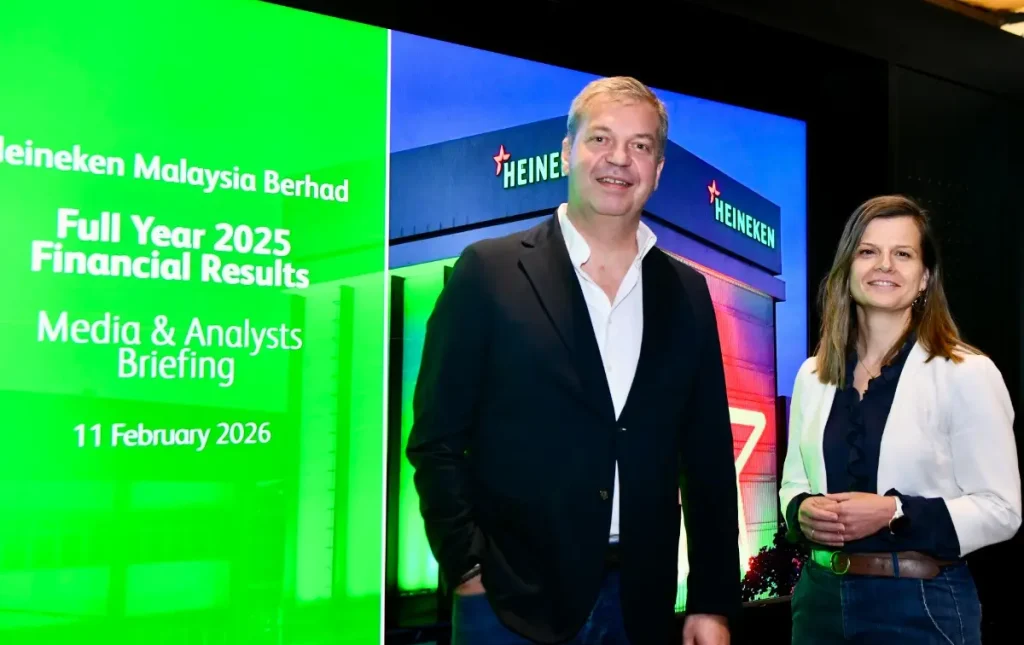
Heineken Malaysia Bhd said it will not be affected by the 6,000 global job cuts announced by its parent company, Heineken NV, despite reporting a slight decline in its financial year 2025 (FY2025) net profit. Managing director Martijn van Keulen said the layoffs primarily involve the group’s headquarters and European operations, and do not impact Malaysia. Heineken NV recently announced plans to reduce about 7% of its global workforce as it faces weaker beer demand amid rising prices and more moderate alcohol consumption. For the financial year ended Dec 31, 2025, Heineken Malaysia posted a 2% decline in net profit to RM459.3 million from RM466.7 million a year earlier. Revenue remained unchanged at RM2.8 billion. The lower earnings were mainly due to the absence of a one-off reinvestment tax allowance that boosted FY2024 results. Excluding this one-time benefit, underlying profit would have risen about 4% to RM607.7 million. The company said cost management efforts helped support profitability despite flat revenue growth. The board declared a final dividend of RM1.12 per share, bringing total dividends for FY2025 to RM1.52 per share, representing a 100% payout ratio. This translates to a dividend yield of 6.6%, the highest since the pandemic. In the fourth quarter ended Dec 31, 2025, revenue increased 2%, partly driven by the excise duty hike in November 2025. Net profit was flat year-on-year due to the absence of the tax allowance benefit. On an underlying basis, fourth-quarter profit would have increased about 8%. Looking ahead, the company expects operating conditions to remain challenging due to macroeconomic uncertainty, inflationary pressures and the impact of higher excise duties on consumer spending. Van Keulen said the company will focus on productivity improvements, operational efficiency, portfolio and channel optimisation, and accelerating digital transformation to sustain long-term growth. Heineken Malaysia is transitioning from its EverGreen 2025 strategy to a new five-year plan, EverGreen 2030, which will prioritise brand growth and innovation, cost efficiency, and becoming future-ready through digitalisation, sustainability and a performance-driven culture. The stock closed 1.25% lower at RM23.70, giving the company a market capitalisation of RM7.16 billion.

Investment & Market Trends

EC-Council Expands AI Certifications As Malaysia Boosts AI Talent

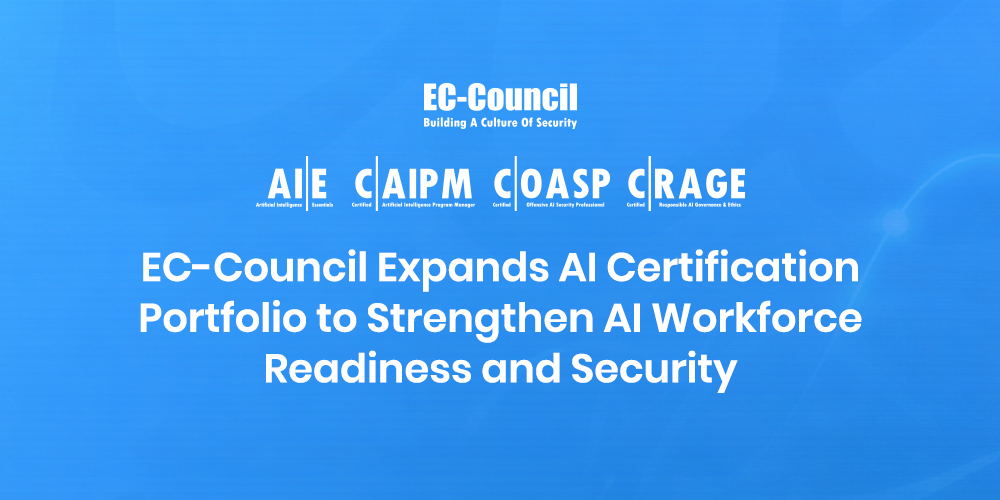
EC-Council, creator of the world-renowned Certified Ethical Hacker (CEH)credential and a global leader in applied cybersecurity education and training, today launched its Enterprise AI Credential Suite, introducing four new role-based AI certifications alongside Certified CISO v4, an overhauled executive cyber leadership program.   The dual launch marks the largest single expansion of EC-Council’s portfolio in its 25-year history, built for one clear reality: AI is scaling faster than the workforce trained to run, secure, and govern it.  Malaysia’s momentum is accelerating quickly. With the establishment of the National Artificial Intelligence Office (NAIO) launched in late 2024 to coordinate AI policy, innovation, and talent development, Malaysia has made its national direction clear: AI capability must move from ambition into execution across government and industry.  As AI shifts from pilots into daily operations, the demand is rising for structured, role-ready pathways that enable responsible adoption, stronger security, and clear governance at scale.  Malaysia’s AI push is also anchored in the country’s broader digital transformation agenda. Under the MyDIGITAL Blueprint , the digital economy already contributes more than 23% of national GDP, underscoring how central AI and advanced technologies are becoming to Malaysia’s competitiveness and growth.  In Malaysia, adoption is expanding rapidly across finance, manufacturing, services, and digital government initiatives. This creates immediate need for professionals who can use AI responsibly, manage AI programs with discipline, protect AI systems from emerging threats, and apply governance that stands up in real operational environments.  For many organizations, the constraint is no longer interest in AI. The constraint is building job-ready capability to deploy it safely, defend it, and maintain accountability as usage scales.  “Malaysia’s AI direction is clear and the next step is capability at scale,” said Jay Bavisi, Group President, EC-Council. “This portfolio is built to help professionals develop practical skills across adoption, defense, and governance, so organizations can scale AI with confidence and clear accountability.”  The Enterprise AI Credential Suite is structured to mirror how AI capability is developed in practice. Artificial Intelligence Essentials (AIE) serves as the baseline, building practical AI fluency and responsible usage across roles, and it is supported by EC-Council’s proprietary Adopt. Defend. Govern. (ADG) framework, which defines how AI should be operationalized at scale in real environments. Adopt: Prepare teams to deploy AI deliberately, with readiness and safeguards Defend: Secure AI systems against emerging risks, including prompt injection, data poisoning, model exploitation, and AI supply-chain compromise Govern: Embed accountability, oversight, and risk management into AI systems from the outset Within this structure, the four new certifications align directly to specific workforce needs across the AI lifecycle. Artificial Intelligence Essentials (AIE) builds foundational AI literacy.  Certified AI Program Manager (CAIPM) equips to translate AI strategy into execution, aligning teams, governance, and delivery to drive measurable ROI and enterprise-scale intelligence. Certified Offensive AI Security Professional (COASP) Builds elite capabilities to test vulnerabilities in LLMs, simulate exploits, and secure AI infrastructure hardening enterprises against emerging threats. Certified Responsible AI Governance & Ethics Professional (CRAGE) Focuses on Responsible AI, Governance and Ethics at enterprise scale with NIST/ISO compliance. Alongside the new AI certifications, Certified CISO v4 updates executive cyber leadership education for AI-driven risk environments, strengthening leadership readiness as intelligent systems become part of core business operations and security decision-making. “Security leaders are now accountable for systems that learn, adapt, and influence outcomes at speed,” Bavisi added. “Certified CISO v4 prepares leaders to manage AI-driven risk with clarity, strengthen governance, and make informed decisions when responsibility is on the line.” The portfolio also builds on EC-Council’s long-standing work with government and defense organizations, including its existing DoD 8140 baseline certification recognition, as AI security and workforce readiness take on greater national importance. To explore the full range of training and certification opportunities, visit the EC-Council AI Courses library.

Investment & Market Trends

Seedflex To Raise US$6–8m As Malaysia Business Turns Profitable

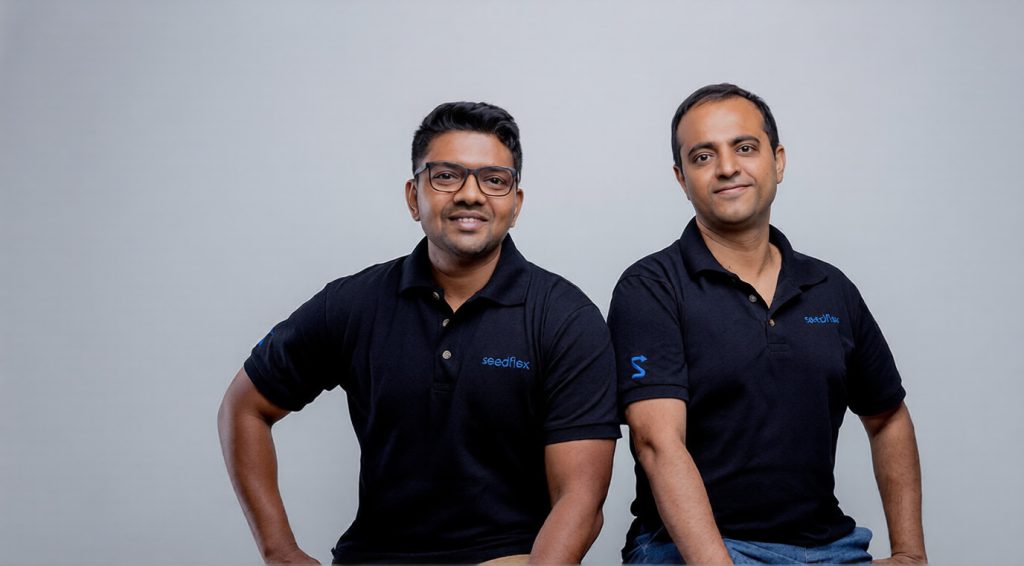
Seedflex’s upcoming Series A fundraising is aimed at accelerating growth rather than addressing financial constraints, according to co-founder Ritwik Ghosh. “This is not about runway or survival. It’s about whether we can accelerate growth in Malaysia and other markets,” he said. The company last raised US$3.2 million in a seed extension round in May 2025, co-led by Z Venture Capital (ZVC) and Iterative, with participation from 500 Global and several strategic angel investors. Ghosh noted that existing investors have expressed strong interest in participating in the upcoming round, including one backer that increased its stake following the seed extension. He added that the fundraising comes amid a more stable and selective investment climate for fintech companies compared with late 2024. Investors, he said, are now prioritising “proven platforms, scale, positive unit economics, and a clear path to profitability.” Operationally, Seedflex has disbursed approximately RM100 million in Malaysia to date and is currently originating about RM20 million in financing per month. The company’s average financing tenure ranges between 1.5 and two months. Seedflex now serves more than 10,000 micro, small and medium enterprises (MSMEs), double its customer base six months ago. It maintains a non-performing loan (NPL) ratio of between 1% and 1.5%, supported by an automated repayment model that deducts payments directly from merchants’ future sales. The company has a team of 25 full-time employees and expects to achieve group-level profitability by the end of the second quarter of 2026. Regionally, Seedflex is expanding cautiously. In Indonesia, where it secured regulatory approval last year, the company is adopting a pilot-first and partner-led strategy. It is also exploring entry into a third market, positioning itself as a pure technology and risk management platform.

News

Albern Murty Named New CelcomDigi Group CEO

CelcomDigi Bhd has officially appointed Albern Murty as its Group Chief Executive Officer, effective Feb 10. Albern has been instrumental in steering the company through its formative integration phase following the landmark merger between Celcom and Digi, which was completed on Nov 30, 2022. He previously served as Deputy CEO and most recently as Acting CEO, playing a key leadership role in aligning operations, culture and strategy during the post-merger transition. With more than 22 years of experience in the telecommunications industry, Albern brings deep operational and commercial expertise to the role. Notably, he served as Chief Executive Officer of Digi.Com Bhd for seven years, where he led the company through a period of digital transformation and market expansion. Albern brings over 22 years of leadership experience in the telecommunications industry, including seven years as CEO of Digi.Com Bhd. Over the course of his career with Digi, Albern also held several senior leadership positions, including Chief Operating Officer and Chief Marketing Officer. His earlier regional experience includes serving as Executive Vice President and Head of Emerging Asia at Telenor Asia, where he oversaw growth strategies across multiple markets. CelcomDigi chairman Tengku Datuk Seri Azmil Zahruddin Raja Abdul Aziz said Albern’s appointment follows the completion of a comprehensive and rigorous search process to identify the company’s next CEO. “The Board looks forward to working closely with him and the rest of the management team to deliver CelcomDigi’s strategic priorities, accelerate sustainable growth as Malaysia’s trusted connectivity and digital solutions partner, strengthen governance standards, and continue building an organisation that ranks among the best places to work in the country,” he said. In conjunction with the leadership transition, CelcomDigi has also announced a management restructuring. Datuk Kamal Khalid has been appointed Chief Strategy, Transformation and Regulatory Officer, reflecting the company’s continued focus on integration execution, regulatory alignment and long-term transformation initiatives. The appointments mark the next chapter in CelcomDigi’s evolution as Malaysia’s largest mobile network operator, as it moves from merger integration towards sustained growth, operational excellence and digital innovation.

Scroll to Top

Subscribe
FREE Newsletter