Author name: admin

Property

Geohan Subsidiary Wins RM59 Million Contracts For Penang LRT Project

Geohan Corporation Bhd’s wholly-owned subsidiary, Geohan Sdn Bhd, has secured two significant contracts from SRS LRT Sdn Bhd, collectively valued at RM59 million, marking another milestone in the company’s continued expansion in the infrastructure sector. The announcement was made in a Bursa Malaysia filing today. The contracts, awarded as letters of award (LOAs), relate to the Penang Light Rail Transit (LRT) Mutiara Line project, a key public transport initiative aimed at enhancing connectivity across the state. Specifically, the two sub-packages, BP01 and BPO2, are valued at RM31.20 million and RM27.80 million, respectively. These projects involve comprehensive bored piling construction and associated civil works along the LRT line, covering areas from Gelugor to the Penang Pesta vicinity and Setia SPICE. Construction for sub-package BP01 is scheduled for completion by March 31, 2027, while sub-package BPO2 is expected to finish by April 30, 2027. Geohan said the contracts are anticipated to boost the company’s earnings visibility over the next two years, supporting sustained revenue growth and strengthening its market position in foundation and geotechnical works. Lee Kim Seng, Geohan’s managing director, expressed confidence in the company’s ability to deliver the projects efficiently and to high standards. “These contracts reflect our continued track record in executing complex infrastructure projects successfully. We remain committed to delivering exceptional results for our clients while ensuring timely completion and maintaining quality standards,” he said. The new contracts are also expected to enhance Geohan’s portfolio in the public transport sector, reinforcing its reputation as a reliable partner for large-scale civil engineering projects. With these awards, the group continues to capitalize on growth opportunities within Malaysia’s expanding rail and urban infrastructure landscape.


Investment & Market Trends

SC Approves Sunway Healthcare’s Listing On Bursa Main Market

The Securities Commission Malaysia (SC) has given its approval for Sunway Healthcare Holdings Bhd (SHH) to be listed on the Main Market of Bursa Malaysia. SHH is currently an 84%-owned joint venture under Sunway City Sdn Bhd (SunCity), which is wholly owned by Sunway Bhd. The remaining 16% stake is held by Singapore-based Greenwood Capital Pte Ltd. As part of the listing exercise, SHH will undertake a share split, increasing its number of shares from 1.2 billion to 10.9 billion without changing its total share capital. Following the share split, SunCity will distribute its SHH shares to Sunway through a dividend-in-specie. The proposed initial public offering (IPO) will involve up to 1.97 billion SHH shares. This includes an offer for sale of up to 1.39 billion existing shares — representing 12.1% of SHH’s enlarged share base — as well as a public issue of 575 million new shares, or 5% of the enlarged share base, which will be offered to both retail and institutional investors. In its filing to Bursa Malaysia today, Sunway confirmed that the SC had also approved SHH’s listing in line with the Bumiputera equity requirements for public-listed companies. SHH will allocate at least 50% of the shares offered to Malaysian retail investors (via balloting) specifically to Bumiputera investors under the retail portion of the IPO. Sunway added that Maybank Investment Bank, AmInvestment Bank and SHH will still need to obtain Bursa Securities’ approval regarding SHH’s public shareholding spread ahead of the listing. “Maybank IB, AmInvestment Bank and SHH are required to notify the SC in writing on the final number of SHH shares relating to the proposed listing before the prospectus is registered,” the group said.

News

ChatGPT Said: Samenta: Higher E-invoicing Exemption To Help 200,000 More SMEs

An estimated 200,000 more small and medium enterprises (SMEs) are set to be exempted from e-invoicing after the government announced that the exemption threshold will be increased to RM1 million in annual revenue, starting in 2026. In a statement on Sunday, the Small and Medium Enterprises Association Malaysia (Samenta) said the higher threshold is a timely move that shows the government understands the real challenges faced by micro and small businesses, many of whom continue to struggle with increased costs and limited resources. Samenta national president Datuk William Ng explained that a large number of SMEs that now fall under the expanded exemption category are businesses operating with very tight margins and limited capacity to adopt new digital systems such as e-invoicing. “For these businesses, the government’s decision provides much-needed breathing room,” he said. “They are already dealing with rising operating costs, uncertainties in tariffs, stronger competition from foreign online sellers, and new compliance requirements. The exemption gives them time to stabilise, plan ahead, and make improvements gradually instead of rushing into digital processes they are not ready for.” Ng added that while the exemption eases pressure on smaller companies, it also supports Malaysia’s broader digitalisation agenda by ensuring that e-invoicing adoption progresses in a way that is practical, realistic, and considerate of different business capabilities across the SME sector. He reminded SMEs not to treat the exemption as a reason to delay technological upgrades entirely. “SMEs should use this extra time to tidy up their accounting processes, organise their financial records, and slowly adopt digital tools where possible,” he said. “Early preparation will not only make future e-invoicing compliance smoother but also help improve efficiency, cash-flow management and competitiveness.” Ng emphasised that the exemption window should be seen as an opportunity for businesses to strengthen their foundations and gradually transition into digital systems, rather than postponing change indefinitely.

Energy & Technology

Sembcorp Is Currently In Talks To Acquire Australia’s Alinta Energy

Sembcorp Industries Ltd is in ongoing discussions to potentially acquire Australia’s Alinta Energy, though no final agreement has been reached yet. The talks come as Alinta’s owner, Hong Kong billionaire Henry Cheng’s Chow Tai Fook Enterprises Ltd, continues exploring a full or partial sale of the utility after spending most of the year reviewing its options. Advisers were appointed in January to lead the sale process. Chow Tai Fook bought Alinta Energy — which now serves more than one million customers across Australia and New Zealand — for over A$4 billion (RM10.92 billion) in 2017. In 2023, it sold Alinta’s Pilbara-region energy assets in Western Australia to APA Group for A$1.7 billion, including debt. The group has been working to unlock liquidity after financial pressures mounted at Cheng’s property company, New World Development Co, prompting the disposal of several assets, including those under the Rosewood Hotel Group. Sembcorp, backed by Singapore sovereign wealth fund Temasek Holdings Pte, confirmed in a statement on Monday (Dec 8) that it is reviewing several acquisition opportunities, including Alinta Energy. The update followed media reports from the Australian Financial Review and The Australian. Sembcorp’s shares declined as much as 1.3% after the announcement. The potential acquisition aligns with Sembcorp’s broader strategy to grow its footprint across the Asia-Pacific energy market. The company has recently been expanding through regional purchases — including buying renewable solar assets in India from ReNew Energy Global in October. It has also reportedly been in talks to take a minority stake in the gas-fired operations of Thailand’s B.Grimm Power PCL. For the Alinta deal, Sembcorp is being advised by Goldman Sachs Group Inc and DBS Group Holdings Ltd, while Chow Tai Fook is working with RBC Capital Markets and UBS Group AG. Any takeover would require approval from Australia’s Foreign Investment Review Board before proceeding. Alinta Energy’s largest power-generating asset is the 1,200MW Loy Yang B brown coal-fired power station in Victoria, which supplies roughly 20% of the state’s electricity. In recent years, Alinta has also been working to grow its renewable energy portfolio in preparation for the country’s transition toward cleaner energy sources.

Investment & Market Trends

Johor’s BMS Holdings Drops Below IPO Price On Its ACE Market Debut

BMS Holdings Bhd, a Johor-based building materials distributor, saw its shares fall below its initial public offering (IPO) price during its debut trading session on the ACE Market on Monday, December 8. The stock opened at 19.5 sen per share, down from its IPO price of 22 sen, and quickly dropped to a low of 18.5 sen shortly after trading commenced. By 9.15am, the share price had recovered slightly to 19 sen, representing a nearly 14% decline, with over 34 million shares changing hands. At this price, BMS Holdings was valued at RM292.6 million. BMS Holdings Bhd managing director Ang Kwee Peng (third from left) and the company’s board members at Monday’s listing ceremony. The decline comes on the heels of a relatively subdued IPO, where applications from public investors amounted to just slightly more than double the shares available for subscription, making it one of the least oversubscribed public offerings in Malaysia this year. Through the IPO, the company raised RM80.1 million from newly issued shares, with an additional RM34.3 million generated from an offer for sale (OFS) by existing shareholders. BMS Holdings operates across retail, wholesale, and project sales of building materials, with a focus on tiles and stone surfaces such as porcelain and ceramic tiles, engineered stones, natural stones, and mosaics. The company also offers complementary bathware and kitchenware products to its customers. According to its IPO prospectus, approximately 43% of the proceeds from the new share issuance will be allocated to expanding BMS Holdings’ retail and distribution network. This includes plans to open new showrooms in Seremban, Selangor, and Kuala Lumpur, as well as establishing a new distribution centre in the Klang Valley. The company also plans to acquire electric vehicle forklifts and upgrade existing facilities, including its retail outlets in Kota Damansara, Kepong, and Klang, along with the Pasir Gudang distribution centre. Another 21% of the IPO proceeds will be invested in enhancing the company’s digital infrastructure, including the implementation of an upgraded enterprise resource planning (ERP) system and warehouse management system. The remaining funds are earmarked for working capital, marketing activities, and listing-related expenses. Proceeds from the OFS were distributed to a group of more than 10 shareholders, including co-founders and directors Ang Kwee Peng (managing director) and Lee Kok Chuan (executive director), who have built the company over more than three decades. Alliance Islamic Bank served as the principal adviser, sponsor, sole underwriter, and placement agent for the IPO. Despite the soft debut, analysts note that the company’s strong long-term growth plans, including retail expansion and digital upgrades, could support future performance as it continues to establish a broader footprint in Malaysia’s building materials market.

News

Sarawak Spends RM21.8 Billion To Speed Up Infrastructure Development

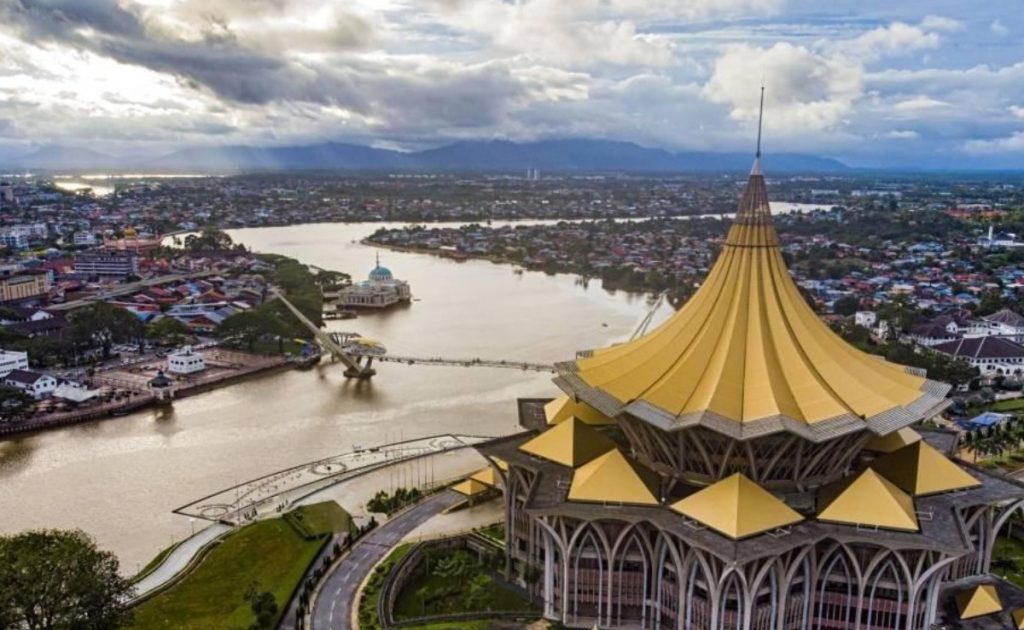
Sarawak has channelled RM21.8 billion through its Alternative Funding (AF) initiative to accelerate key infrastructure projects across the state, said Second Minister for Finance and New Economy Datuk Amar Douglas Uggah Embas on Wednesday. He explained that the AF model was introduced to ensure important development projects can move forward without delays, allowing the state to fast-track critical infrastructure while maintaining strong financial stability. “So far, a total of 1,586 projects have been implemented under AF. Of these, 1,127 projects — or 71% — have been completed, while the remaining 459 are progressing at various stages,” he said during his winding-up speech for the State Budget 2026 debate at the Sarawak State Legislative Assembly. Uggah, who is also the deputy premier, said the AF mechanism has played a major role in transforming Sarawak’s physical and economic landscape as the state works towards high-income status under the Post-Covid Development Strategy (PCDS) 2030. Major AF-funded developments include the coastal road network, the second trunk road, the Sarawak Water Supply Grid (stressed areas), rural electrification programmes, and digital infrastructure projects such as the Sarawak Multimedia Authority Rural Telecommunication (SMART) towers and the Sarawak Rural Broadband Network. He added that AF also supports the development of educational facilities, such as Sarawak’s international schools, as well as projects undertaken by regional development agencies including the Upper Rajang Development Agency (URDA), Highland Development Agency (HDA), Northern Regional Development Agency (NRDA), and the Integrated Regional Samarahan Development Agency (IRSDA).

News

Ex-Miti Minister Zafrul Named Mida Chairman For Two Years

Tengku Datuk Seri Zafrul Abdul Aziz, former Minister of Investment, Trade and Industry (Miti), has been appointed as the new chairman of the Malaysian Investment Development Authority (Mida), effective Wednesday, the Prime Minister’s Office (PMO) announced. He will serve a two-year term, with additional responsibilities to be revealed at a later date. The Mida chairmanship had been vacant for over a year following the end of Tan Sri Dr Sulaiman Mahbob’s term in September 2024. Zafrul, a former banker turned government minister, first joined the administration in March 2020 as finance minister under the Perikatan Nasional government, continuing in the role under the Barisan Nasional-led administration until November 2022. Following the 15th general election, he was appointed a senator and Miti minister under Prime Minister Datuk Seri Anwar Ibrahim’s unity government, serving until Dec 2, 2025. Mida described Zafrul’s appointment as a strategic move to strengthen Malaysia’s investment promotion and development capabilities amid intensifying global competition. The agency highlighted his expertise in financial services, trade negotiations, government policy, and investment facilitation. During his tenure as Miti minister, Zafrul oversaw record-breaking investment inflows, with RM329.5 billion approved in 2023 and RM378.5 billion in 2024. In the first nine months of 2025, approved investments reached RM285.2 billion, a 13.2% increase compared with the same period last year, despite global economic challenges. “His appointment ensures continuity in our strategic direction while bringing fresh momentum to our operational priorities,” said Mida CEO Datuk Sikh Shamsul Ibrahim Sikh Abdul Majid. “We are confident that his leadership will further enhance Malaysia’s position as a premier investment hub.”

News

MOF: BNM Has Plan To Reduce Stake In PayNet

Bank Negara Malaysia (BNM) has developed a long-term strategy to gradually reduce its ownership stake in Payments Network Malaysia Sdn Bhd (PayNet), the country’s primary payment infrastructure provider. The plan, confirmed by the Ministry of Finance (MOF), is aimed at fostering greater market competitiveness while ensuring that PayNet continues to play a central role in strengthening Malaysia’s digital payment ecosystem. According to the MOF, BNM’s move to pare down its shareholding aligns with the central bank’s broader objective of promoting a more dynamic, inclusive, and innovation-driven payments landscape. While the shareholding reduction will be phased over time, the ministry emphasised that it will not compromise the stability, security, or efficiency of the national payment system. The plan is structured to maintain a balance between encouraging private-sector participation and safeguarding public trust in the country’s financial infrastructure. In a written reply to the Dewan Rakyat on Wednesday, responding to a question by Aminolhuda Hassan (PH–Sri Gading) regarding the government’s review of BNM’s ownership in PayNet, the MOF highlighted that BNM currently holds a 35.5% stake in the company. As the largest shareholder, BNM continues to provide strategic direction and oversight, ensuring that PayNet delivers reliable, secure, and competitive digital payment services for both individuals and businesses. The ministry also noted that BNM’s phased reduction plan will be implemented with careful monitoring and governance, maintaining the resilience of the payment system while enabling greater private-sector participation and competition. This approach is expected to enhance the efficiency and inclusivity of digital payments in Malaysia, supporting the country’s broader economic and financial digitalisation goals. In summary, BNM’s measured plan to gradually reduce its stake in PayNet reflects a strategic effort to foster competition, innovation, and sustainability within Malaysia’s payment ecosystem, while ensuring that national payment infrastructure remains robust, secure, and accessible for all users.

ESG

Banks Provide Flood Relief Support To Affected Customers

In response to the recent floods, banks in Malaysia are providing a wide range of relief measures to assist affected customers. These measures include the deferment of loan or financing instalments, giving temporary financial relief to individuals and businesses struggling with the impact of flooding. Additionally, banks are offering special financing facilities to help customers repair and restore their homes, businesses, and other properties damaged by the floods. In a joint statement issued today, the Association of Banks in Malaysia (ABM) and the Association of Islamic Banking and Financial Institutions of Malaysia (AIBIM) emphasised that the banking industry is committed to supporting customers through these challenging times. The organisations highlighted that banks are taking proactive steps to reduce the financial burden on affected individuals and businesses while ensuring uninterrupted access to essential banking services. Other relief initiatives include the waiver of fees for replacing damaged bank documents, cards, and cheques, as well as providing financial assistance and adaptation facilities specifically tailored for micro, small, and medium enterprises (MSMEs) affected by flood damage. Banks are also facilitating the exchange of damaged banknotes, ensuring customers can access funds safely and securely. The associations urged customers to contact their banks through official and reliable channels, including bank branches, websites, online banking platforms, and official social media accounts, for information on available assistance programs. They cautioned customers to remain vigilant against potential scams and to avoid engaging with unauthorised parties claiming to represent financial institutions. To ensure transparency and accessibility, ABM and AIBIM noted that customers can refer to the list of member banks on their official websites for updated information regarding flood relief measures. They also confirmed that member banks will continue taking all necessary steps to maintain access to essential banking services in affected areas. The statement further indicated that banks will provide ongoing updates on relief efforts and service availability through official communication channels, reaffirming the commitment of Malaysia’s banking sector to support communities and businesses in navigating the aftermath of the floods. This coordinated effort reflects the banking industry’s role in not only providing financial services but also in strengthening resilience and recovery for individuals, families, and businesses impacted by natural disasters.

Investment & Market Trends

AmBank, Huawei Malaysia Seal RM350 Million Financing Deal

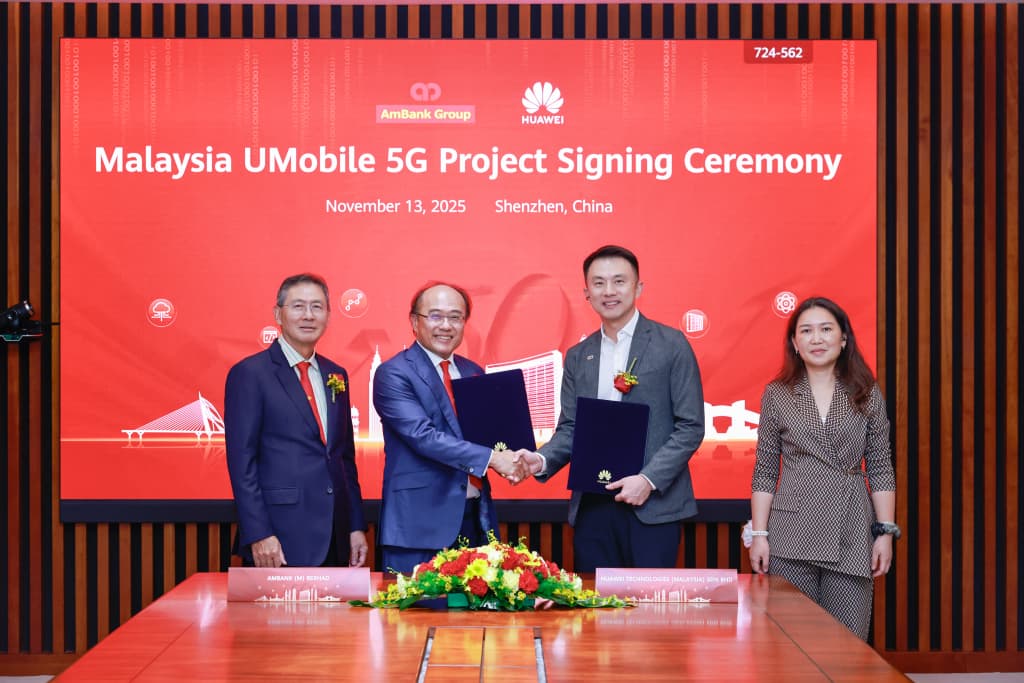
AmBank Group and Huawei Technologies (Malaysia) Sdn Bhd have formalized a RM350 million supply chain financing agreement aimed at bolstering Malaysia’s digital infrastructure and supporting the country’s ambitious technology-driven development goals. The financing facility is part of a broader effort to accelerate the rollout of Malaysia’s second 5G network and enhance the nation’s technology ecosystem, positioning Malaysia as a competitive hub for digital innovation and foreign investment in the region. In a joint statement, both parties emphasized that the agreement reflects their commitment to facilitating foreign direct investment (FDI) by providing customized financial solutions that meet the operational needs of multinational corporations. Through this collaboration, AmBank aims to support Huawei Malaysia’s supply chain while contributing to the broader national agenda of advancing digital transformation and building a resilient, future-ready economy. AmBank Group managing director of business banking Christopher Yap said the partnership underscores the bank’s long-standing relationship with Huawei Malaysia and its strategic role in supporting Malaysia’s digital growth. He highlighted that the RM350 million facility demonstrates AmBank’s confidence in the country’s digital ambitions and its capacity to deliver large-scale, tailored financial solutions to global technology leaders. “This collaboration not only strengthens Malaysia’s digital infrastructure but also acts as a catalyst for attracting high-value foreign investments. By working closely with Huawei Malaysia, we are helping create a robust ecosystem that supports innovation, enhances connectivity, and drives economic growth across multiple sectors,” Yap added. The supply chain financing facility is expected to facilitate smoother operations for Huawei Malaysia’s local and regional business activities, enabling timely procurement, production, and deployment of digital solutions. Both AmBank and Huawei Malaysia highlighted the mutual benefits of the arrangement, which include strengthening the local technology ecosystem, promoting financial inclusion, and enhancing Malaysia’s position in the global digital economy. This partnership reflects AmBank’s ongoing commitment to being a trusted financial partner for multinational corporations and to supporting strategic initiatives that align with Malaysia’s vision of becoming a technology-driven, future-ready nation. By combining financial expertise with technology innovation, AmBank and Huawei Malaysia aim to accelerate digital infrastructure development, attract sustainable foreign investments, and contribute to the long-term growth and competitiveness of the Malaysian economy.

Scroll to Top

Subscribe
FREE Newsletter