A diner ordering sashimi in Kuala Lumpur is unlikely to think about exchange rates, customs clearance, cold-room capacity or the logistics of moving fresh seafood thousands of kilometres from Japan.
That is precisely the point.
Behind Malaysia’s growing appetite for Japanese cuisine sits a supply chain where timing, temperature and availability can determine what a restaurant is able to put on its menu. Freshness cannot wait for a delayed shipment. A chef cannot serve an ingredient that did not arrive. And customers accustomed to consistency rarely care about the logistical explanation when something is unavailable.
Senri (M) Sdn Bhd operates in that largely invisible space.
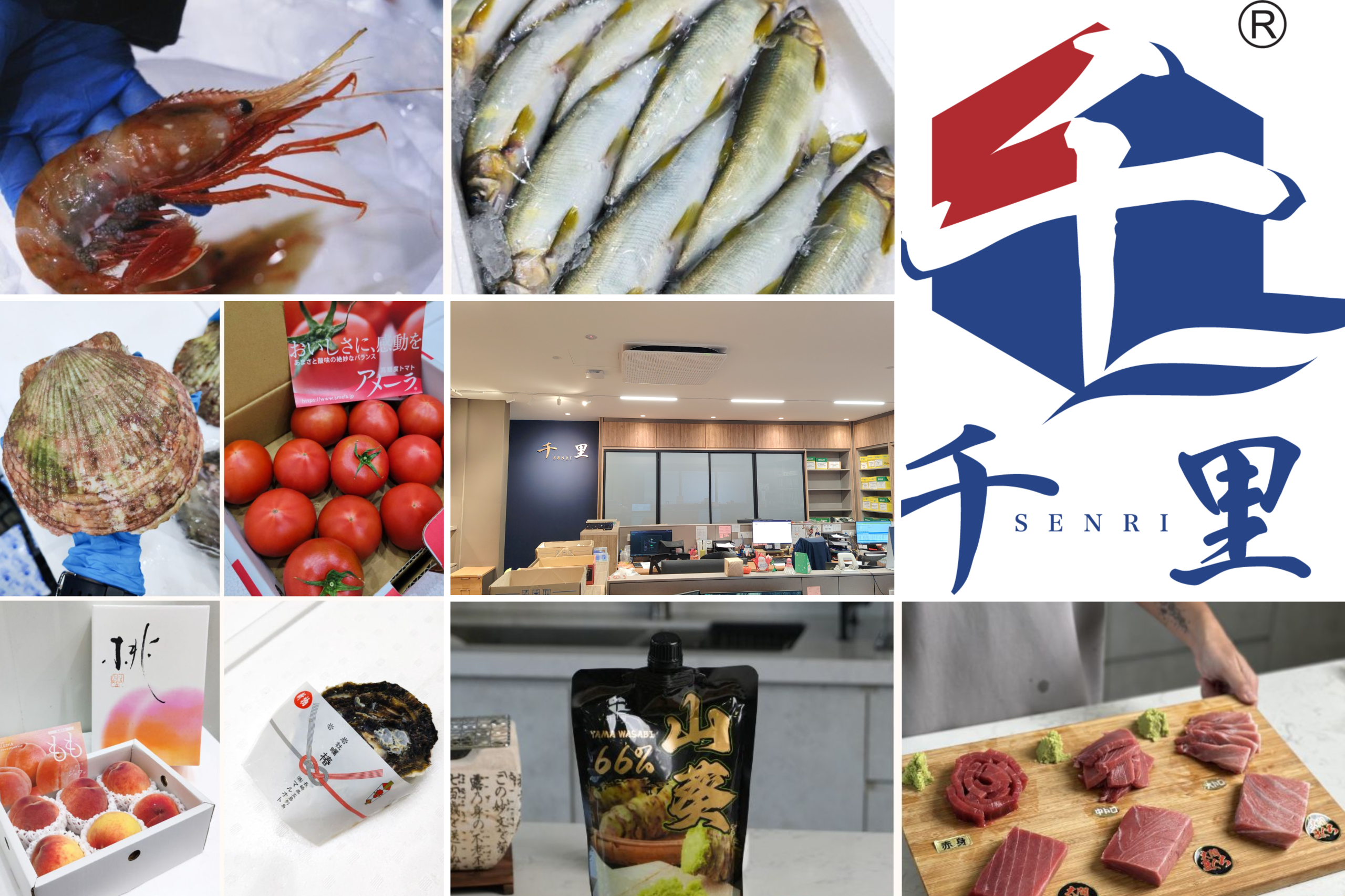
Established in 2018, the Kuala Lumpur-based importer and wholesaler specialises in Japanese food products, including premium sea urchin and air-flown fish sourced from Japan’s Toyosu Fish Market, alongside frozen seafood and dried ingredients.
Its customers span Malaysia’s HORECA sector — restaurants, hotels, cafés and other food-service operators — where Senri’s job extends considerably beyond selling seafood.
It is about making distance disappear.
The Business Behind the Menu
Malaysia’s expanding Japanese dining market has created opportunities for restaurants and suppliers alike. It has also exposed the vulnerabilities involved in sourcing authentic ingredients internationally.
Availability can fluctuate. Import lead times change. Exchange rates move. Shipping disruptions happen. Regulations evolve. Fresh seafood adds another complication: time.
For a restaurant, these supply-chain problems quickly become operational ones. An unavailable ingredient can disrupt a menu, while inconsistent quality risks disappointing customers who increasingly expect authenticity and consistency.
Senri has therefore built its proposition around reducing uncertainty.
Through relationships with Japanese producers and exporters, it coordinates sourcing, import documentation, customs clearance, quality inspection, warehousing and distribution before products reach customers.
The company has also expanded beyond fresh seafood into frozen and dried products, giving food-service operators a broader one-stop sourcing platform.
As competition increases, however, Senri believes supplying products alone is no longer sufficient.
It increasingly works with chefs, restaurant owners and purchasing teams on seasonal offerings, product recommendations and specialty ingredients that can support menu development.
In effect, the wholesaler is becoming part of the restaurant’s decision-making ecosystem.
Freshness Has an Infrastructure Problem
Growth has made that role more complicated.
More customers and a broader product portfolio mean more inventory to predict, store and move. Too little stock risks shortages. Too much creates its own financial and operational consequences.
Senri is consequently directing capital towards areas diners will probably never see: cold rooms, warehouse capacity, inventory management and digital systems.
The company has implemented a Warehouse Management System and strengthened demand forecasting and standard operating procedures as transaction volumes increase.
These investments are intended to improve supply visibility, reduce errors and allow the company to react faster to changing customer requirements.
Senri also monitors exchange-rate movements and global supply-chain conditions — factors capable of rapidly altering the economics of imported food.
The lesson is straightforward: the promise of fresh Japanese seafood begins long before the fish reaches the chef.
Growing Up as a Business
Scaling has also forced Senri to change how it is managed.
What began with a more founder-led operational structure has evolved into defined responsibilities across purchasing, logistics, warehouse operations, sales, finance and administration.
For management, that transition is necessary because complexity increases with scale.
Decisions that could once be handled personally need to be delegated. Departments must communicate effectively. Managers need enough authority to respond quickly when circumstances change.
Leadership has therefore shifted towards developing capable teams and future leaders, leaving senior management more room to concentrate on supplier relationships, business development, market expansion and long-term investment.
It is a familiar challenge for growing SMEs: the systems that get a company started are rarely the systems capable of taking it much further.
What Customers Don’t See
Senri considers one of its biggest competitive advantages to be something customers may barely notice when everything is working properly.
Reliability.
A delivery arriving on time is not dramatic. Neither is accurate inventory, correctly completed import documentation or a cold chain functioning exactly as intended.
But repeat those things consistently and they become commercially valuable.
Senri’s relationships with producers and exporters in Japan provide sourcing access, while procurement planning and inventory management are designed to translate that access into dependable supply in Malaysia.
The company combines this with responsiveness when customers require something unusual or plans suddenly change.
Trust, in this business, is accumulated through hundreds of transactions where nothing goes wrong.
And that may become increasingly important as Malaysia’s Japanese food market matures.
Consumers have more choices, restaurants face greater competition and expectations surrounding quality and authenticity continue to rise. The businesses serving them therefore need supply partners capable of delivering not just premium ingredients, but predictability.
For Senri, the opportunity lies in becoming increasingly difficult to remove from that equation.
The glamour of Japanese dining will remain at the front of the restaurant: the precision of the chef, the presentation of the plate and the quality of the ingredients.
Senri’s work happens much earlier and mostly out of sight.
Because behind Malaysia’s Japanese food boom is a much less visible business — the discipline of making sure the right ingredients arrive at the right place, in the right condition, at exactly the right time.