Consumers are notoriously difficult to predict.
Yesterday’s niche ingredient can become tomorrow’s supermarket staple. A traditional dessert can suddenly find a new audience with an unexpected flavour. Sugar gets reconsidered, convenience gets reinvented and products once confined to specialist stores find their way into everyday shopping baskets.
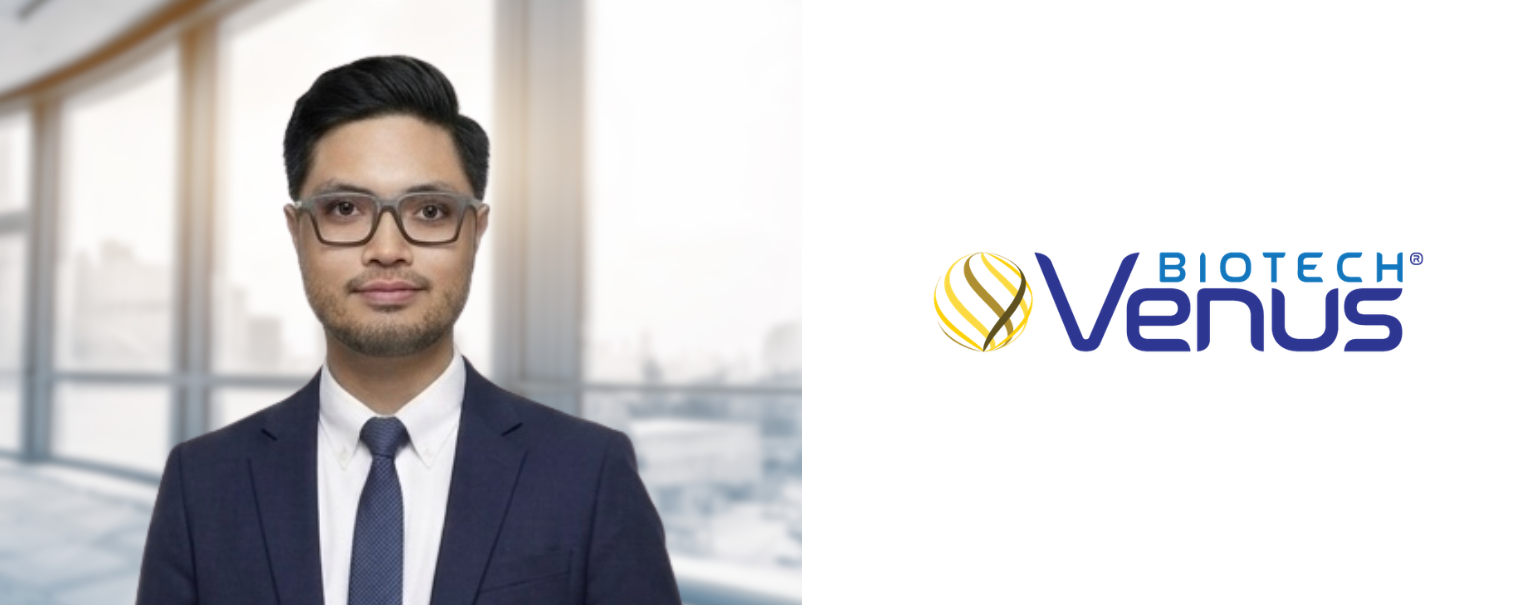
Director of Venus Biotech Sdn Bhd – Imran Khan.
Often, consumers do not know what they want next until somebody puts it in front of them.
That is an interesting place to build a business — and it is increasingly where Venus Biotech Sdn Bhd sees its opportunity.
The Malaysian company sits at the intersection of biotechnology, food innovation, manufacturing and commercialisation. Its business ranges from food ingredients and product development to Halal compliance, consultancy, training and manufacturing.
On paper, these can look like very different businesses. In practice, they revolve around one question: How do you turn an idea into something the market can actually buy?
Tomorrow’s Products Start Somewhere
Consider what is happening to the modern pantry.
Consumers are paying closer attention to sugar. Alternative sweeteners such as stevia, erythritol and allulose are becoming increasingly relevant to product formulation. Convenience continues to reshape food consumption, while traditional flavours are being repackaged and reinterpreted for contemporary lifestyles.
Venus Biotech operates within these shifts.
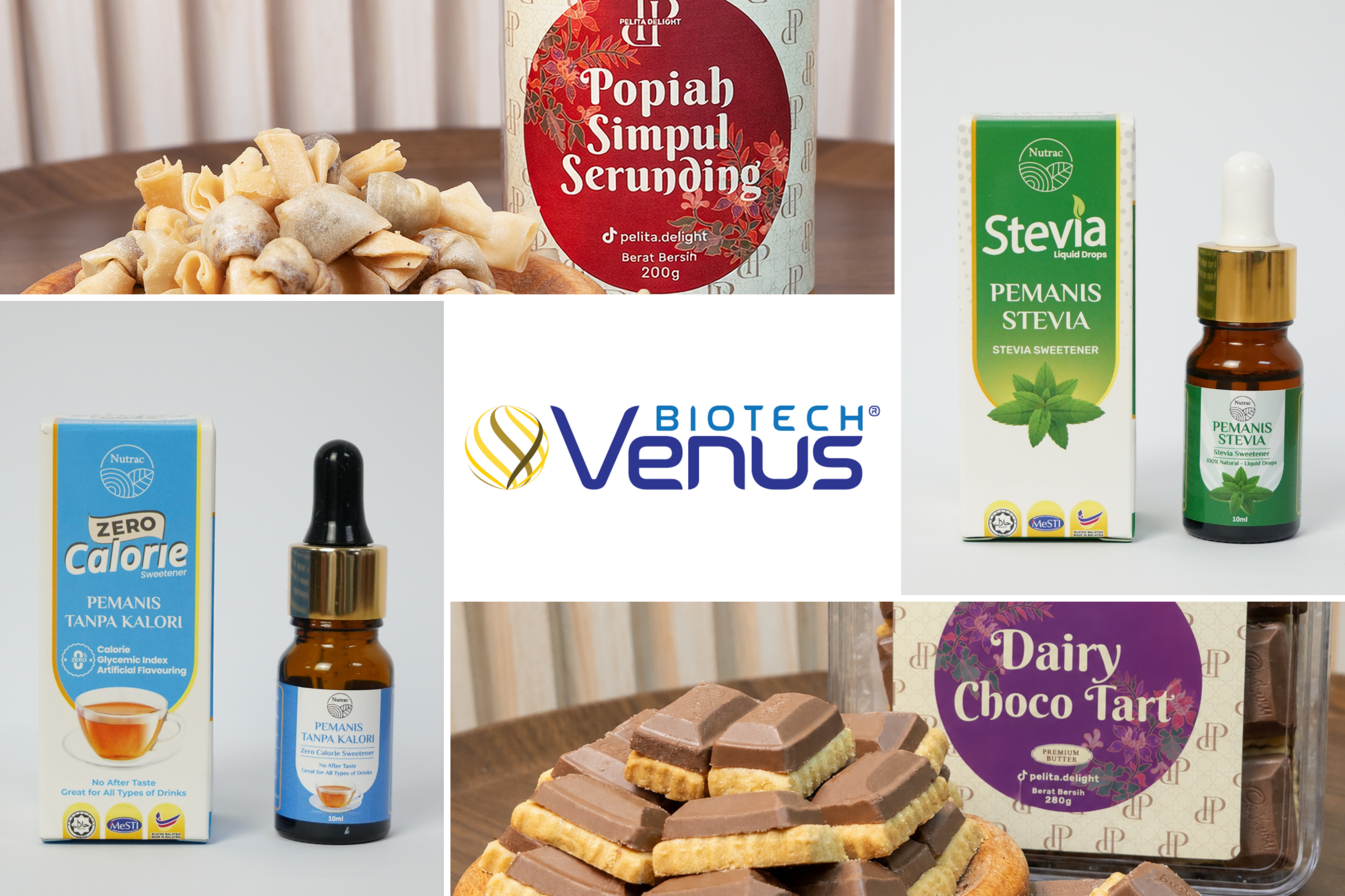
Its ingredient portfolio includes natural and artificial sweeteners, food acids, antioxidants, herbs, spices and flavour enhancers. But rather than stopping at supplying ingredients, the company also works in formulation, R&D and commercial production.
Its own product development illustrates the possibilities.
Traditional Kuih Tepung Pelita, for example, has been given a contemporary pistachio interpretation under the Rembun brand. Elsewhere, Venus Biotech works with retort technology for products such as rendang, dendeng and sambal, alongside cooking pastes, beverage syrups, biscuits, snacks and premix flours.
The objective is not innovation simply for novelty.
A product still has to taste right, remain safe, comply with requirements, survive production and ultimately make commercial sense.
And that is where the business becomes more complicated.
The Shelf Is the Final Test
There is a considerable distance between having a clever product idea and seeing it successfully sold at scale.
Ingredients need to work together. Production needs to be consistent. Shelf life matters. Food safety matters. Halal integrity matters. Packaging matters. Certification can determine whether a product is ready for the channels it hopes to enter.
For smaller food businesses in particular, navigating all of this can mean dealing with multiple suppliers, manufacturers, technical specialists and consultants.
Venus Biotech identified an opportunity to bring more of those pieces together.
Alongside manufacturing and R&D, it provides guidance on Halal and MeSTI certification, product formulation and new product development. It also conducts food-handler, Halal competency and food-technology training, including areas such as retort processing and preservation.
This integrated structure has become one of the company’s key differentiators.
It means Venus Biotech can participate much earlier in a product’s journey — potentially from the first formulation — and remain involved as it moves towards commercial production and market readiness.
Science Meets the Supermarket
Now Venus Biotech wants to push further into the consumer market itself.
Its next phase places greater emphasis on FMCG commercialisation, wider distribution and product placement across channels including hypermarkets and pharmacies, while continuing to grow its consultancy and training businesses.
That ambition changes what happens internally too.
Running manufacturing, R&D, consultancy and compliance operations simultaneously becomes increasingly complex as volumes and projects increase. Venus Biotech is therefore strengthening workflows, coordination, production capacity and operating systems as it prepares for larger-scale growth.
There are boundaries to that expansion.
The company maintains that growth cannot come at the expense of Halal integrity, food safety or consistency. Sustainability follows a similarly practical philosophy, with attention placed on production efficiency, resource management, supply-chain improvements and reducing unnecessary waste.
In other words, innovation still needs discipline.
Creating Demand, Not Just Following It
The consumer market rarely stands still long enough for businesses to become comfortable.
Tastes change. New ingredients emerge. Health considerations influence purchasing decisions. Traditional products find modern interpretations, and technology makes previously difficult products easier to manufacture and distribute.
The opportunity for Venus Biotech is to operate where those changes meet science and commercial reality.
Its future may not be defined by one breakthrough ingredient or a single blockbuster product. The bigger proposition is building an ecosystem capable of repeatedly taking ideas through formulation, compliance, manufacturing and eventually onto shelves.
Because the most interesting consumer businesses do not only ask what people are buying today.
They ask what people might be buying tomorrow — before consumers have even thought to ask for it.