Walk through a supermarket today and almost everything seems to promise something.
Natural. Wholesome. Clean. Better for you.
Turn the package around, however, and the story can become considerably more complicated.
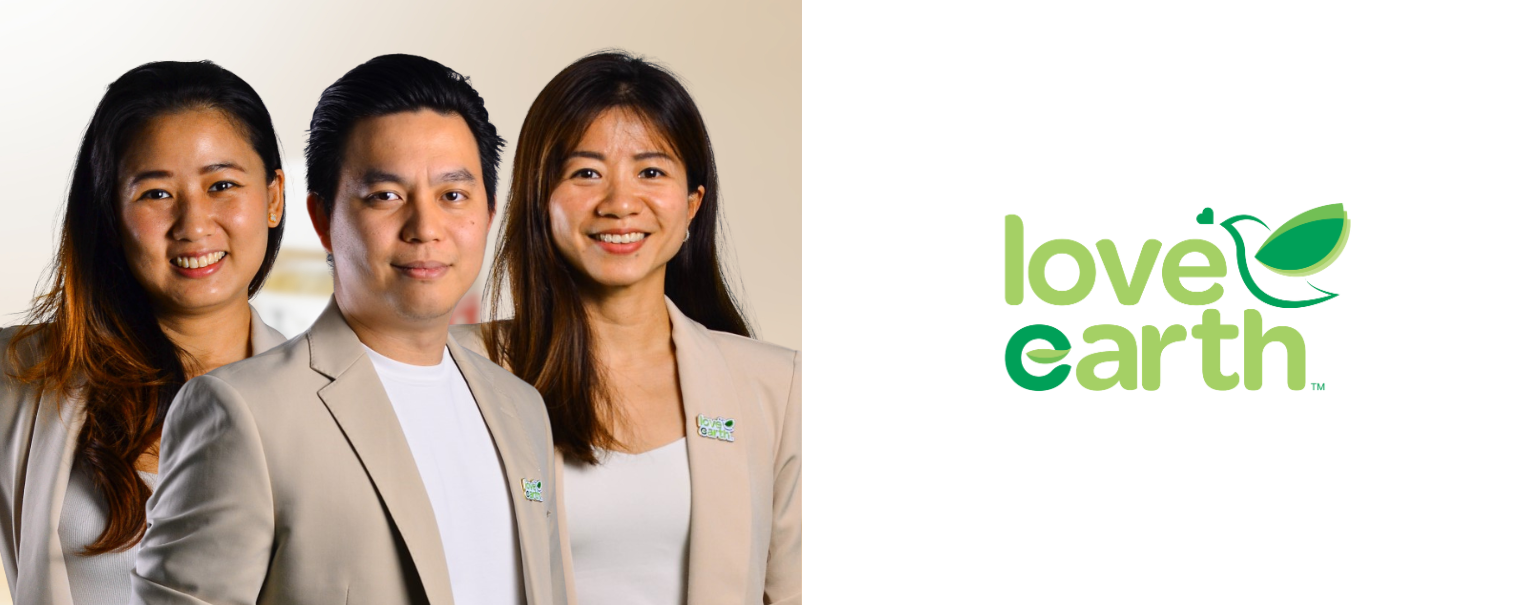
Chief of Inspirations, Chief of Creations and Chief of Growth of Love Earth Organic – Samantha Ma, Jason Leong and Natasha Mah.
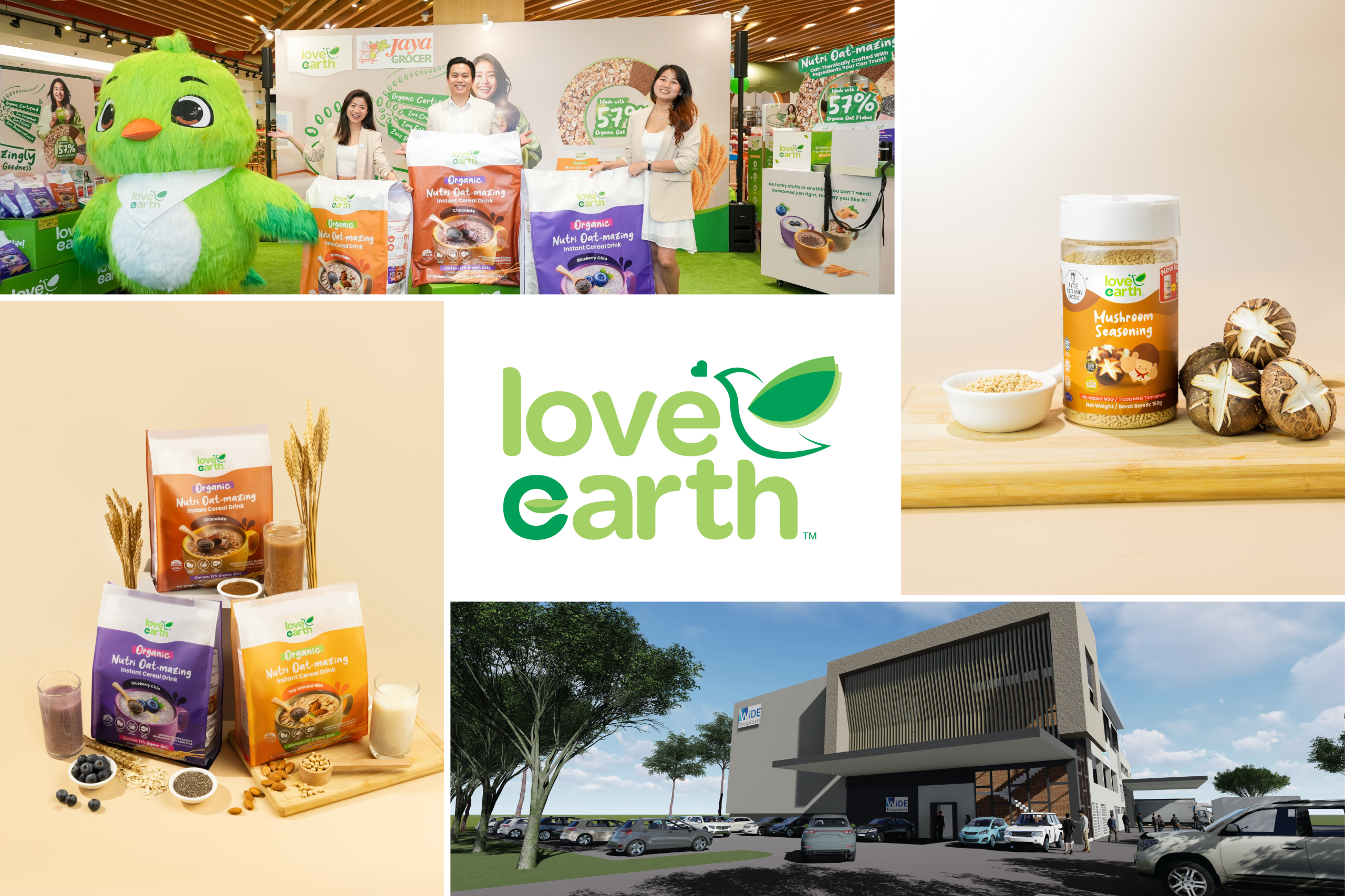
Love Earth Organic was founded in 2011 around a deceptively simple idea: eating well should not require consumers to become food scientists. Fifteen years later, that belief has grown into a Malaysian organic and natural food business with more than 180 products, 4,600 retail touchpoints and a presence in 15 countries.
Its products span superfoods, nuts, seeds, snacks, seasonings and breakfast cereals to nutrition for babies and mothers. The company says one Love Earth product is now sold every 10 seconds.
Yet the philosophy behind those numbers can be reduced to four words: “We sell what we eat.”
For Love Earth, that sentence has become less a slogan than a test.
Making Organic Ordinary
When Love Earth entered the market, organic food in Malaysia occupied a very different space.
It was expensive, relatively niche and frequently confined to specialist retailers. Healthy eating could feel less like an everyday choice than membership in an exclusive club.
Love Earth saw an opportunity not simply to sell more organic products, but to make them approachable.
The customer it had in mind was not an abstract wellness consumer. It was the working parent shopping for a family, the young couple trying to eat better, or anyone wanting cleaner ingredients without dramatically changing the way they lived—or spent.
That proposition has become more relevant as consumers pay closer attention to labels and ingredients. Awareness has increased, but Love Earth argues that information is useful only when consumers have practical alternatives they can afford and understand.
Its answer has been to bring natural and organic food closer to the everyday Malaysian pantry.
Why Control Matters
Eight years ago, the company made a decision that changed the economics—and responsibility—behind that promise: it began building its own manufacturing capability.
The logic was control.
If a brand promises consumers uncompromising quality, relying entirely on others to produce its food eventually creates a limit to how much of that promise it can personally guarantee.
Now Love Earth is taking that strategy further.
Its first owned factory in Rawang is targeted for 2027, with the company working towards production-level organic certification and greater proprietary formulation capability.
The investment is part of a broader shift towards what Love Earth describes as “depth before breadth.”
After building a portfolio across multiple food categories, the next stage is less about adding products for the sake of expansion and more about deepening the relationship consumers have with the brand.
That discipline means sometimes saying no.
Love Earth says it has rejected formulations that would have lowered costs but compromised its standards, as well as distribution opportunities that offered greater reach at the expense of its positioning.
It has consistently recorded year-on-year growth of more than 20%, but management argues that the more revealing measure is whether families continue choosing the brand.
Its five-year ambition reflects that thinking: 30 million healthier choices made.
When Founders Have to Let Go
Growth has created another challenge: how to preserve conviction when the founders can no longer personally oversee everything.
Love Earth now employs more than 130 people. Its co-founders have had to move from operators to executives, while developing a middle-management structure capable of carrying the business forward.
Processes that worked for 10 people no longer work for 50. Structures built for 50 have to change again at 130.
The company has introduced structured SOPs and quarterly OKRs, embraced AI across functions and moved towards greater employee empowerment and flexible working arrangements.
The difficult part is ensuring systems scale without allowing the original purpose to disappear inside them.
From Organic Food to Health Brand
Love Earth’s next ambition is larger than food.
It wants to become Malaysia’s most trusted health brand, building a relationship with families that extends across different stages of their wellness journey.
International expansion into Europe and the Middle East forms part of that plan, alongside B Corp certification, ISO-grade management systems and a stated goal of PLC-readiness by 2028.
These are significant ambitions for a company that began by trying to make organic food less intimidating.
But perhaps the most difficult target is also the least measurable.
Fifteen years from now, Love Earth wants consumers opening one of its products to recognise the same promise that started the company in 2011.
Because products can multiply. Factories can grow. Markets can expand.
Trust is much harder to manufacture.