ESG

ESG, News

Measures Involving Trade and ESG Must Be Fair to Developing Countries – Tengku Zafrul

KUALA LUMPUR: Malaysia believes there is a need to revisit commitments to sustainable development, efficient global recourse and fair and balanced trade among countries, said the Ministry of Investment, Trade and Industry (MITI). Its minister Tengku Datuk Seri Zafrul Abdul Aziz said countries must have shared values which will result in trade policies that can contribute to equitable and sustainable development. “However, this should not be used as non-tariff measures to restrict trade flows. The proliferation of trade-related environmental measures such as the threat of environmental, social and governance (ESG) by developed countries is among the most important aspects of international trade,” Tengku Zafrul said during a meeting at the World Economic Forum held in Riyadh, Saudi Arabia. Tengku Zafrul said the proliferation of trade-related measures has emerged as potential protectionist tools that could unfairly discourage global production and trade, particularly to developing countries. “These measures can manifest as border instruments and compliance but they will undoubtedly be complicated and perhaps too costly for most developing country exporters,” he added. Tengku Zafrul stressed that leaving the matter unattended could potentially erode developing and least developing countries’ trade competitiveness and investment attractiveness. Citing a report by the World Trade Organisation, he highlighted that environmental goods and services face an average tariff of 4.3% along with numerous non-tariff measures. “The cost of compliance, including certification, can be prohibitively expensive, especially for small and medium enterprises from developing nations. “Such barriers necessitate a collaborative approach where developed countries not only impose these standards but also facilitate the means for compliance through technical and financial support,” he added. Tengku Zafrul went on to say that in light of the complexities posed by ESG standards as non-tariff barriers and the significant need for capacity building and fair trade policies, a comprehensive approach is essential to ensure both environmental sustainability and economic justice, particularly for developing nations. “Therefore, Malaysia supports and welcomes discussions on establishing effective multilateral rules on trade and sustainable development. “Our commitment is evident through initiatives such as the New Investment Policy, New Industrial Master Plan 2023, National Energy Transition Roadmap and the ESG Industry Framework, which are all aimed at achieving sustainable economic growth,” he said. — BERNAMA

Energy & Technology, ESG

Nornickel Develops Palladium Solutions to Address Environmental Challenges

BANGKOK: Mining and smelting company Nornickel is developing innovative palladium solutions to address key climate challenges in the Asia Pacific region. The solutions include improving water treatment for over 2 billion people, facilitating the implementation of green energy projects, reducing harmful emissions and optimising the transition to biodegradable packaging. For this, Nornickel has allocated a total of US$100 million to be used for research and development of palladium applications by the end of 2030. Currently, water that has been disinfected with chlorine poses significant environmental risks in its production, transport and storage. A palladium alloy catalyst combined with electrolysis technology allows the disinfectant to be produced close to the water supply, reducing environmental risks. “Palladium is a critical mineral for the future, especially for hydrogen and solar energy projects. “Palladium-based catalysts in the hydrogen energy sector show efficiency gains at every stage of the production chain, from the extraction of hydrogen from water through electrolysis, to its transport and even in the fuel cell itself. In the solar energy industry, palladium chalcogenide can be used to make highly efficient photovoltaic (PV) cells,” said Norilsk Nickel Palladium Centre’s Head Dmity Izotov. The key raw material for the production of biodegradable packaging is currently glycolic acid, which is derived from formaldehyde, a dangerous carcinogen. The new palladium-based catalyst eliminates the need for carcinogenic formaldehyde and provides better raw material yields. Palladium technology not only helps manufacturers meet increasingly stringent environmental regulations but also reduces production costs and improves safety. “In the era of global digitalisation, technologies such as neural networks, big data analysis and machine learning play an important role in accelerating processes. Nornickel is actively using digital technologies to model and predict the structures and properties of materials. “Tight international cooperation in the development of digital technologies is needed at all levels and is crucial to accelerate the adoption of green technologies and achieve sustainable development goals. The Palladium Technology Centre is poised to act as a pilot site for testing new digital tools,” said Dmitry. Palladium is widely recognised around the world for its significant role in resolving environmental challenges. It is already being actively used in the automotive industry to develop emission control systems. Palladium is highly catalytic, hydrogen-permeable and when combined with other elements, has good optical properties. This gives palladium enormous potential to improve the performance of green technologies and make them cheaper to implement.

ESG

Yayasan Tengku Abdullah Joins Hands with FOMEMA to Gift RM300K to Aid Vulnerable Communities During Ramadan

KUALA LUMPUR: – FOMEMA Sdn Bhd, through its charity arm, Yayasan Tengku Abdullah (YTA), continues to support vulnerable members of the community, particularly those in the B40 category, with a series of charitable activities during the holy month of Ramadan. This annual ‘giving back’ initiative reflects YTA’s ongoing commitment to fostering inclusivity and solidarity among vulnerable communities with the active participation of volunteers from  FOMEMA employees, irrespective of their religious backgrounds. “As the charity arm for FOMEMA, we understand our role in identifying and supporting the local communities, especially during the festive season. “To this end, we have allocated RM300,000 towards impactful activities during the month of Ramadan for those who need it the most”, YTA chairman Tengku Shaheera Tengku Tan Sri Abdullah said in a statement. Building on this commitment, two major Iftar events were organised recently with residents of Kampung Sungai Kepong in Lanchang, Pahang, while in Kuala Lumpur, the event was attended by representatives and residents of four charity homes alongside 51 students from the Faculty of Medicine and Health Sciences, Universiti Putra Malaysia, attended the event and received aid in the form of textbooks and medical tools required for their respective courses. Both events welcomed a total of approximately 1000 members of vulnerable communities, including students, single mothers, orphans, and the elderly from underprivileged backgrounds. To further spread festive joy, duit raya and contributions amounting to approximately RM70,000 were distributed to the recipients to help alleviate their financial burden ahead of the Aidilfitri celebrations by both Tengku Shaheera and FOMEMA executive chairman Tengku Datuk Seri Abu Bakar Ahmad Tengku Tan Sri Abdullah. Additionally, throughout the month of Ramadan, donations of 650 packets of dates were distributed to charity homes and donations of necessities and Hari Raya essentials to recipients from low-income families in Klang Valley, all in the spirit of spreading happiness and the blessings of Ramadan. “These initiatives are part of continuous efforts by YTA to spread joy and much-needed support to vulnerable communities, aligning with FOMEMA’s corporate social responsibility (CSR) focus on giving back to communities and ensuring public well-being while creating meaningful bonds leading up to the festive periods”, FOMEMA chief executive officer Dr Mohd Afiq Farhan Md Hanif said.

ESG, News

Ministry and SMJ Secretariat to Discuss Measures to Tackle Hardcore Poverty in Sabah

KOTA KINABALU: The Entrepreneur and Cooperatives Development Ministry and the Sabah Maju Jaya secretariat (SMJ) will discuss interventions to address hardcore poverty in the state.   Entrepreneur and Cooperatives Development Minister Datuk Ewon Benedick, who is also the Penampang MP, said the discussion aims to formulate entrepreneurial and educational interventions to complement existing initiatives in tackling the issue. “I want to reaffirm our commitment to continue working together to develop the entrepreneurial sector through the Sabah Entrepreneurial Development Coordination Committee as envisioned by the Sabah Governor Tun Juhar Mahiruddin. “The ministry is also following through on this mandate through on this mandate alongside the Sabah Ministry of Industrial Development and Entrepreneurship for the development of micro, small and medium enterprises (MSMEs) and cooperatives in Sabah,” he said. Ewon noted the achievement of total foreign investments amounting to RM26.7 billion over the 2 years from 2021 to 2023, as well as the reduction in hardcore poverty to 12,555 households, as 2 significant accomplishments that the state should be proud of and appreciate. He also commended the Sabah government’s decision to establish a Joint Coordination Committee to coordinate relevant agencies and departments in entrepreneurship development functions between the federal and state governments to maximise economic activities in the state. Meanwhile, Datuk Dr Yusof Yacob said that dwelling on past infrastructure failures would not benefit the people of Sabah. Instead, he urged strong support for the current Sabah government led by Chief Minister Datuk Seri Hajiji Noor in its efforts to provide various infrastructures for the people and eradicate hardcore poverty in the state. “Enough of blaming each other. We should instead support and give opportunities to the state government under the Gabungan Rakyat Sabah (GRS) and Sabah Pakatan Harapan (PH) to solve the state’s issues,” he said. Yusof urged the people to give time and understand the state government’s intentions in addressing existing problems, particularly those concerning water, electricity and roads. — BERNAMA

ESG, News

1 Utama Becomes Mall With Biggest On-Site Solar PV Panels in Malaysia

KUALA LUMPUR: Bandar Utama City Centre Sdn Bhd, operator of 1 Utama Shopping Centre has appointed Solarvest Energy Sdn Bhd to install 273,300 sq ft of solar photovoltaic (PV) panels and building-integrated PV (BIPV) panels on the mall. The panels will cover the rooftop of the building and the carpark to generate over 5,700 kWp of renewable energy, making it the largest on-site solar PV and BIPV project in Malaysia to date. Solarvest will undertake the engineering, procurement, construction and commission works for installing the solar power system and the installation is nearing completion. “Being the first green mall in Malaysia since 1995, we recognise the important role we play in promoting sustainable practices, managing environmental impact and investing in impactful long-term solutions for a circular economy and climate mitigation,” said 1 Utama Shopping Centre Public Relations and Sustainability Senior Manager, Lee Li Lian. He also mentioned that the mall had always set new standards in integrating green features and eco-campaigns, with its award-winning rainforest enclave that features 100 species of forest trees and the mall’s rooftop Secret Garden, which is the largest in Southeast Asia. “We are proud to be adopting solar energy and innovative green technology to further reduce our carbon footprint. This is a step forward for 1 Utama to achieve our ESG and Zero Energy building goals,” he added. With shopping malls being energy-intensive in terms of lighting and air conditioning, Lee said that the solar power system would help the mall conserve electricity usage and reduce reliance on fossil fuels. As part of its environmental, social and governance (ESG) goals, 1 Utama plans to earn the GreenRE Super Low Energy Building Certification by next year and achieve full ESG compliance while implementing International Labour Organisation (ILO) 2019 standards throughout its supply chain. Meanwhile, Solarvest Executive Director and Group Chief Executive Officer of Solarvest, Davis Chong Chun Shiong revealed that Solarvest’s tender book in Malaysia grew from 1.6 gigawatts (GW) last year to 2.8GW this year.

ESG

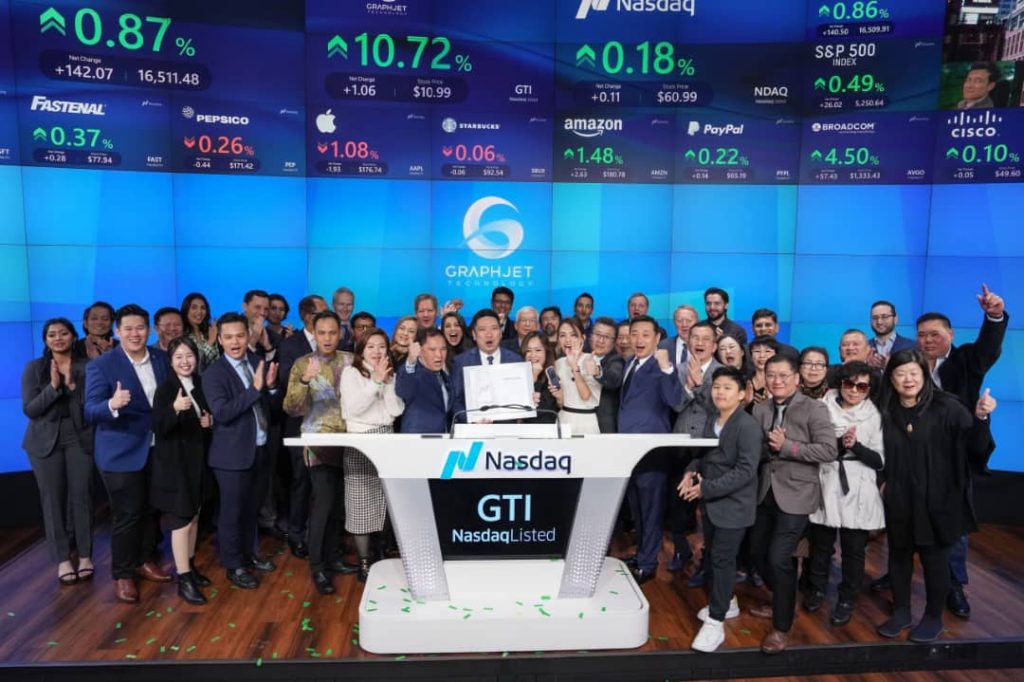
Graphjet Technology Celebrates NASDAQ Bell-Ringing, Highlighting Progress In Sustainable Graphite Production.

KUALA LUMPUR: Graphjet Technology Sdn Bhd (GTSB), a leader in sustainable graphite and graphene production, has made significant milestones with a bell-ringing ceremony at the NASDAQ stock exchange. This ceremonial event symbolises the successful listing of GTSB’s ordinary shares under the ticker symbol GTI, which began trading on March 15, 2024. The bell-ringing ceremony, a time-honoured tradition on Wall Street, was led by GTSB co-founder and chief executive officer Aiden Lee Ping Wei, along with chairman Lim Hooi Beng, executive director Jay Aw, chief technology officer Liu Yu and other key members of the company’s management team. This momentous occasion was celebrated with the participation of esteemed guests, including business partners, investors, and representatives from the Malaysian government. “Ringing the NASDAQ bell is a proud moment for all of us at GTSB. It signifies the culmination of more than two years of hard work and dedication by our team,” said Aiden Lee in a statement. “As we step into this new chapter as a publicly traded company, we are more committed than ever to leading the way in green graphite production and contributing to a sustainable future,” he said. GTSB’s innovative approach to producing graphite and graphene from agricultural waste has set a new standard in the industry. With a production process that reduces the carbon footprint by up to 83% and costs by up to 80 per cent compared to traditional methods, GTSB is well-positioned to meet the growing demand for these critical materials, especially in the United States market. The company’s recent NASDAQ listing will further bolster its growth strategy and manufacturing capacity expansion. GTSB is dedicated to delivering shareholder value through groundbreaking technologies and sustainable business practices. The company’s vision of driving innovation across multiple industries with its sustainably produced graphite and graphene is now more attainable than ever, thanks to the global visibility and strong platform provided by its NASDAQ listing.

ESG

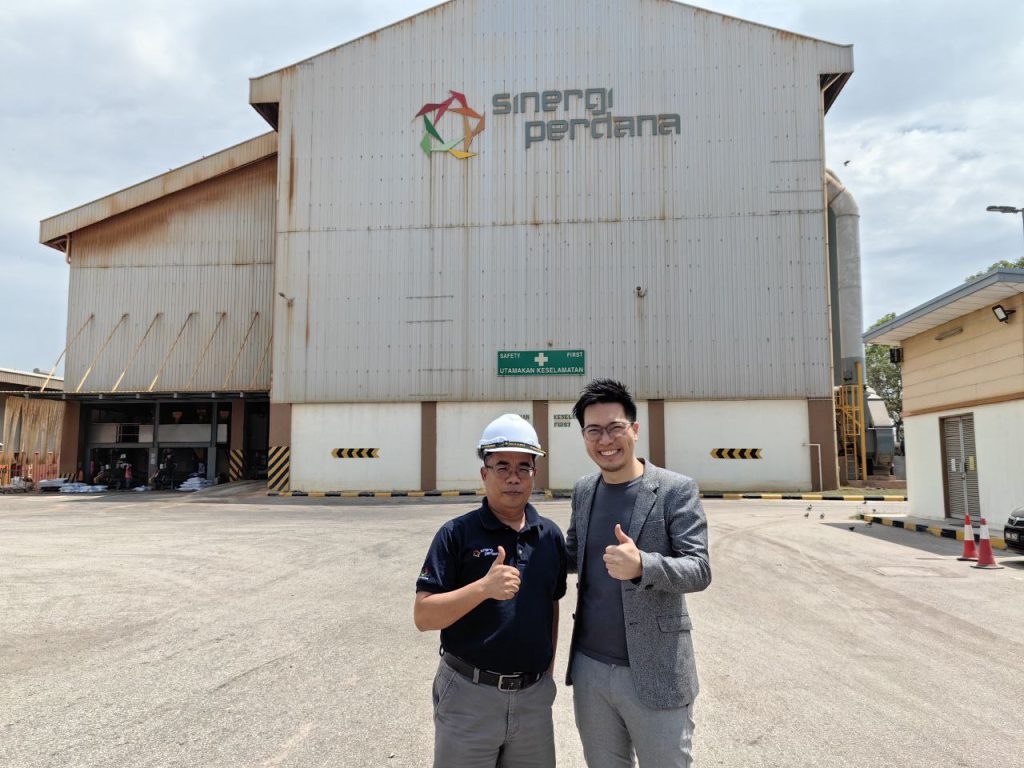
Meta Bright Starts Commercial Operation Of Solar Project For Sinergi Perdana

KUALA LUMPUR: Meta Bright Group Bhd (MBGB) has achieved its commercial operation date (COD) for its solar project under the solar photovoltaic (PV) zero capex program for Sinergi Perdana Sdn Bhd (SPSB) on March 21, 2024. SPSB is owned by the Rubber Industry Smallholders Development Authority (RISDA), which is part of the Ministry of Rural and Regional Development. The solar project, developed by MBGB’s wholly-owned subsidiary FBO Land (Setapak) Sdn Bhd (FLSB), has a capacity of up to 401.76 kWp. MBGB executive director of corporate and strategic planning Derek Phang Kiew Lim said the successful completion of installation for the solar project with SPSB marks a significant milestone in the company’s journey towards sustainability. “This project not only exemplifies our commitment to renewable energy but also aligns with the government’s initiatives to promote clean energy solutions. “We are excited about the positive impact this project will have on our earnings and the environment,” he said in a statement. This initiative is part of a 21-year renewable energy supply agreement, offering SPSB a 20 per cent discount to the prevailing Tenaga Nasional Bhd (TNB) tariff rates, equipped with imbalance cost pass-through (ICPT). Further, this project is estimated to mitigate approximately 380.81 tonnes of CO2 emissions annually, thus contributing significantly to environmental sustainability by reducing carbon footprints, combating climate change and promoting cleaner energy alternatives. In addition to the successful installation of the Sinergi Perdana project, MBGB is actively pursuing new opportunities in the renewable energy sector. The company is currently exploring projects in the Commercial & Industry (“C&I”) segment worth approximately RM34.7 million. MBGB stated that the total value of projects that have completed installation stands at approximately RM3.55 million. Additionally, the company has projects currently in progress valued at around RM11.89 million. The commercial operation of this project is expected to provide MBGB with sustainable earnings income, contributing positively to the company’s long-term financial stability. Furthermore, the project is projected to mitigate a significant amount of CO2 emissions, reinforcing the company’s dedication to clean energy and a greener, sustainable future. The solar program’s acceptance by SPSB is a testament to the trust placed in MBGB’s ability to deliver mutually beneficial and sustainable renewable energy solutions. The company is optimistic about expanding participation in its solar PV zero capex program with other Malaysian enterprises, demonstrating its capability to contribute to sound environmental, social, and governance (ESG) practices.

ESG

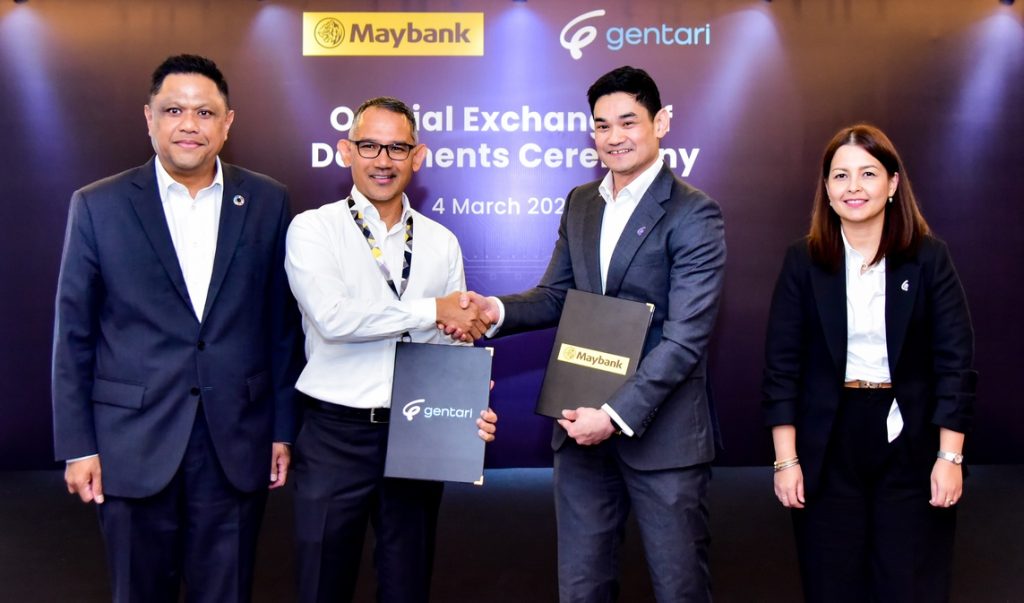
Maybank, Gentari Collaborate To Empower Sustainability Journey

KUALA LUMPUR: Malayan Banking Bhd (Maybank) and clean energy company Gentari Sdn Bhd signed a memorandum of understanding (MoU) to collaborate and explore green mobility and renewable energy solutions. This marks Gentari’s first collaboration with a financial institution, signifying an aligned commitment with Maybank to drive the adoption of sustainable solutions in the market. The collaboration will further strengthen Maybank’s sustainability goals, aiming to achieve a carbon-neutral position of emissions by 2030 and a net zero carbon equivalent position by 2050. Maybank community financial services group chief executive officer Syed Ahmad Taufik Albar said the bank is committed to becoming the sustainability leader in Southeast Asia, driven by sustainable financing and a crucial agent for low-carbon initiatives. He said Maybank’s focus on delivering value-based solutions grounded in sustainable and ethical principles while meeting the market’s growing demand for eco-conscious practices. “We offer comprehensive solutions in green mobility and renewable energy. “Embracing our purpose of humanising financial services, we support our customers with a complete ecosystem: best-in-class, value-based offerings that are both within and beyond traditional banking,” said Taufik Albar in a statement. As of December 2023, Maybank has surpassed its sustainable financing targets, mobilising RM34 billion for the year, well ahead of its 2023 target of RM16 billion, with a cumulative achievement of over RM68 billion, against the targeted RM80 billion by 2025. The strategic partnership marks a significant milestone, harnessing Gentari’s well-established expertise in the green mobility and renewable energy sector and underscoring Maybank’s commitment to championing sustainable practices and innovative solutions. With Gentari as the clean energy solutions partner in this journey, Maybank is installing charging points for electric vehicles (EV) and hybrid vehicles at its network of premises and branches nationwide, beginning with ten strategically chosen locations. Having the widest network of direct current (DC) fast chargers in Malaysia, Gentari offers EV and hybrid vehicle owners in Malaysia access to over 335 charging points, including more than 100 DC fast chargers, which enable rapid charging for EV and Hybrid vehicles. This collaboration will extend Maybank Islamic’s InCharge pre-credits to include Gentari’s charging stations, giving customers more access and benefits. Maybank Islamic InCharge is an EV pre-credit incentive programme for EV and hybrid vehicle owners with Maybank Islamic Auto financing with credits useable at selected charging stations. Meanwhile, Maybank’s small and medium enterprises (SMEs) customers will have access to consultancy and advisory services facilitation with Gentari as the clean energy industry expert in Maybank’s myimpact SME Hub. Other areas of collaboration include cross-branding and marketing efforts of the entire suite of Maybank product offerings, including financing, insurance and takaful, card partnerships and others, leveraging on Maybank’s financial offerings and digital platforms with Gentari’s expertise and facilities. “A just energy transition requires diverse stakeholders to unite to make clean energy more accessible, sustainable and affordable. “This collaboration unites Maybank’s suite of financing and insurance solutions with Gentari’s green mobility and renewable energy offerings, marking the collaboration between like-minded partners dedicated to making the shift towards a sustainable lifestyle attainable,” Gentari deputy chief executive officer Shah Yang Razalli, also the chief executive officer of Gentari Green Mobility. The exchange between Maybank and Gentari occurred in a closed-door ceremony attended by the senior management of both companies. The partnership aims to create greater awareness and more opportunities for individuals and businesses to make a positive impact through sustainable choices and contribute meaningfully to a better tomorrow.

ESG

PNSB, IJM and LSH Collaborate To Transform Selangor’s Economy With Cohesive ESG Infrastructure Initiatives

KUALA LUMPUR: Permodalan Negeri Selangor Bhd (PNSB), IJM Corporation Bhd (IJM Corp) and Lim Seong Hai Capital Bhd (LSH) signed a strategic collaboration targeted at transforming the road transportation infrastructure in the southern districts of Selangor. Leveraging the combined strengths of PNSB, IJM Corp, and LSH, PNSB will take the lead in planning, land management and project oversight, showcasing its commitment to Selangor’s strategic ambitions, while LSH and IJM Corp’s industry expertise will ensure effective execution and delivery. This initiative is focused on the Southern Selangor Integrated Regional Development (IDRISS). IDRISS aims to harness the economic potential of the Sepang and Kuala Langat districts and is expected to significantly contribute to Selangor’s development as a key hub for regional trade and investment. Development projects within IDRISS cover a wide range of sectors, including industrial, logistics, warehousing, ports, commerce, housing, tourism and education. PNSB chief executive officer Raja Ahmad Shahrir Iskandar Raja Salim said this partnership underscores the agency’s commitment to harnessing the economic potential of Southern Selangor. “Leveraging PNSB’s extensive experience and deep understanding of the state’s local development needs, alongside the collective strengths of LSH and IJM Corp, we aim to create a robust infrastructure that supports our long-term vision for the region’s growth and development while incorporating sustainable elements within an environmental, social and governance (ESG) framework,” he said in a statement. An intent to collaborate agreement was signed between the three parties, signifying a unified commitment to this vision. The collaboration will study various viable connectivity routes and plans to introduce key transportation links. These efforts aim to improve connectivity, reduce travel time and create new development corridors. The initiative seeks to invigorate local economies by bolstering Selangor’s logistics and transport efficiency and providing better access to markets, services, and employment opportunities. In addition to immediate infrastructure enhancements, the projects will incorporate nature-positive infrastructure, including renewable energy, energy-efficient designs, sponge city planning model for flood mitigation and rehabilitation of mangrove forests, supporting Southern Selangor’s sustainable development. IJM Corp group chief executive officer and managing director Lee Chun Fai said the company’s involvement in this initiative draws upon its core expertise in construction and infrastructure development to support Selangor’s growth. “We aim to meet the state’s immediate and future infrastructure needs, ensuring long-term benefits. “Our approach is pragmatic, focused on the well-being of the community and sustainable regional development,” he said. LSH non-executive chairman Tan Sri Lim Keng Cheng said the company is excited to join forces with PNSB and IJM Corp on this strategic venture. “Our combined expertise in capital management and infrastructure development will ensure the successful realisation of the IDRISS initiative. “This collaboration aims to elevate Selangor’s transportation infrastructure, becoming the backbone of the region’s economic growth,” he said. This collaboration also represents a crucial step toward improving infrastructure connectivity and enhancing the economic landscape of Selangor’s southern districts. It seeks to create a vibrant ecosystem conducive to business and investment, signalling a brighter outlook for the state.

ESG

Nestlé Malaysia Starts New biomass Boiler For Its Industrial Complex In Chembong

KUALA LUMPUR: Nestlé Malaysia Bhd is further reducing its carbon footprint with the operation of its new biomass boiler at its Chembong factory in Rembau, Negeri Sembilan, reflecting the company’s strong environmental, social and governance (ESG) commitment. The biomass boiler started operations at the Chembong factory at the end of 2023 and uses oil palm empty fruit bunches (EFB) and palm kernel shells as renewable energy sources. It replaces fossil fuels to generate steam for heating processes in its manufacturing operations. This approach is part of a natural carbon cycle and does not contribute to long-term carbon emissions, making it carbon neutral. This innovative solution significantly reduces net CO2 emissions compared to fossil fuels, and it also aids in the reduction of other greenhouse gases. It is projected to significantly decrease the factory’s greenhouse gas emissions by 14,000 tonnes of CO2e annually while simultaneously minimising pollution, reducing landfill waste, and preserving valuable natural resources. Costing RM18 million to install, the biomass boiler was developed and installed by technology partner Enco Systems Sdn Bhd, a total boiler solutions provider. Officiating the biomass boiler at the factory, Negeri Sembilan chief minister Datuk Seri Utama Aminuddin Harun said driving meaningful change and sustainable development requires a collective effort, with the public and private sectors playing a role. “As such, I laud forward-thinking companies such as Nestlé Malaysia that are going the extra mile to champion sustainability in their business by taking proactive measures to minimise their carbon footprint. “This aligns with the state government’s shared values of environmental stewardship and responsible economic growth,” he said. Established in 1993 and expanded in 2019 to meet growing local and regional demand, the Chembong factory is Nestlé Malaysia’s largest Milo plant in the world. Over the past three decades, the factory has given rise to job creation, economic opportunities and community engagement. With a fully Malaysian manufacturing workforce, it is also an important production centre for other key brands such as Kit Kat, Nestlé Ice Cream and Koko Krunch. All products are halal-certified and made in Malaysia for local and global consumption, exporting to more than 20 countries worldwide. Nestlé Malaysia chief executive officer Juan Aranols said the company celebrates a 30-year journey of its Chembong factory with the official launch of this important sustainability investment. “This initiative enables us to make significant progress towards our environmental goals, namely the reduction of our carbon footprint as a responsible manufacturer and also allows us to impact the Chembong community and honour our environmental commitment positively. “It also serves as a testament to our dedication to producing high-quality products made in Malaysia by Malaysians,” he said. Aranols said that Milo is taking further strides towards a more sustainable future by adopting a biomass boiler and using renewable electricity. “Milo’s colour is green, and we are making Milo even greener for the planet and all Malaysians, with the adoption of cleaner technologies that complement further the move to renewable electricity implemented in 2022,” Aranols said

Scroll to Top

Subscribe
FREE Newsletter