Investment & Market Trends

Investment & Market Trends

Axis REIT To Pursue More Industrial Property Acquisitions In 2026

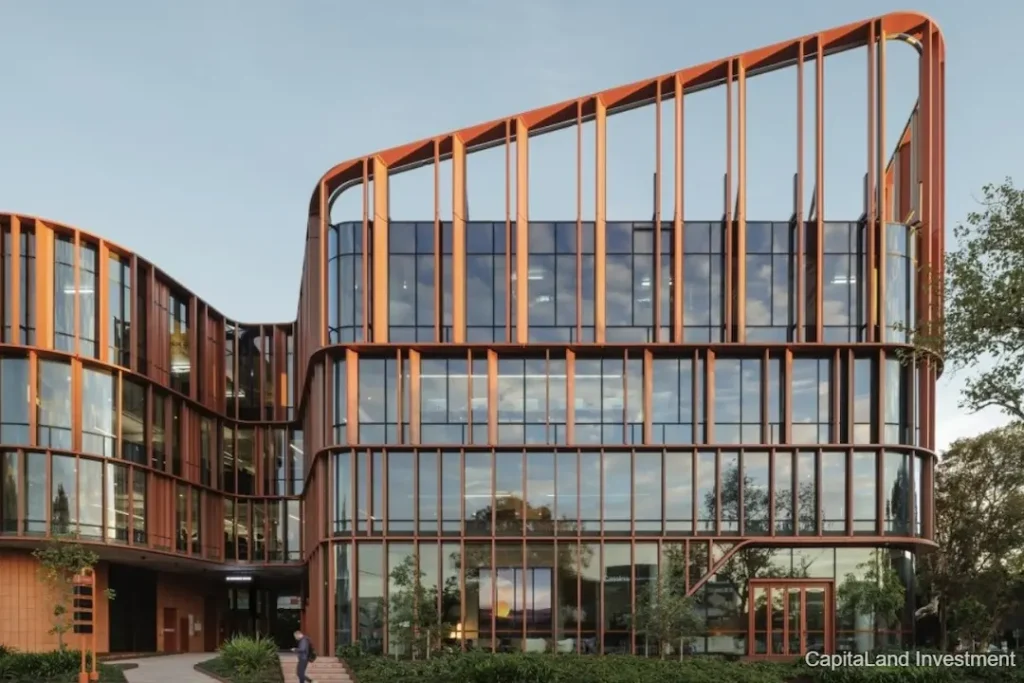
Axis Real Estate Investment Trust (Axis REIT) is looking to ramp up asset acquisitions in 2026, with a continued focus on industrial properties. Axis REIT Managers Bhd chief executive officer and executive director Leong Kit May said the approach follows the trust’s 2025 strategy, which targeted up to four industrial assets, mainly in Penang, Johor and the Klang Valley. Axis REIT Managers Bhd chief executive officer and executive director Leong Kit May (right). She said the trust believes up to four industrial acquisitions could potentially be completed in 2026, adding that Axis REIT remains open to further opportunities as the year progresses, with more guidance to be provided when plans are more certain. According to its presentation, Axis REIT completed the acquisition of an industrial facility in Northport, Port Klang, on Jan 27 for RM50 million. The trust is also planning to acquire an RM80 million warehouse in Telok Gong, Port Klang, which is expected to be completed in the fourth quarter of 2026. Further acquisitions are lined up, including industrial buildings in Seberang Perai, Penang, and an industrial facility in Senai, Johor. These are expected to be completed in the second quarter of 2027 and the fourth quarter of 2027, respectively. Leong said both the broader REIT market and Axis REIT are expected to maintain a positive outlook heading into 2026. Meanwhile, Axis REIT reported a strong financial performance for the fourth quarter ended Dec 31, 2025, with net profit rising to RM133.87 million from RM91.01 million a year earlier, supported by resilient net property income. Quarterly revenue increased four per cent to RM91.31 million from RM87.76 million previously. For the full year, net profit climbed to RM282.08 million from RM210.01 million, while revenue grew to RM364.2 million from RM320.1 million. The trust also declared a distribution of 2.75 sen per unit for the quarter, bringing total distributions for the financial year to 10.55 sen, up from 9.27 sen a year earlier.

Investment & Market Trends

OCK Group Expands Portfolio With Fujikura WTC Solutions

OCK Group Bhd has signed a distributorship agreement with Japan-based Fujikura Ltd to distribute the company’s wrapping tube cable (WTC) series. Fujikura is a global provider of high-performance fibre optic cables, accessories, and integrated systems that support reliable, high-speed data transmission for telecommunications operators, data centres, and smart city projects worldwide. OCK said the collaboration aligns with its ongoing commitment to support Malaysia’s accelerating fibre rollout and network upgrading initiatives. According to OCK, a regional towerco and telecommunication network solutions provider, the distribution agreement will take effect from January 2026 and remain valid until December 2026. Under the agreement, OCK will distribute Fujikura’s WTC solutions along with a wide range of related accessories, allowing the group to strengthen its supply chain capabilities and expand its product offerings across its various business segments. Fujikura will retain the right to update product specifications and introduce new products, ensuring that OCK has access to the latest technological advancements from one of the leading fibre optic manufacturers. The collaboration supports OCK’s commitment to Malaysia’s accelerating fibre rollout and network upgrade initiatives. “With growing demand for high-performance fibre infrastructure driven by smart cities, data centres, artificial intelligence adoption, enterprise digitalisation, and 5G implementation, Fujikura’s optical cable solutions enhance our value proposition as a comprehensive digital and telecommunication solutions provider,” the group said.

Investment & Market Trends

LG Electronics Expands Local Manufacturing In India

LG Electronics has secured a 15-year incentive package worth 7.06 billion rupees (about US$76.3 million) from the Maharashtra state government, effectively offsetting the full cost of expanding its Pune manufacturing facility and lowering fixed costs at one of its key overseas production hubs. The incentive package, approved earlier this month and disclosed by LG Electronics India on Monday, covers investments made between November 2017 and October 2024 to expand the Pune plant, a core manufacturing base for the company in India. The deal strengthens LG’s cost base in India at a time when the company is tightening its focus on operational efficiency and margin discipline across global operations.  The incentives will be applied over 15 years through 2040 and include refunds on state goods and services tax for locally sold products, electricity subsidies, waivers on property and stamp duties, and partial reimbursement of employer contributions to India’s Employee Provident Fund. The agreement strengthens LG’s cost structure in India as the company sharpens its focus on operational efficiency and margin discipline across global operations. While LG posted record annual revenue of 89.2 trillion won (about US$61.8 billion) last year, profitability came under pressure in the fourth quarter amid softer demand and heightened competition in televisions and display products. In response, the company has identified cost control and localisation as key drivers of its next phase of growth. By reducing long-term manufacturing and operating costs in India — one of LG’s fastest-growing and most strategic markets — the incentive package enhances resilience against pricing pressure while supporting scalable production. “This certification provides a strong foundation for LG Electronics’ continued growth in India,” said Atul Khanna, chief accounting officer of LG Electronics India, in the company’s disclosure. The Pune facility manufactures televisions and air conditioners for the Indian market and selected export destinations. LG also operates a plant in Noida, near New Delhi, producing refrigerators and washing machines. Together, these two plants anchor LG’s India operations, supported by local research and development as well as a nationwide network of more than 700 brand shops and 900 service centres. LG is further expanding its local footprint with a third factory under construction in Sri City, Andhra Pradesh. Backed by a US$600 million investment, the plant is expected to begin air-conditioner production later this year, with phased expansion into refrigerators, washing machines and air-conditioner compressors through 2029.

Investment & Market Trends

Omesti Secures Mara Institutions Network Connectivity Deal

Omesti Bhd has secured a contract worth up to RM43.1 million to provide WiFi network services at education institutions under Majlis Amanah Rakyat (Mara). The ICT firm’s subsidiary, Ohana Communications Sdn Bhd, was appointed as the universal service provider for Mara education institutions by the Malaysian Communications and Multimedia Commission (MCMC) under the Universal Service Provision initiative, according to a Bursa filing on Tuesday. Under the contract, Ohana Communications will install and upgrade WiFi network facilities at the institutions, and provide warranty and support services for 44 months. The MCMC’s Universal Service Provision initiative seeks to bridge the digital divide by extending telecommunications and digital communication services to underserved areas. Citaglobal Bhd received a similar appointment under the initiative, covering network facilities for public higher education institutions, polytechnics, community colleges, and institutions under the Human Resources Ministry. Omesti shares ended unchanged at 8.5 sen on Tuesday, giving the company a market value of RM186.44 million.

Investment & Market Trends

IOI Properties REIT IPO Could Drive Gains

IOI Properties Group Bhd’s upcoming real estate investment trust (REIT) listing could act as a catalyst for further share price gains, despite the stock rising 17% year-to-date. The group plans two REIT listings in Malaysia and Singapore, with the Malaysian listing targeted for June 2026, according to UOB Kay Hian Research. Using a sum-of-the-parts framework, the research house estimates an additional 9% to 16% upside for IOI Properties’ share price, supported by continued yield compression among prime REITs in Malaysia. “Our calculation assumes an asset value of RM7 billion and a target valuation of 1.5 times price-to-book (P/B) for the REIT, in line with peers with prime retail assets, alongside a retained stake of 60% to 70%,” the report said. Post-listing, IOI Properties’ net gearing is expected to improve to 0.91–0.94 times from 0.97 times as of end-Q1 FY26, while implied FY26 P/B rises to 0.9 times from 0.7 times. UOB Kay Hian has set a RM3.50 target price for the stock. Hong Leong Investment Bank takes a more bullish view, assigning a RM4.15 target price, citing the group’s diversified presence across Malaysia, Singapore and China. A dealer noted the recent rally reflects growing market recognition of IOI Properties’ expanding recurring income base and longer-term REIT monetisation potential. “Over the past year, shares have gained 50% as investors re-rate the stock on strong overseas earnings momentum and expanding recurring income,” he said. At the time of writing, IOI Properties was trading around RM3.10 per share.

Investment & Market Trends

Anta Sports Buys 29% Of Puma For US$1.8b

Anta Sports Products Ltd announced on Tuesday that it has signed a share purchase agreement with Groupe Artémis, the investment firm of the Pinault family, to acquire a 29.06% stake in Puma SE, the global sportswear brand behind Puma. The deal, valued at €1.5 billion (US$1.78 billion), represents a major step in Anta Sports’ strategy to expand its global presence in the sporting goods market. The transaction, expected to close by the end of the year, is subject to regulatory approvals and customary closing conditions. Anta said the acquisition will be fully funded through its internal cash reserves. People walk past an Anta store in the Huangpu district of Shanghai on January 27, 2026. Chinese athletic goods giant Anta Sports will buy a controlling stake in historic German sportswear brand Puma for 1.79 billion USD, a stock exchange filing showed, as it expands its international presence. Anta chairman Ding Shizhon said the deal makes Anta Sports Puma’s largest shareholder and aligns with the company’s “single-focus, multi-brand, globalization” strategy. “Puma’s iconic status and rich heritage provide a strong foundation for growth. This investment will help unlock the brand’s full potential and drive further global expansion, particularly in China,” Ding added. He noted that Anta remains confident in Puma’s management and strategic direction. “Our goal is to build a strong, trust-based partnership while maintaining Puma’s operational independence,” he said. As part of the acquisition, Anta will seek representation on Puma’s supervisory board to ensure alignment with both shareholders and employee representatives. Anta confirmed it has no immediate plans for a full takeover and remains committed to respecting Puma’s independent governance and corporate culture as a listed German company.

Investment & Market Trends

Greentronics Expands Into Thai Digital Insurance Market

Greentronics Technology Bhd’s fleet management-focused subsidiary, Mpire Mobility Sdn Bhd, has formed a strategic partnership with Thai Paiboon Insurance Public Company Limited (TPB) to tap into rising cross-border travel between Malaysia and Thailand. In a statement, the group — which operates across property development and construction, fleet management and financing services — said the collaboration aims to introduce digital insurance solutions for Malaysian motorists travelling to Thailand. Greentronics Technology Bhd executive chairman Datuk Billy Goh Soo Wee (left) and Thai Paiboon Insurance Public Company Limited managing director Eugene Foong (right). TPB is a leading general insurer for Malaysian vehicles entering southern Thailand and holds the largest portfolio in this segment. Under the partnership, TPB’s Malaysian customers will gain access to Mpire Mobility’s one-stop automotive service, repair and maintenance platform, which connects vehicle owners directly to authorised workshops for servicing and repair. Greentronics executive chairman Datuk Billy Goh Soo Wee said the partnership marks a significant milestone for both Mpire Mobility and the group, as it enters Thailand’s digital insurance market. “Through this collaboration, we will continue to expand the Mpire Mobility business while capitalising on growing Malaysia-Thailand cross-border travel,” he said. Since its launch in 2024, Mpire Mobility has installed telematics systems in more than 1,000 vehicles and onboarded over 10,000 users onto its Jom MyServis ecosystem, he added. Meanwhile, TPB managing director Eugene Foong said the partnership underscores the insurer’s commitment to enhancing customer protection through digital innovation and practical cross-border solutions. By working with Mpire Mobility, TPB is able to extend its insurance services beyond national borders, offering Malaysian motorists travelling in Thailand greater clarity, confidence and support in the event of an accident. He added that the integration of digital platforms and coordinated aftersales processes will improve communication, streamline claims handling and deliver a more seamless customer experience.

Investment & Market Trends

Prudential To Boost Stake In Malaysian Life Insurer To 70% For RM1.52b

British insurer Prudential announced on Thursday that it has agreed to acquire an additional 19% stake in Sri Han Suria, the holding company that owns Prudential Assurance Malaysia, for approximately RM1.52 billion. The acquisition will raise Prudential’s ownership of its conventional life insurance business in Malaysia to 70%, strengthening the group’s control and strategic presence in the country. The move follows a “full and final settlement” reached in July 2025 over a dividend claim filed by Detik Ria, the minority shareholder in Sri Han Suria, which had been the subject of a long-running dispute. The additional stake will be purchased through Prudential Corporation Holdings, a wholly-owned subsidiary of Prudential, directly from Detik Ria. The transaction has received approval from Malaysia’s central bank, Bank Negara Malaysia, and completion is expected shortly. Prudential Assurance Malaysia (PAMB), together with Prudential’s interest in the shariah-compliant business of Prudential BSN Takaful Bhd, constitute Prudential’s Malaysian life insurance operations. The increased ownership underscores Prudential’s long-term commitment to Malaysia and reflects the company’s confidence in the country’s growth prospects, said Anil Wadhwani, Prudential’s Chief Executive. “Increasing our ownership of PAMB reflects our deep commitment to Malaysia and our confidence in its future,” Wadhwani said in a statement. Following the completion of this transaction, Prudential has also agreed to cooperate with Detik Ria regarding a potential sale of the remaining 30% stake in Sri Han Suria. Should Detik Ria decide to divest its remaining shares, Prudential will work with them to facilitate a sale to one or more mutually agreed third parties. The acquisition consolidates Prudential’s position in the Malaysian life insurance market and is expected to enhance operational efficiency, governance, and strategic decision-making within its Malaysian operations, further strengthening the group’s footprint in the region.

Investment & Market Trends

No GST For Now, SST Will Continue – Finance Ministry

The government has no immediate plans to reintroduce the Goods and Services Tax (GST), the Dewan Rakyat was informed on Friday (Jan 23). In a written reply, the Finance Ministry acknowledged the potential benefits of the GST but explained that the Sales and Services Tax (SST), which is currently in place, provides a faster and more direct financial impact for the government. “As highlighted previously by the Prime Minister, the government does not intend to implement the GST at this time. This decision takes into account various factors that require careful consideration, including the disposable income of Malaysians and the overall cost of living,” the ministry said. The ministry emphasised that the SST will be retained and further enhanced. Noting its long-standing role in the country, the ministry highlighted that the SST has been used in Malaysia for more than four decades and remains an effective taxation mechanism. Additionally, the ministry pointed out that reintroducing the GST would involve a significant preparation period of up to two years. This would allow businesses sufficient time to upgrade and adapt their systems to comply with the new tax requirements. The response was made in reply to a question from Datuk Ku Abd Rahman Ku Ismail (PN-Kubang Pasu), who inquired whether the government intended to reintroduce the GST, noting that many financial experts consider it a more comprehensive and efficient taxation system compared to the SST. The ministry’s statement underscores the government’s cautious approach toward any major tax reforms, balancing revenue considerations with the economic impact on households and businesses. While the GST remains a potential option in the future, the SST continues to serve as the primary indirect tax mechanism for Malaysia at present.

Investment & Market Trends

TikTok To Form US Joint Venture With Oracle, Silver Lake

TikTok and its parent company ByteDance have officially set up a new US-based venture to transfer part of TikTok’s operations to non-Chinese owners, securing the app’s continued presence in the United States and avoiding a potential nationwide ban. Under the agreement, first announced in September by the Trump administration, certain parts of TikTok will be spun off into a new US entity managed by three investors: Oracle Corp., private equity firm Silver Lake Management LLC, and Abu Dhabi’s MGX. The deal ends a years-long geopolitical and regulatory standoff that threatened to shutter TikTok in the US over national security concerns. In 2024, Congress passed legislation to ban the app unless ByteDance sold TikTok, citing fears that the Chinese government could access US user data or influence content. TikTok has consistently denied these claims.

Scroll to Top

Subscribe
FREE Newsletter