News

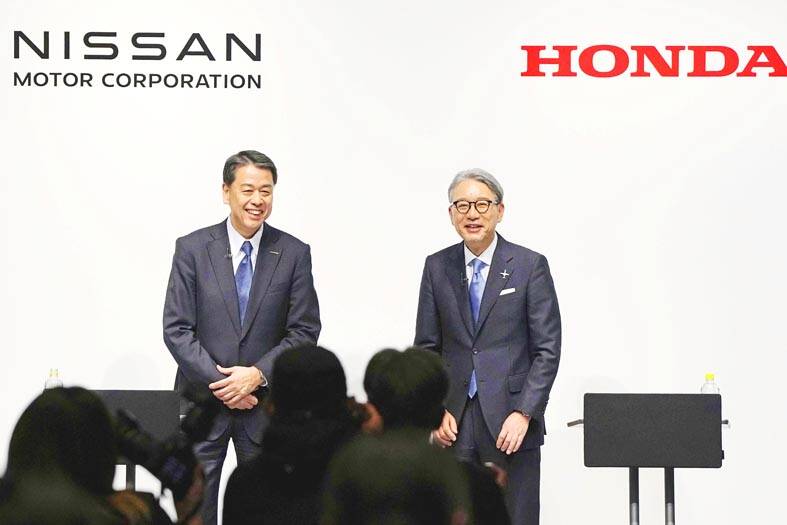
Nissan chief executive officer Makoto Uchida, left, and Honda president Toshihiro Mibe attend a news conference in Tokyo on March 15.
News

Honda, Nissan can surpass BYD

Honda Motor Co absorbing Nissan Motor Co could give the two struggling Japanese brands the scale they need to take on China’s BYD Co (比亞迪), sales figures released yesterday showed. Honda, which earlier this week sketched out plans for a deal that amounts to an acquisition of Nissan, sold 3.43 million cars globally in the first 11 months of this year. Nissan said it sold just over 3 million. China’s biggest automaker BYD sold 3.76 million vehicles over the same period — a clear illustration of how Nissan and Honda are weak alone, but together might have a fighting chance. Honda and Nissan are having trouble contending with ascendant domestic automakers in China, which surpassed Japan as the world’s largest car exporter last year and is set to pull further ahead next year. The duo have had to pare back staffing and production in China, while Mitsubishi Motors Corp, which might also participate in the Honda-Nissan combination, has all but pulled out of the world’s biggest car market. Honda’s sales in China fell 28 percent last month compared with the same month of last year, while output slumped 38 percent year-on-year. Any spending Honda might need to do to catch up could be impacted by its ¥1.1 trillion (US$7 billion) buyback, S&P Global Inc said in a report. “Large-scale share repurchases do not contribute to strengthening the future business base and result in capital outflows,” the ratings agency added. Honda announced the buyback on Monday. The upper limit amounts to 24 percent of issued shares. Stock in Honda closed up 0.8 percent yesterday. Nissan’s China sales dropped 15.1 percent last month, while local production sank 26 percent. Globally, Honda’s sales last month slipped 6.7 percent to 324,504 units, while output tumbled 20.4 percent. Nissan’s worldwide sales declined 1.3 percent year-on-year last month to 278,763 vehicles, while production took a bigger hit at 14.3 percent. Together, Honda and Nissan would also pose more of a threat to Toyota Motor Corp, which is the world’s biggest automaker followed by Germany’s Volkswagen AG. Its global sales plateaued last month as lackluster demand coalesced with a pause in production at two of its plants. Toyota’s sales — including that of subsidiaries Daihatsu Motor Co and Hino Motors Ltd — totaled 984,348 units last month, the Japanese automaker said yesterday, down 0.2 percent year-on-year. Production declined 9.4 percent to 966,921 units. Toyota’s business is also feeling the strain of locally made electric vehicles in China as well as intense competition over hybrid gasoline-electric cars in the US. Like Honda and Nissan, its hold on markets across Southeast Asia is being steadily eroded by Chinese competitors, too. More broadly, weaker global demand this year for new cars was compounded by output cuts at Toyota caused by regulatory probes, and recalls in Japan and abroad. Production in the first 11 months fell 7.3 percent in Japan and 15.2 percent in China for Toyota, again underscoring the rising competition in Asia’s biggest economy. Toyota’s production in China, or vehicles off the delivery line as opposed to end-consumer sales, declined 1.6 percent last month. Shares in Toyota gained as much as 4.4 percent yesterday.–BLOOMBERG


News

HeiTech Padu Founder’s Daughter Steps Down as GCEO; Ex-Maybank Exec Takes Over

KUALA LUMPUR: HeiTech Padu Bhd founder’s daughter Salma Nadia Mohd Hilmey has voluntarily resigned as its group managing director and group chief executive officer, with the resignation to be effective Dec 31, 2024. According to Bursa Malaysia Securities’ filings, a former executive vice president and head of business development of Malayan Banking Bhd Hasrul Azuan Mohd Yusof will take over as CEO. He was appointed on Monday, Dec 23, 2024. HeiTech Padu’s share price hit a high of RM3.08 before falling to RM3.02 a share following the news. It has a market capitalisation of about RM336 million. “The board of directors of HeiTech Padu wishes to announce that Salmi Nadia, group managing director and group chief executive officer of the company have entered into a Settlement Agreement for Mutual Separation of Service dated Dec 23, 2024,” the filing said. She assumed the role on April 3, 2024. Salmi Nadia intends to pursue other opportunities and interests. Salma Nadia is the daughter of the HeiTech Padu’s founder and deputy executive chairman Datuk Seri Mohd Hilmey Mohd Taib. He holds a 17.8 per cent interest in the company. MyEG Services Bhd holds a 16.3 per cent interest while Rosetta Partners Sdn Bhd 22.5 per cent interest in the company

News

Bursa Malaysia Adopts IFRS Sustainability Standards

KUALA LUMPUR: Bursa Malaysia Securities Berhad (“Bursa Malaysia” or “the Exchange”) has announced enhancements to the sustainability reporting requirements under the Main Market and ACE Market Listing Requirements. These updates align with the National Sustainability Reporting Framework (NSRF) to improve transparency and accountability in managing sustainability-related risks and opportunities (SROs). The new requirements incorporate the IFRS S1 General Requirements for Disclosure of Sustainability-related Financial Information and IFRS S2 Climate-related Disclosures, establishing globally recognized standards for sustainability reporting in Malaysia. Mandatory IFRS Standards Listed issuers must prepare their sustainability statements in the annual report following the IFRS Sustainability Disclosure Standards. Performance Metrics Sustainability statements must include metrics and targets demonstrating performance and progress on SROs for the past three financial years, along with a summarized data format. Internal Review or Assurance Issuers must disclose whether the sustainability statement was subjected to internal audit review or independent assurance following recognized standards. To accommodate varying levels of readiness, the enhanced requirements will be implemented in stages: Large Main Market Issuers (Market Cap ≥ RM2 billion): Effective from 1 January 2025. Other Main Market Issuers: Effective from 1 January 2026. ACE Market Issuers: Effective from 1 January 2027. Issuers may use transition reliefs during the adjustment period, focusing on a climate-first approach for two years (Main Market) and three years (ACE Market). General Meetings Starting 1 March 2025, issuers must hold in-person or hybrid meetings to promote shareholder participation. Listing Advisers From 2 January 2025, issuers must disclose the names of listing advisers in public documents for a specified period. An explainer video will be available on MyBURSA by the end of 2024: MyBURSA Sustainability Framework Resources Detailed amendments to the Listing Requirements can be found here: Main Market: Amendments to the Main Market Listing Requirements ACE Market: Amendments to the ACE Market Listing Requirements

News

CJ 4DPLEX Appoints Jun Bang as New CEO

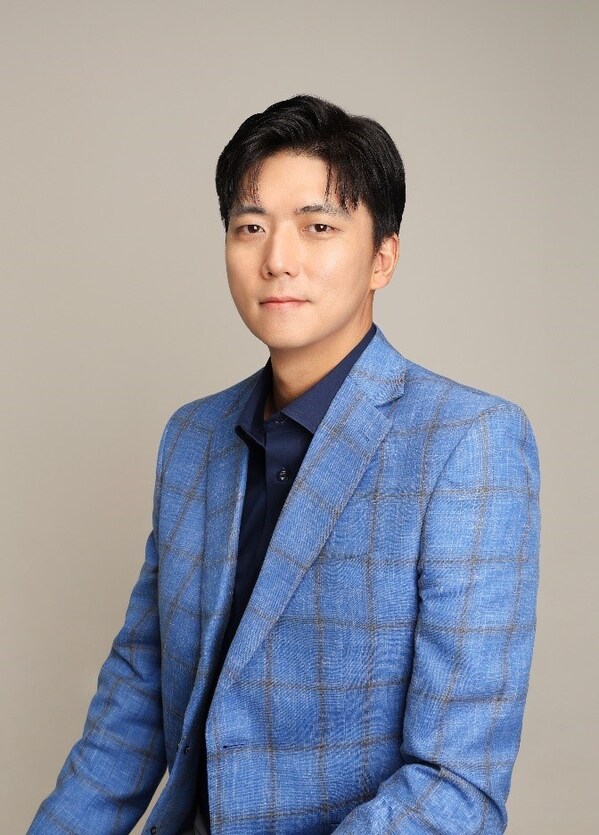
SEOUL:  CJ 4DPLEX, the world’s leading producer of premium film formats and cinema technologies, announced today it has appointed Jun Bang as CEO. Bang is the youngest ever appointed CEO within the CJ Group of companies, also making him amongst the youngest executives to hold the position within Korea’s major conglomerate companies. His ascent at the company comes after the executive spearheaded several key initiatives and played a key role in the rapid success of the global entertainment company. Bang was the key architect in building the company’s alternative content business. The company now produces and distributes nearly 20 original films a year, including various concert films of major Pop, K-Pop and J-Pop artists, and has also showcased the first theatrical live broadcast of sports in ScreenX, offering the Korean Baseball Organization’s playoff series in the multi-screen format early this fall. He was also instrumental in building the ScreenX VFX Production and Creative Studio, which houses nearly 100 visual artists, and has allowed the ScreenX format to significantly increase its content slate to encompass all major Hollywood blockbusters as well as local tentpole projects in major global markets. Bang has also been a key executive, helping shape the company’s business strategy and growth by serving as a member of the executive management group of CJ CGV. Bang most recently served as the COO of Content & Marketing where he headed original content investment, film and new media business operations, global marketing, and theatrical distribution at CJ 4DPLEX. Bang has been with CJ 4DPLEX since 2018. Before leading the Content Division at CJ 4DPLEX, he was Senior Director, Content Business Innovation where he oversaw content investment and distribution strategies as well as ScreenX and 4DX studio operations. Prior to joining CJ, Bang served in roles spanning innovation strategy, new biz development and administration in various industries and markets. “Transitioning into the role of CEO at CJ 4DPLEX, I am excited to lead the company in its next phase during a pivotal moment in cinematic entertainment,” said Jun Bang, CEO of CJ 4DPLEX. “With all the recent momentum our theaters have recently received, we will aggressively expand all facets of our operation as more and more moviegoers look to experience 4DX and ScreenX theaters around the world.” Headquartered in Seoul, South Korea, CJ 4DPLEX operates revolutionary film technologies for theaters worldwide including the multi-sensory 4DX format and the panoramic ScreenX format. CJ 4DPLEX is part of the CJ Group conglomerate that also includes entertainment powerhouses CJ ENM and the fifth largest cinema chain in the world, CJ CGV. CJ 4DPLEX is a subsidiary of CJ CGV. “We are thrilled Jun is taking the helm at CJ 4DPLEX at this exciting time for the company,” said Don Savant, CEO & President of CJ 4DPLEX America. “Jun’s leadership in developing alternative concert music content for global cinema and expanding our VFX studio to enhance our Hollywood and local productions has been a game changer for the cinema industry, which is fighting to differentiate cinema from home and streaming.” As the world’s first multi-projection cinema, ScreenX is a cutting-edge cinematic technology that expands specially selected sequences of the film onto the left-and-right-side walls of the auditorium. The 270-degree field of view creates a virtual reality-like setting with cinema quality resolution. There are over 420 ScreenX auditoriums around the world in 40 countries. 4DX pushes the conventional boundaries of cinema by offering a multi-sensory experience, integrating motion-based seating synchronized with over 21 distinct effects. Through motion, vibration, water, wind, snow, lightning, scents, and various other special effects, 4DX’s state-of-the-art technology immerses audiences into the action of the film through these effects-enhancing features. To date, there are over 800 4DX auditoriums around the world, spanning over 70 countries.

News

T. Rowe Price Appoints APAC Consultant Relations Head

Baltimore-based T. Rowe Price has announced an internal promotion to the role of head of APAC consultant relations. T. Rowe Price has promoted Cassandra Crowe to head of Asia Pacific consultant relations, according to a statement. Based in Sydney, she will report to head of global consultant relations Nick Slater. In the role, Crowe will oversee collaboration with global investment consulting firms and research houses in the region across its range of leading investment strategies. Crowe will assume the new role at the start of next year and be supported by Alycia Vassallo, who joined as senior consultant relations manager last December. She will also join the Asia Pacific distribution leadership team. Crowe has been T. Rowe Price’s head of consultant relations for Australia and New Zealand for the past five years. She is also co-chair of the asset manager’s regional diversity and inclusion business group.

News

Zendesk appoints Mitch Young as senior VP

SINGAPORE: Zendesk has named technology industry veteran and customer experience expert Mitch Young as its new senior vice president for Asia Pacific, tasking him with spearheading the company’s growth across the region’s dynamic markets. Effective immediately, Young will lead Zendesk’s growth strategy across the Asia Pacific region, overseeing key markets such as Australia, India, Japan, Singapore, and beyond. Before joining Zendesk, Young held leadership roles at IBM and most recently at ServiceNow, where he successfully led the Asia Pacific region for nearly six years before taking a sabbatical. Based in Melbourne, Young brings extensive experience in regional leadership roles. His career has taken him to Singapore and Shanghai, where he managed business growth across both mature and emerging markets in the APAC region. Zendesk plans to leverage his vast knowledge of the region’s markets to build on one of the fastest-growing regions for the company. Speaking on his new role, Young shared, “This is a time of massive opportunity for us at Zendesk. As the company delivering the most comprehensive suite of AI-powered CX solutions, we are at an exciting inflection point. This aligns well with the macro opportunities in APAC, the region that is poised to deliver exponential growth in the global economy.” “I am excited to be here and work with our teams to support APAC businesses as they position themselves to take advantage of these growth possibilities,” he added. Zendesk supports brands in financial services, retail, and manufacturing across the APAC region, which is also home to engineering hubs in Melbourne and Singapore that drive global product development. Recently, the company released its CX Trends report, revealing that APAC leaders who embrace AI are 172% more likely to achieve high ROI, while 72% of consumers expect more personalised service. Commenting on the APAC landscape, Young said, “What I find most exciting about the CX space, at this time particularly, is how AI is enabling efficiencies and productivity gains across the board. Eighty-two percent of agents in APAC believe that having an AI copilot would help them do their job better. We’re partnering with businesses whose impetus is retaining and growing their customer base, amid growing economies but also growing competition.”

News

Equinix Appoints Cyrus Adaggra As President For Asia-Pacific

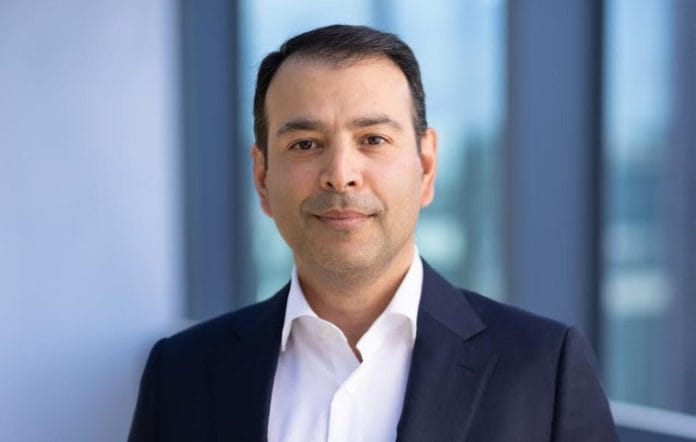
Equinix Inc, the digital infrastructure company, has named Cyrus Adaggra as its President for the Asia-Pacific (APAC) region. In his new role, Cyrus will oversee the management, strategy, and growth of Equinix in the APAC region to meet the evolving demands of customers and partners. He will be based in Sydney, Australia, and report directly to Jon Lin, Chief Business Officer of Equinix. Jon Lin said, “Cyrus’ contributions in Asia-Pacific have been pivotal to our ability to grow and expand into new markets across Asia. He is an exceptional leader in advancing regional growth, forging strong government partnerships, and strengthening our presence in the region.” Cyrus expressed pride in his appointment, stating, “Asia continues to be a large growth opportunity for our company. The digital landscape across Asia is experiencing rapid growth and transformation, fuelled by the increasing adoption of digital technologies and the rise of digital economies. With our exceptional APAC team, we will deliver unparalleled service to accelerate our customers’ digital transformation journeys and drive innovation across the region.” Since joining Equinix in 2021 as Vice President of Corporate Development and Strategy for APAC, Cyrus has led the company’s expansion into Malaysia, Indonesia, the Philippines, and Thailand, as well as organic growth in existing markets. With over 20 years of expertise in mergers and acquisitions, financial strategy, and corporate development, Cyrus brings extensive experience to his leadership role.

News

Medicilon Appoints Dr. Lilly Xu as Chief Technology Officer

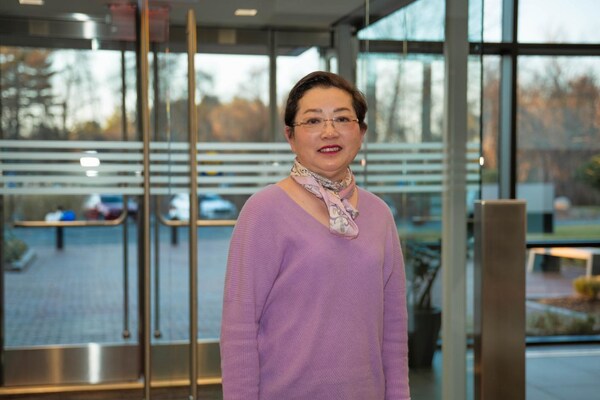
BOSTON: Medicilon, a leading preclinical contract research organization (CRO), has named Dr. Lilly Xu as its new Chief Technology Officer (CTO). With over 30 years of experience in preclinical drug development, Dr. Xu will lead Medicilon’s technological innovation and global expansion, strengthening its capabilities to deliver cutting-edge R&D solutions. Dr. Xu, who holds a Ph.D. in Biology from St Louis University, is a recognized expert in pharmacokinetics, toxicology, and drug metabolism. She has successfully led numerous global drug development programs from early discovery through clinical stages and held leadership roles at major pharmaceutical and biotech companies, including Pharmaron, Icagen, Purdue Pharma, Sanofi, and Amgen. “We are thrilled to welcome Dr. Xu during this pivotal time in Medicilon’s growth,” said Dr. Chunlin Chen, Founder and CEO of Medicilon. “Her extensive expertise and global perspective align with our vision of driving innovation and advancing our international presence.” Dr. Xu added, “I’m honored to join Medicilon’s forward-thinking team. I look forward to contributing to platform innovation, accelerating the transition of research into clinical breakthroughs, and achieving milestones that will benefit our global clients and their patients.” Medicilon continues to expand its advanced research platforms, including nucleic acids, ADCs, PROTACs, antibodies, and cell and gene therapies, reinforcing its position as a leader in preclinical drug development.

News

Singapore Stocks Shine Despite Gloomy Outlook

SINGAPORE: Singapore’s main stock index is on track to have its best annual performance since 2017, but any celebrations over the Straits Times Index’s (STI) 15% gain so far this year are likely to be overshadowed by doubts about what lies ahead. Even with the index hovering near its record high for weeks, investors said the bourse is a shadow of its former self, with delistings outnumbering new listings, the membership less diverse and prominent regional companies such as Grab Holdings Ltd and Sea Ltd going public elsewhere. For traders who have lived through the boom-and-bust cycle of Singapore stocks, there’s a stark difference between the euphoria back on that record day in 2007 and the reality now. “In 2007, we saw loads of liquidity. Basically everybody was talking about stocks,” said Terence Wong, chief executive officer at Azure Capital Pte, an investment firm he founded in 2015 after more than a decade on the sell-side. Now, “the Singapore market is just one of the many options that investors have. It is in a very sad state.” Maybank Securities Pte’s Thilan Wickramasinghe, who has worked through both stock market peaks, echoed those sentiments. “There were a lot more listings coming in, a lot more capital,” said Wickramasinghe, who joined the brokerage industry two decades ago. “You could see the changes in Singapore almost on a monthly basis.” A deeper look at the STI’s gains this year suggests the rally is primarily driven by banks – with the trio of DBS Group Holdings Ltd, Oversea-Chinese Banking Corp Ltd and United Overseas Bank Ltd making up more than half of the benchmark’s weighting. That compares with less than 30% in early 2008 when the index was revamped to its current 30-member composition. Another difference is the liquidity. Daily traded volumes in the city-state are far lower than other regional markets such as Australia and Thailand, Morgan Stanley analysts including Nick Lord wrote in a recent note. Nearly 90% of daily trades in Singapore can be attributed to just 30 of the largest stocks out of more than 600 listed firms on Singapore Exchange Ltd (SGX), and most of these volumes are less than US$10mil a day. Retail investors make up just 15% of the total turnover in Singapore, compared with 35% in India and 87% in China, according to a UBS Group AG report earlier this year. “I don’t think we are anywhere near the level of market buzz we saw in 2007,” said Paul Chew, head of research at brokerage Phillip Securities Pte. At the time, a wave of Chinese companies known as S-chips were listing on the SGX, generating excitement among local investors. “This time around, there isn’t any strong thematic around the mid-caps,” said Chew. “How long can we sustain the rally with just the banks?” Singapore officials acknowledged that things could be better. “Everyone can see there is a need for us to do something to improve the situation that we face today in Singapore,” Second Minister for Finance Chee Hong Tat said in August. The global financial crisis wasn’t the only catalyst for the collapse and subsequent stagnation in Singapore stocks. The Chinese “S-chips,” which generated such enthusiasm ahead of the 2007 record, were also part of a series of high-profile scandals in the 2010s that caused Singapore authorities to tighten market regulation. A penny-stock crash in 2013 further contributed to a loss of retail confidence. Now Chee is leading a newly formed task force assigned with creating an action plan to revive the market by next summer. The committee will consider “initiatives to improve the vibrancy” of the stock market, and study ways “to galvanise greater private sector participation” in the effort, the city-state’s financial regulator said in August. — BLOOMBERG

News

Qew Group Berhad Champions Strategic Partnership to Position Kedah as a Regional Investment Hub

KUALA LUMPUR: Qew Group Berhad (QGB) proudly supports the strategic partnership between Communication 21 Media Group and Invest Kedah Berhad, endorsed by the ASEAN Chamber of Commerce and Industry (ACCI) and the Global Confederation of Belt and Road Economic Cooperation (GC-BREC). Formalized on 18 December 2024 through the signing of a Memorandum of Understanding (MoU), in conjunction with the Malaysia China Summit 2024 – this partnership aims to position Kedah as a prominent regional investment hub, particularly by engaging investors from China. The MoU outlines a comprehensive framework to promote Kedah’s potential in sectors such as manufacturing, renewable energy, and technology. It also seeks to foster cross-border partnerships between ASEAN and Chinese industries by leveraging platforms like ASEAN-Connect and the extensive networks of ACCI and GC-BREC. These efforts are expected to enhance Kedah’s industrial profile, attract global investors, and drive sustainable economic growth. As a strategic partner of Invest Kedah Berhad, QGB is excited to contribute to this initiative through its flagship project—the QEW Smart Integrated Industrial Park in Bukit Kayu Hitam, Kedah. Envisioned as a comprehensive Halal Hub, this development is tailored to meet the evolving needs of industries across ASEAN and beyond. “This partnership not only solidifies Kedah’s position as a premier investment destination but also provides an excellent platform to showcase 258 acres of industrial land to investors from China,” a QGB Group Chief Strategic & Investment (GCSI) Azwah Md Noor shared . “Leveraging on the support of Communication 21 Media Group and the China Chamber network, this initiative will help unlock substantial growth opportunities for the region.” The collaboration is projected to result in the sale of 150 acres of industrial land, with an estimated gross development value of USD 65.3 million (approx. RM294 million). These proceeds will play a crucial role in expediting the development of the QEW Smart Integrated Industrial Park, slated to begin construction in the first quarter of 2025. Through initiatives like ASEAN-Connect and China-To-ASEAN, spearheaded by Invest Kedah Berhad and Communication 21 Media Group, Kedah will continue to be promoted as a high-potential investment hub. The involvement of ACCI and GC-BREC further strengthens the cross-border relationships between ASEAN and Chinese industries, fostering long-term economic ties. “This collaboration is a testament to the shared commitment of all stakeholders to driving sustainable and inclusive economic development in the region,” Azwah, added. Qew Group Berhad is honored to play a key role in this transformative partnership, paving the way for Kedah’s rise as a key player in the ASEAN , ASIAN & Global investment landscape.

Scroll to Top

Subscribe
FREE Newsletter