News

News

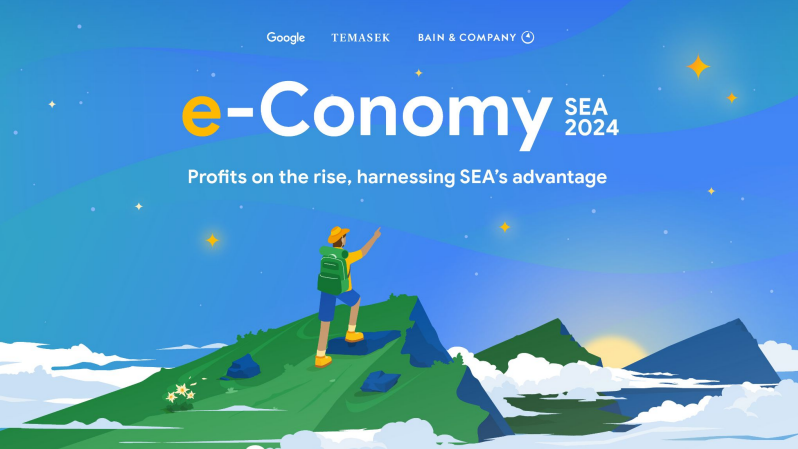
e-ConomySEA 2024 report: Malaysia’s digital economy to hit $31 billion in 2024

Malaysia’s digital economy is poised to reach $31 billion in Gross Merchandise Value (GMV) in 2024, an increase of 16% from 2023 according to the latest e-Conomy SEA 2024 report by Google, Temasek, and Bain & Company. Positive growth trends across the digital sectors Malaysia’s digital economy has progressed towards profitability while maintaining double-digit growth for GMV. Deeper digital participation among users, effective monetisation strategies, and the recovery of pandemic-impacted sectors are expected to drive continued growth. Ecommerce: E-commerce remains the largest contributor to the digital economy.  The sector grew by 17% to $16 billion GMV in 2024, as major ecommerce platforms reinvest in GMV growth, paired with the rise of video commerce. Online travel posted the fastest GMV growth compared to other sectors at 19% year-on-year (yoy) to reach $8 billion GMV in 2024 as Malaysia’s international tourism is experiencing a robust recovery and expected to exceed pre-pandemic levels in 2024. Spending on overseas travel has jumped 330% since 2020 as Malaysians take advantage of opportunities to travel abroad, though primarily in the Asia Pacific region, which accounted for 38% of outbound expenditures. SEA visitors account for almost half (49%) of Malaysia’s inbound traveller spend, driven by several factors including improved air connectivity, strategic airline partnerships and a favourable exchange rate. Food delivery and transport has grown 10% from $3 billion GMV in 2023 and to reach $4 billion in 2024. This steady growth momentum is driven by the recovery of commuter demand and international travel. Food delivery platforms are increasingly focused on boosting profitability through new revenue streams like tiered delivery options and subscription plans, while competitive intensity remains high in ride hailing due to new player entry and expansion of existing players. Online media in Malaysia has shown consistent growth with its GMV expected to grow 10% from $3 billion in 2023 to $4 billion in 2024, driven by the increasing popularity of digital content, games and streaming services. Digital financial services continues on an upward trajectory as various Malaysia’s digital banks offer compelling features and ease of access, contributing to the rapid growth of the DFS landscape. Digital payment is expected to reach $172 billion in 2024, a 5% increase from 2023, while digital wealth is expected to significantly expand and  reach an assets under management (AUM) of approximately $80 billion by 2030. Malaysia to seize the AI opportunity  Artificial Intelligence (AI) is transforming Malaysia’s digital landscape as the government continues to place emphasis on responsible AI development and deployment through its Malaysia AI Roadmap 2021-2025 and upcoming National AI Office (NAIO) launch. Malaysia is also among the Top 10 countries globally driving AI search interest, especially in the education, marketing and gaming sectors, with Kuala Lumpur, Putrajaya, and Selangor leading the nation in AI interest. As more companies deploy AI to innovate, improve efficiencies and customer experiences as well as bring new ideas to life, the demand for AI infrastructure will continue to grow. To meet this demand, Malaysia has recorded a large AI infrastructure investment among SEA countries at $15 billion in H1’24. The report estimates Malaysia’s current data center capacity at 120MW and expects that to expand 5X over the coming years. Malaysia has seized the AI opportunity through strategic initiatives like KL20, which will bolster the startup ecosystem through incentives for high-tech industries, tax exemptions on foreign investments and a billion dollars in government funding for startups in Malaysia and the region. “As Malaysia assumes the ASEAN Chairmanship next year, we aim to be a regional champion for digital policies that are forward-looking and transformative, to promote a regulatory environment that encourages technological advancement and to nurture cross-border collaboration. The e-Conomy report serves as a powerful validation of our efforts and is not merely a report; it is a testament to the immense potential that lies ahead for Malaysia’s digital future. It is a call to action for all of us – the government, the private sector, and the people of Malaysia – to collaborate and realize our nation’s full digital potential. Let us seize this opportunity and together, build a digitally empowered Malaysia that is prosperous, inclusive, and sustainable,” said YB Tuan Gobind Singh Deo, Minister of Digital as represented by Mr. Fabian Bigar, the Secretary General of the Ministry of Digital at the event. “We have been seeing a consistent strong growth of Malaysia’s digital economy and this year is another strong testament of the potential of Malaysia’s digital economy. With the region’s focus on AI, it’s encouraging to see the country’s leaders are putting AI and semiconductors in the country’s priority list,”  said Farhan Qureshi, Country Director for Google Malaysia. “At Google, we are committed to further support the growth of Malaysia’s digital economy by accelerating the local workforce with AI-ready skills and tools. From equipping youths with future-ready skills in AI through Google Career Certificate scholarships to deploying Google Workspace for public officers, we are dedicated to ensuring Malaysia remains at the forefront of the digital age,” he added. “Southeast Asia’s digital economy continues to do well, with continued double-digit GMV and revenue growth and a surge in profitability across sectors led by key players. Likewise in Malaysia, we see a healthy digital economy driven by e-commerce, online travel and digital financial services. As Malaysia’s DFS sector embraces digital disruption, new technologies such as AI are poised to accelerate growth. To fully harness the transformative potential of Generative AI, businesses must advance beyond experimentation and invest in foundational elements—aligning AI initiatives with core business objectives to address real-world problems and create tangible value, strengthen AI talent, and build scalable, adaptable infrastructure for sustained growth,” said Amanda Chin, Partner, Bain & Company. “Investments in AI infrastructure and growing interest of Malaysians in AI technology signal a promising future for the country’s digital economy. As the digital landscape evolves, driven by strategic government initiatives, it is essential to prioritize digital security to safeguard data, maintain trust, and ensure the sustained progress of the digital sector,” shared Geia Lopez, Head

News

amp appoints Reiner Erlings as Managing Director in APAC and the Middle East

With over 18 years of experience in the Middle East, Reiner is renowned for his expertise in sonic branding and composition. As a specialist in creating memorable sonic identities, his contributions to brand identity are recognized across sectors, from national airlines to government, to banks and entertainment. His deep understanding of regional music trends and sonic strategy offers a unique perspective that resonates with local audiences while aligning with global standards. Reiner’s leadership and expertise will enable amp to harness the rapid digital transformation in Asia-Pacific market, where demand for impactful brand experiences continues to rise. Building on amp’s established success in the region, with a portfolio of sonic branding work for global and regional brands like Mastercard, Mercedes, SMBC Indonesia, Telenor, Uber, and, Reiner is uniquely positioned to further elevate the company’s offerings and help businesses in APAC create truly differentiated brand experiences. “We are thrilled to have Reiner onboard as we continue our sonic efforts together in the APAC and the Middle East. Reiner’s deep experience and visionary approach to sonic branding are unparalleled, especially in markets where culture and tradition are integral to brand identity,” said Michele Arnese, Founder and Global CEO of amp. “His understanding of regional nuances, combined with our global sonic expertise, will deliver transformative brand experiences for our clients in the Middle East and APAC.” Lulu Raghavan, Landor’s President APAC said: “As it gets more and more difficult to stand out in any category, brands will increasingly turn to multisensorial branding as a key differentiator to build strong brand identities. I’m very excited that our clients in APAC can now access world class sonic branding solutions through the expertise of Reiner and his talented team at amp.”

News

Lars Schuetzenmeister appointed MCC APAC leader

MCC has appointed Lars Schuetzenmeister as senior vice president for MCC’s new consolidated Asia Pacific (APAC) business unit. Schuetzenmeister is a respected MCC veteran who previously served as vice president over the company’s Asia operations in Indonesia, Malaysia, Philippines, Thailand and Vietnam. In his new role, he will add MCC’s Australia and New Zealand operations to his portfolio. The new combined business unit will enable greater synergies and best-practice sharing across MCC’s APAC geography. ‘Lars is an outstanding leader who will bring energy and incredible customer-centricity to this important role,’ says president and CEO Hassan Rmaile. ‘We’re extremely excited to take this step forward on behalf of our APAC customers while creating additional growth opportunities and partnerships across the region.’

News

Alex Worthington appointed as Director of APAC Capital Markets – Colliers

Colliers has strengthened its Capital Markets presence in Asia Pacific with the strategic appointment of Alex Worthington as Director, based in Singapore, and reporting to Chris Pilgrim, Managing Director of Global Capital Markets, Asia Pacific. Leading diversified professional services and investment management company Colliers has bolstered its Capital Markets capabilities in the Asia Pacific region with a strategic new appointment in Singapore. Alex Worthington has been appointed Director, APAC Capital Markets, Key Client Account Management and Investor Intelligence, a role which will be central to driving Colliers’ growth and market-leading client service offering across the region. Reporting to Chris Pilgrim, Managing Director of Global Capital Markets, Asia Pacific, Mr Worthington comes to Colliers with a strong background in real estate and the capital markets sector specifically, bringing with him a proven history in key account management within a multinational professional services environment. “In this new role, Alex will strategically lead and enhance key account management for the region’s largest institutional investors,” Mr Pilgrim said. “He will drive multi-service revenue growth and enable our Capital Markets team to continue to grow and deepen its long-term relationships across Asia Pacific, particularly with institutional grade capital, clients and investors.”

News

Edelman Appoints Rakesh Thukral as CEO for Asia Pacific

Edelman has announced that Rakesh Thukral will succeed Warren Fernandez as CEO for the firm’s operations in Asia Pacific (APAC). Warren will be stepping down from the role to pursue a new opportunity and will remain with the firm until the end of the year to ensure a smooth transition.   Rakesh has a long-standing career with Edelman. As the current APAC chief operating officer and managing director of India, he has championed growth through a relentless focus on the firm’s clients, people and diversification of specialties and offerings across its portfolio. Speaking on the development, Ed Williams, Edelman’s president for international, says, “I am grateful for everything that Warren has done for the firm, and for his leadership both regionally and globally. He has broadened and sharpened the firm’s capabilities in APAC, and his decades of experience in the news and media sector has been hugely important to many of our clients. We sincerely wish him all the best with his next move. “The APAC region continues to present significant opportunity for Edelman and our clients, and therefore remains a key focus for us. Rakesh’s experience of partnering with global companies to enter the Indian market, and for Indian businesses to expand globally, will be invaluable to our clients across the whole region. He has a deep understanding of the business, political, and societal dynamics of the region, and I have confidence that under his leadership, our business will be well positioned”, continues Ed. Warren says, “I am grateful for having been part of the Edelman team and to have worked with some of the industry’s most talented and committed colleagues. A new opportunity has arisen which is hard to say no to; it is a role that plays to my longstanding interests in public policy, and where I will have the opportunity to engage on some of the significant political and geopolitical issues of the day.” Rakesh adds, “Over the past couple of years, under Warren’s and Ed’s leadership, Edelman has become known for its strong integrated offering and work in Asia. Our growing capabilities in this space have been recognised with Creative Effectiveness Lions at Cannes, and at PRovoke’s Global SABRE Awards earning the title of “#1 campaign in the World” for two consecutive years. “We have a strong team across the region and great client relationships across sectors and markets. I look forward to working with our teams and clients to continue elevating our work, and ensuring our clients receive solutions that help them evolve and grow their businesses in these complex times.” Rakesh will report into Ed in his new role, and the appointment is effective immediately.

News

Mimecast Appoints David Sajoto as APAC VP & GM

Human risk management platform Mimecast has appointed David Sajoto as Vice President and General Manager for Asia-Pacific and Japan. As a cybersecurity expert in identifying emerging trends and optimising market strategies, Sajoto has helped shape some of the most influential initiatives in the tech industry. Known for his customer-centric approach and fostering a collaborative culture, he is committed to driving both innovation and business growth. Sajoto has played a pivotal role in guiding organisations through digital transformations and helping them navigate complex challenges in the rapidly evolving tech landscape. Before joining Mimecast, Sajoto served as the senior vice president of Vectra AI in Asia Pacific and Japan. In his impressive career, he has held various leadership roles in sales and management at companies, including ExtraHop, Ixia, BMC Software, Gigamon, Oracle, and Dynatrace. He has a double degree in Computer Science and Engineering and Master’s in Business Systems from Monash University. “Joining Mimecast as VP and GM of APAC and Japan is an honour, and I look forward to working alongside our growth-driven team in the region,” Sajoto said. “Together, we are focused on strengthening partnerships and seizing new opportunities to expand our solutions.” Sajoto was recognised as Business Leader of the Year at the Asia Pacific Business Awards 2023-2024 for exceptional leadership and significant contributions to the growth and development of businesses in the Asia Pacific region. “We’re thrilled to have David as the new VP and GM for Asia-Pacific and Japan,” said Mimecast CCO David Helfer. “We welcome his exceptional leadership and expertise. He is the ideal addition to our team and will play a key role in the strategy of our business innovation and strengthening our partnership across the region.”

News

Sarawak to finalise MASwings acquisition by December, says Abang Jo

KUCHING: Sarawak is set to finalise the sale and purchase agreement for MASwings, a subsidiary regional airline of Malaysia Aviation Group (MAG), by next month, says Premier Tan Sri Abang Johari Openg. He said that the establishment of a Sarawak-owned airline is aimed at promoting the state to the business community as well as to tourists. “With a well-developed airport, the entire ecosystem in Sarawak will be in place, allowing us to be competitive with other destinations. “This goal is set to be achieved by 2035 while we continue to make progress in other areas of development,” he said when speaking at the Institution of Engineers, Malaysia (IEM) Sarawak annual dinner here on Sunday (Nov 24). Transport Minister Anthony Loke was reported to have said that negotiations between MASwings and the Sarawak government were ongoing for the acquisition. He also said negotiations regarding the purchase of shares in MASwings were also underway with MAG and Khazanah Nasional Bhd. – Bernama

News

Starbucks is said to consider selling stake in Chinese unit

Starbucks Corp is exploring options for its Chinese operations including the possibility of selling a stake in the business, according to people with knowledge of the matter. The coffee chain has been speaking to advisers about ways to grow its operations in China including the potential introduction of a local partner, the people said, asking not to be identified because the information is private. It has informally gauged interest from prospective investors, including domestic private equity firms, the people said. A stake sale could also attract interest from Chinese conglomerates or other local companies with experience in the industry, some of the people said. Starbucks is still evaluating its options and hasn’t made a decision about whether to proceed, the people said. Shares of Starbucks were little changed in early trading before the New York market opened. The stock is down about 5 percent in the past 12 months through Wednesday’s close. Starbucks has faced pressure from activist Elliott Investment Management LP, which wants it to commit to reviewing its Chinese business, Bloomberg News has reported. In previous years, McDonald’s Corp and Yum! Brands Inc have carved out their Chinese operations and sold stakes to private equity firms to tap more growth and better cater to local tastes. China is the second-biggest market globally for Starbucks and generated about US$3 billion of net revenue in the most recent financial year, when the company increased its store count in the country by 12 percent. But local upstarts such as Luckin Coffee Inc are increasingly challenging their position. New Starbucks chief executive officer Brian Niccol told analysts last month that he’s working to better understand the company’s Chinese operations, noting that the competitive environment seems “extreme” and the macro environment is “tough.” Starbucks needs to figure out how to expand in the market and is continuing to explore strategic partnerships that could help it over the long term, Niccol said at the time, without providing further details. “We are fully committed to our business and partners, and to growing in China,” a spokesperson for Starbucks said in response to Bloomberg News queries this week. “We are working to find the best path to growth, which includes exploring strategic partnerships.” Niccol, the former CEO of Chipotle Mexican Grill Inc, took the reins at Starbucks in September after his predecessor Laxman Narasimhan failed to revive its flagging fortunes and was abruptly ousted. Niccol has vowed to redouble efforts to improve Starbucks’s physical locations and speed up service times. Starbucks had 7,596 outlets in China as of late September, accounting for about 19 percent of the global total. Same-store sales fell 14 percent in China last quarter. Other Western chains have also sought local tie-ups in China after struggling to catch up with more nimble rivals. In 2016, KFC operator Yum sold a stake in its Chinese operations to Primavera Capital Group, a private equity firm led by former Goldman Sachs Group Inc rainmaker Fred Hu, and tech billionaire Jack Ma’s  Ant Financial Services Group. That set the stage for it to spin the business off in a separate listing, which came after pressure from activist investor Corvex Management LP. The following year, McDonald’s sold a controlling stake in its China and Hong Kong operators for US$1.7 billion to a group of investors including state-backed conglomerate Citic Ltd, domestic buyout firm Citic Capital Holdings Ltd  and Carlyle Group Inc.–BLOOMBERG

News

Motorola CEO sees Trump as favourable to business

CHICAGO: Motorola Solutions Inc chief executive officer (CEO) Greg Brown said the incoming administration of US President-elect Donald Trump will be favourable to a business that’s already doing very well. Once synonymous with mobile phones and pagers, Chicago-based Motorola has reinvented itself as a provider of high-tech security products for businesses and governments. The company provides two-way radios for firefighters, body cameras for police officers and software that sends email and text alerts during emergencies. Trump has been strident in his support of the police, as he believes city crime should be reduced, and has pledged to build the wall along the border with Mexico, which will require more border agents, Brown said in an interview on Bloomberg TV. Trump has also vowed to cut the corporate tax rate, and the environment for mergers and acquisitions (M&As) should also be more favourable under his administration, according to Brown. “There’s a lot to like about this through the lens of a multinational corporation,” the CEO said. Motorola got out of China years before Trump threatened to increase tariffs on imports from the country by as much as 60%. Regarding Trump’s pick of Howard Lutnick to lead the Commerce Department, Brown said he thinks Lutnick will be “progressive and aggressive.” Motorola has done some 40 deals in the last decade, including two acquisitions of US$1bil or more. The company has strong free cash flow and a low net debt-to-earnings ratio, putting it in good shape to make deals if the opportunities arise. “M&A does play a key role going forward,” Brown said, describing any acquisitions as more likely to be “tuck-ins” than large deals. “It depends on what opportunities come forward and at what price,” the CEO added. — BLOOMBERG

News

Trump Presidency Could Add RM19.7B to Malaysian GDP

The economic policies of Donald Trump’s potential presidency could add up to RM19.7 billion to Malaysia’s GDP, according to global property firm IQI. Benefits but Risks Remain “It’s too early to predict the exact policies President Trump and the Republican-led Congress will implement,” said Juwai IQI Co-Founder and Group CEO Kashif Ansari. “However, based on the first Trump presidency and his cabinet choices, we anticipate key trends.” One pivotal policy is the intensification of tariffs on Chinese goods, expected to accelerate the shift of manufacturing out of China to Southeast Asia. For Malaysia, this could add 1% to GDP over four years, equivalent to RM19.7 billion—about 40% of the East Coast Rail Link’s cost. The IMF projects Malaysia’s 2024 GDP at US$440 billion. A 1% boost translates to US$4.4 billion or RM19.7 billion at current exchange rates. Risks to Consider Ansari highlighted risks such as rising U.S. inflation potentially driving up interest rates, which could attract capital away from Malaysia and strengthen the U.S. dollar, raising costs for Malaysian manufacturers reliant on imports. Trump’s China Tariffs Benefitted Malaysia During Trump’s first presidency, tariffs on Chinese goods significantly benefitted Malaysia. From 2017 to 2021, Malaysia’s foreign direct investment (FDI) from China and Hong Kong nearly doubled, climbing from 9% to 15.2% of total FDI. The “China Plus One” strategy, where companies diversify manufacturing outside China, saw Malaysia receive over US$4.4 billion in Chinese investments—nearly double Thailand’s share. By 2023, China and Hong Kong were sending RM15.98 billion annually in FDI to Malaysia, triple the level from a decade ago. U.S.-Malaysia Trade and Economic Growth Trade between Malaysia and the U.S. thrived during Trump’s first term. In 2021, Malaysian exports to the U.S. hit US$56.2 billion, a 27.3% increase from the prior year, with a trade surplus of US$41 billion. Malaysia’s economy grew steadily during Trump’s first presidency, with annual growth of 5.8% in 2017, 4.8% in 2018, and 4.5% in 2019, before the pandemic-induced contraction in 2020. Indirect Benefits to Malaysia’s Real Estate Market Trump’s first presidency had minimal direct impact on Malaysia’s housing market, aside from supporting economic growth, which gave consumers more spending power. House prices grew 6.5% in 2017 but slowed to 1.2% by 2020. Over the next four years, Juwai IQI expects house prices to rise, differentiating a second Trump presidency from the first.

Scroll to Top

Subscribe
FREE Newsletter