News

News

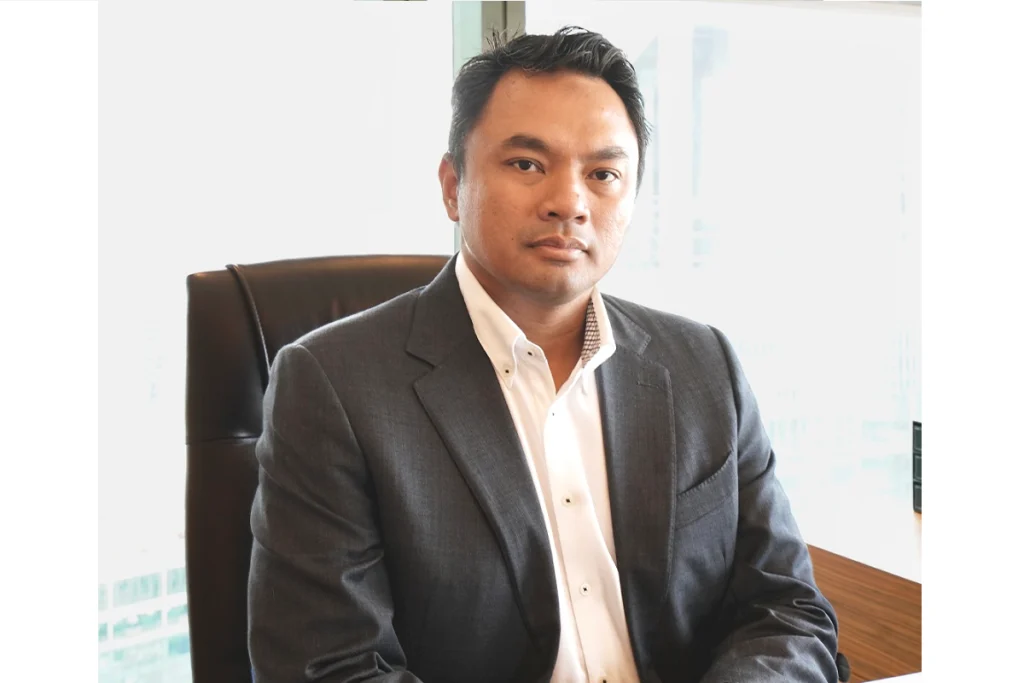
Supermax Executive Director Shelley Wong Steps Down

KUALA LUMPUR, Supermax Corp Bhd announced that its executive director, Shelley Wong Phait Lee, will step down from the board effective Dec 9, 2025, following the conclusion of the company’s annual general meeting. In a filing with Bursa Malaysia on Friday, the glove manufacturer said Wong’s resignation was due to personal reasons and her intention to pursue other opportunities. Wong joined Supermax’s board in January 2024 as an independent non-executive director before being redesignated as executive director in May of the same year, as part of the group’s leadership restructuring. Aside from her role at Supermax, Wong also serves on the boards of YX Precious Metals Bhd, Vanzo Holdings Bhd and JS Solar Holdings Bhd. At Friday’s close, shares of Supermax fell half a sen or 1.04% to 47.5 sen, giving the glove maker a market capitalisation of RM1.55 billion.

News

Former Chairman Chan Soon Tat Emerges As Substantial Shareholder In Systech

KUALA LUMPUR, Former chairman of Systech Bhd, Datuk Chan Soon Tat, has emerged as a substantial shareholder in the company after acquiring 10 million shares, representing a 5.68% stake, on Oct 28, according to the group’s latest filing with Bursa Malaysia. The move marks Chan’s re-entry into a more significant role in the company’s ownership structure, signalling renewed confidence in Systech’s growth prospects — particularly as the group pivots further into artificial intelligence (AI) and digital infrastructure services. In a separate filing, Systech announced that it has secured a two-year contract with Tujuh Warisan Sdn Bhd to deliver GPU-as-a-service, AI solutions, and Internet-of-Things (IoT) infrastructure via its wholly owned subsidiary, Systech Digital Solutions Sdn Bhd. The agreement, effective Oct 31, covers the deployment of advanced AI infrastructure and high-performance GPU systems, which will support a range of data-intensive applications. The deal includes an automatic one-year renewal clause unless terminated by either party, with payments to be settled within seven days of invoicing. While the exact contract value was not disclosed, Systech noted that the project will contribute positively to its earnings visibility over the contract period. The timing of Chan’s stake acquisition coincides with notable changes in Systech’s shareholder composition. Former managing director Datuk Hooi Jia Hao reduced his holding to below the 5% threshold after disposing of 26 million shares on Oct 24. Meanwhile, Hooi’s investment vehicle, Smartpro Capital Bhd, had earlier exited its remaining 4.19% stake. As of July 30, 2025, Smartpro had been the company’s largest shareholder with a 27.48% interest. Following these movements, executive chairman Datuk Ong Theng Soon is now Systech’s largest shareholder, holding a 2.6% direct and 10.88% indirect stake through his spouse Liew Su-Wen. Executive director Low Min Yew holds 5.1% directly and 5.3% indirectly via LMY Holdings Sdn Bhd, which has become an increasingly influential shareholder. Other key investors include Lim Ying Ran, Goh Yit Fong, and national cyclist Datuk Mohd Azizulhasni Awang, who also hold indirect interests through LMY Holdings. Notably, LMY Holdings became a substantial shareholder on Oct 17 with a 5.277% stake. Systech, which is expanding into cloud-based and AI-driven services, has seen heightened market attention following its recent push into digital transformation initiatives. The company said it aims to position itself as a leading regional provider of secure, scalable AI and IoT infrastructure solutions. On Friday, Systech’s shares slipped half a sen or 2.4% to 20.5 sen, valuing the group at RM135.2 million. Year to date, the counter has declined by about 30.5%, though analysts believe the group’s strategic contracts and evolving shareholder base could signal a more stable outlook in the coming quarters.

News

Capital A’s Rally Stalls Near 10-Month Peak As PN17 Exit Optimism Cools

KUALA LUMPUR, Shares in Capital A Bhd retreated on Friday, ending a four-day winning streak after touching a 10-month high, as investors took profit amid the group’s ongoing efforts to finalise its regularisation plan and exit from Practice Note 17 (PN17) status. The counter slipped as much as 3% to 98 sen in early trading before edging up slightly to 99 sen at the midday break, still 2% lower for the day. Over 14 million shares changed hands, giving the company a market capitalisation of about RM4.3 billion. The pullback followed Thursday’s statement from Capital A’s chief executive officer Tan Sri Tony Fernandes, who said the group expects to complete its PN17 regularisation by December, after satisfying or obtaining waivers for all remaining conditions tied to its aviation restructuring. Under its regularisation plan, unveiled in April 2024, Capital A will divest its short-haul aviation assets — AirAsia Aviation Group Ltd and AirAsia Bhd — to AirAsia X Bhd for RM6.8 billion. The move will consolidate all short- and medium-haul AirAsia carriers under a single listed entity, streamlining the group’s airline operations. Capital A and AAX have since overcome a key hurdle in the restructuring after AAX and its Thai partner agreed to buy out minority shareholders in Asia Aviation PCL, which operates Thai AirAsia, rather than seeking a regulatory waiver. In addition, AAX plans to raise RM1 billion through a private placement to support the expanded airline group’s operations, with investor details expected to be announced soon, Fernandes said. According to Bloomberg data, Capital A has four “hold” ratings and one “buy” recommendation from analysts, with a 12-month consensus target price of RM1.12, unchanged after the update. The latest developments mark a crucial step for Capital A, which has been working to exit PN17 status since early 2022 following pandemic-driven losses that triggered the classification.

News

ACE Market-Bound Aquawalk Targets RM114.3 Million In IPO

KUALA LUMPUR, Aquawalk Group Bhd is set to raise RM114.3 million from its initial public offering (IPO) ahead of its ACE Market debut on Bursa Malaysia Securities Bhd on Nov 19, 2025. The developer and operator of Aquaria KLCC said RM89.77 million, or 78.6% of the proceeds, will be allocated for capital expenditure, while RM3 million (2.6%) will go toward upgrading information technology systems. Another RM14.94 million (12.7%) is earmarked for working capital, and RM7 million (6.1%) for listing-related expenses. Aquawalk Group CEO Daryl Foong described the listing as a major milestone for both the company and Malaysia’s tourism sector. “It shows Malaysia’s ability to deliver world-class entertainment and education, while advancing conservation efforts sustainably and profitably,” he said at the launch of the company’s prospectus. Foong said the group plans regional expansion with new oceanariums in Surabaya, Indonesia, and Kota Kinabalu, Sabah, aiming for completion within three years. “These locations will range from 40,000 to 70,000 sq ft, while our larger Phuket facility spans about 100,000 sq ft. Construction will start after the IPO, with each site employing nearly 100 permanent staff, excluding construction-related jobs,” he added. In addition to Aquaria KLCC, the group owns and operates Aquaria Phuket and holds a 40% stake in Jakarta Aquarium and Safari. The IPO comprises a public issue of 368.6 million new ordinary shares and an offer for sale of 368.6 million existing shares. Of the public issue, 92.15 million shares are available to the Malaysian public, 4.68 million to eligible directors, employees, and contributors, and 271.76 million via private placement. The offer for sale includes 230.37 million shares for Bumiputera investors approved by the Investment, Trade and Industry Ministry and 138.22 million shares for selected investors through private placement. Priced at 31 sen per share, Aquawalk will have a market capitalisation of RM571.3 million upon listing, based on a total enlarged share capital of 1.84 billion shares. Applications for the public issue open today and close at 5 pm on Nov 7, 2025. M&A Securities is acting as adviser, sponsor, and managing underwriter for the IPO, with CGS International serving as joint underwriter and joint placement agent.

News

Zafrul: Malaysia To Keep Ban On Raw Rare Earth Exports

KUALA LUMPUR, Malaysia will maintain its ban on the export of raw rare earth elements (REE) to ensure that value-added processing and downstream development take place domestically, said Investment, Trade and Industry Minister Tengku Datuk Seri Zafrul Abdul Aziz. He said the policy aims to strengthen Malaysia’s industrial base while promoting sustainable growth and technological advancement in the REE sector. “At the same time, we continue to welcome foreign investment and technology partnerships in the mining and processing of REE to help build a complete and competitive domestic ecosystem,” Zafrul said during a special briefing session on the Malaysia-US Reciprocal Trade Agreement (ART) in the Dewan Rakyat on Wednesday. “Malaysia values strategic collaboration with the US and other nations in developing the local REE industry, including potential trilateral cooperation involving Malaysia, the US, and Australia, such as with Lynas,” he added. The minister stressed that Malaysia’s policy seeks to avoid the export of unprocessed, low-value raw materials, ensuring that the country benefits first from local processing and value creation. “The same principle applies to REE and other critical minerals. Once processing and value addition are completed in Malaysia according to our laws and standards, the resulting high-value products can be exported as part of global supply chains,” he said. Addressing concerns regarding the Malaysia-US ART, Zafrul clarified that the agreement will be implemented in accordance with Malaysia’s national laws and strategic priorities to safeguard domestic interests while expanding new trade opportunities. He also noted that the list of proposed procurements under the ART does not involve new government expenditure, but instead reflects commercial arrangements by private sector players. “For instance, Malaysia Aviation Group’s purchase of Boeing aircraft was announced in March 2025, well before the tariff announcement by US President Donald Trump,” he said. “Similarly, Petronas’ decision to procure liquefied natural gas (LNG) from the US forms part of its strategy to ensure supply security and fulfil its domestic and international obligations. It was a commercial decision — not a political one,” he added. Zafrul further emphasised that under the ART framework, Malaysia is now recognised as a “trusted supply chain partner”, which is expected to facilitate smoother trade flows, especially for strategic and high-technology goods. “This recognition strengthens Malaysia’s position as a regional investment hub and preferred destination for companies seeking to access the US market,” he said. He added that Malaysia’s strong commitment under the ART would also be taken into account in the US government’s ongoing investigation into the semiconductor sector under Section 232 of the US Trade Expansion Act 1962, which is expected to conclude by the end of 2025.

News

Infomina Faces RM225.7m Counterclaim From Bank Of The Philippine Islands

KUALA LUMPUR, Computer mainframe systems specialist Infomina Bhd (KL) said its Philippine subsidiary has been hit with a RM225.67 million counterclaim by the Bank of the Philippine Islands (BPI), escalating the ongoing legal dispute between the two parties over an alleged wrongful contract termination. In a filing with Bursa Malaysia on Wednesday, Infomina said the counterclaim includes an “unprecedented” PHP3 billion (RM212.66 million) in exemplary damages, PHP173.48 million (RM12.3 million) as a refund of fees, and PHP10 million (RM710,000) in legal costs. BPI is also seeking to include members of Infomina Philippines’ board of directors and Infomina’s group chief technology officer, Siow Liew Fei, as additional defendants in the case. “Based on legal advice, Infomina Philippines remains confident in the merits of its claims against BPI, as well as its defences against the counterclaim — particularly with respect to the extraordinary demand of PHP3 billion in exemplary damages,” the company said. Infomina’s Philippine unit has until Nov 15 to file its defence, though the deadline may be extended by another 20 days to Dec 5. The dispute stems from BPI’s alleged wrongful termination of a 2021 software purchase and maintenance agreement with Infomina Philippines. In its original suit filed in September 2022, the company sought PHP1.65 billion (RM133 million) in damages, claiming that the termination was invalid and that BPI had failed to properly report its software usage and consumption as required under the agreement. Infomina said the legal proceedings are ongoing, and it will make further announcements as necessary. Despite the legal developments, the company’s share price closed three sen or 2.19% higher at RM1.40 on Wednesday, valuing the group at RM841.75 million. The outcome of the case, if successful, could have a material impact on Infomina’s financial performance and its operations in the Philippines, where it continues to expand its enterprise technology and data infrastructure services.

News

Kumpulan Kitacon Wins RM86.6m Contract For Housing Project At The Mines Resort City

KUALA LUMPUR, Kumpulan Kitacon Bhd has secured an RM86.58 million contract from Earth Pavilion Sdn Bhd to construct residential units at The Mines Resort City in Selangor. The project, to be undertaken by its wholly owned subsidiary Kitacon Sdn Bhd, comprises two phases: Phase 3: 34 units of three-storey semi-detached and zero-lot homes Phase 4: 47 units of three-storey zero-lot and bungalow houses Construction will commence on Nov 1, 2025, and is expected to be completed within 24 months, the group said in a bourse filing. Kitacon added that the contract is expected to contribute positively to its earnings and net assets per share for the financial year ending Dec 31, 2025 (FY2025) and onwards. For the first half of FY2025, the group posted a net profit of RM26.41 million, up 9.9% from RM24.02 million a year earlier, despite a 12.5% decline in revenue to RM413.34 million due to several projects nearing completion. CGS International projected stronger earnings in the second half of FY2025, supported by margin expansion and ongoing township projects such as Bandar Bukit Raja and Elmina. As of June, Kitacon’s tender book stood at RM913 million, comprising 83% residential and 17% industrial projects. The group has secured RM375 million worth of new contracts so far this year, including an RM88 million residential project from GuocoLand Group. At Tuesday’s midday break, Kitacon shares slipped 0.5 sen or 0.68% to 72.5 sen, valuing the company at RM362.7 million.

News

LAC Med Signs Underwriting Deal For Main Market Listing

KUALA LUMPUR, LAC Med Bhd has entered into an underwriting agreement with RHB Investment Bank Bhd and Alliance Islamic Bank Bhd for its upcoming initial public offering (IPO) on the Main Market of Bursa Malaysia, which is targeted for December 2025. In a statement, the medical solutions provider said the IPO proceeds will be used to accelerate its market expansion, strengthen its product portfolio, and enhance its range of medical devices and services. LAC Med also plans to diversify into two new business segments — Equipment-as-a-Service (EaaS) and Medical Equipment Asset Management Services (MEAMS) — to build recurring income streams post-listing. Part of the IPO funds will be channelled towards regional expansion in Indonesia, relocation to a larger head office with expanded storage space, and the establishment of a product demonstration showroom. Group chief executive officer Liew Yoon Poh said the IPO marks an important milestone for LAC Med’s next phase of growth. “Our listing will enable us to expand our suite of integrated medical solutions, driving better patient care and operational efficiency for healthcare providers. Through our partnerships with global brands, we aim to deliver best-in-class technologies and services to the market,” he said.

News

Creador Names Ex-Ekuinas CEO Syed Yasir Arafat As Senior Adviser

KUALA LUMPUR, Regional private equity firm Creador has appointed former Ekuiti Nasional Bhd (Ekuinas) chief executive officer Datuk Syed Yasir Arafat Syed Abd Kadir as its senior adviser, as part of efforts to strengthen its investment footprint in Malaysia. In this new role, Syed Yasir will assist Creador in sourcing and executing strategic investments across key sectors, particularly healthcare and pharmaceuticals, advanced manufacturing, and business-to-business (B2B) services. Datuk Syed Yasir Arafat Syed Abd Kadir stepped down from Ekuinas on March 31 after 15 years at the state-owned private equity firm, including nine as chief executive officer. “Syed Yasir brings a wealth of leadership experience and an extensive professional network that will enhance Creador’s ability to create value and build sustainable partnerships,” the firm said in a statement on Tuesday. According to Creador, Syed Yasir will work closely with its investment team to provide strategic insights, support deal origination, and contribute to portfolio development. His appointment reflects Creador’s continued focus on expanding its presence and fostering long-term growth in the Malaysian market. Founded in 2011, Creador is a private equity firm specialising in South and Southeast Asia, with more than US$3 billion (RM12.63 billion) raised across six funds and investments in over 60 companies to date. Syed Yasir stepped down from Ekuinas on March 31 after 15 years with the state-backed private equity firm, including nine years as CEO. He was succeeded by Aliff Omar Mohamad Omar, previously Ekuinas’ senior director of investment. During his tenure, Syed Yasir oversaw RM4 billion in managed funds and RM5.6 billion worth of investments in 28 companies. He also led the creation of Dana Asas, a Bumiputera-focused fund, and introduced private credit as a new investment asset class.

News

Uber Eyes Investment In Hong Kong IPOs Of Pony AI And WeRide

Uber Technologies Inc is reportedly planning to invest in the Hong Kong listings of autonomous vehicle companies Pony AI Inc and WeRide Inc, signaling its continued commitment to expanding partnerships in the Chinese robotaxi sector. According to sources familiar with the matter, Uber may invest around US$100 million (RM420.2 million) in Pony AI’s share sale. Pony AI, which went public in the US last year, aims to raise up to US$972 million in its Hong Kong offering, with the potential to increase the size of the deal through an over-allotment option. San Francisco-based Uber is also eyeing WeRide’s Hong Kong listing, although the exact investment amount has not been disclosed. Other potential investors in the offerings may include Grab Holdings Ltd, Singapore’s state investor Temasek Holdings Pte, and German engineering giant Robert Bosch GmbH. WeRide, which also went public in the US a year ago, filed for a Hong Kong IPO seeking up to US$398 million. Discussions are ongoing, and the investment plans could change, according to the sources. Uber, Pony AI, and WeRide did not immediately comment. Previously, Uber invested in the US IPOs of both Pony AI and WeRide, and in May announced an additional US$100 million investment in WeRide. The ride-hailing firm has also collaborated with Pony AI earlier this year to launch autonomous services in the Middle East and partnered with WeRide in Abu Dhabi. Since their US debuts, Pony AI’s American depositary receipts have gained more than 50%, while WeRide’s have fallen 28% over the same period. Both companies plan to use proceeds from their Hong Kong listings to scale autonomous driving operations. Pony AI intends to commercialise its Level 4 robotaxi and robotruck technology and fund research and development, aiming for profitability by 2028–2029. WeRide plans to advance its autonomous driving technology, accelerate commercial mass production of Level 4 fleets, and expand its operations over the next five years, although it has yet to turn a profit. Grab, meanwhile, is also moving into autonomous mobility, recently investing in Michigan-based May Mobility to bring robotaxi services to Southeast Asia and partnering with WeRide to deploy fleets in the region. This move by Uber reflects the growing strategic importance of autonomous vehicle technologies in Asia and its push to deepen collaboration with key robotaxi developers in China and beyond.

Scroll to Top

Subscribe
FREE Newsletter