News

News

Brazil, China Launch Joint Investment Fund

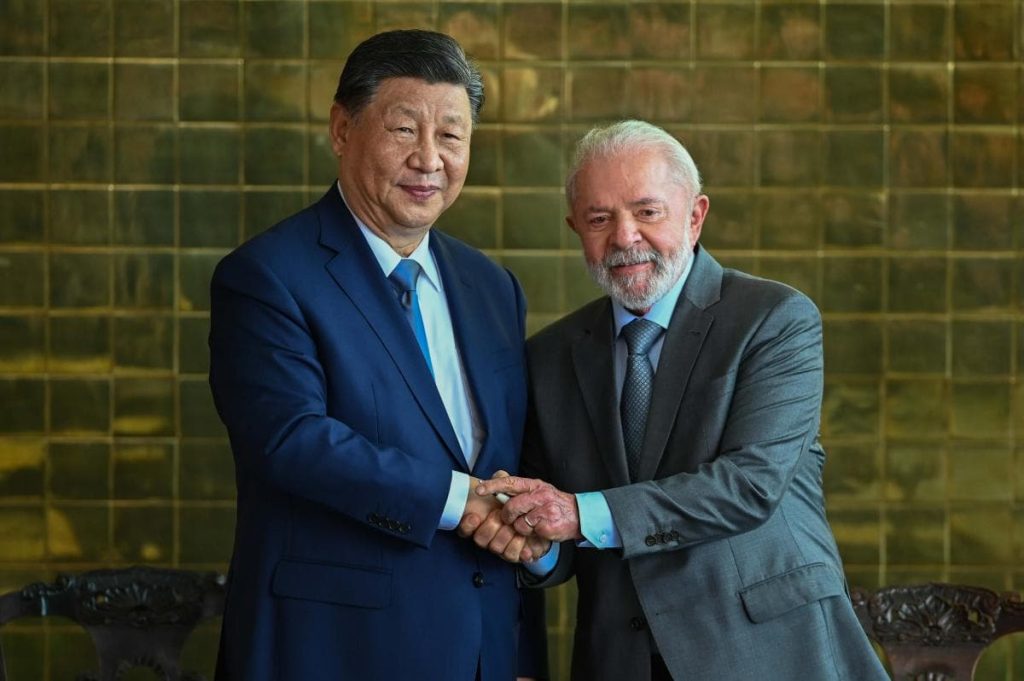
RIO DE JANEIRO, Brazil’s Development Bank (BNDES) and the Export-Import Bank of China (Cexim) have formalized an agreement to establish a landmark US$1 billion (RM4.21 billion) joint investment fund aimed at financing strategic sectors that support economic development and innovation. The fund, set to begin operations in 2026, will target investments across energy transition, infrastructure, mining, agriculture, and artificial intelligence (AI), reflecting both nations’ shared priorities in advancing sustainable growth and technological competitiveness. Chinese President Xi Jinping (left), with Brazilian President Luiz Inácio Lula da Silva (right). Under the arrangement, BNDES will contribute US$400 million, while Cexim will provide US$600 million. Together, the two institutions will deploy capital through a combination of debt securities and equity investments in Brazil, with a focus on projects that can accelerate industrial modernization, boost productivity, and support the low-carbon transition. BNDES and Cexim have already signed a commitment term and a declaration of intent to cooperate in structuring the fund. According to BNDES planning director Nelson Barbosa, the initiative represents the first bilateral investment fund jointly developed by a Brazilian and a Chinese financial institution, marking a significant milestone in the countries’ economic partnership. Notably, the fund will operate primarily in Brazilian reais, underlining its commitment to supporting domestic market financing while reducing reliance on external currency volatility. Speaking at the signing ceremony in Rio de Janeiro, Barbosa emphasized the broader importance of the initiative. “This new partnership between the two institutions will strengthen the commercial and economic relationship between Brazil and China. It will also create new channels of financing for projects that are crucial to Brazil’s long-term development and competitiveness, while deepening integration between our two economies,” he said. The announcement comes at a time when Brazil is actively seeking to diversify its sources of foreign investment and build stronger ties with strategic partners such as China, which remains its largest trading partner and a growing source of capital inflows. The collaboration also complements China’s broader engagement in Latin America, where it has steadily increased investments in energy, infrastructure, and technology projects over the past decade. Analysts say the fund could serve as a template for future bilateral investment platforms, especially those seeking to balance traditional sectors like mining and agriculture with forward-looking industries such as renewable energy and AI. For Brazil, the initiative offers a powerful financing mechanism to accelerate industrial transformation, while for China, it opens an avenue to strengthen its economic footprint in one of Latin America’s largest markets. The new fund is expected to announce its first wave of investments soon after its official launch in 2026, with further details on governance and project selection criteria to be revealed in the coming months.
News

MAS Names Abigail Ng As Chief Sustainability Officer

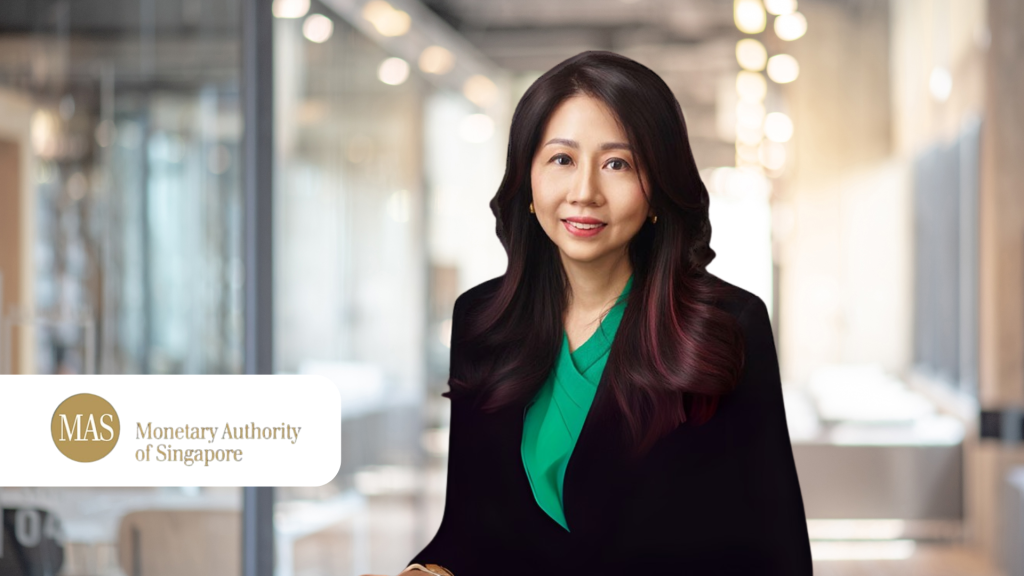
The Monetary Authority of Singapore (MAS) has named Abigail Ng as its new Chief Sustainability Officer (CSO), effective 6 October 2025, underscoring the city-state’s next phase in embedding climate and sustainability goals into financial regulation. Ng succeeds Gillian Tan, who had carried the dual portfolio of Assistant Managing Director (Development & International) and CSO since 2022. Monetary Authority of Singapore (MAS) has named Abigail Ng as its new Chief Sustainability Officer (CSO). This appointment marks a structural shift for MAS, which has chosen to carve out the CSO role as a dedicated leadership position, distinct from its broader developmental and international mandates. Officials said the move comes as Singapore transitions from designing sustainability frameworks to scaling and executing them across financial markets. Building Asia’s sustainable finance architecture Over the last three years, MAS’ Sustainability Group has spearheaded multiple high-impact initiatives. Under Tan’s leadership, MAS launched the Finance for Net Zero Action Plan to mobilise capital for Asia’s decarbonisation. Other landmark programs included: The Singapore-Asia Taxonomy, setting consistent standards for green finance. The Transition Credits Coalition (TRACTION), to support credible transition credits. The Financing Asia’s Transition Partnership (FAST-P), a blended finance platform to crowd in private capital. A Sustainable Finance Jobs Transformation Map, aligning workforce skills with the sector’s growing demand. Tan will continue with MAS as Group Head of the Development & International Group, focusing on global engagement and policy development. Ng’s regulatory focus Ng, currently Head of the Markets Policy & Consumer Department, has played a key role in shaping sustainability disclosure requirements and coordinating with global regulators on financial standards. Her promotion signals MAS’ intention to reinforce policy clarity, regulatory credibility, and international alignment in sustainable finance. In her new role, Ng is expected to prioritise: Strengthening disclosure frameworks and taxonomy-based standards. Guiding financial institutions in transition financing. Enhancing Singapore’s credibility as a hub for green and sustainable capital flows. Broader implications for global finance For international banks, investors, and corporates operating through Singapore, the change reflects three clear messages: Sustainability is now institutionalised at the highest level of MAS’ governance. The regulator is shifting from framework design to practical enforcement and execution. Singapore aims to maintain leadership in the global dialogue on transition finance, particularly in Asia’s distinct energy and industrial pathways. Market participants should expect closer scrutiny of ESG claims, stricter alignment with disclosure rules, and deeper integration of taxonomy-based financing into market practices. A structural pivot for Singapore MAS’ decision to establish a dedicated CSO role highlights Singapore’s long-term calculation: sustainable finance is no longer a temporary agenda but a core pillar of financial regulation and competitiveness. Ng’s leadership will be closely watched as Singapore continues to position itself as a bridge between Asia and global capital markets. Her role is expected to shape not only domestic frameworks but also influence regional and international standards, particularly in areas like blended finance, transition pathways, and credible ESG reporting. For investors and corporates, the message is clear: sustainability is now fully embedded in the DNA of Singapore’s financial system, setting a precedent for regulators across Asia.

News

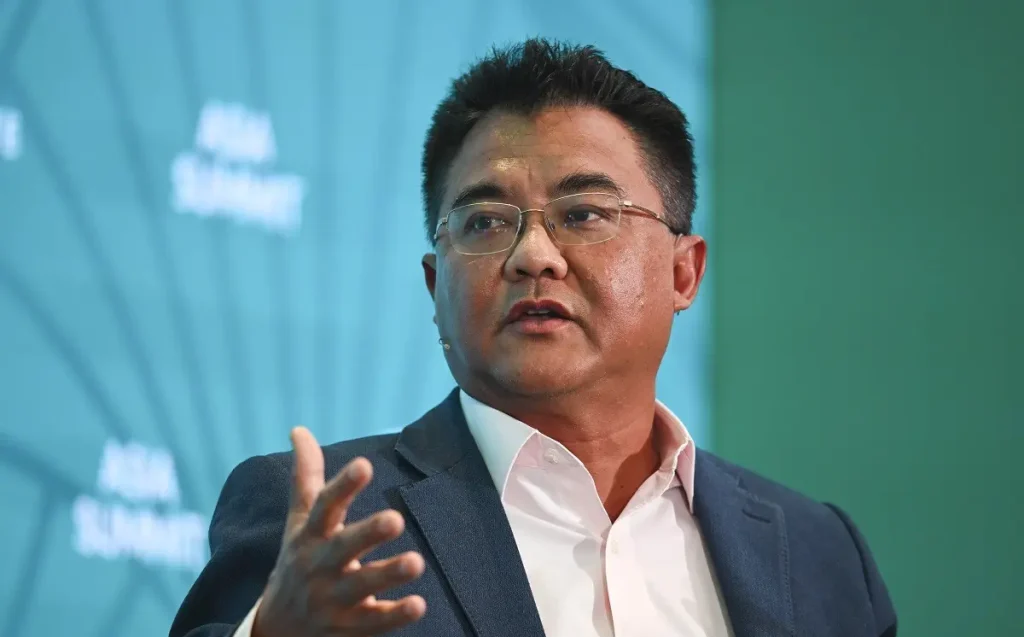
Khazanah Eyes Partnerships In US And China, Says CIO

SINGAPORE, Malaysia’s sovereign wealth fund, Khazanah Nasional Bhd, is looking to strengthen its partnerships with both the United States and China, recognising their pivotal roles in shaping global capital flows, supply chains, and technological advancement, according to its Chief Investment Officer, Datuk Hisham Hamdan. Speaking on the sidelines of the Milken Institute Asia Summit 2025 in Singapore, Hisham said Khazanah’s mandate extends beyond investing in foreign companies. A key focus, he noted, is to identify businesses in the US and China that can collaborate with Malaysian entrepreneurs and contribute expertise in research and development (R&D). “You have to pay attention to these countries,” Hisham told Reuters in an interview, highlighting China’s R&D expenditure of 2.7% of GDP as a benchmark that underscores the importance of knowledge partnerships. Malaysia has in recent years attracted growing inflows of investment from both the US and China, particularly in data centre infrastructure, with major commitments from global technology giants including Microsoft, Alphabet, and Amazon, as well as Chinese leaders such as Tencent, Alibaba, and Huawei. The nation is also positioning itself as a regional hub for semiconductors, automotive manufacturing, and critical minerals such as rare earths. On macroeconomic conditions, Hisham said he was encouraged by the potential convergence of US interest rate cuts and China’s supply chain realignments. “That reminds me of the roaring 90s,” he said, recalling the period when Malaysia’s economy surged on the back of US monetary easing and Japan’s supply chain relocations to Southeast Asia. “We want to take advantage of this shift — China’s supply chain diversification into ASEAN and Malaysia,” he added. Khazanah currently holds investments across more than 8,000 companies worldwide. Hisham stressed that the fund’s strategy is not just about targeting individual firms, but rather ensuring the right balance between geographic exposure and sectoral positioning. Founded in 1994 and wholly owned by the Malaysian government, Khazanah has in recent years pivoted toward a more diversified and global portfolio, with rising allocations to technology, renewable energy, and private equity. When asked about Reuters’ exclusive report on Khazanah’s potential partnership with a Chinese state-owned enterprise to develop a rare earth refinery in Malaysia, Hisham declined to confirm the discussions, saying it was “way too early.” However, he acknowledged that rare earths remain one of the industries under review by the fund.

News

Eurospan MGO Completes Listing With Ng Holding 84% Stake

KUALA LUMPUR, The mandatory general offer (MGO) for Eurospan Holdings Bhd has officially closed, with the company’s new controlling shareholder, Samuel Ng Heng Hong, now holding a commanding 84.11% stake in the Malaysian furniture manufacturer. According to a statement by AmInvestment Bank Bhd, which acted on behalf of Ng’s private investment vehicle, EC Synergy (M) Sdn Bhd, the MGO concluded yesterday with valid acceptances totaling 4.43 million shares. This represents approximately 9.97% of Eurospan’s issued share capital. Prior to the MGO, Ng had already acquired a 74.14% block of shares from Eurospan’s chairman Tan Han Chuan and non-executive director Tan Ching Ching. With the additional shares obtained through the MGO, Ng now controls a total of 37.36 million shares. The initial acquisition of the Tan siblings’ majority stake was valued at RM75.75 million, or RM2.30 per share, and triggered the mandatory offer under Malaysian takeover rules. Independent adviser MainStreet Adviser had recommended that shareholders reject the MGO, citing the offer price. Although the RM2.30 per share price represented a 132% premium over Eurospan’s net asset value, it was still priced at discounts ranging from 4.1% to 21.4% compared with recent market trading levels. This MGO is Eurospan’s second in just over a year, following a previous takeover bid by the Tan siblings at RM1.70 per share in May 2024. In reaction to the news, Eurospan’s shares jumped 21.25% yesterday to close at RM2.91, giving the group a market capitalisation of RM129.3 million. The stock has seen substantial gains over the past year, rising more than 71%, while year-to-date, the share price has increased by over 27%. The latest developments cement Samuel Ng’s control over Eurospan, giving him the ability to influence strategic decisions and future growth plans for the company, while also highlighting the active movements in Malaysia’s small-cap furniture manufacturing sector.

News

Censof Secures RM3 Million Contract From LGM

PETALING JAYA, Censof Holdings Bhd has secured a contract valued at RM2.78 million from Lembaga Getah Malaysia (LGM) for the subscription of its financial management and accounting software system, reinforcing the group’s presence in the government technology sector. In a filing with Bursa Malaysia, Censof said the contract was awarded through its subsidiary, Century Software (M) Sdn Bhd, and is set to run for five years and six months, starting from Oct 1, 2025, until March 31, 2031. Century Software chief executive officer Mohd Faiz Alias highlighted that the contract underscores the continued demand for digital solutions in the public sector. “This win reflects our proven ability to deliver mission-critical platforms that enhance accountability, transparency, and operational efficiency for government agencies,” he said. The contract will involve the full implementation and ongoing support of the software system, allowing LGM to streamline its financial management processes, improve reporting accuracy, and strengthen internal controls. Mohd Faiz added that Censof’s expertise in designing and deploying robust financial systems positions the company well for future government projects. “Securing this contract demonstrates the trust and confidence that public sector entities have in our capabilities. We remain committed to supporting LGM and other clients in their digital transformation journey,” he said. The company also noted that this project aligns with its long-term strategy of expanding its footprint in the government and institutional markets, delivering sustainable growth and value to shareholders.

News

Singapore Court Rules Foreign Liquidators Cannot Sue Banks Over 1MDB Deals Made Before 2018

KUALA LUMPUR, A Singapore court has ruled that foreign liquidators cannot sue Standard Chartered Bank and BSI Bank over 1Malaysia Development Bhd (1MDB)-linked transactions that took place before 2018, the year Singapore’s cross-border insolvency law came into effect. The liquidators of Blackstone Asia Real Estate Partners and Brazen Sky — both linked to the 1MDB scandal — had sought to recover assets they claimed were improperly transferred, using avoidance claims to challenge the deals. However, High Court judge Aidan Xu cited Article 23(9) of Singapore’s Insolvency, Restructuring and Dissolution Act, which bars such claims for transactions made before 2018. While acknowledging the transactions appeared “dubious,” he said the law clearly prevents the court from intervening, stressing that any change would have to come from Parliament. The liquidators argued that Article 21 of the law should allow the court to act on past fraudulent deals, warning that otherwise wrongdoers might escape liability. The banks, however, maintained that Parliament had intentionally added Article 23(9) to protect the finality of earlier transactions. Xu agreed, ruling that Article 21 cannot override the restriction. The decision narrows the scope of action available to foreign liquidators under Singapore’s model law framework but does not prevent them from pursuing claims through regular court channels, which are lengthier and more complex. Brazen Sky has already filed separate suits against BSI Bank and certain bankers, alleging dishonest assistance in the same transactions. In response, Angela Barkhouse, joint liquidator of Blackstone Asia Real Estate Partners, said they respect the ruling but noted that the judge himself admitted the outcome may not align with the spirit of the UN’s model law. She added that her team is considering other legal avenues, including a possible appeal. “We remain undeterred in our mission to recover assets from those responsible and maximise returns for Malaysia,” she said.

News

Director Accused Of Seeking RM5m Bribe To Halt SC Legal Action

KUALA LUMPUR, A company director has been charged with soliciting a RM5 million bribe — allegedly using the name of the Securities Commission Malaysia (SC) — to prevent legal action against independent trust firm UBB Amanah Bhd. P Kuhan Arunasalam, 39, faces one count of seeking the bribe from V Siva Ananthan in July 2024 at a restaurant in Bangsar. The charge, filed under Section 16(a)(A) of the Malaysian Anti-Corruption Commission (MACC) Act 2009 and punishable under Section 24(1), carries a maximum 20-year jail term and a fine of at least five times the bribe amount or RM10,000, whichever is higher. Kuhan pleaded not guilty. Sessions Court judge Suzana Hussin granted bail of RM20,000, ordered his passport to be surrendered, and required him to report to the MACC once a month. Prosecution officer Selvam T Armugom led the case, while lawyer Wan Shahrizal Wan Ladin represented the accused. Kuhan is believed to be linked to Spherix Sdn Bhd, described as a digital compliance and traceability platform. In response, the SC reiterated that it does not comment on ongoing cases and stressed that it takes a serious view of any unauthorised use of its name for endorsements or solicitations.

News

Creador-Backed Custom Food Submits Draft Prospectus For Main Market Listing IPO

KUALA LUMPUR, Custom Food Holding Bhd, a specialty food ingredient manufacturer backed by private equity firm Creador, has filed a draft prospectus for an initial public offering (IPO) on the Main Market of Bursa Malaysia. The IPO is aimed at funding the construction of a new manufacturing facility, repaying borrowings, and supporting working capital needs. Creador, which has backed notable listings such as CTOS Digital Bhd in 2020, Mr DIY Group (M) Bhd in 2021, and Eco-Shop Marketing Bhd in May this year, currently holds an effective 16.7% stake in Custom Food. The proposed listing involves a public issue of 113.31 million new shares (11.1% of enlarged issued shares) and an offer for sale of 186.81 million existing shares (18.3%), bringing the total public float to 29.4%. For the retail portion, 30.62 million shares will be offered, comprising 20.42 million shares for the Malaysian public and 10.21 million for eligible persons. Meanwhile, 269.5 million shares will be allocated under the institutional offering. Proceeds from the sale of the existing shares will go to Oriental Concept Sdn Bhd (OCSB) and Sabroso Group Sdn Bhd (SGSB). Following the IPO, OCSB’s stake will drop to 61.21% from 80% (assuming full exercise of the overallotment option), while SGSB’s stake will decline to 4.98% from 20%. OCSB is controlled by managing director Datuk Saw Beng Liang, his brother Saw Benson, and their father Saw Ee Chee. SGSB is controlled by Polvere Group Sdn Bhd, an indirect 83.5% subsidiary of Creador V LP. Custom Food specialises in producing non-dairy creamers, functional lipid powders, and malt and cereal products, operating manufacturing facilities in Kulim, Kedah, and Perai, Penang. For the financial year ended Dec 31, 2024 (FY2024), the company posted a net profit of RM42.07 million on revenue of RM394.86 million, translating to a profit margin of 10.65%, up from 8.77% in FY2023 and 9.4% in FY2022. RHB Bank is the sole principal adviser, bookrunner, and underwriter for the IPO.

News

4,000 Companies Go Global Through MADANI Digital Trade Platform – MATRADE

KUALA LUMPUR, Nearly 4,000 Malaysian companies have expanded their reach internationally through the MADANI Digital Trade (MDT) platform, boosting their competitiveness in the global market. The Malaysia External Trade Development Corporation (MATRADE) highlighted that the Malaysia International Halal Showcase (MIHAS) 2025 fully leveraged the MDT platform, connecting 600 Malaysian halal exporters, including micro, small, and medium enterprises (MSMEs), with 300 international buyers through digital business matching. “MDT facilitates, modernises, and digitalises cross-border trade, enabling goods and services to move faster, more efficiently, and cost-effectively,” MATRADE said in a statement today. “The platform also supports key trade processes such as customs declarations for imports, exports, and e-commerce transactions, improving compliance and streamlining operations.” MATRADE noted that MDT prioritises MSME empowerment, providing digital tools and resources to prepare them for international trade. “With intelligent business matching and trade facilitation services, MSMEs can actively participate in global markets and integrate into international supply chains,” it added. During the Global Halal Summit (GHaS) on Sept 19, Prime Minister Datuk Seri Anwar Ibrahim highlighted MDT’s role in strengthening Malaysia’s global competitiveness. He emphasised that the platform is a key enabler for trade digitalisation, SME empowerment, and deeper integration into global supply chains, reflecting the government’s vision to support businesses through innovation and digital connectivity. Digitalisation, he noted, allows companies to operate more efficiently, access new markets, and tap into opportunities within the digital economy and international trade. At the MDT platform launch on March 13, Investment, Trade and Industry Minister Tengku Datuk Seri Zafrul Abdul Aziz described it as a catalyst for trade facilitation. He said the platform would streamline export processes, reduce costs, and provide inclusive opportunities for SMEs on the international stage. As the lead agency, MATRADE works closely with relevant government bodies, including the Royal Malaysian Customs Department (RMCD), and trade ecosystem partners across logistics, insurance, and finance. “RMCD plays a vital role in enabling seamless trade by integrating digital solutions into customs operations, improving efficiency, and strengthening trade facilitation,” MATRADE said. “This initiative not only enhances Malaysia’s international trade standing but also drives economic growth through a more transparent, technology-driven trade environment.” Built using big data analytics, cloud computing, and artificial intelligence, MDT is positioned as a smart trade platform and a major support system for Malaysia’s halal industry. The virtual International Sourcing Programme (INSP), held alongside MIHAS 2025, has also utilised MDT and will run until November 2025. Amid a changing global trade landscape, MATRADE remains committed to supporting businesses through digital transformation. “The MDT platform represents a key milestone in equipping Malaysian companies for success in the digital economy and reinforcing Malaysia’s role in global trade,” it concluded.

News

Sime Darby To Close Tractors Singapore (Maldives) Operations

KUALA LUMPUR, Sime Darby Bhd (KL:SIME) announced that its wholly-owned indirect subsidiary, Tractors Singapore (Maldives) Private Ltd (TSMPL), began a members’ voluntary winding-up on July 15, 2025, under the Maldives Companies Act 2023. In a filing with Bursa Malaysia on Monday, Sime Darby said S&A Lawyers LLP has been appointed as the liquidator for TSMPL. TSMPL was incorporated on Nov 1, 2017, as a private company limited by shares in the Maldives. Its main business activities included the sale and rental of engines and power systems, assembly, as well as product support for industrial machinery and parts. Sime Darby noted that the liquidation of TSMPL is not expected to have any significant impact on the group’s earnings or net assets for the financial year ending June 30, 2026.

Scroll to Top

Subscribe
FREE Newsletter