Property

News, Property

Minimal Impact on Malaysia’s Construction Sector from US Reciprocal Tariffs, Says MIDF

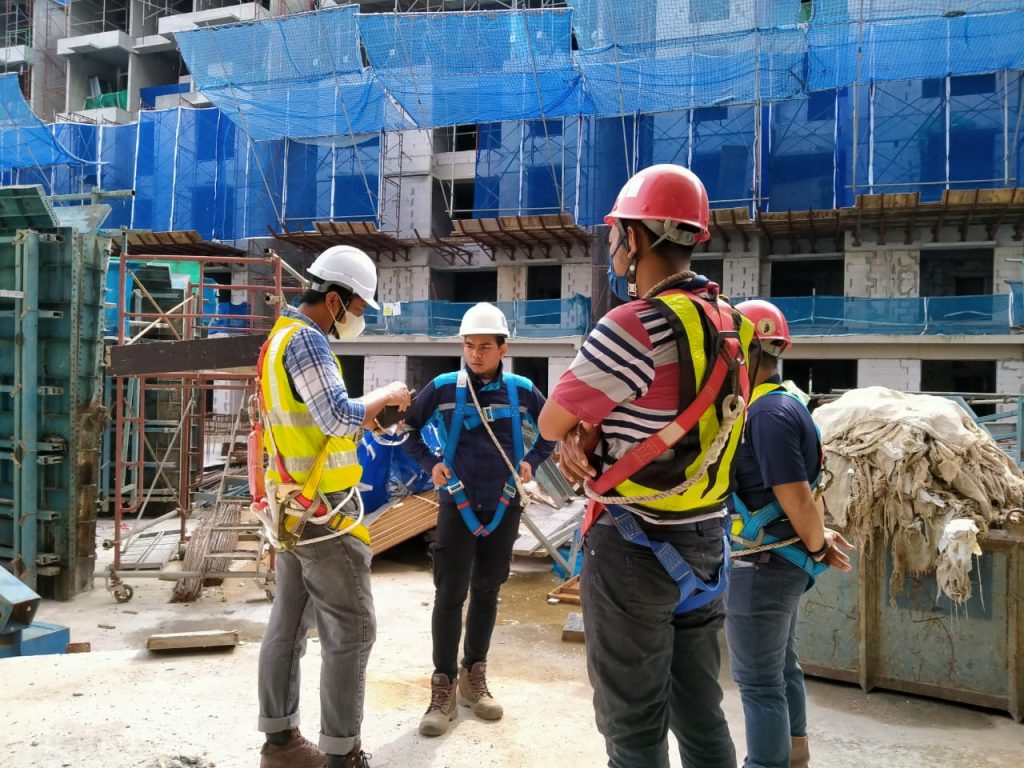
KUALA LUMPUR: The newly imposed 24 per cent reciprocal tariff on Malaysian imports into the United States, effective April 9, is expected to have minimal direct impact on the domestic construction sector, according to MIDF Amanah Investment Bank Bhd. In a sectoral note released today, MIDF highlighted that the construction industry remains primarily domestic in nature, distinguishing it from export-reliant sectors such as automotive and consumer electronics. As such, it is largely insulated from direct trade shocks, though secondary effects through cost inputs could arise. “While the tariffs may exert upward pressure on input costs—particularly steel or cement if global supply chains are disrupted—most of the construction companies under our coverage have no direct revenue exposure to the US market,” the bank stated. The companies cited include Malaysian Resources Corporation Bhd, WCT Holdings Bhd, Malayan Cement Bhd, Cahya Mata Sarawak Bhd, Gamuda Bhd, and Sunway Construction Group Bhd (SunCon). These firms primarily operate within Malaysia, limiting their vulnerability to international tariff policies. MIDF noted that IJM Corporation Bhd has minor exposure to the US through exports of industrial concrete products, but this is not expected to materially affect its overall outlook. Even in cases like SunCon’s data centre projects for US-based hyperscalers, the work is executed within Malaysia and hence unaffected by the tariffs. “Overall, the broader construction sector remains well-shielded from the immediate implications of the US-Malaysia tariff action,” MIDF stated, while acknowledging potential indirect risks from fluctuations in global raw material prices. The investment bank remains positive on the construction outlook, citing a favourable cost environment, stable input prices, and continued momentum in industrial and infrastructure projects. Steel bar prices, for instance, have continued to decline for the fourth consecutive month due to global oversupply. Meanwhile, domestic cement prices remain steady, underpinned by controlled production levels and stable raw material costs. This pricing environment has helped cushion contractors against margin erosion. “Despite geopolitical uncertainties such as the Liberation Day tariffs, we see limited downside risk to the sector, given its domestic focus, low exposure to US markets, and manageable input costs,” MIDF added. As of February 2025, cement prices in Malaysia have held steady at RM380 per tonne for the 19th straight month since July 2023. This prolonged stability reflects a balanced supply-demand landscape and disciplined cost management within the industry.

Property

Grade A office rents on Hong Kong Island down 4.3% in February

According to a Knight Frank report, in February, the overall average Grade A rent in Hong Kong Island continued to decline, dropping by 0.5% MoM and 4.3% YoY to HK$60.8 per sq ft. There has been notable activity in smaller office spaces, particularly those ranging from 2,000 to 3,000 sq ft. The legal sector is experiencing significant growth due to the increasing complexity of financial markets, said Knight Frank, resulting in heightened demand for specialised legal services. This trend has led to new entries and expansions by law firms focusing on private equity funds, investment trusts, exchange traded funds (ETFs) and other finance-related matters. “Recently, two UK law firms have set up their new outposts in Hong Kong: one firm leased the entire 21st floor of Gloucester Tower, Central, covering 12,600 sq ft, while the other secured 3,000 sq ft in K11 ATELIER, Quarry Bay,” the report added. Here’s more from Knight Frank: Meanwhile, the finance sector remained active. For instance, a multinational company providing commercial insurance brokerage services leased 23,000 sq ft on the 25th floor of Two Taikoo Place, relocating from Causeway Bay; while a large-scale transaction involving an alternative investment firm leasing 55,049 sq ft was recorded in The Henderson. On another front, there has been an increase in inspections and inquiries from the crypto sector, which typically prefers smaller office spaces and co-working environments. Government’s investments in Web3 infrastructure and talent development, coupled with tax relief on crypto profits for hedge funds and private equity firms, are anticipated to attract investment. The office leasing market is currently facing significant challenges, including declining rents, high vacancy rates and an oversupply of space. We expect that the measures announced in the Budget—specifically, the halt on releasing new commercial sites for sale in the coming year and the rezoning of some commercial properties for residential use—will stabilise the supply-demand dynamics of the office market and mitigate further rental pressures.–REAL ESTATE ASIA

Property

IJM Corp’s RM2.4 Billion Finsbury Circus Project Fuels Global Expansion

KUALA LUMPUR: IJM Corp Bhd’s Finsbury Circus project in London is set to deliver substantial value to the company, with an impressive gross development value (GDV) of RM2.4 billion. This development is a major boost to the group’s international property portfolio, according to MIDF Research. As part of its medium-term strategy, IJM Corp aims to expand its investment property portfolio to RM2 billion over the next five years. This ambitious plan will focus on strategically selected overseas assets that offer prime locations, sustainability credentials, and strong tenant profiles. One of the key highlights of the Finsbury Circus development is the long-term lease agreement signed with global law firm Simmons & Simmons LLP. The firm has committed to a 20-year lease, occupying approximately 62% of the 25 Finsbury Circus property, with an option to extend to 80%. This lease agreement is seen as a testament to the property’s appeal and the effectiveness of IJM Corp’s strategic plan to diversify and develop high-quality, income-generating assets. For the third quarter of the financial year ending December 31, 2024, IJM Corp reported a 12.9% year-on-year increase in net profit to RM113.3 million, driven by a 4.4% growth in revenue to RM1.54 billion. However, the company experienced a slight dip in its cumulative nine-month earnings, with net profit falling by 6.9% to RM274.4 million due to unrealised foreign exchange losses. Despite this, analysts remain optimistic, expecting IJM Corp to deliver strong earnings growth in the coming years, bolstered by a robust pipeline of industrial contracts, including several hyperscale data centre projects valued at a total of RM12 billion.-NST

Property

MM2H Visa Injects RM455.8 Million Into Malaysia’s Economy

KUALA LUMPUR: The latest data reveals that Malaysia’s revamped Malaysia My Second Home (MM2H) visa programme has injected a staggering RM455.8 million into the economy within just six months, following policy changes implemented in June 2024. With 782 new visa approvals, the programme is on track to generate nearly RM1 billion in annual investments, according to IQI Co-Founder and Group CEO Kashif Ansari. MM2H: A Major Economic Driver “Over the past six months alone, MM2H visa holders have contributed RM455.8 million, benefiting Malaysia in two key ways,” Ansari explained. “Firstly, their funds circulate through local financial institutions via fixed deposits, supporting loans and economic development. Secondly, MM2H participants invest significantly in real estate, particularly in luxury homes, stimulating the property market and related industries.” With 319 principal applicants and 463 dependents approved under the programme in this period, each main applicant brings an average of 1.5 family members into Malaysia, further amplifying economic activity. A Global Appeal Beyond China While Chinese nationals continue to be the largest group of MM2H applicants, they now represent less than one-third of total approvals. Australia ranks as the second-largest source of applicants, with South Korea, Japan, Bangladesh, and the United Kingdom also contributing significant numbers. “MM2H is more international than many realize,” Ansari noted. “We see strong demand from countries across Asia and beyond, showcasing Malaysia’s global appeal as a top destination for expatriates.” Why Foreigners Choose Malaysia Malaysia’s attractiveness lies in its affordable yet high-quality lifestyle, rich cultural diversity, excellent education system, and fast-growing economy. Additionally, Malaysia provides a relatively lower language barrier for Chinese applicants, with Mandarin-speaking services widely available—a major advantage for families bringing elderly relatives who may not speak English. “Many Malaysians may not fully appreciate just how desirable their country is,” Ansari remarked. “Foreigners are willing to invest significantly to live here because Malaysia offers an exceptional quality of life at a fraction of the cost compared to Western countries.” What’s Next for MM2H? The government’s 2024 reforms introduced a three-tiered visa system, offering longer residency periods for greater financial commitments. Additionally, MM2H holders must now purchase a home and retain ownership for at least 10 years. To attract younger, working-age participants, age requirements were lowered, and minimum income thresholds removed. Looking ahead, further enhancements could boost MM2H’s impact, including easier work and business opportunities for visa holders and tax incentives to encourage foreign entrepreneurs to establish businesses in Malaysia. “With MM2H driving close to RM1 billion annually in investments, it’s already proving to be a major success,” Ansari concluded. “With the right improvements, its potential to fuel Malaysia’s economic growth could be even greater in the years ahead.”    

Property

Why Asia’s Elite Are Investing in Property

Despite a volatile macroeconomic landscape, family offices in the Asia-Pacific region are strengthening their commitment to real estate, recognizing the sector’s potential for both capital appreciation and wealth preservation. According to The Wealth Report, Knight Frank’s latest survey of 150 single and multi-family offices worldwide, investors are increasingly diversifying into high-growth real estate sectors such as luxury residential, industrial logistics, and living spaces. The survey, conducted between November and December 2024, covered 121 single-family offices, 18 multi-family offices, and 11 senior investment heads. Notably, 51% of surveyed offices are headquartered in Asia-Pacific, highlighting the region’s growing influence in global investment strategies. Major hubs such as Singapore, Sydney, and Hong Kong SAR are emerging as key centers for wealth management and property investment, alongside established markets like London, New York, and Geneva. Growing Allocations to Real Estate With total assets under management (AUM) exceeding US$84 billion across the surveyed firms, the findings indicate a significant shift toward real estate: 40% of family offices operate businesses with real estate holdings. 28% increased their real estate allocations in the past 18 months, compared to just 17% who reduced exposure. Office spaces (20%), luxury residential (17%), industrial (14%), and hotels (12%) remain the most preferred asset classes. Looking ahead, real estate investment appetite continues to strengthen. 44% of family offices plan to increase their property exposure over the next 18 months, with the highest interest in Living sectors (14%), Industrial/logistics (13%), and Luxury residential (12%). “Despite concerns over macroeconomic conditions, family offices remain bullish on real estate, particularly in Asia, where diversification into emerging sectors like data centers and living-related assets is gaining traction,” said Christine Li, Head of Research at Knight Frank Asia-Pacific. Challenges and Investment Strategies While optimism remains high, investors face structural challenges in expanding their real estate portfolios. The top barriers include: Identifying reliable partners/operators (23%) Complex tax regulations (20%) Intense competition for assets (19%) Regulatory and compliance hurdles (17%) In response, family offices are shifting away from traditional core investments toward opportunistic (31.9%) and value-add (30.3%) strategies, seeking higher returns in a market shaped by rising interest rates and shifting economic conditions. A Regional Focus with Global Ambitions Asia-Pacific family offices exhibit a strong preference for domestic real estate investments, with 70% of their portfolios concentrated in local markets. Countries such as New Zealand (93%) and Australia (90%) demonstrate particularly high domestic investment levels. However, investors in Hong Kong SAR (33%) and Singapore (41%) are expanding their reach, targeting opportunities in both regional and international markets. For most family offices, real estate remains a long-term strategy: 37% of investments have a horizon of nine years or more 32% span between three to six years Only 3% of transactions are made with a sub-three-year outlook Shifting Dynamics Among Family Offices The leadership of family offices remains predominantly baby boomer-led (50%), with Gen X (36%) following closely behind. However, the next generation is increasingly influencing investment decisions: 58% of family offices have involved younger generations in decision-making 47% report some shifts in investment strategies, with 18% seeing a significant transformation Millennials and Gen Z are prioritizing sustainable investments, with 63% of millennial investors actively allocating capital to ESG-focused assets, compared to 35% of baby boomers Singapore: A Growing Wealth Hub Singapore continues to solidify its position as a global wealth and investment hub. The number of registered single-family offices (SFOs) surged from 400 in 2020 to over 2,000 by 2024, underscoring the city-state’s appeal to high-net-worth individuals seeking stability and pro-business policies. “In an era of rising geopolitical tensions and economic fragmentation, Singapore remains an attractive destination for wealth preservation and capital deployment,” said Galven Tan, Chief Executive Officer at Knight Frank Singapore. In 2024 alone, family offices played a crucial role in high-profile property acquisitions previously dominated by institutional investors. Notable transactions included: Admirax Industrial Building – Sold for S$154 million 21 Collyer Quay (Office Building) – Acquired for S$688 million River Valley Apartments (Collective Sale) – Closed at S$56 million, brokered by Knight Frank Singapore The growing influence of family offices in real estate investment signals a major shift in global wealth management. With a stronghold in Asia-Pacific, these investors are actively diversifying into resilient and high-yielding property assets, overcoming structural challenges through strategic partnerships and innovative investment approaches. As family offices continue to evolve, the next generation of leaders is expected to drive further changes, particularly in sustainable and technology-driven real estate investments.

Property

Radium Development Berhad’s PBT Surges 29% to RM24.9M in FY2024

KUALA LUMPUR:  Radium Development Berhad (“Radium” or “the Group”) (KLSE: RADIUM), a leading Klang Valley property developer, has reported robust financial results for the financial year ended 31 December 2024 (“FYE2024”), driven by strong project performance and strategic expansion. Radium’s revenue rose 19.1% to RM152.8 million (FYE2023: RM128.3 million), supported by key projects such as Suite Canselor @ Ampang, Vista Adesa, and Radium Adesa @ Sungai Besi. Profit before tax (“PBT”) surged 29% to RM24.9 million (FYE2023: RM19.3 million), attributed to higher revenue and improved cost efficiencies. In 4Q FYE2024, revenue jumped 63.3% to RM46.2 million (4Q FYE2023: RM28.3 million), though PBT was lower at RM9.5 million (4Q FYE2023: RM15.3 million) due to a one-off fair value gain in the previous year. As of 31 December 2024, Radium maintains a strong balance sheet with RM244.5 million in cash and a low gross gearing ratio of 0.13 times against shareholders’ funds of RM767.6 million. Strategic Growth & Market Expansion Radium continues expanding its project pipeline, with the successful launch of Radium Arena @ Old Klang Road (GDV: RM550 million) and high take-up rates for Desa East Residences. Recent land acquisitions in Cheras and Ampang add GDVs of RM2.54 billion and RM470 million, respectively, strengthening future development prospects. Diversifying beyond property development, Radium is entering the hospitality sector with a 145-room boutique hotel at Suite Canselor @ Ampang, marking a new growth avenue. Future Outlook Datuk Gary Gan Kah Siong, Group Managing Director, stated: “Our strong FY2024 results underscore Radium’s resilience and growth potential. Demand for our developments remains strong, and our strategic land acquisitions, coupled with diversification into hospitality, position us for long-term success. With a solid financial base and a low gearing ratio, we are well-placed to drive sustainable growth and enhance shareholder value.” Moving forward, Radium will continue expanding its land bank in prime locations, diversifying revenue streams, and delivering high-quality projects to meet evolving market demands.

Property

Gamuda Land’s The Clove Achieves 100% Take-Up for Phase One

SELANGOR: Gamuda Land has announced the overwhelming success of The Clove, its newly introduced Park Homes typology, which achieved a 100% take-up rate for its first phase across Gamuda Cove, Gamuda Gardens, and twentyfive7. This milestone highlights the strong market demand for customer-centric innovation and AI-powered home customization, setting a new benchmark for modern homeownership. The Clove introduces Malaysia’s first-of-its-kind Park Homes, featuring an innovative cluster-of-eight layout arranged around a private, gated common garden. By blending the best aspects of terrace and semi-detached homes, this concept offers spacious, flexible layouts designed to meet the evolving needs of modern families. Compared to conventional terrace houses, Park Homes provide lower density, enhanced privacy, and a higher proportion of corner units, ensuring more green space and natural light—key factors for homebuyers prioritizing wellness, nature, and a secure living environment for their families. A standout feature of The Clove is its cutting-edge home customization technology, powered by Generative AI (GenAI) through the GL Connect portal. Buyers can personalize their home’s room configurations—choosing between one to three bedrooms—based on their lifestyle needs, all at no additional cost. This eliminates the need for costly post-purchase renovations, offering homeowners a seamless and hassle-free buying experience. “The Clove is a result of extensive research and customer feedback,” said Jess Teng, Chief Operating Officer of Gamuda Land. “We wanted to go beyond traditional housing and create homes that are not only spacious and sustainable but also flexible and future-proof. With GL Connect, buyers can design their ideal space without the usual renovation struggles, making homeownership more accessible and tailored to real-life needs.” While the unique Park Homes concept was initially unfamiliar to many buyers, the exclusive show unit previews at Gamuda Cove and Gamuda Gardens quickly changed perceptions. “Seeing the actual space helped buyers understand the benefits of this design,” Teng explained. “The overwhelming response confirms that homebuyers today are looking for innovative, adaptable, and nature-focused living spaces.” What’s Next? With a Gross Development Value (GDV) of RM1 billion, The Clove represents Gamuda Land’s commitment to sustainable, modern living. The show units at Gamuda Cove and Gamuda Gardens remain open for public viewing, while the Signature Collection at twentyfive7 is set to launch in March. For more information or to experience Malaysia’s first AI-powered home customisation portal, GL Connect, visit gamudaland.com.my.

Property

EcoWorld sells land in Johor to Microsoft for RM693mil

PETALING JAYA: Eco World Development Group Bhd (EcoWorld Malaysia) is selling freehold industrial land measuring 138.532 acres at Eco Business Park I in Iskandar Malaysia to Microsoft Payments (Malaysia) Sdn Bhd for RM693.96mil. In a filing with Bursa Malaysia, EcoWorld Malaysia said part of the disposal price will be used to complete the remaining main infrastructure development on the land and to defray associated expenses for the proposed land sale, which are expected to be incurred within 24 months from the date of the sale and purchase agreement. “At this juncture, the quantum for each of these utilisations has yet to be finalised.” It added that the balance will be used as working capital. “Timing of utilisation cannot be ascertained at this juncture as it will depend on the actual amount available and actual working capital requirements at that point of time. “Any part of the disposal price which has yet to be utilised will be placed in deposits with financial institutions or short-term money market instruments. Interest derived from the deposits placed or any gain arising from short-term money market instruments will be used as working capital of the group.” Additionally, EcoWorld Malaysia said the proposed land sale, once it is completed, is expected to enhance the net assets and gearing of the group in view of the surplus cash after setting aside cash required to complete the remaining infrastructure works and to defray associated expenses. “The quantum of the surplus cash cannot be determined at this juncture as it will depend on, amongst others, actual development costs incurred for the development of the Land at the time of completion.” Commenting on the land deal, EcoWorld Malaysia said the industrial component of its business has been growing very rapidly over the past four years with annual sales having exceeded RM1bil in financial year 2023 (FY23) and FY24 from this segment alone. “This is largely attributed to the comprehensive three-pronged strategy adopted by the group, which has given it a wide range of products across two sizeable industrial revenue pillars, thus enabling it to serve local small and medium enterprises, larger industrialists and renowned international players. “The sale of industrial land with infrastructure to global multinationals, in both traditional manufacturing as well as the high-tech and digital space, is an integral part of the group’s strategy to grow its Eco Business Park.” EcoWorld Malaysia said the proposed land sale at Eco Business Park I marks the second strategic land deal entered into between the company and the buyer for their development and operation of a data centre in Iskandar Malaysia. “It demonstrates the southern state and Malaysia’s continued attractiveness as a hub for hyperscale data centre operators and is also testament to the suitability of the group’s industrial parks as ideal sites for such high-tech operations.” The company said the completion of sale will add to the group’s already substantial cash reserves (including short-term funds) which stood at RM1.36bil as at Oct 31, 2024. “Accordingly, EcoWorld Malaysia is in a very good position to not only expand its landbank but to also pursue strategic opportunities to grow its portfolio of recurring income assets in the commercial and / or industrial sector. “This is with the aim of establishing a solid foundation of new and sizeable recurring income sources to anchor future cashflow and earnings, thus complementing the group’s trading revenue generation from its sale of development properties.”–THE STAR

Property

Penang Welcomes its First Crowne Plaza Hotel

PENANG: The Crowne Plaza Penang Straits City marked its grand opening today with a jubilant celebration, signifying a major milestone in the Straits City Future City (海峡综合城) waterfront flagship development. This transformative 40-acre project is set to revitalize Butterworth into a dynamic and inclusive future city. A Vision for Transformation Ms. Chew Gek Khim, Executive Chairman of Straits Trading, emphasized the significance of this launch, stating: “Crowne Plaza Penang Straits City represents the transformation of our legacy assets and land bank in Butterworth. This is just the beginning of a transformative journey for Straits City. More than just infrastructure, Straits City is about creating a thriving urban ecosystem where businesses, communities, and innovation converge—contributing to Butterworth’s long-term growth and vibrancy as a place to work, live, and play.” Straits City is a collaboration between Singapore Exchange (“SGX”)-listed The Straits Trading Company Limited (“Straits Trading”) (海峡贸易) and Bursa Malaysia-listed Malaysia Smelting Corporation Berhad (“MSC”). Straits City: An Interactive, Intelligent, and Integrated Urban Hub Crowne Plaza Penang Straits City and Straits Galleria mark the first phase of the 40-acre development, which is set for completion by 2038. The master plan envisions Butterworth as a key future city in the Northern Region, seamlessly connecting Penang’s mainland and island. Reflecting on this broader vision, Ms. Chew stated: “Straits City is designed to create a balanced and sustainable community, meeting the needs of today while also fulfilling the aspirations of future generations. Our goal is to cultivate a thriving urban environment that enriches Butterworth’s economic and social fabric.” The development integrates retail, commercial, and residential components under the “Work, Live, Play” concept, fostering a seamless blend of work, leisure, and modern living. Sustainability is at the core of Straits City’s vision, featuring eco-conscious infrastructure and smart technologies, such as intelligence-driven security systems and Internet-of-Things solutions to enhance energy efficiency. Additionally, pedestrian-friendly walkways and cycling pathways will be introduced where feasible to promote an active and sustainable lifestyle. Straits City is also aligned with local initiatives, collaborating with agencies to empower communities and support projects like the ‘Levelling Up Seberang Perai’ program under the Penang State Government’s Penang 2030 plan. Strategic Growth and Economic Impact Strategically located just 2 km from the Northern region’s transportation hubs, Straits City offers excellent accessibility. The development is well-supported by existing and upcoming infrastructure, including highways, rail, and additional transport routes that enhance connectivity within the region. Butterworth’s rapid industrialization and projected population growth to 1.2 million by 2030—comprising 55% of Penang’s total population—make Straits City a crucial driver of the region’s evolving urban landscape. Additionally, Penang remains Malaysia’s top contributor to manufacturing Foreign Direct Investment (“FDI”), reinforcing its status as an economic powerhouse. With its close proximity to key industrial zones such as the Perai Free Industrial Zone, the development is primed to meet the rising demand for housing, services, and high-quality hospitality. Crowne Plaza Penang Straits City: A New Landmark in Hospitality As the first Crowne Plaza in Penang, the 23-storey hotel features 343 well-appointed rooms and suites designed to cater to the growing demand for luxury accommodations on the mainland. Equipped with motion-sensor lighting and offering stunning views of Penang Island, the hotel also underscores sustainability through organic bath amenities. The hotel provides versatile spaces for business and leisure, including: Straits Ballroom, accommodating up to 800 guests Smaller meeting rooms, ideal for intimate gatherings Straits Galleria, a multi-level retail podium with a curated selection of shops, restaurants, and entertainment venues Grand Opening Highlights The grand opening ceremony welcomed distinguished guests, including representatives from Straits Trading, MSC, IHG Hotels & Resorts (“IHG”), government officials, industry leaders, business associates, and the media. The celebration featured a traditional lion dance symbolizing prosperity, followed by an immersive video presentation showcasing the envisioned development of Straits City. Key speakers at the event included: Ms. Tan Hwei Yee, Chief Executive Officer of STC Property Management Sdn. Bhd. Shi’ai Liang, Senior Director, Development of IHG Ms. Chew Gek Khim, Executive Chairman of Straits Trading, who delivered the keynote address emphasizing Straits City’s long-term vision and the collaborative efforts that made this milestone possible The official opening was graced by Mr. Abdul Hadi Che Man, Director of Tourism Malaysia Northern Region, and YB Chee Yeeh Keen, Bagan Jermal State Assemblyman. Following the ceremony, guests enjoyed an exclusive guided tour of the hotel’s eco-friendly features and innovative designs. The event also included a visit to the Straits City Concept Centre (“SCCC”), a 10,000-square-foot gallery offering a comprehensive and interactive overview of the broader development. The day concluded with a networking luncheon at the hotel’s 1887 All Day Dining Restaurant. A Promising Future for Straits City With the launch of Crowne Plaza Penang Straits City, Butterworth is poised for a remarkable transformation. As Straits City evolves, it will play a crucial role in shaping the region’s future, fostering a vibrant urban ecosystem that aligns with economic growth, sustainability, and modern living.

Scroll to Top

Subscribe
FREE Newsletter