Global trade in forest-risk commodities is entering a new era, defined not by scale alone, but by the ability to prove origin through verifiable supply chain traceability. For China, the world’s largest processor and exporter of wood and rubber-derived goods, the implications are immediate and structural.
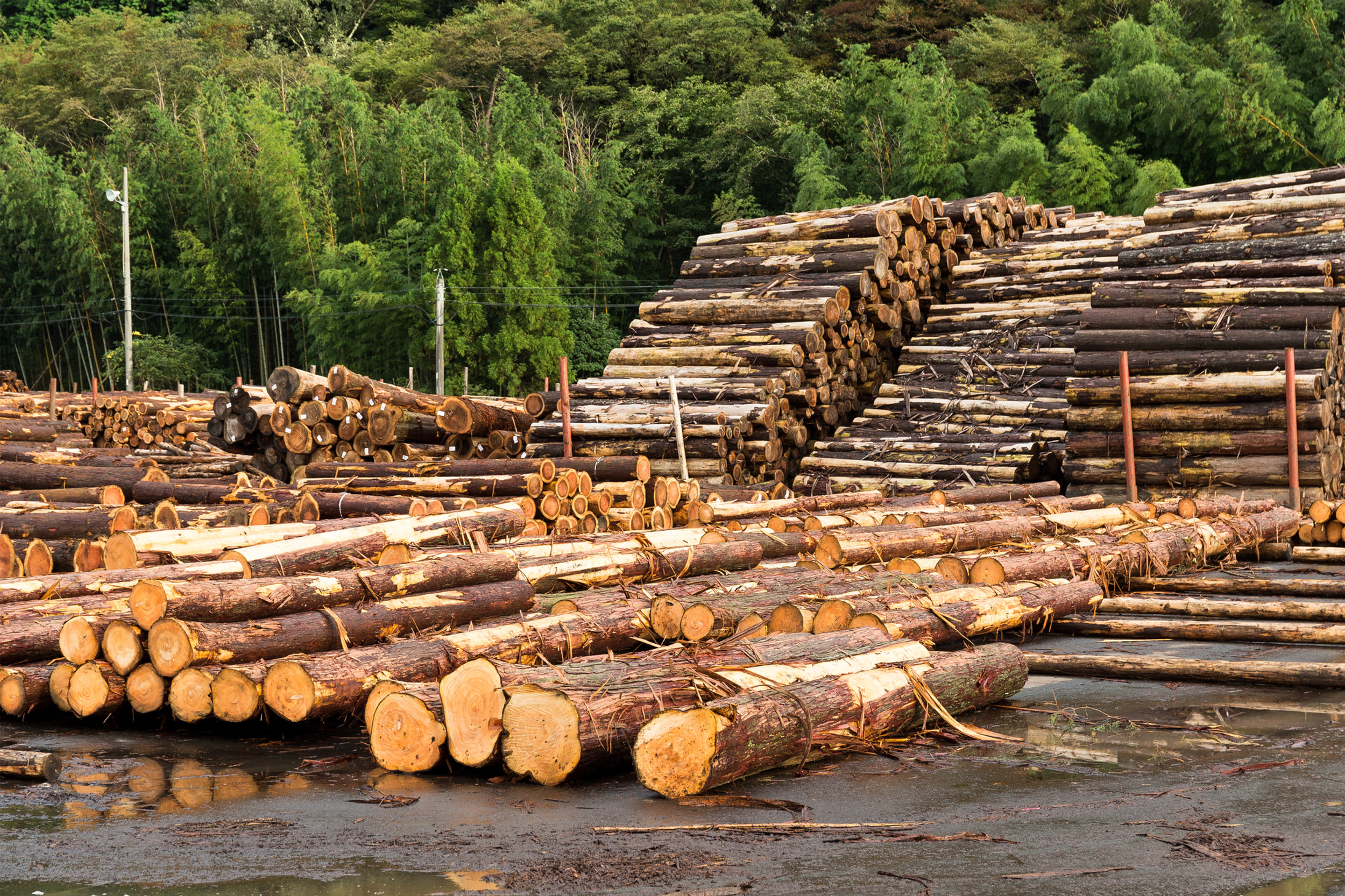
China exports over €7.1 billion in wood-based goods and €4.01 billion in rubber products to the European Union each year, placing the country at the heart of one of the world’s most scrutinized deforestation-linked supply chains (Fern, 2026). With approximately 30–35% of global wooden door and window production, China’s industrial scale is unmatched (MDPI, 2025). Under the EU Deforestation Regulation (EUDR), these combined flows, worth over €11 billion annually, now require full traceability to the plot of origin, proof of legal sourcing, and deforestation-free verification. Compliance is no longer about documentation but more about verifiable data.
Yet most supply chains operating through China are not built for this level of transparency. The challenge is not conceptual but rather operational. Fragmented sourcing networks, multiple intermediaries, and sourcing from thousands of smallholder producers have created data environments that are inconsistent, incomplete, and disconnected from downstream enterprise systems. The result is a systemic readiness gap: companies understand the requirement but lack the operational capability to meet it at scale.
The scale of the problem varies by commodity but follows a consistent pattern. In rubber, maintaining supply chain traceability is complicated by supply networks where commodity ownership changes multiple times before processing. In timber, tightening legality requirements expose the limits of documentation that cannot be standardized across jurisdictions, increasing the need for legality compliance. Across agricultural commodities, visibility into farm-level practices remains uneven, constraining the ability to verify upstream conditions with the precision now required by regulators and buyers alike.
Implementation barriers compound this structural challenge. High costs, the absence of unified market standards, and limited technical capacity continue to constrain adoption, particularly among smallholder producers, who represent the majority of upstream suppliers. Research on agricultural technology adoption underscores that rollout depends not just on the availability of tools but on knowledge transfer, capacity building, and sustained extension support (Frontiers, 2025).
Regulatory pressure is also accelerating from both sides. The EUDR requires end-to-end traceability from production plots to the point of EU market entry. In parallel, China’s General Administration of Customs has introduced tighter procedural requirements for the declaration and management of overseas enterprises engaged in agricultural exports, thereby strengthening traceability, quarantine supervision, and customs clearance efficiency in line with international phytosanitary standards (China Briefing, 2025).
Companies operating in China’s export ecosystem now face a dual compliance architecture: stringent import regulations in destination markets and China’s evolving governance frameworks on digital traceability and food safety. With the EUDR’s enforcement deadline set for 30 December 2026 for large operators, the window for companies to build compliant traceability systems is narrowing faster than many supply chain teams have anticipated.
“Across APAC, buyers are no longer accepting supplier declarations at face value. They want origin data that can withstand audit. For China’s exporters, traceability is becoming a commercial filter: those who can prove deforestation-free sourcing will protect key accounts; those who cannot risk being left off supplier shortlists,” says Olivier Barents, Senior Head of Markets APAC, KOLTIVA.
What is emerging from this shift is a fundamental reframing: traceability is no longer a sustainability reporting layer. It is becoming core infrastructure and a foundational capability that shapes how materials are sourced, how risks are assessed, and how companies compete in regulated markets. Companies that invest in it are repositioning. Greater visibility enables stronger sourcing relationships. Procurement becomes more informed and less reactive. And the ability to provide verifiable data builds the kind of trust that international buyers increasingly expect as a baseline, not a bonus.
“Today, traceability is directly linked to market access. China’s companies need to demonstrate the origin of their products with credible, auditable data. The biggest challenge we see is not the availability of technology, but implementation at scale as many supply chains remain fragmented at the origin level. Traceability platforms such as KoltiTrace helps bridge that gap by enabling field data collection, supplier mapping, and transaction tracking in one system, so traceability becomes a strategic advantage, not just a compliance requirement,” states Liu Wenjing, Customer Success Representative, KOLTIVA China.
The risks are already materializing. EU importers sourcing wood- and rubber-derived goods from China are increasingly pre-screening suppliers ahead of enforcement, quietly deprioritizing non-compliant supply chains in procurement decisions before any formal regulatory action takes place. For Chinese exporters, the practical consequence is not a distant compliance deadline but the loss of buyer relationships happening now, as EUDR compliance becomes part of supplier pre-screening.
The trajectory is clear. Export-oriented companies are already encountering this shift in practice, with buyers in regulated markets demanding geolocation data, risk assessments, and verifiable evidence of deforestation-free sourcing that goes well beyond traditional supplier disclosures.
The inability to provide such data is no longer merely a compliance gap; it is a commercial risk with direct consequences for market access, procurement relationships, and long-term competitiveness. For private-sector actors, the immediate priority is a supply chain readiness assessment that maps where traceability data exists, where it breaks down, and which supplier tiers carry the greatest exposure before the enforcement window closes. For government agencies, the opportunity lies in aligning national customs and agricultural governance frameworks with EUDR audit requirements and in accelerating smallholder onboarding programs that make compliance operationally viable at origin.
The defining question for the sector is no longer whether transformation is needed, but whether companies and policymakers can move fast enough to secure their position in an increasingly traceable world.