As Malaysia works toward increasing the female Labour Force Participation Rate (LFPR) to 60% by 2033, the latest data reveals a notable gap: women’s LFPR stands at 56.4%, compared to 83.3% for men. Many single mothers face the dual responsibilities of paid employment and unpaid caregiving — a challenge often referred to as the ‘double shift’ or ‘double burden’.
A 2019 survey by the Khazanah Research Institute (KRI) shows that Malaysian women spend significantly more time than men on unpaid care work, while devoting a similar number of hours to paid work. These tasks, including cooking, cleaning, and child care, are mentally demanding and time-sensitive.
Inclusive Employment Initiatives by dobiQueen
As part of its inclusive employment policy, dobiQueen actively hires single parents and members of the B40 community, providing meaningful opportunities, job stability, and long-term support.
Most recently, the company introduced its “Single Parent Welfare Support” programme, rewarding high-performing single-parent employees with monthly incentives of up to RM500. This initiative strengthens the workforce while advancing dobiQueen’s mission to empower women and foster a supportive society.
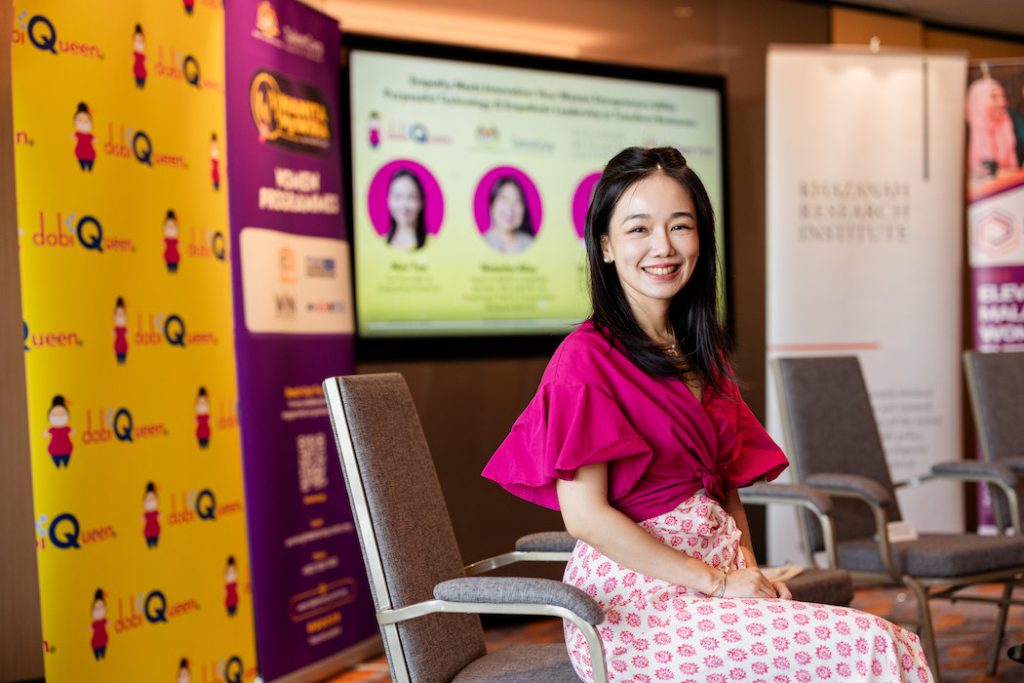
Nini Tan, Co-founder and Executive Director of dobiQueen
“Empowering women and strengthening families to reclaim their time to focus on what matters most has always been core to dobiQueen’s mission,” said Nini Tan, Co-founder and Executive Director of dobiQueen.
“Our Single Parent Welfare Support programme reflects our commitment to helping them build stability, confidence, and long-term success. When single parents are empowered, this strengthens families, and communities flourish from there.”
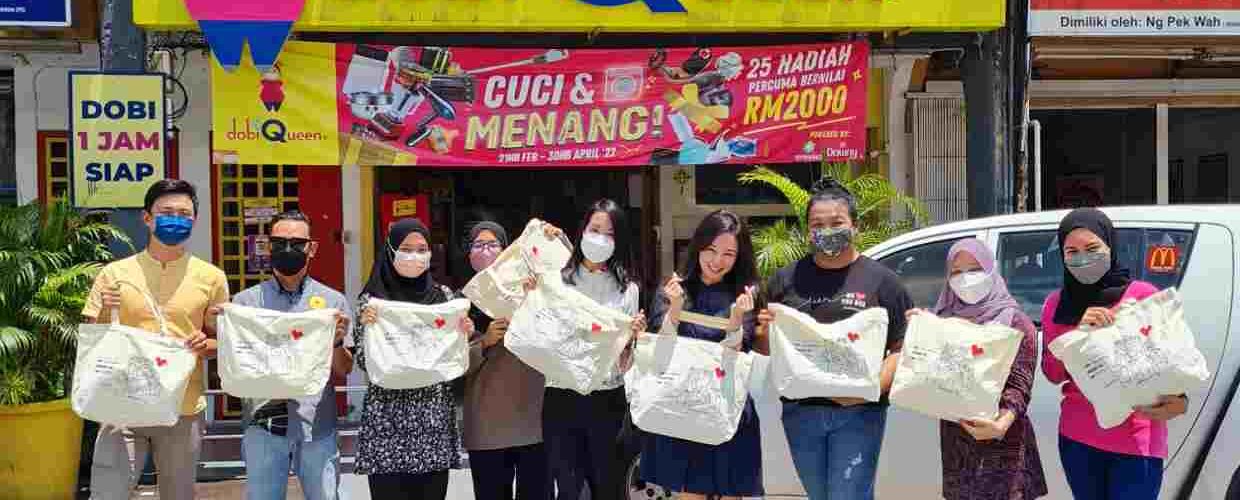
Personalised Raya bags were also gifted to children in collaboration with the Dignity for Children Foundation.
Dedicated to supporting underserved communities, dobiQueen regularly collaborates with NGOs such as Dignity for Children Foundation, Kintry, PichaEats, Komuniti Tukang Jahit (KTJ), and The Asli Co. These partnerships have supported single mothers, refugee mothers, and women from the B40 income group, helping them generate income and enhance skills.
Malaysians Turn to Launderettes to Save Time and Energy
In line with Malaysia’s social and economic inclusion goals, dobiQueen is also redefining everyday convenience. A recent customer survey reveals that families, working individuals, and students increasingly use professional launderette services to reclaim valuable time.
By outsourcing laundry, customers save 150 to 300 hours a year — equivalent to 25 hours per month or 6 hours per week. This time savings allows them to reduce stress and enjoy greater flexibility in daily life.
Customer data from over 15 million washes shows that:
-
41% of users spend extra time bonding with their children
-
32% use the time for dining out and social activities
-
19% reinvest the time into managing or growing their businesses
-
8% dedicate time to self-care
Globally, self-service laundry services are growing rapidly, with the Asia Pacific region leading, driven by urbanisation, a growing middle-class population, and widespread smartphone adoption. 
With over a decade in the laundry industry, dobiQueen has gained insights into customer habits via its proprietary mobile app. The app helps users locate the nearest outlet and start washing or drying instantly via QR code scanning, removing the need for in-outlet kiosks, buttons, or tokens.
“With over 90 outlets across the Klang Valley, we’ve witnessed firsthand how our laundrette services can make a meaningful impact, giving Malaysians more time and energy back in their daily lives,” said Nini Tan.
Expansion Plans and Global Benchmarking
dobiQueen plans to open 20 outlets per year, expanding to Sabah and Sarawak, with 10 outlets in Kota Kinabalu and 10 in Kuching.
“At dobiQueen, we actively benchmark against global leaders in the laundry industry, particularly Japan and Korea, known for advanced technologies,” said Nini Tan.
“While Korea leads in automation and convenience, we adapt innovations to suit Malaysian consumer behavior, prioritising trust and security. Japan remains technologically advanced but often relies on physical tokens and domestic e-payment systems. Malaysia has leapfrogged these limitations with inclusive payment options for both local and international users.”
The laundry service market is valued at US$45.85 billion in 2025 and is projected to reach US$273.0 billion by 2032, growing at a CAGR of 29.3% from 2025 to 2032.