About €2.75 billion in agricultural export earnings is at risk for East Africa as global markets tighten rules on traceability and sustainability. Exporters are now required to show clear proof of where and how their products are produced, yet only 15% of agribusinesses in the region are aware of these new requirements, according to the 2024 Danish Industry Report.

Most producers still lack digital traceability systems, putting access to high-value markets—particularly the European Union—at serious risk. Agriculture remains the backbone of East Africa’s economy, contributing 32% of GDP and employing more than 80% of the population. However, exports such as coffee, cocoa, tea, cereals, horticulture products, oil crops, rubber, and timber are facing increased scrutiny across Uganda, Kenya, Tanzania, Ethiopia, Rwanda, and Burundi.
The pressure has intensified with the enforcement of the EU Deforestation Regulation (EUDR) and the Corporate Sustainability Due Diligence Directive (CSDDD). These rules require exporters to provide verifiable proof of legal origin, deforestation-free sourcing, and full supply-chain transparency. They apply broadly across agricultural exports, not just high-risk commodities.
While these regulations aim to promote sustainability, they have exposed a major readiness gap. The Danish Industry Report shows that 65% of companies need clearer guidance, 57% require practical compliance frameworks, and 52% lack access to digital tools needed to comply. The impact is already visible—The Guardian reported in 2024 that some EU buyers have slowed or reduced purchases from East African suppliers due to compliance uncertainty, especially in supply chains dominated by smallholders.
Despite the risks, many businesses still view digital traceability as costly. In reality, the greater cost lies in losing access to premium markets. Adoption remains slow due to low digital literacy, limited smartphone access, weak internet connectivity, fragmented systems, and data privacy concerns.
Speaking at KOLTIVA’s Beyond Traceability Talks webinar, Susan Atyang, Regional Program Manager at the Agricultural Business Initiative (aBi), said traceability is essential for competitiveness, market access, and financial inclusion. She noted that aBi supports organisations only after assessing readiness factors such as audited accounts, return on investment, farmer reach, and compliance systems—highlighting that traceability is now a business necessity, not an optional add-on.
Misconceptions also remain about smallholder farmers’ ability to adopt digital tools. Waithera Muriithi, Strategy & Innovation Lead at Café Africa Uganda, challenged this view, saying the real issue is awareness, not capability. When farmers understand the benefits, adoption improves. Café Africa is supporting national efforts such as EUDR task forces and the creation of data warehouses to streamline compliance.

Still, major challenges persist. Over 75% of agriculture in Ethiopia, Kenya, Tanzania, and Uganda depends on smallholders, many of whom lack formal land documentation required for geolocation verification. Fragmented supply chains with multiple intermediaries make consistent data collection difficult. Internet penetration stands at just 28.5%, far below the global average of 67.9%, and 80% of smallholders live below the poverty line, making it unrealistic to place the full cost of compliance on farmers.
According to Fanny Butler, Senior Head of Markets EMEA at Koltiva, sustainability is impossible without traceability—and demand will only increase. She stressed that shared-cost models are essential, where buyers subsidise onboarding, suppliers ensure data quality, and development partners co-finance mapping. Early adopters, she added, will gain a clear competitive advantage.
Adding a global perspective, Manfred Borer, CEO and Co-Founder of Koltiva, said East Africa has strong resources and global demand but needs coordinated readiness. Traceability, he noted, is no longer optional—it is the price of entry into the world’s most valuable markets.
Experts agree that progress depends on three key actions: increasing regulatory awareness across supply chains, verifying source-level data such as geolocation and deforestation risk, and deploying digital tools suited to rural conditions.
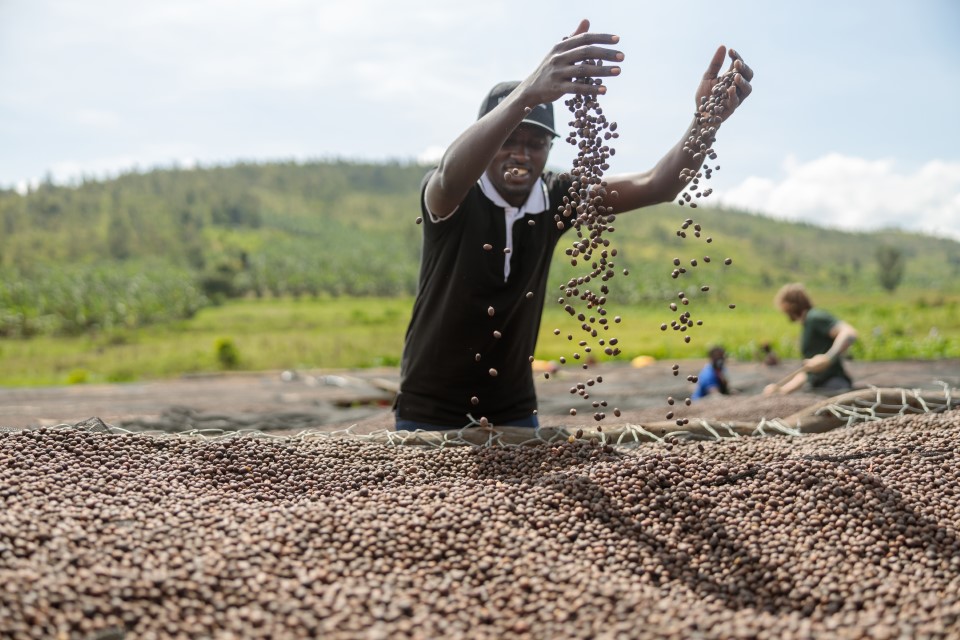
East Africa is expected to contribute 19% of additional global agricultural production over the next decade, according to OECD–FAO projections. However, unlocking this potential depends on how quickly exporters, processors, cooperatives, and governments close the compliance gap. As sustainability rules tighten, the region faces a clear choice: strengthen competitiveness through traceability—or risk shrinking access to global markets.