Companies can invest in automation, advanced manufacturing and new technologies, but none of it works without people who know how to use them. Institut Latihan Umax is tackling one of the most persistent challenges facing Malaysian industry: finding workers with the skills to do the job.
Malaysia does not have a shortage of people looking for work. Yet companies continue to struggle to find people with the right skills.
That contradiction has become increasingly important as the country moves towards more sophisticated manufacturing, automation and Industry 4.0.
The problem is no longer simply about education. It is a business problem.

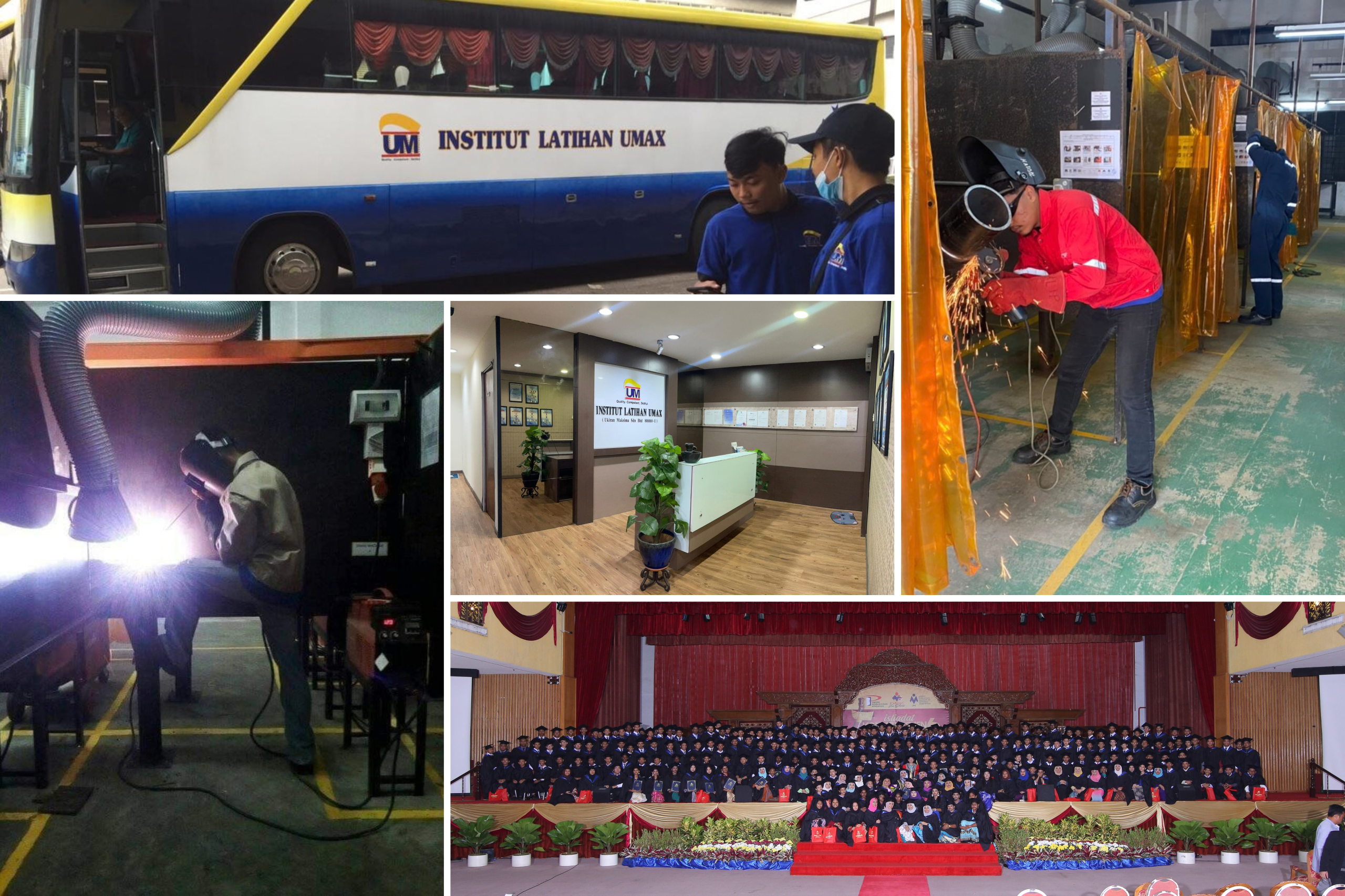
Institut Latihan Umax, managed by Ukiran Maksima Sdn Bhd, operates directly within that gap. The Technical and Vocational Education and Training (TVET) institution specialises in welding technology and polymer technology, particularly injection moulding, combining theoretical education with hands-on technical training.
Its students include SPM leavers, unemployed youth, job seekers and working adults. But the ultimate measure of its programmes is determined somewhere else: the workplace.
Training for the Job
For employers, hiring someone with a qualification is not necessarily the same as hiring someone who is ready to work.
Technical industries require employees who understand equipment, processes, safety and production environments. Businesses also need people capable of communicating, solving problems and working effectively within teams.
Umax was built around closing that divide.
Its programmes incorporate practical training, professional certification, career guidance and job-placement services. By working directly with employers and industry partners, the institution attempts to ensure that what students learn reflects what companies actually need.
The distinction matters.
Education can produce qualifications. Industry needs capability.
For Umax, success therefore depends less on how many people enter its classrooms and more on how many leave equipped for sustainable employment.
Technology Keeps Changing the Skills
The challenge is becoming harder because the workplace itself is moving.
Automation, artificial intelligence, digitalisation and Industry 4.0 are changing how factories operate and what employers expect from workers.
Technical skills can no longer remain static.
Umax continuously reviews its curriculum, training equipment and certification programmes while investing in trainer development. Employer feedback, labour-market information and graduate employment outcomes are used to identify where skills demand is moving.
This creates a continuous cycle between industry and education.
As businesses adopt new technologies, training has to respond. As jobs evolve, workers need new competencies. And as existing roles change, even experienced employees may need to return to training.
That is why Umax’s market extends beyond school leavers.
Upskilling and reskilling working adults is becoming an increasingly important part of workforce development as companies attempt to modernise without leaving existing employees behind.
Quality Over Headcount
There is an obvious growth strategy for any education provider: increase enrolment and introduce more courses.
Umax is deliberately cautious about both.
The institution says growth should instead be reflected in graduate employment, training quality, stronger employer partnerships and the ability to deliver skills that have genuine market demand.
It does not want to introduce programmes simply because students might enrol in them. There must also be an industry need on the other side.
That approach puts employability at the centre of the business model.
It also explains the emphasis on job placement. Umax works with employers to connect graduates with employment opportunities, extending its role beyond training towards workforce development.
A Business Issue, Not Just an Education Issue
As Umax itself expands, maintaining industry relevance becomes more difficult.
Its response has been to strengthen governance, introduce clearer responsibilities across specialised teams and rely more heavily on performance monitoring, employer feedback and employment outcomes.
The institution is also modernising training facilities, strengthening industry partnerships and developing its trainers to keep pace with technological change.
These investments address a much larger economic challenge.
Malaysia can attract investment, automate factories and encourage companies to move into higher-value activities. But those ambitions ultimately depend on whether businesses can find enough people capable of doing increasingly sophisticated work.
Machines alone do not create an advanced economy. Neither do certificates.
People with the ability to apply knowledge, adapt to technology and solve real problems do.
That is why Malaysia’s skills gap increasingly belongs not only in conversations about education, but in boardrooms, factories and economic planning.
For institutions such as Umax, the task is to make sure the skills being taught today still have value when graduates walk into the workplace tomorrow.