Singapore-based deeptech startup N&E Innovations has raised around $1.7 million in Series A funding to develop solutions that help keep fresh produce and food products from spoiling.
The round was led by Australian agrifood investor Tundra Capital, with SGInnovate, The Radical Fund, Archipelago VC and SG7 Group also participating. Existing investors Cercano, SEEDS Capital, Elev8 Capital and Qian Hu Corporation joined the round as well.

Didi Gan is a Singaporean biomedical scientist and entrepreneur who founded N&E Innovations to turn agricultural food waste into sustainable antimicrobial technology.
The company uses waste from cashew processing to develop ViKANG99, an ingredient designed to slow the growth of bacteria and mould. It can be used to produce protection, packaging and hygiene products.
“Food waste is usually seen as something we need to get rid of. We see it as a resource,” said founder Didi Gan. “We can take something like a discarded cashew nut husk, extract the compounds that naturally fight microbes and turn them into an ingredient that can help protect food.”
Founded in 2020 by biomedical scientist Didi Gan, N&E Innovations has developed ViKANG99, a patented edible antimicrobial ingredient made from agricultural waste, including discarded cashew nut husks. The ingredient helps slow the growth of bacteria and mould and can help fresh produce stay fresh for up to four times longer.
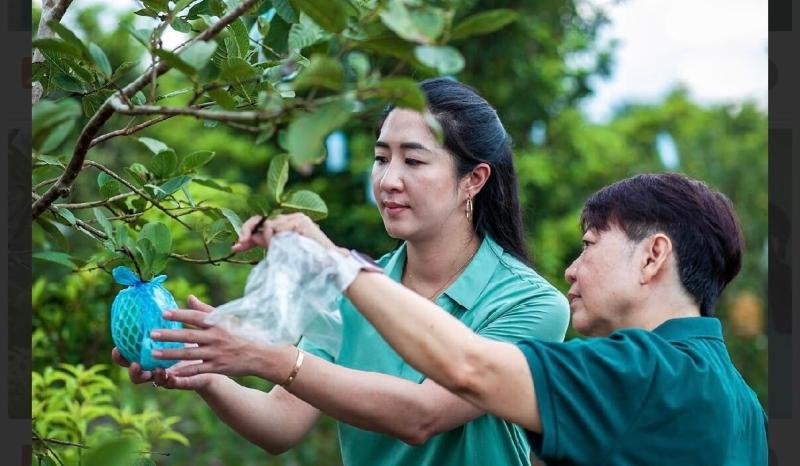
N&E Innovations uses agricultural waste to produce ViKANG99, a food-grade ingredient containing natural antimicrobial compounds designed to slow the growth of bacteria and mould. It can be incorporated into food packaging and various other products.
One of the company’s products is The Orange Wrap, which it describes as an antibacterial cling wrap. Unlike regular cling film, it uses ViKANG99 to help reduce microbial growth on food surfaces.
The technology could help reduce food spoilage, particularly in markets where temperature-controlled supply chains are not always consistent. It could also help extend the shelf life of fresh produce and reduce food waste more broadly.