For a restaurant built around getting your hands messy, Ombak Kitchen is remarkably disciplined about the details.
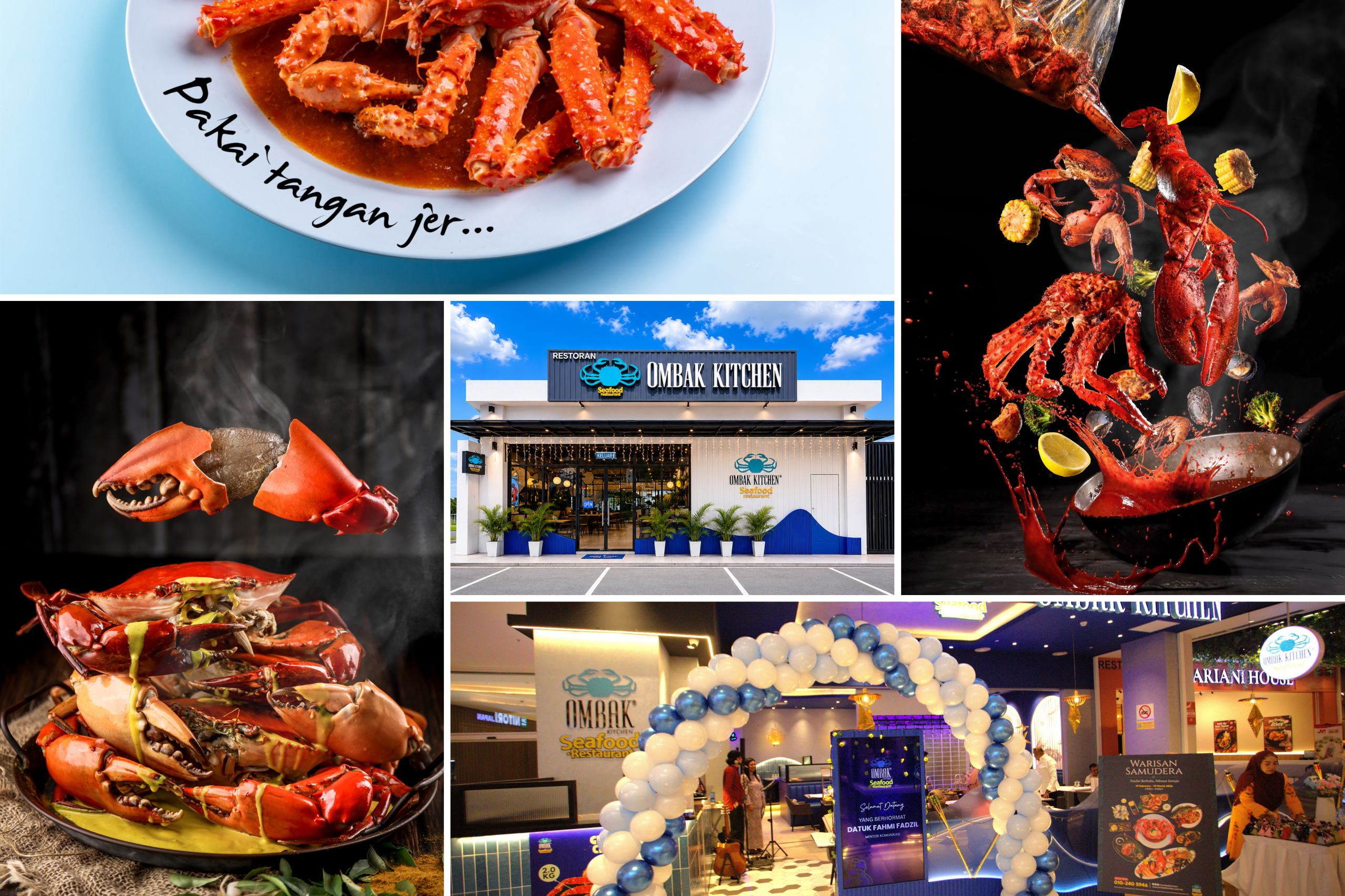
The Malaysian seafood brand has made its name through Pakai Tangan Jer — its hands-on approach to Cajun seafood dining, where crabs, prawns, lobsters and other seafood arrive at the table drenched in proprietary sauces and are meant to be shared without much ceremony.
But behind the informality is a business that has deliberately resisted one of the restaurant industry’s most familiar temptations: expanding faster than its operations can support.
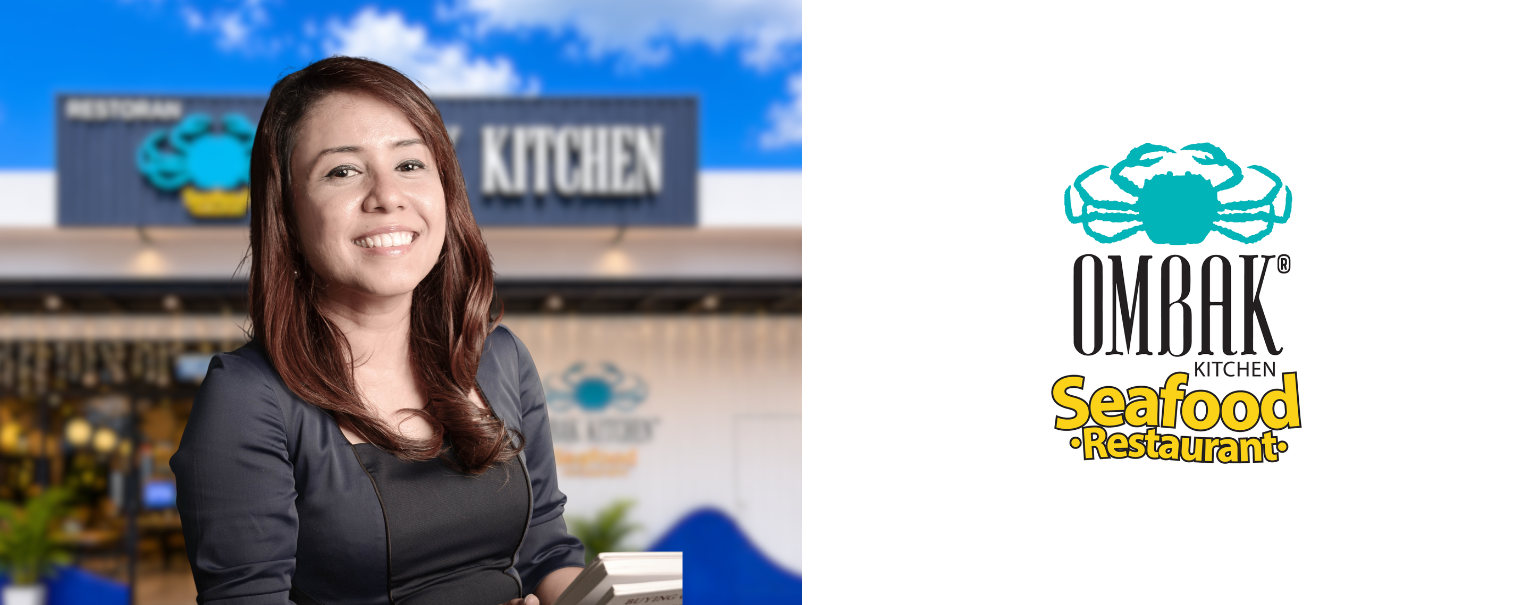
Co-Founder and Group CEO of Ombak Kitchen – Sharita Loo.
Operated by Arena International Services Sdn Bhd, Ombak Kitchen opened its first restaurant in Bukit Jelutong in June 2018. It now has four outlets across Bukit Jelutong, Bangsar, IOI City Mall Putrajaya and Setapak, serving premium halal seafood ranging from Alaskan King Crab and lobster to oysters, accompanied by sauces developed in-house using Louisiana-inspired spices and the company’s own blends.
The proposition was relatively straightforward when it entered the market.
At the time, premium seafood dining in Malaysia tended to sit at opposite ends of the spectrum. Consumers could pay fine-dining prices at hotels and upscale restaurants, or travel to traditional seafood restaurants, often outside central urban locations.
Ombak Kitchen saw room between the two.
It wanted to give urban families access to fresh, premium seafood in convenient locations without turning every meal into a major financial occasion. Its blue crab identity became a recognisable marker of that proposition.
Eight years later, however, access is no longer the principal competitive battleground.
The proliferation of dining concepts and seafood operators means consumers have considerably more choice. For Ombak Kitchen, the challenge has consequently shifted from filling a market gap to maintaining something harder to replicate: consistency.
“The genuine search is for a place diners can return to and rely on: same freshness, same flavour, same warmth of service, every single time,” the company says.
That emphasis helps explain its measured expansion.
Ombak Kitchen argues that restaurant growth cannot simply be read through outlet numbers, revenue or customer volumes. Its preferred indicator is whether customers return, celebrate important occasions at its restaurants, recommend the brand and voluntarily become part of its community.
The commercial results, it believes, follow.
This philosophy is connected to the company’s broader purpose of “enriching life and living”, influenced by the principles of Friends to Mankind and its belief that commercial success should ultimately contribute to a wider human good.
There is also a practical business case behind the philosophy.
Ombak Kitchen’s hands-on dining model leaves unusually little room for operational shortcuts. A plated dish can sometimes disguise inconsistencies through presentation. Seafood eaten directly by hand is far less forgiving.
The resistance of a lobster, tenderness of squid, freshness of a tiger prawn and temperature of the food are immediately apparent. So too are inconsistencies in sauces or preparation.
“Every flaw shows. Every compromise is felt, before it is tasted,” the company says.
As a result, much of Ombak Kitchen’s competitive advantage sits out of customers’ sight.
Daily sourcing, kitchen protocols, sauce standardisation across four locations and staff training form the infrastructure behind what is intended to feel like an effortless meal. The company says it sources fresh rather than frozen seafood and, where possible, absorbs cost pressures instead of quietly compromising the experience or its pricing promise.
Service is treated with similar precision. Employees are trained and retrained not simply in serving food but in creating an atmosphere in which diners feel comfortable lingering over a messy meal. Small gestures — including helping crack a crab claw — form part of a service culture that the business considers difficult to reproduce consistently.
That operating discipline will now face a larger test.
Ombak Kitchen plans to open three additional outlets by 2027, including two in the Klang Valley and one in Johor Bahru. But the more consequential change may be taking place behind the scenes.
Its founders are preparing, figuratively and operationally, to “exit the kitchen”.
The next phase involves converting years of founder knowledge and instinct into repeatable systems, workflows and standards, while developing a new generation of leaders capable of running the organisation without constant founder intervention.
It is a familiar transition for founder-led businesses. What works across a handful of locations because the founders remain close to daily operations can become increasingly fragile as the organisation grows. Scaling therefore requires more than replicating outlets; it requires institutionalising the judgement that made the original business successful.
For Ombak Kitchen, that means codifying not only how seafood is sourced and prepared, but also what the brand should feel like.
Its underlying proposition has, after all, become broader than Cajun seafood.
The company believes it is competing for something increasingly scarce among urban Malaysians: uninterrupted time together. In an era of hurried meals and screens at the table, Pakai Tangan Jer is intended to encourage participation. Eating becomes slower, communal and difficult to do absent-mindedly.
A regular weeknight dinner can become a small celebration; birthdays, office milestones and marriage proposals become experiences built around a shared table. In that sense, Ombak Kitchen is selling more than seafood. It is creating a reason for people to reconnect.
That may ultimately be its more defensible proposition.
The next three outlets will increase Ombak Kitchen’s footprint. The harder task will be ensuring that customers do not notice the business has become bigger at all.
For a brand that believes trust is built one consistent meal at a time, preserving the recipe that earned that trust may be the most important ingredient in its next stage of growth.