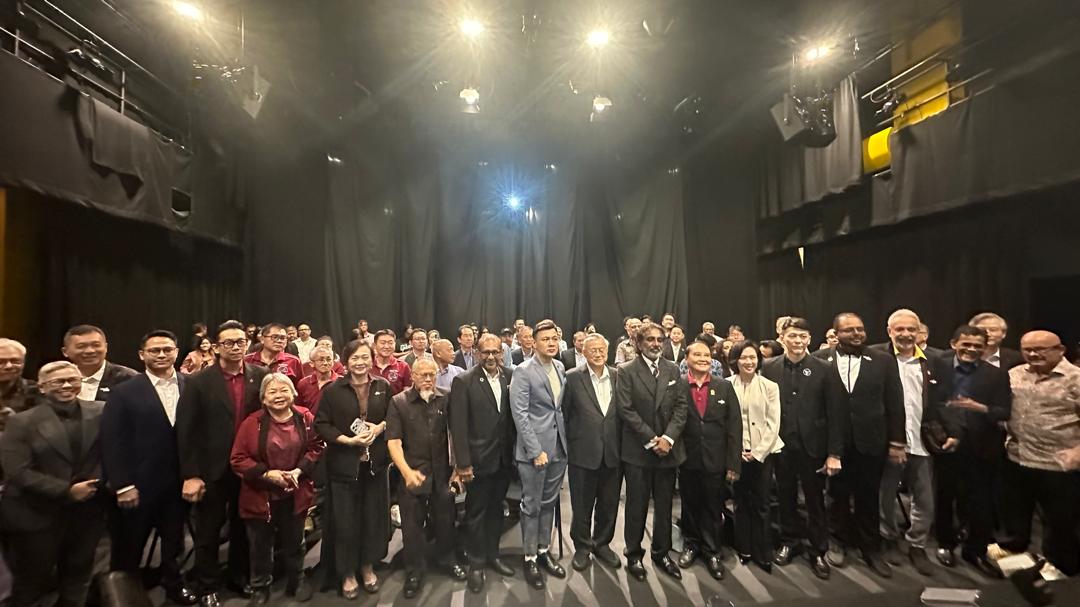
The Malaysian Association for Arts, Live Events, Concerts and Festivals (ALIFE) today joined fellow industry associations under the Industries Unite coalition in calling for the abolishment of the Entertainments Tax.
Introduced in 1953 during the colonial era, the Act was created at a time when entertainment was viewed as a luxury. More than seventy years later, Malaysia has evolved into a nation driven by tourism, creativity, culture and experiences, yet this outdated legislation remains.
“Entertainment today is not a luxury. It is culture, family recreation, tourism and an important contributor to Malaysia’s creative economy,” said Rizal Kamal, Senior Advisor of ALIFE. “The question is no longer whether the Act is outdated. The question is why we continue to operate under it.”
Entertainment Tax Affects Far More Than Concerts
A common misconception is that entertainment duty only affects major international concerts.
In reality, it applies to virtually every ticketed live performance, including theatre productions, musicals, comedy clubs, dance performances, cultural showcases, arts festivals, touring productions and performances in cafés and live music venues.
These are not simply commercial activities. They are cultural outputs that preserve Malaysian stories, nurture local talent and provide wholesome experiences that bring families together. For many children, a theatre production is their first introduction to the performing arts. Public policy should make these experiences more accessible, not more expensive.
Grassroots Talent Bears the Greatest Burden
While major productions receive the most attention, it is grassroots performers who are most affected.
Emerging comedians, theatre companies, musicians, dancers, cultural producers, festival organisers, venue operators and independent promoters rely on affordable ticket prices to build audiences. Entertainment duty increases costs before a single ticket is sold, making it harder for local talent to experiment, grow and build sustainable careers.
If Malaysia wants internationally recognised artists tomorrow, it must support emerging artists today.
Malaysia Should Make Touring Easier, Not Harder
Local artists should be encouraged to perform throughout Malaysia.
A successful production in Kuala Lumpur should naturally continue to Johor Bahru, Penang, Kuching, Kota Kinabalu, Ipoh and other cities, allowing more Malaysians to enjoy live performances while creating economic opportunities nationwide.

Instead, organisers face different entertainment tax rates, approval processes and administrative interpretations depending on where performances are held. In some cases, even different municipalities within the same state apply the law differently. Some local authorities have clear mechanisms for exemptions or reductions, while others have little guidance on implementation.
This fragmented approach discourages domestic touring, creates unnecessary costs and limits the growth of Malaysia’s live performance ecosystem.
Stable Policy Creates Investment
The creative economy depends on long-term investment.
Whether developing touring circuits, restoring theatres, opening live music venues or producing festivals, investors need confidence that policies will remain stable and predictable.
The Federal Government’s decision to exempt entertainment duty for international live performances until 2028 has already demonstrated what stable policy can achieve. Kuala Lumpur has experienced remarkable growth in international concerts and live entertainment, attracting investment, creating employment and generating significant economic activity across tourism, hospitality, retail and transportation.
This growth has contributed substantial revenue to the Federal Government through tourism, corporate taxes, income taxes, SST and the wider economic activity generated by a thriving live entertainment industry.
ALIFE believes the same certainty should now be extended nationwide, particularly in high-potential cities such as Johor Bahru, Penang and Kuching, where the private sector is ready to invest if long-term policy remains competitive and consistent.
Looking Beyond Entertainment Duty
Every live event creates spending that extends far beyond the venue itself.
Audiences support hotels, restaurants, cafés, shopping centres, transport providers and thousands of small businesses. Tourism remains one of Malaysia’s most important economic sectors, while shopping consistently accounts for more than one-third of international visitor expenditure, illustrating the wider multiplier effect generated by visitor experiences.
The objective should not be to maximise tax collected from each ticket.
It should be to maximise economic activity across entire cities, support local businesses, create jobs and strengthen Malaysia’s competitiveness as a regional destination for arts, culture and tourism.
A Call for Action
ALIFE respectfully calls upon the Federal Government and all State Governments to work together to resolve the longstanding issues surrounding the Entertainments Tax.
We recognise that successive governments have acknowledged that the legislation no longer reflects the realities of today’s creative economy. What Malaysia needs now is decisive action.
Malaysia should not have one city with a competitive entertainment policy while other cities compete under different rules. A consistent national framework would unlock private investment, encourage domestic touring and allow every state to benefit from the growth of the creative economy.
Abolishment of the tax would make live performances more affordable for families, strengthen grassroots talent, encourage domestic touring, provide confidence for investors and position Malaysia as one of Southeast Asia’s leading destinations for arts, culture and live experiences.
Stable Policy. Stronger Confidence. Sustainable Growth.
“Entertainment is not a luxury. It is culture. It is family. It is community. It is economic growth. It is time our laws recognised that.”