1. Looking back, what was the defining decision or moment that set you on this path — and what gave you the conviction to pursue it despite the uncertainties?
A sense of adventure—that entrepreneurial itch to bring something new to people. I’ve always been drawn to creating experiences that make people feel something, whether it’s heart-melting or mind-blowing or just plain good.
In my younger days, it was a lot of trial and tribulations. Our mindset was simple: do incredible things first and figure things out later, badaboom. Not always the smartest approach, but that’s where a lot of magic came from—and some of those wild ideas became real businesses.
We still carry that spirit today, but with more balance. A big part of what we do now is grounded in solid fundamentals and proven models. It’s less about chasing every crazy idea, and more about knowing which ones are worth building.
2. What was the gap or opportunity you identified early on that others may have overlooked — and how did you translate that into a viable business model?
Stand-up comedy was huge in the West, but almost non-existent in Asia at the time. So we essentially brought in the “contraband”—starting with small club shows and giving comedians the freedom to say whatever made people laugh.
We already knew the potential because we’d seen how big it was in places like the US, UK, and Australia. From there, we built the business step by step—clubs to theatres, and eventually to arenas.
3. In the early stages, what were the toughest realities of building the business that people don’t often see — particularly from an operational or financial standpoint?
Working with people was one of the toughest parts—different expectations, temperamental artists, and everyone fighting over a very small pie.
At one point, we took the “Jerry Maguire” approach. Instead of trying to work with everyone, we focused on a small group of talents—the ones with the biggest potential and who genuinely believed in what we were building.
Financially, it was also a real challenge. The creative industry is seen as high risk, and we didn’t have deep pockets. We were fortunate to have support from MyCreative Ventures, which played a big role in helping us get to where we are today.
4. Your space sits at the intersection of creativity and commerce. How do you balance creative integrity with the need to deliver consistent business performance and profitability?
It took us some time to realise this, but the best creative projects are the profitable ones. At the end of the day, we have to produce things that people actually want and will pay for.
Projects that only serve the artist tend to become vanity projects. If there’s no real audience demand, it’s very hard to sustain.
Profit is the lifeblood of creativity. It gives us the ability to keep going—and more importantly, to fund new ideas. So we focus on projects that can do both: create something that truly move people, and still make strong business sense.
5. You operate in an industry where perception, reputation, and personal branding are closely intertwined. From your perspective, what are the key imperatives of building and managing a strong personal brand today — particularly as a business leader?
The biggest shift today is that you can’t get ahead by withholding information anymore. There was a time when people relied on ‘trade secrets’, but that advantage is gone. Knowledge is everywhere now—and people can quickly tell if you’re the real deal or not.
We’re also in an era where knowledge and intelligence are commodities. What really makes the difference now is experience and genuine passion.
So for me, it starts with being authentic and being willing to share what you know. There’s no real advantage in keeping things to yourself anymore. The advantage now comes from how fast you can learn, apply, and evolve.
It becomes a cycle—share what you know, learn from the response, improve, and then share again. Over time, that builds trust, and that trust becomes your brand.
6. Can you share a period where the business faced significant pressure — whether market-driven or internal — and how you navigated that as a leader?
Honestly, all the time. There have been multiple moments where the pressure was real.
Check this – when the USD jumped from 3.2 to 3.8 in a short span, and later close to 4.8 against the ringgit; when we had to shut down our live performance venue because it simply wasn’t sustainable; during the pandemic, when we had zero shows for almost two years; and more recently, when we took huge hits from K-pop concerts.
Those moments test you. But the approach has always been the same—keep moving forward. Learn fast, adapt, and pivot when needed. And most importantly, remind ourselves why we do this – we want to bring joy, make life feel worth living, and create moments that last.. sometimes a lifetime.
7. As a CEO, you’re constantly making decisions with incomplete information. What principles or frameworks guide your decision-making, especially in high-stakes situations?
In the early days, it was mostly gut feel—talking to people on the ground and getting advice from those who had already made it.
Today, it’s much more data-driven. We look at the numbers, trends, and signals, and then combine that with experience to make informed decisions.
Next, we’re moving into a new phase where intelligence—AI and deeper analytics—can tell us what’s likely to work. Our role is deciding whether to act. It’s less about guessing and more about choosing the right bets—but even with all the data, it still comes down to human instinct.
The numbers guide; emotion and experience decide.
8. Have there been moments where you questioned the path you chose or considered pivoting entirely? What ultimately anchored your decision to stay the course?
Yes, there were multiple moments where it was tough—when business was bad, when we didn’t have the right people, or the right systems in place. There was even a period where the government wasn’t particularly supportive of the industry.
But what we realised is that we didn’t need to pivot the business itself—we needed to rethink how and why we do business.
For me, staying grounded in values made the difference. Keeping a clear conscience, and not doing things purely for money, is what kept us going. That clarity gave us the resilience to ride through difficult periods and come out stronger.
9. How has your leadership style evolved over time — particularly in how you manage talent, culture, and expectations as the business grows?
I used to be very hands-on—almost to the point of micromanaging. I was extremely action-oriented and involved in every step, driving the team closely.
Over time, I realised that’s not scalable. Today, my focus is on building systems, supporting and developing talent, and giving clear guidance rather than controlling every detail.
I’ve also learned that when people are happy, enjoy their work, and feel a sense of purpose, the results take care of themselves—usually at a much higher level than if I tried to force it.
10. What are the most significant shifts you’re seeing in your industry today, and how are you positioning the business to remain relevant and competitive in the years ahead?
There’s no doubt that AI is changing everything at a rapid pace. We’ve made a conscious decision to ride that wave—we see ourselves as an AI-enabled company, but with a very clear goal: to create the best human experiences.
At the same time, change is constant. While we adapt quickly, we also focus on building things that can last.
What stays true is the intrinsic nature of human beings—our need to feel, to connect, to belong. That doesn’t change. Technology just changes how we deliver it.
Having been in the business for 17 years, we lean heavily on our reputation and experience. That gives us an edge—because while tools and technology evolve, trust and execution still matter.
11. As you enter your next phase, what are you intentionally focusing on as a business leader — in terms of growth, impact, and long-term legacy?
We’re approaching an era of change that we’ve never seen before. It’s probably the most challenging—and exciting—phase of my journey with LOL Asia.
On the business side, we’re scaling across Southeast Asia, building new IPs, and creating systems that allow the company to operate at a much higher level than before.
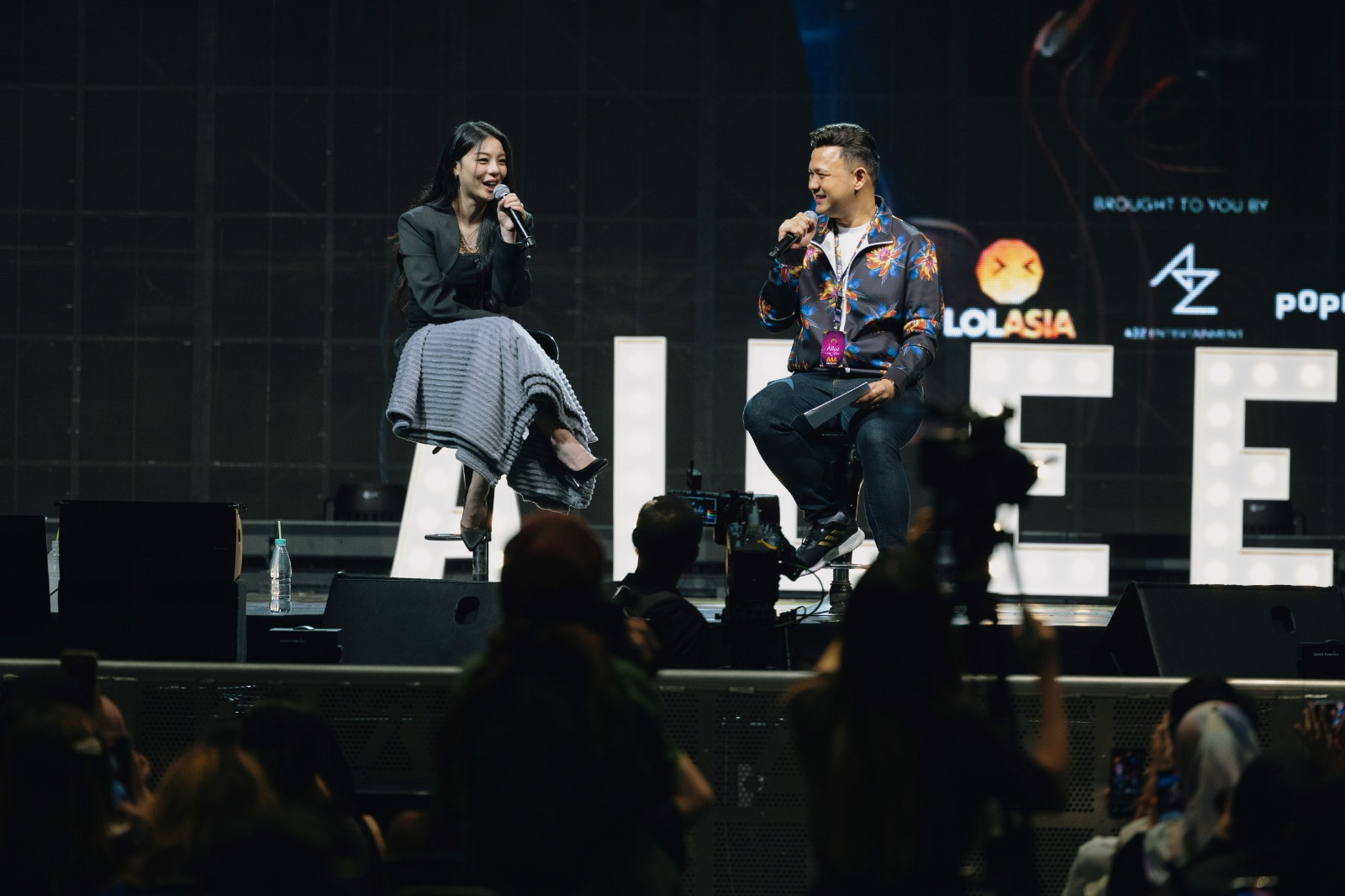
But beyond growth, I’m very conscious that what we do creates ripple effects. We’re shaping the industry, influencing mindsets, and building platforms that can change the way people live their lives.
In terms of legacy, I want to be someone who contributes to a positive shift in culture—someone who makes the world more livable. It may sound idealistic, but I think it’s important to aim for that. You only get to your destination when you believe it’s possible.