china

News

China Sees Strong Growth in Cross-Border RMB Transactions with Malaysia and Cambodia in 1Q2025

China has recorded a sharp increase in cross-border renminbi (RMB) transactions with Malaysia and Cambodia in the first quarter of 2025, reflecting deeper financial integration and growing confidence in the use of its local currency for international trade. According to data released by the People’s Bank of China, cross-border RMB transactions between China and Malaysia reached 102 billion yuan (approximately RM61.8 billion) in 1Q2025, marking a 27% increase compared to the same period last year. Meanwhile, transactions between China and Cambodia totalled five billion yuan (RM3.02 billion), representing a significant 45% year-on-year growth. Within this, RMB transactions for goods trade alone accounted for 1.3 billion yuan—up 23% from a year earlier. The central bank stated that it would continue enhancing policies to create a more business-friendly environment for enterprises in China, Malaysia, and Cambodia to settle cross-border trade and investment in RMB. The surge underscores China’s ongoing efforts to internationalise the renminbi and strengthen its financial ties with Southeast Asian economies.

News

Nvidia Faces US$5.5 Billion Hit as US Tightens Export Curbs on China

Nvidia Corp is staring down a multi-billion-dollar blow as new US export controls tighten the noose around its operations in China. The company revealed that it will take a US$5.5 billion writedown in its fiscal first quarter, following the US government’s decision to require an export licence for its H20 chip — a product Nvidia specifically designed to comply with earlier restrictions. The move signals a significant policy shift. In a regulatory filing on Tuesday, Nvidia said it was informed by US officials that the H20 will now fall under indefinite export licensing requirements, with authorities citing concerns that the chips may be used in or diverted to Chinese supercomputers. The market reacted swiftly. Nvidia’s shares dropped approximately 6% in after-hours trading, while shares of rival Advanced Micro Devices Inc — also exposed to the AI chip space — fell as well. The H20 chip had been Nvidia’s tailored solution for the Chinese market, balancing capability with compliance. Although less powerful than the models sold outside China, the chip supported AI inference tasks, making it a strategic offering in the world’s second-largest economy. But even this scaled-back solution is now considered a potential risk. With US-China tech tensions escalating, Washington’s latest clampdown underscores a broader strategy to limit Beijing’s access to advanced AI technologies. The impact is profound. Analysts at Bloomberg Intelligence estimate the new restrictions could cost Nvidia between US$14 billion and US$18 billion in annual revenue. If the controls persist, Nvidia’s China-related data centre revenue could drop back to low- to mid-single digits — levels not seen since early 2024, prior to the H20’s ramp-up. Nvidia has long warned that intensifying restrictions could backfire, accelerating China’s push for self-reliance and hurting US competitiveness in the process. “Further tightening of restrictions risks weakening American companies while strengthening China’s resolve to build domestic alternatives,” the company has argued. Adding to the political complexity, the new policy comes on the heels of a National Public Radio report suggesting that former President Donald Trump — now back in office — had been considering a softer stance on the H20 in exchange for Nvidia investing in US-based AI infrastructure. Nvidia has pledged up to US$500 billion in AI-related investments across the US over the next four years, though much of that was already in the pipeline. The latest development reflects the continuation of a years-long geopolitical battle over semiconductor dominance. Initial curbs began in October 2022, when the US first barred sales of Nvidia’s most advanced AI chips to China. Since then, the restrictions have expanded significantly, covering a broader range of chips, semiconductor manufacturing tools, and high-bandwidth memory — all vital components in AI development. The Biden administration extended these rules globally in its final weeks, aiming to close loopholes via third-party nations. The Trump administration now appears committed to maintaining, and potentially strengthening, that framework. With Nvidia’s China strategy increasingly under pressure, the global semiconductor industry is bracing for further volatility — and investors are watching closely.

News

Xi Jinping Pledges to Strengthen Strategic Partnership with Indonesia in Call with Prabowo

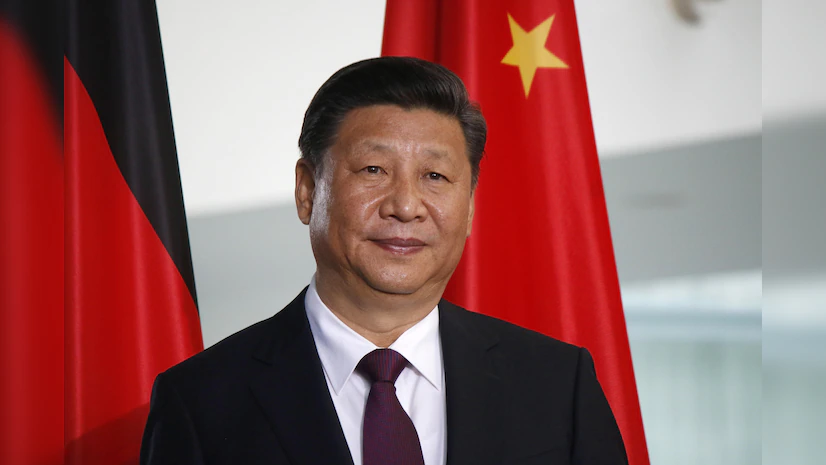
SHANGHAI: Chinese President Xi Jinping has pledged to further strengthen China’s strategic partnership with Indonesia in a phone conversation with Indonesian President Prabowo Subianto on Sunday, as reported by China’s state-run Xinhua News Agency. During the call, Xi highlighted the global significance and strategic importance of the bilateral partnership. The two leaders also exchanged congratulations on the 75th anniversary of diplomatic relations between their countries. Xi’s remarks come as Beijing seeks to rally other nations against the US’s import tariffs, which were recently announced by former President Donald Trump. As part of a broader diplomatic push, Xi is scheduled to visit several Southeast Asian nations, including Vietnam, Malaysia, and Cambodia, starting Monday, April 14. His visit aims to solidify ties with key neighbours as trade tensions between China and the US continue to rise.–REUTERS

News

US Backs Off Tariffs on Phones, Chips, Displays

US President Donald Trump’s administration has temporarily exempted smartphones, computers, and other key electronics from its sweeping “reciprocal tariffs” — offering major relief not only to US tech giants like Apple Inc and Nvidia Corp, but also to critical players across Asia’s electronics supply chain, particularly in China, Taiwan, South Korea and Japan. The exclusions, published Friday by US Customs and Border Protection, carve out a significant list of consumer tech products — including smartphones, laptops, processors, and flat-panel displays — from the baseline 10% global tariff and the steep 125% levy targeting Chinese imports. This development, although possibly short-lived, marks the first notable easing in Washington’s intensifying trade confrontation with China. The exemptions are backdated to April 5 and cover approximately US$390 billion in US imports, including more than US$101 billion from China, according to US trade data analysed by Gerard DiPippo of the Rand China Research Center. Asia’s Supply Chains Still at Risk While the tariff reprieve is welcome news for global tech firms, Asian exporters remain wary. China alone accounts for over US$41 billion of the US’s smartphone imports and more than US$36 billion in computers — much of it produced through deeply intertwined regional supply networks involving Taiwan, South Korea, Japan, and Southeast Asia. “This is a large hole in the US tariff wall that will spare key firms like Apple and consumers of laptops and phones from sticker shock,” DiPippo said. “But many other Chinese-made consumer, intermediate, and capital goods remain exposed to prohibitively high US tariffs.” Although the move provides breathing room for firms like Foxconn, TSMC, Samsung, and Pegatron — which manufacture and assemble components across China, Taiwan and Southeast Asia — many analysts warn the exemptions may simply pave the way for new sector-specific tariffs, particularly targeting semiconductors. China: Both Target and Backbone While Trump’s administration says the US can no longer rely on China to produce “critical technologies,” the reality of Asia’s manufacturing dominance tells a different story. The exemptions notably include semiconductor manufacturing tools — essential for chip production — from firms like ASML (Netherlands) and Tokyo Electron (Japan). These tools support multibillion-dollar factory builds by TSMC, Samsung, and Intel under the 2022 Chips and Science Act. Also excluded are AI infrastructure products, such as GPUs and servers — largely assembled in Taiwan and Mexico — used by Nvidia and other firms. However, these firms still rely heavily on Chinese supply chains for key components and final assembly. While Apple and Nvidia may breathe easier for now, China remains central to global tech production, and the pressure on companies to “reshore” manufacturing to the US is already proving unrealistic. Industry sources note the deep-rooted nature of Asia’s electronics ecosystem, which cannot be replicated overnight. Uncertainty Lingers Despite resistance from within Trump’s White House, the tech sector’s lobbying power seems to have influenced the exemptions. Yet, this relief is widely seen as temporary — laying the groundwork for new targeted tariffs on semiconductors and high-tech components. A forthcoming investigation into semiconductor imports is expected to precede another round of sectoral tariffs. These could hit both chips and end-products containing them, raising stakes for companies across Asia and global supply chains. While the current exemptions do not extend to Trump’s separate 20% fentanyl-related tariff on Chinese goods, nor to legacy levies from his previous term, the message is clear: the US-China tech decoupling is accelerating, and Asia’s role in the global tech economy is under increasing scrutiny. Representatives from Nvidia and ASML declined to comment, while spokespeople from Tokyo Electron and the US Trade bodies did not immediately respond.

News

Trump Suggests Potential Exceptions to 10% Tariff, Optimistic About Trade Negotiations with China

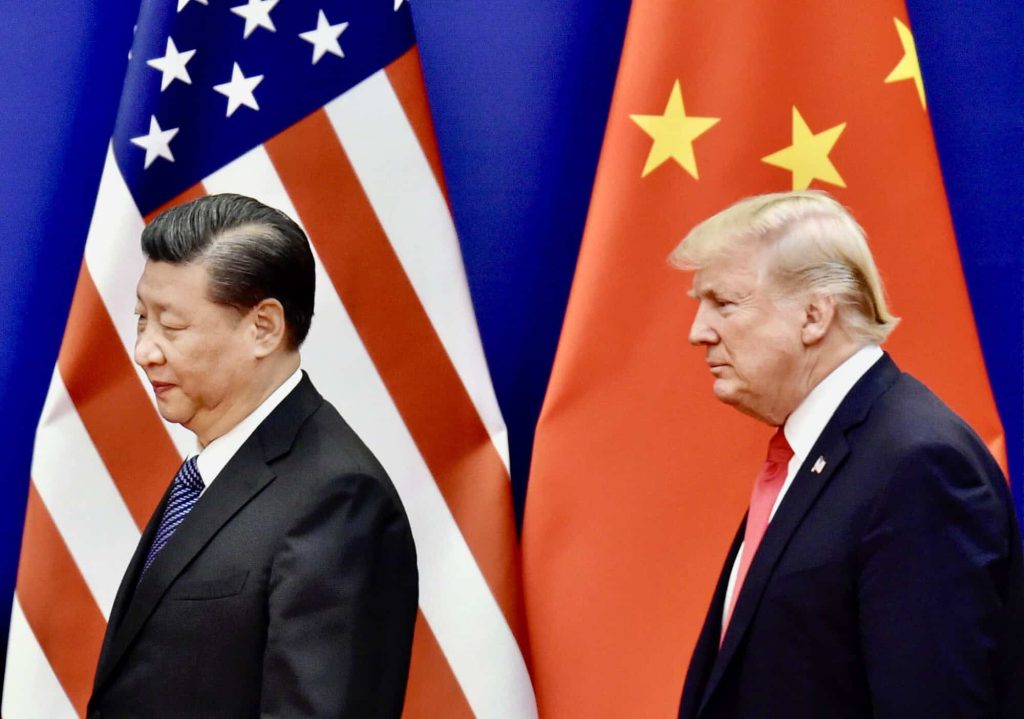
US President Donald Trump hinted at possible exemptions to his recently imposed 10% tariff on most US trading partners, asserting that the tariff rate is “pretty close” to a baseline for nations seeking trade negotiations. Speaking to reporters aboard Air Force One en route to Florida, Trump suggested that there could be exceptions for certain countries for “obvious reasons,” although he did not specify what these reasons might entail or indicate any immediate shift in tariff policy. The President’s remarks come amid a turbulent week for global financial markets, which reacted sharply to the initial announcement and subsequent delay of higher tariffs on numerous nations. Trump’s administration had hastily enacted higher tariffs, only to backtrack hours later in response to concerns over potential economic repercussions. Despite the tumultuous market response, Trump remains steadfast in his strategy to leverage tariffs as a tool to bolster domestic manufacturing and increase federal revenue. Notably, while China faces a substantial 145% tariff rate, Trump intends to maintain the 10% baseline for most other countries, prompting a rush among foreign governments to secure favorable trade deals with the US. In light of recent market volatility, which saw significant fluctuations in stock and bond markets, Trump expressed confidence in the resilience of the US economy, remarking, “I think the markets were solid today. I think people are seeing we are in great shape.” He reiterated his belief in the strength of the US dollar as the global currency of choice, dismissing concerns over its stability. Regarding the ongoing trade dispute with China, Trump struck a hopeful note, predicting that “something positive is going to come” from negotiations with Chinese President Xi Jinping. He praised President Xi as “a very good leader, a very smart leader,” suggesting optimism for potential breakthroughs in resolving the protracted trade tensions between the world’s two largest economies. Despite the temporary relief offered to other trading partners, the imposition of high tariffs on China is expected to elevate the average US duty rate to historic levels, impacting an estimated $690 billion in bilateral trade. Both Washington and Beijing have escalated tariffs on each other’s goods, underscoring the intensity of their economic standoff while leaving room for further negotiations. In conclusion, while uncertainties persist amidst evolving tariff policies and global economic dynamics, Trump’s administration continues to navigate a delicate balance between protectionist measures and international trade relations, with significant implications for global markets and economies alike.–BLOOMBERG

News

China Escalates Trade War with US, Raising Tariffs to 125%

In a bold move responding to the US’s ongoing tariff increases, China has announced it will raise tariffs on all US goods from 84% to 125%, effective April 12, 2025. This decision follows the White House’s recent clarification that tariffs on Chinese imports had reached 145%, further escalating trade tensions between the two countries. The Chinese Ministry of Finance made the announcement on Friday, stating that this latest increase is a direct response to the US’s decision to impose higher tariffs. The Chinese government also made it clear that it would no longer entertain any additional US tariff hikes, signaling that further increases from Washington would be disregarded entirely. According to the statement, the Chinese market can no longer accommodate US goods under the current tariffs, and the situation has become economically unviable for both sides. “Given that there is no longer any possibility of market acceptance for US goods exported to China under the current tariff levels, if the US side subsequently continues to impose tariffs on Chinese goods exported to the US, the Chinese side will pay no attention to it,” the Ministry of Finance stated. The move comes amidst rising frustrations over the ongoing tariff war, which has already put significant pressure on global trade. China’s decision to raise tariffs has had an immediate impact on financial markets. S&P 500 futures saw a decline, while the Hang Seng China Enterprises Index pared back its earlier gains. The US dollar also extended its losses, reflecting investor unease following China’s announcement. In a statement responding to the US’s recent tariff hikes, China’s Commerce Ministry expressed deep dissatisfaction with Washington’s approach, calling the actions economically meaningless and accusing the US of using tariffs as a “tool for bullying and coercion.” The ministry labeled the current situation as a “joke,” criticizing the US for treating tariffs as part of a “numbers game” that has little bearing on actual economic impact. This escalation in the trade war has significant implications not just for the US and China, but for the broader global economy. While the US has raised tariffs on Chinese goods to 145%, China’s new tariff rates on US goods will only intensify the already strained relations between the world’s two largest economies. The dispute is not only about trade imbalances but also the strategic competition between the two nations, particularly in the areas of technology, intellectual property, and geopolitical influence. Both countries have long used tariffs as leverage in negotiations, but with no immediate resolution in sight, the escalating tariffs are expected to have lasting effects on global supply chains, businesses, and consumers worldwide.–BLOOMBERG

News

Jack Ma: AI Should Empower, Not Replace, Humanity

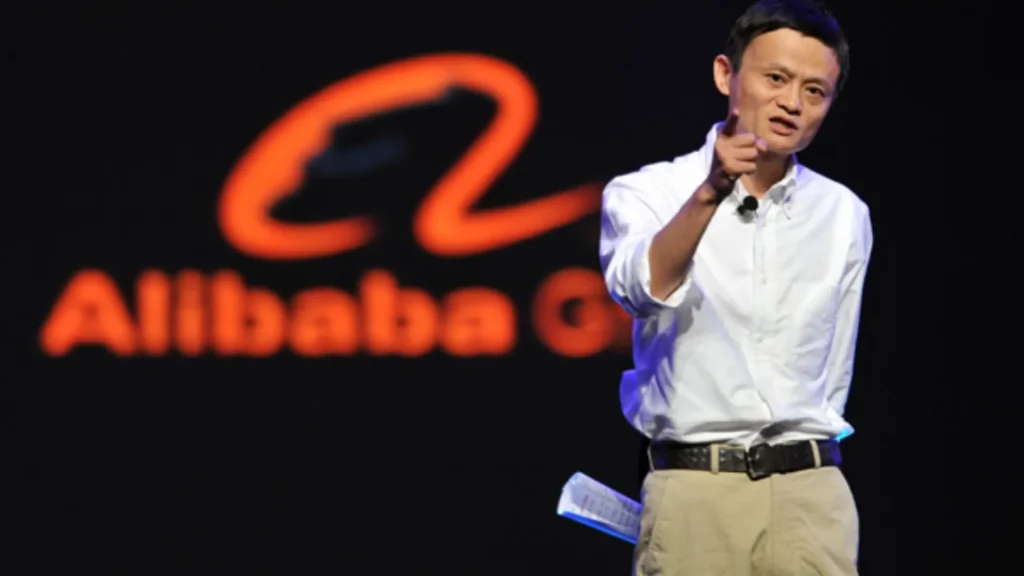
HANGZHOU: Alibaba co-founder Jack Ma has reaffirmed his long-held view that artificial intelligence (AI) should serve human interests—not replace them. In a rare public appearance at Alibaba Group’s headquarters on Thursday, the Chinese tech mogul urged technologists to ensure AI remains a tool that empowers people rather than a force that threatens livelihoods. “We’re not trying to make machines more like humans,” Ma said. “We’re trying to make them understand humans—to think like us and do things we can’t.” Addressing employees at the company’s Hangzhou campus, Ma emphasised the ethical responsibility of developers to align AI advancements with human values and societal needs. He described AI not as a threat, but as a powerful enabler when used appropriately. “Technology isn’t just about conquering the stars and the oceans,” he said. “It’s about preserving the spark among all of us.” Alibaba, once best known for dominating China’s e-commerce market, has shifted its focus sharply towards AI innovation. Its Qwen AI model series has received industry recognition, positioning the company alongside global leaders such as OpenAI and China’s Deepseek. In February, Alibaba CEO Eddie Wu announced the company’s strategic pivot toward artificial general intelligence (AGI), aiming to develop AI systems with capabilities comparable to human intellect. Ma’s latest remarks come as China repositions its private sector to spur economic recovery. Once at odds with regulators over industry reform, Ma has recently resurfaced in both corporate and national forums. He joined other entrepreneurs in February for a high-profile meeting with Chinese President Xi Jinping to discuss technology and innovation—signalling renewed state support for private enterprise. Though Ma stepped back from public life in recent years, Thursday’s appearance rekindled echoes of his visionary leadership. His message was clear: the future of AI should be grounded in compassion, creativity, and service to humanity.–BLOOMBERG

Investment & Market Trends, News

Yuan Hits New Lows as US Tariffs on China Take Effect

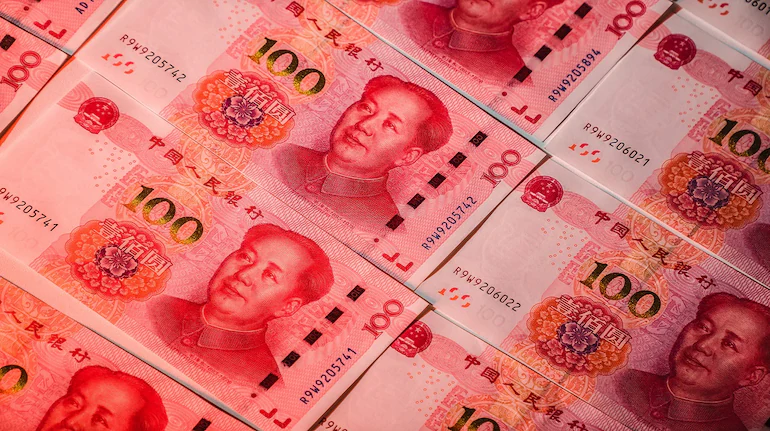
HONG KONG: The Chinese yuan fell to a fresh 19-month low against the US dollar today, following a record-low drop in its offshore counterpart overnight, as tensions from the escalating Sino-US trade war continue to weigh on investor sentiment. In afternoon trading, the yuan weakened by 0.2%, hitting 7.3498 per US dollar, after briefly dipping to 7.3505 earlier, the lowest level since September 2023. Meanwhile, the offshore yuan pared some losses, rising 0.62% to 7.3812 per dollar after dropping over 1% in the previous session and reaching a record low of 7.4288 per dollar. The declines come amid growing concerns as the trade war between the world’s two largest economies intensifies. These concerns were exacerbated by China’s central bank loosening its control over the yuan in an effort to mitigate the negative impact on exports. US President Donald Trump’s “reciprocal” tariffs on numerous countries took effect today, including hefty duties of 104% on Chinese goods, even as the US prepares for further trade negotiations. Carol Kong, a currency strategist at Commonwealth Bank of Australia, noted that the recent shift in the dollar was significant, influenced by the decision to proceed with additional tariffs on Chinese goods. She predicts the offshore yuan could fall to 7.7 per dollar by the end of Q3, though this could happen sooner if further tariff hikes are imposed by both countries. To stabilise the market, China’s central bank set the onshore yuan’s midpoint rate at 7.2066 per dollar, the weakest since September 2023. The yuan is permitted to trade within a 2% band of this rate, with a lower limit of 7.3507, which is just above the September 2023 low. Despite this, the central bank’s fixing was slightly firmer than expected, indicating a reluctance to allow the yuan to depreciate drastically. Chinese state-owned banks were observed selling dollars in the onshore market early this morning to slow the yuan’s decline. Lei Zhu, head of Asian fixed income at Fidelity International in Hong Kong, commented that Chinese regulators are likely focused on stabilising the market, deeming this a priority over sending dramatic signals to the market. Both the onshore and offshore yuan have fallen by more than 1% against the dollar this month, continuing the downward trend since the start of the year, largely due to concerns over the impact of the tariffs. Economists noted that while a weaker yuan could make Chinese exports more competitive and ease pressure on the economy, a sharp decline could also lead to unwanted capital outflows, posing risks to financial stability.

News

China advises Shein against shifting supply chain

Fast-fashion retailer Shein is facing opposition from the Chinese government regarding its plans to shift some production outside of China, Bloomberg News reported on Tuesday, citing sources familiar with the matter. China’s Ministry of Commerce has reached out to Shein and other companies, advising them against diversifying their supply chains by sourcing from other countries. The exact identity of the other companies contacted was not immediately clear. The ministry’s requests came in the context of US President Donald Trump’s announcement on reciprocal tariffs, which has led many firms to seek alternative strategies to avoid additional import levies. Shein did not immediately respond to a Reuters request for comment regarding the report. Trump’s unexpectedly harsh tariffs have caused significant disruptions in global markets, wiping out trillions of dollars in asset value and prompting China to retaliate with a 34% tariff on all US goods.

Investment & Market Trends, News

BYD Forecasts Record Q1 Net Profit

BEIJING: Chinese electric vehicle (EV) giant BYD is forecasting record net profit for the first quarter of 2025, driven by robust sales growth that saw the company ship more than one million vehicles between January and March. According to preliminary results released today, the Shenzhen-based automaker expects net profit to come in between ¥8.5 billion (US$1.2 billion) and ¥10 billion – nearly doubling from ¥4.6 billion in the same period last year. This marks a year-on-year growth of between 86% and 119%. “The company achieved record new energy vehicle (NEV) sales for Q1,” BYD stated in a filing to the Hong Kong Stock Exchange. In the first quarter alone, sales of pure electric passenger vehicles surged by 39% to 416,388 units. BYD had earlier announced that its total vehicle sales during this period had surpassed the one million mark for the first time. The company, whose slogan is “Build Your Dreams”, has experienced a strong sales trajectory in recent months. Its annual revenue in 2024 climbed to ¥777.1 billion, surpassing that of US rival Tesla. In addition to domestic success, BYD noted “substantial growth” in international NEV sales. However, geopolitical headwinds could challenge the company’s global ambitions. The escalating China-US trade tensions and broader friction between Beijing and Western capitals pose significant risks. Former US President Donald Trump has imposed 25% tariffs on all imported vehicles, alongside sweeping levies on Chinese goods. These come on top of earlier measures by predecessor Joe Biden, which restrict the use of Chinese technology in smart vehicles. In Europe, BYD faces scrutiny as well. The European Union is reportedly investigating whether the Chinese government provided unfair subsidies for BYD’s upcoming factory in Hungary, which is set to begin electric car production later this year.-AFP

Scroll to Top

Subscribe
FREE Newsletter