investment

News

Maybank Extends US$150 Million Sustainability-Linked Loan to AT&S Malaysia

Malayan Banking Bhd (Maybank) has extended a sustainability-linked loan (SLL) valued at US$150 million to Austria Technologie & Systemtechnik Malaysia Sdn Bhd (AT&S), marking a significant milestone in sustainable finance for the region. In an official statement, Maybank confirmed that the facility represents the first SLL issued by a Malaysian and Southeast Asian commercial bank to AT&S. It is also the inaugural SLL extended by a domestic financial institution to a multinational corporation operating within Malaysia’s semiconductor industry. The loan will support the development of AT&S’s first high-end integrated circuit substrate manufacturing facility located in the Kulim Hi-Tech Park, Kedah. The project will incorporate advanced equipment and closed-loop recycling systems, in line with AT&S’s rigorous sustainable energy framework. Embedded in the SLL are environmental performance targets, including a commitment by AT&S to reduce its annual greenhouse gas emissions by 31% by 31 March 2028, benchmarked against its financial year 2022 levels. Maybank stated that this financing aligns with its broader strategy to mobilise sustainable finance and contribute to regional decarbonisation efforts, particularly in high-growth sectors such as semiconductors. -Bernama

Investment & Market Trends, News

Luno Adds Algorand and NEAR as First SC-Approved Digital Assets of 2025

Luno has further strengthened its digital asset offerings in Malaysia with the addition of Algorand (ALGO) and NEAR Protocol (NEAR), the first Securities Commission Malaysia (SC)-approved cryptocurrencies of 2025. This brings the total number of assets available on the platform to 20. This latest expansion not only broadens access to the cryptocurrency market for Malaysian investors but also offers greater portfolio diversification, particularly with the upcoming launch of NEAR staking, which will offer passive rewards of up to 7% per annum, distributed daily. Both new digital assets are built on scalable, secure blockchain platforms. Algorand is recognised for its fast, low-cost transactions and environmentally sustainable approach, aiming to support a borderless digital economy through decentralised applications. Meanwhile, NEAR Protocol offers a high-throughput, low-fee blockchain infrastructure designed to simplify decentralised app development. In 2024, Luno led the approval of seven digital assets with the SC and now targets to double that figure in 2025, beginning with ALGO and NEAR. The exchange continues to work closely with the regulator to streamline the introduction of new assets. Luno remains the only regulated digital asset exchange in Malaysia offering staking services. Currently, staking is available for Ethereum, Solana, Cardano, and Polkadot, with NEAR set to be included soon. Committed to investor protection and innovation, Luno applies a rigorous screening process for all new listings, considering technical, regulatory, and legal aspects. It also promotes responsible investing through its free educational platform, Luno Discover, which provides resources to help users make informed financial decisions.

News

Gold Prices Ease from Record Highs Amid Profit-Taking and Tariff Uncertainty

KUALA LUMPUR: Gold prices retreated from record highs on Thursday as investors moved to lock in gains, following a strong rally sparked by renewed concerns over US President Donald Trump’s aggressive trade policies. Spot gold dipped 0.8% to US$3,318.19 an ounce at 8:27 GMT, after briefly hitting an all-time high of US$3,357.40 earlier in the session. The precious metal remains up 2.5% for the week. US gold futures also edged lower by 0.5%, settling at US$3,330.50. Market analysts attribute the pullback to profit-taking behaviour amid a marginally firmer US dollar, which has slightly weakened gold’s appeal. “Likely the reversal off fresh all-time highs can be attributed to some profit taking on the highs. A slightly firmer tone to an otherwise weak US dollar likely took the edge off gold,” said independent analyst Ross Norman. “Still, price dips are well bought into, suggesting underlying sentiment is very positive.” The US dollar index rebounded modestly from near three-year lows on Thursday, increasing the cost of gold for international buyers. Gold surged 3.6% on Wednesday, bolstered by Trump’s directive to investigate potential tariffs on critical mineral imports, in addition to ongoing reviews into pharmaceutical and semiconductor goods. These developments raised fresh concerns over inflation and supply chain disruptions. US Federal Reserve Chair Jerome Powell, in remarks on Wednesday, indicated that the central bank would wait for additional data before adjusting interest rates. However, he warned that the administration’s tariff strategy could drive inflation further from the Fed’s target. Historically considered a hedge against inflation, gold typically benefits from a low-interest-rate environment, further enhancing its attractiveness in the current economic climate. “The market’s interpretation seems to be that gold would benefit either way,” said Carsten Menke, analyst at Julius Baer. However, physical demand for gold in India remained subdued this week, as consumers were discouraged by the sharp price rally. Meanwhile, premiums remained stable in China, the world’s top gold consumer. Norman noted that fading participation from traditional buyers could indicate that the rally is approaching its peak. “But it’s hard to see a scenario where gold would correct lower just now, other than being technically overbought and overextended,” he added. Other precious metals also declined on Thursday. Spot silver slipped 1.2% to US$32.37 an ounce, platinum lost 0.6% to US$961.10, and palladium fell 2.5% to US$948.01.–REUTERS

News

China’s Trade Minister Warns US Tariffs Could Trigger Humanitarian Crisis

 Chinese Trade Minister Wang Wentao has warned that the United States’ ongoing tariff measures could inflict significant damage on developing nations, potentially triggering a humanitarian crisis. In a video call with Ngozi Okonjo-Iweala, the Director-General of the World Trade Organization (WTO), Wang said that the continued introduction of tariffs by the US poses severe risks to the global economy, particularly affecting the least developed countries (LDCs). He argued that these nations stand to face the worst consequences from such protectionist measures. Wang emphasised China’s determination to take “decisive countermeasures” to protect its legitimate rights and interests, while upholding fairness and justice within the international community. He also reiterated China’s stance against unilateralism and protectionism, calling on WTO members to come together in promoting open cooperation and multilateralism. During a separate call with Brazil’s Minister of Development, Industry, Foreign Trade, and Services, Geraldo Alckmin, Wang discussed strengthening economic and trade ties between China and Brazil in light of the tariffs imposed by the US. Both sides explored ways to mitigate the effects of these tariffs and enhance their collaboration to ensure mutual benefit. China’s concerns over the US tariff policies have grown amidst rising global economic tensions, with the trade war between the two superpowers showing no signs of abating. The US tariffs have affected a wide range of industries and goods, and China’s calls for multilateral cooperation reflect a desire to maintain global economic stability amid escalating trade disputes. As the trade landscape shifts, China is determined to leverage its position and resources to counter the adverse effects of protectionism and strengthen international partnerships.–BLOOMBERG

Investment & Market Trends, News

Trump Pauses Global Tariffs for 90 Days, Slaps 125% Tariff on China

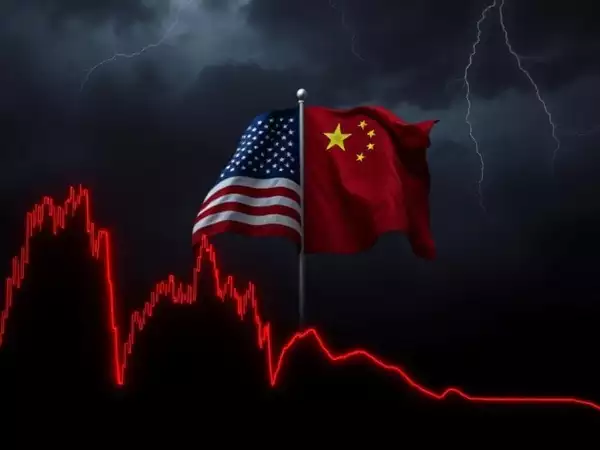
WASHINGTON: US President Donald Trump has announced a 90-day pause on new tariff hikes for most countries, in an apparent response to recent market volatility. However, he intensified his trade offensive against China, imposing a steep 125% tariff citing a “lack of respect” from Beijing. The surprise move came after a turbulent week on Wall Street, with markets reeling from the president’s earlier announcement of sweeping global tariffs. Following the pause, stocks rebounded dramatically, with the S&P 500 surging 9.5% to close at 5,456.90—snapping a week-long losing streak. Despite the pause for most nations, Trump doubled down on China, saying the country’s leadership “doesn’t quite know how to go about” negotiating a deal. “A deal’s going to be made with China. A deal’s going to be made with every one of them,” Trump said, while hosting motor racing champions at the White House. Responding to criticism that he had backtracked on his aggressive trade stance, Trump insisted he was simply being “flexible.” “People were getting a little yippy, a little afraid,” he said, referring to market jitters. “I saw last night where people were getting a little queasy.” The move follows mounting pressure from investors and global leaders after the US imposed a baseline 10% tariff on all imports last Saturday, with elevated rates for key trading partners—including China and the European Union—taking effect Wednesday. Trump revealed on Truth Social that over 75 countries had reached out to negotiate and refrained from retaliatory action, prompting him to issue the 90-day tariff suspension, though the baseline 10% remains in effect. China, however, struck back earlier Wednesday by raising tariffs on US imports to 84%, retaliating against Trump’s escalation of duties on Chinese goods to 104%. In response to the latest move, Beijing’s finance minister remarked, “The United States simply piles mistakes on top of mistakes.” Meanwhile, the European Union announced retaliatory tariffs targeting over €20 billion worth of US goods—including soybeans, motorcycles, and beauty products. However, the EU has not responded to the separate “Liberation Day” tariffs of 20% that took effect Wednesday. Despite heightened tensions, Trump remains confident that his strategy will revive American manufacturing by compelling companies to relocate operations back to the US. “I’m telling you, these countries are calling us up kissing my ass,” he told fellow Republicans at a private dinner, referring to nations eager to secure favourable trade deals. In addition to economic tensions, diplomatic strains are escalating. China issued a travel advisory warning its citizens to assess risks before visiting the US. Meanwhile, US Defence Secretary Pete Hegseth, speaking from Panama, accused Beijing of issuing “threats” as tensions continue to build around control of the Panama Canal. As Trump presses forward with his trade vision, the world’s two largest economies appear locked in an increasingly hostile standoff. — AFP

Investment & Market Trends, News

Khazanah Faces Challenges in Exiting Private Assets

KUALA LUMPUR: Khazanah Nasional Bhd, Malaysia’s sovereign wealth fund, has expressed difficulty in exiting private assets as it navigates the uncertainty caused by US President Donald Trump’s sweeping global tariffs. The fund, which oversees over US$30 billion in assets, is currently reviewing its portfolio as global market conditions remain volatile. In an interview with Bloomberg TV’s Avril Hong on the sidelines of the ASEAN Investment Conference 2025, Managing Director Amirul Feisal Wan Zahir highlighted the challenge of exiting and making investments amid shifting global policies. “We are exposed to private assets both internationally and domestically,” said Amirul. “Policy changes, like the ones we’re seeing now, have a significant impact on global markets, making it harder to exit or make new investments. We will have to see how things unfold,” he added. Amirul noted that Khazanah is focusing on diversifying risks internationally, particularly in response to the restructuring of global trade. Domestically, the fund is focused on supporting key sectors crucial to Malaysia’s economy, such as aviation connectivity and energy transition. In addition, Khazanah is exploring investments in startups, venture capital, and semiconductors, he mentioned. The uncertainty surrounding Trump’s tariffs, which have raised concerns about a potential global recession, has caused market turbulence and threatened to impact Khazanah’s investment returns. Last year, however, the fund reported a 22% increase in its net asset value, bolstered by gains in domestic assets. Amirul also acknowledged the challenges posed by a 24% tariff imposed on Malaysian imports by the US, part of broader measures aimed at addressing perceived trade imbalances. Despite this, Malaysia remains committed to engaging with Washington for a fair resolution. While Malaysia’s stock market has faced significant fund outflows in recent weeks, Amirul remains optimistic about the country’s economic prospects. “We are more optimistic about Malaysia’s growth,” he said. “Current rates remain conducive for trade.”–BLOOMBERG

News

Growth Strategies Take Centre Stage at ASEAN Investment Conference 2025

The ASEAN Investment Conference (AIC) 2025 kicked off today in Kuala Lumpur, bringing together regional policymakers, investors, and capital market leaders to chart a collective path towards resilient growth and inclusive development across ASEAN. Held over two days under the theme “Connecting Capital, Unlocking Opportunities and Driving Sustainability,” the conference convenes more than 700 influential participants including thought leaders, bankers, and fund managers to explore strategies that will deepen regional integration, mobilise capital, and unlock new growth avenues for the region’s 600+ million people. Hosted by the Securities Commission Malaysia (SC) in collaboration with AFFIN Group, CGS International Securities Malaysia, and RHB Banking Group, the conference comes at a pivotal moment as global markets face shifting dynamics and economic uncertainties. Delivering the keynote address, Malaysian Prime Minister Dato’ Seri Anwar Ibrahim emphasised the importance of regional collaboration and sustainable capital flows. Earlier in the day, he held a closed-door breakfast session with global fund managers overseeing a combined USD8 trillion in assets under management (AUM). Malaysia, as the ASEAN Chair in 2025, is positioning itself to lead regional initiatives focused on mitigating the effects of global trade shifts—including US tariffs—while promoting intra-ASEAN trade, and advancing growth in emerging sectors such as artificial intelligence and green energy. Key discussion areas included: Strengthening regional financial integration through fintech and digital banking. Enhancing cooperation with major economic partners such as China, Japan, and South Korea. Supporting sustainable development and economic resilience amid global headwinds. SC Chairman Dato’ Mohammad Faiz Azmi remarked, “ASEAN’s strength lies in its unity and shared purpose. In a time of global uncertainty, collaboration and mutual investment are key to unlocking the region’s full potential.”He added, “By deepening cooperation, we can harness ASEAN’s diversity and move collectively towards a more inclusive and resilient future.” A major milestone at the event was the launch of the ASEAN Simplified ESG Disclosure Guide for SMEs in Supply Chains (ASEAN SEDG) – Version 1.Developed under the SC’s Chairmanship of the ASEAN Capital Markets Forum (ACMF), the guide offers practical, step-by-step ESG reporting support for SMEs, helping them align with evolving sustainability standards while building resilience and competitiveness. It reflects the aspirations of ASEAN Vision 2040, which aims to transform all ten member states into sustainable, future-ready economies. Prominent speakers at AIC 2025 included: Senator Datuk Seri Amir Hamzah Azizan, Minister of Finance II, Malaysia H.E. Chee Hong Tat, Minister for Transport and Second Minister for Finance, Singapore Senator Tengku Datuk Seri Utama Zafrul Tengku Abdul Aziz, Minister of Investment, Trade and Industry, Malaysia H.E. Thomas Djiwandono, Vice Minister, Ministry of Finance, Indonesia H.E. Dr. Kao Kim Hourn, Secretary-General of ASEAN The event also featured insights from senior representatives of multilateral agencies including the World Bank, Asian Development Bank (ADB), and Asian Infrastructure Investment Bank (AIIB).

News

US Tariffs Likely to Weaken Palm Oil Demand and Prices

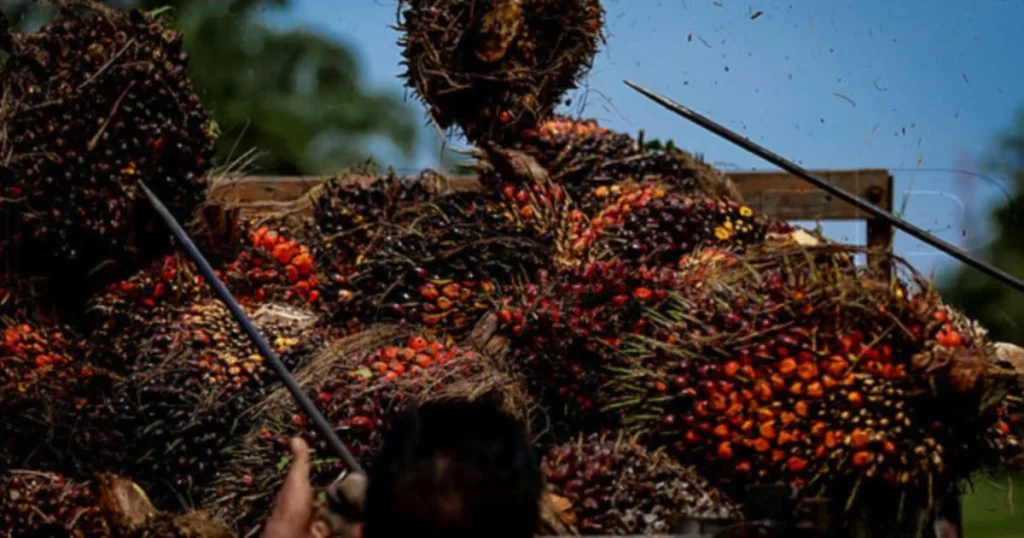
KUALA LUMPUR: The newly implemented reciprocal tariffs by the United States and retaliatory measures from China are expected to dampen global commodity demand, including palm oil, according to CIMB Securities. The research firm noted that if the recent decline in crude oil prices continues, it could further pressure crude palm oil (CPO) prices. The narrowing price gap between palm oil and fossil fuels may reduce the economic viability of biodiesel, potentially weakening demand for palm-based biofuels. CIMB maintained its average CPO price forecast at RM4,200 per tonne for 2025. However, it warned that every RM100 drop in CPO price assumptions could reduce the earnings forecasts for plantation companies under its coverage by approximately 3% to 7%. The US recently imposed a 10% import tariff on palm oil, effective immediately, with rates set to rise on April 9 to 24% for Malaysian palm oil and 32% for Indonesian palm oil. These increases will raise costs for US buyers and may drive them to seek cheaper alternatives, such as domestically produced soybean oil. “These tariffs are likely to prompt food manufacturers and consumers in the US to shift away from palm oil, which could benefit local soybean farmers,” said CIMB. “For those unable to substitute palm oil easily, higher input costs may result in either consumer price increases or margin compression.” In 2024, Malaysia exported 191,000 tonnes of palm oil to the US — accounting for around 10% of the US’s total palm oil imports and just 1.1% of Malaysia’s total exports. CIMB also highlighted a potential upside scenario: China could reduce soybean imports from the US due to the newly imposed 34% tariff and instead increase palm oil imports to offset the decline in soybean oil availability. However, the firm cautioned that this substitution would be limited, given broader economic headwinds and trade-related uncertainties. “China is expected to shift its soybean sourcing to countries like Brazil and Argentina, given the prohibitively high tariffs on US imports,” the note said. Despite these developments, CIMB maintained an ‘overweight’ stance on the agriculture and forestry sector, citing minimal direct exposure of Malaysian palm oil to the US market.–BUSINESS TIMES

Investment & Market Trends

Wawasan Dengkil Tanks on Debut – Investors Left Cold Despite 17x Oversubscription

Wawasan Dengkil Holdings Bhd’s debut on the ACE Market was far from a victory lap, as the construction services firm’s shares slipped below its IPO price within minutes of trading on Tuesday. The stock opened flat at 25 sen—matching its reference price—with an initial volume of 2.89 million shares. But the optimism quickly faded. Within minutes, heavy selling pressure sent the stock tumbling to 23.5 sen by 9.10am, after over 11 million shares had changed hands. Wawasan Dengkil now joins a growing list of newly-listed counters that have stumbled out of the gate this month, becoming the fourth IPO in March to disappoint investors on day one. Lim Soon Yik – Wawasan Dengkil Holdings Bhd, Executive Director Despite the weak market reception, Executive Director Lim Soon Yik struck a confident tone at the company’s listing ceremony, saying the fresh capital would enable Wawasan Dengkil to accelerate its expansion plans and tap new business opportunities. The public seemed to share that initial confidence—at least on paper. The IPO saw public retail applications exceed their allocation by 17 times, while all shares offered to eligible persons and private placements were fully subscribed. In total, the company raised RM27.01 million from the listing. Of that, over a third is earmarked for working capital tied to project execution. Another 28% is set aside for new heavy machinery purchases, including excavators, a mobile crane, and dump trucks. “This is a timely expansion, especially with the government’s continued push for infrastructure development,” Lim said. The firm is currently working on 14 active construction projects with unbilled orders worth RM378.14 million and is bidding for new jobs totalling RM1.3 billion. Its involvement includes notable projects like the third phase of the Light Rail Transit (LRT3). “As earthworks are crucial during the early stages of infrastructure builds, we’re well-positioned to ride the wave of upcoming construction demand,” Lim added. Meanwhile, RM13.5 million raised from the offer-for-sale portion of the IPO—comprising existing shares—will go directly into the pockets of Lim and his family, raising eyebrows amid the stock’s lacklustre performance. Of the IPO proceeds, 5% will go toward general working capital, debt repayment, office upgrades, and listing expenses. M&A Securities served as the adviser, sponsor, underwriter, and placement agent for the listing, while Eco Asia Capital Advisory acted as the financial adviser. The poor debut now casts a shadow over what was supposed to be a growth story—leaving many investors questioning whether oversubscription hype is enough to support post-listing performance in today’s cautious market.

Investment & Market Trends

Malaysia’s largest golf platform Deemples raises US$2m from V Ventures to fuel growth and market expansion

KUALA LUMPUR:  Today Deemples announced a USD 2 million (approx. MYR 9.58 million) investment from Singapore based corporate venture capital firm — V Ventures, to drive its growth and enrich user experience. The investment comes at a time of rapid growth for Deemples, which has seen its business double yearly for the past four years in Malaysia. This investment will further facilitate the brand’s plans to expand its presence in Southeast Asia and establish a strong foothold in a new market. “Our core mission is to create the premier golfing experience empowered by tech to allow our community to play anytime, anywhere, with anyone. With this new investment, we have set our eyes on further expanding our ecosystem to be truly regional with our services and to significantly enrich the golfing community,” said David Wong, CEO and founder of Deemples   Founded with the vision of addressing a personal need to find golf buddies, Deemples has grown into a household name in Malaysia growing its number of active golfers by 200% since their last fundraising round. Deemples enables golfers to plan their games effortlessly, whether it’s a spontaneous round, a tournament, a club match or a prearranged outing. With its tech-first philosophy and designed-for-golfers approach, Deemples caters to the diverse needs of golfers, enhancing their overall experience of the sport.   “We will use the funds to build a scalable best-in-class product, with a keen focus on relentless innovation, formula for product market fit, and to ultimately expand into untapped markets. This is important to the mission of providing the best borderless golfing experience for our community, enabling golf enthusiasts to connect, play, and enjoy the game, anywhere. In essence, it solidifies our commitment to empowering golfers everywhere and reinforces our position as a leader in revolutionising the way golf is experienced and enjoyed across borders,” shared Ahmad Daleen, Chief Technology Officer of Deemples.   Propelling the growth of golf in Malaysia and Southeast Asia With a 100% growth observed in the Malaysian Golfing community from 2023 alone, there is excitement surrounding the evident rise in both appreciation for golfing and notable enhancement in skill levels. This reflects a deeper commitment to mastering and enjoying the sport. This growth can be attributed to increased accessibility to golf courses and training facilities. Overall, the future looks promising for the Malaysian golfing community as it continues to expand and evolve.   Deemples has played a significant role in shaping and expanding the golfing community across Malaysia. Operating as the first two-sided marketplace, Deemples prioritises providing value to both customers and golf courses alike. Through its platform,  the brand encourages players to golf more frequently by connecting them with other golfers and establishing a golfing network. This not only benefits users by enhancing their experience but also helps golf courses increase their revenue and attract more players to their facilities.   “Deemples has helped golf courses in Malaysia to provide a new level of service for both new and existing golfers over the last 4 years.  We at The Mines Resort and Golf Club were able to launch on the platform easily and immediately start receiving bookings from their users. Deemples has been a great partner to us and other golf courses. With their best-in-class technology, and growth strategy, it will enable all subscribed golf courses to provide a thrilling golfing experience to our golf fraternity. We are excited to see what our future with Deemples holds for the golf industry in Malaysia.” shared YBHG Admiral Tan Sri Dato Setia Mohd Anwar Mohd Nor (R), President of the Malaysian Golf Association and Executive Chairman of The Mines Resort and Golf Club.   With a steady growth in the Malaysian market from last year, Deemples is set to continue to provide the best golf booking and matching experience in Malaysia. The platform’s established track record serves as a solid foundation for its ongoing expansion efforts. By leveraging its scalable platform and profound understanding of the golfing community, Deemples is dedicated to expanding across Southeast Asia whilst ensuring that Malaysia remains a focal point of its operations.

Scroll to Top

Subscribe
FREE Newsletter