Electricity transmission capacity to Sabah’s east coast has been significantly enhanced following the completion of a RM9.2 million grid upgrade aimed at strengthening supply stability and reducing generation costs in Tawau.
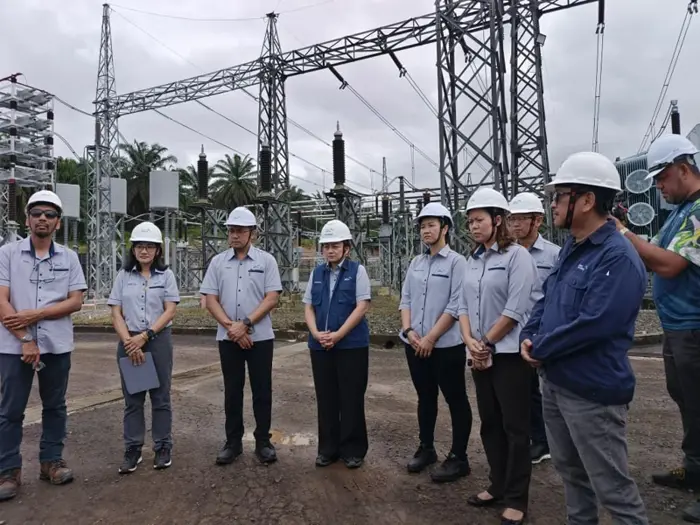
Sabah Electricity Sdn Bhd chief executive officer Mohd Yaakob Jaafar said the project involved installing a 132kV capacitor bank at the main Tawau intake substation. Work began in November 2024 and was completed on Dec 31.
The upgrade forms part of a broader strategy to channel lower-cost electricity generated on Sabah’s west coast to the east coast, where power production is more expensive due to heavier reliance on diesel generation.
“The goal is to transmit more affordable energy from the west coast to the east coast, particularly Tawau, where generation costs are higher,” Yaakob said during a media site visit on Friday.
He noted that the earlier upgrading of the 275kV transmission line from Sandakan to Lahad Datu in March last year had already raised east coast supply capacity from about 210MW to 260MW. With the completion of the capacitor bank installation, transmission capacity to Tawau can now reach up to 400MW.
Yaakob added that the Energy Commission of Sabah had set a target for the project to be completed before the end of 2025. Sabah Electricity delivered the project on schedule, within budget and without workplace incidents.
Tawau’s current electricity demand ranges between 170MW and 180MW daily. Supply is supported by the main grid and three local power stations — HDA Kubota, HDA Tawau and IPP Serudong — with no immediate supply constraints.
Although the upgrade was primarily aimed at enabling the transfer of cheaper energy rather than directly reducing outages, service reliability has improved. Tawau’s System Average Interruption Duration Index (SAIDI) has improved from about 180 minutes previously to around 130 minutes.
Looking ahead, Sabah Electricity is studying the installation of reactor systems in Sandakan to further strengthen power flow along the east coast corridor.
Under the Sabah Energy Roadmap, the utility also plans to gradually phase out diesel power stations in Sandakan and Tawau between 2027 and 2029. These will be replaced with more cost-effective and sustainable energy sources, including large-scale solar projects on both the west and east coasts.
Additional renewable energy capacity is also being planned to support long-term supply security in the region.
“The objective is to reduce reliance on costly diesel generation and ensure a more stable, affordable and reliable electricity system for Sabah,” Yaakob said.