Southeast Asia Payment Methods in 2026: A Simple Guide
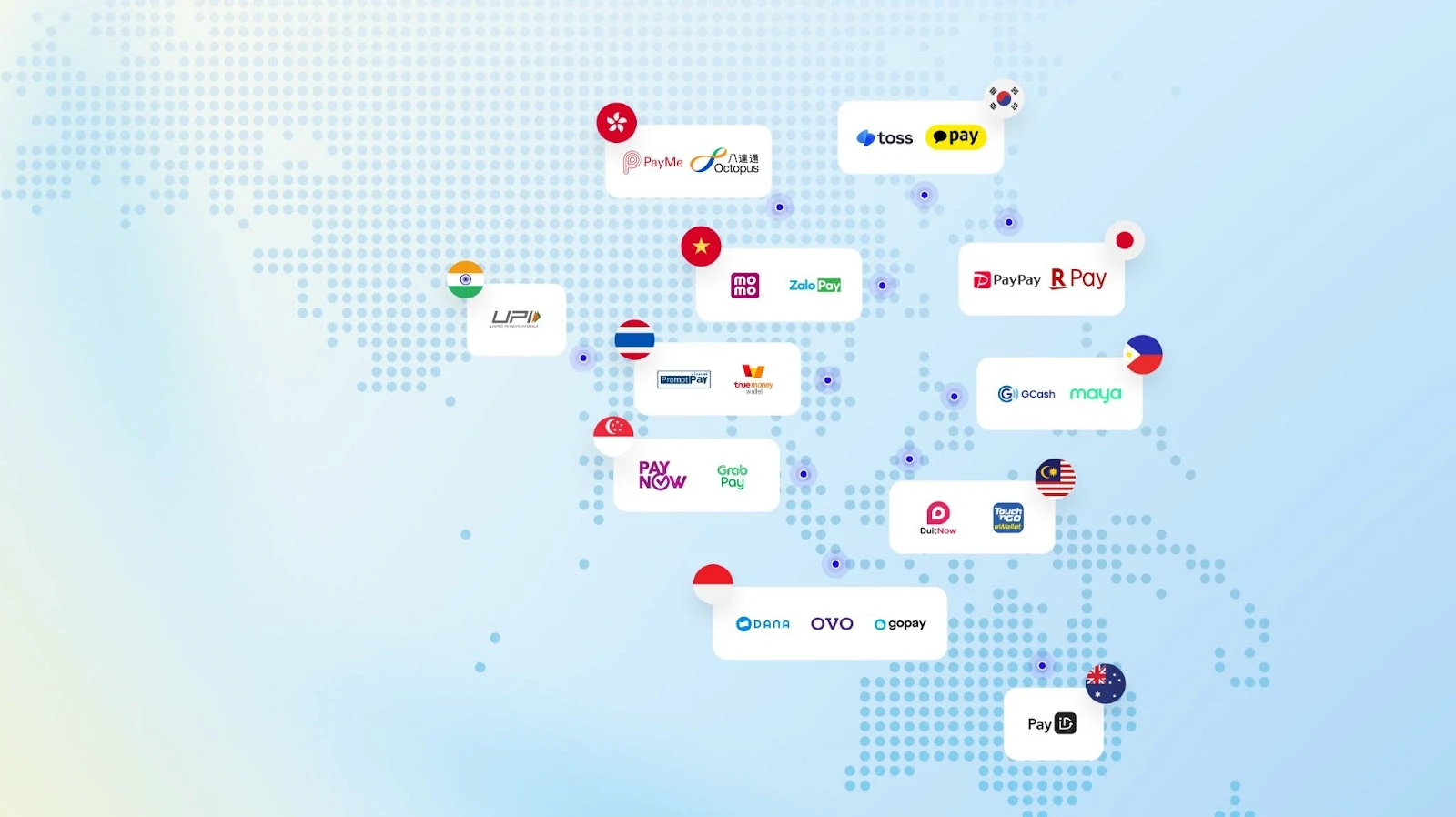
Southeast Asia is often grouped together, but each country has its own unique payment habits shaped by culture, regulations, and local players.
Across the region, one thing is clear — digital payments are growing rapidly, especially through QR codes, digital wallets, and bank transfers.
From small shops in Indonesia to street vendors in Bangkok and hawker stalls in Singapore, paying with a phone has become increasingly common, replacing cash and cards in many cases.
According to the Global Payments Report 2026, digital payment methods such as wallets, buy-now-pay-later (BNPL), and account-to-account (A2A) transfers could make up 46% of global in-store payments by 2030.
How Payments Differ Across Southeast Asia
Singapore: Digital Wallets Take the Lead
Singapore has become a leader in digital payments.
Digital wallets now make up the largest share of in-store payments, overtaking debit cards in 2025. Popular options include GrabPay, ShopeePay, PayNow, Apple Pay, and Google Pay.
Cards are still widely used, especially for online transactions, but digital wallets are growing quickly.
Malaysia: QR Payments Driving Growth
Malaysia is seeing strong growth in digital payments through DuitNow and DuitNow QR.
Cash usage is declining, while digital wallets like Touch ’n Go, Boost, GrabPay, and ShopeePay are gaining traction.
Bank transfer systems like FPX also remain important for online payments.
Philippines: Digital Growth, But Cash Still Dominates
The Philippines has a mix of digital and cash payments.
While digital wallets like GCash, Maya, and ShopeePay are widely used, cash still accounts for a large share of transactions, including cash-on-delivery for online purchases.
This is partly due to a large unbanked population, though digital adoption continues to rise.
Indonesia: Fast Shift to Digital Payments
Indonesia is seeing one of the fastest moves away from cash.
Systems like QRIS and BI-FAST have helped drive adoption of digital wallets such as GoPay, DANA, and OVO.
Cash use has dropped significantly, especially in cities.
Thailand: Bank Transfers Lead
Thailand stands out for its strong use of account-to-account payments, driven by PromptPay.
This method dominates both online and in-store payments.
Digital wallets like TrueMoney and LINE Pay are also used, while cash remains more common outside urban areas.
Vietnam: Rapid Growth in QR Payments
Vietnam’s payment market is growing quickly, especially through QR code systems like VietQR.
Digital wallets such as MoMo, ZaloPay, and ShopeePay are popular, while global players like Apple Pay are expanding.
Cash is still used, but digital adoption is accelerating.
Key Trends Across the Region
- Digital wallets are rising quickly
- QR code payments are becoming standard
- Bank transfers (A2A) are expanding across markets
- Cash is declining, but not disappearing
- Each country follows a different pace and path
Bottom Line
Southeast Asia’s payment landscape is diverse but moving in the same direction — towards digital-first transactions.
For businesses, understanding each country’s preferred payment methods is crucial, as there is no one-size-fits-all approach in this region.