For decades, the beauty industry has taught consumers to conceal imperfections. Cover the blemish. Correct the skin. Hide anything that does not fit the image of a flawless complexion.
Then a Malaysian brand decided to put a bright pink heart on it.
Launched in December 2021, Dododots took one of skincare’s most functional products—the hydrocolloid acne patch—and turned it into something people could actually enjoy wearing. Colourful hearts, playful characters and expressive designs transformed what was traditionally hidden into something deliberately visible.
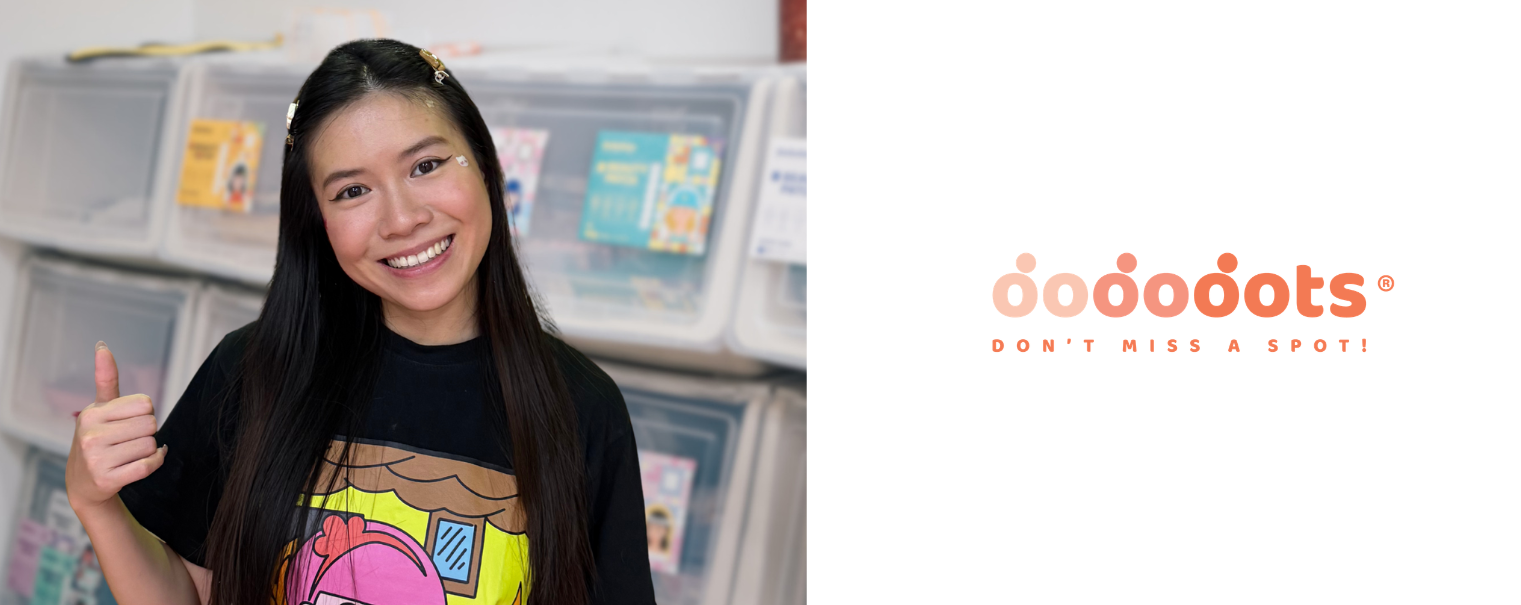
Co-Founder of Dododots – Esther Erin.
It was a deceptively simple idea that tapped into something much bigger: a generation increasingly comfortable rejecting conventional ideas of perfection.
Today, Dododots has expanded into more than 22 countries and over 5,500 retail stores, with its products available through major names including Guardian, Watsons, Sephora, 7-Eleven, FamilyMart and Miniso. With more than 70 designs, over one billion organic content views and a Malaysia Book of Records title for the most acne patch designs, the homegrown brand has turned a small skincare category into a serious international growth story.
Making Imperfection Part of the Look
The original opportunity was straightforward. In 2021, Southeast Asia’s pimple patch market was dominated by transparent, clinical-looking products designed to disappear on the skin.
Dododots asked a different question: why should they disappear at all?
That thinking resulted in colourful patches designed to complement an outfit or mood rather than disguise a breakout. More recently, the company has pushed in the opposite direction with a concealer patch developed to match different skin tones—demonstrating that choice, rather than concealment itself, sits at the centre of the brand.
Underneath the playful aesthetic is a more emotional proposition.
Dododots sees itself as helping people feel confident on days when their skin may make them feel otherwise. In an age of filters, carefully curated social feeds and heightened pressure around appearance, the brand has deliberately positioned itself away from the pursuit of perfection and closer to self-acceptance.
That positioning has proved particularly relevant to Gen Z, where individuality and authenticity increasingly influence purchasing decisions.
Attention You Can’t Simply Buy
Perhaps the more interesting part of the Dododots story is how the company has translated that cultural relevance into a highly effective business model.
Its content operation is a case in point.
A team of just four produces between 400 and 500 videos every month. Collectively, Dododots’ organic content has accumulated more than one billion views, with its most successful video exceeding 60 million. Approximately 70% of customer acquisition comes organically.
Instead of relying primarily on expensive advertising, the company has learned to earn attention by documenting the realities of building the business—including the mistakes.
For a young consumer brand, that creates a powerful advantage. Content becomes a compounding asset rather than simply another marketing expense, while the personalities and experiences behind the company become part of the brand itself.
Going From Niche to Everywhere
The next challenge is turning cultural visibility into physical ubiquity.
Dododots’ entry into approximately 2,300 7-Eleven stores in Malaysia represents an important shift. A product once associated primarily with beauty retail can now sit alongside everyday purchases, bringing the brand into consumers’ daily routines.
Internationally, ambitions are considerably larger. Australia, the United States, Canada, Singapore and Vietnam are among the markets receiving attention as the company develops the regulatory, supply-chain and retail infrastructure required for sustainable expansion.
Its stated target of reaching RM50 million in revenue in 2026 is significant, but management is equally focused on what sits underneath that number: systems capable of supporting a much larger organisation.
Interestingly, Dododots has resisted two common shortcuts to growth.
The founders have declined investment approaches rather than dilute equity before they believe the business has reached its appropriate valuation. They have also resisted rushing into conventional skincare categories such as serums, moisturisers and toners.
The strategy instead is remarkably focused: own the patch.
Growing Up Without Becoming Corporate
As Dododots has expanded to a team of around 25 operating across multiple countries, its founders have discovered that scaling a business is ultimately a people challenge.
The early days of two founders sharing almost every decision have given way to department leaders responsible for areas including retail, warehousing, compliance and performance. That transition requires founders to surrender something entrepreneurs often find difficult to give up: control.

It has also changed their perspective on leadership. Culture, retention, performance and trust are no longer viewed as separate HR considerations; they are fundamental business issues.
The next evolution will require even greater discipline. Operational knowledge that currently sits with founders and department heads needs to become documented systems. Financial forecasting, cash-flow management and visibility across country entities must also become more sophisticated as revenue and geographic complexity increase.
Dododots ultimately wants to become something considerably bigger than a Malaysian brand with overseas distribution. Its ambition is to emerge as a globally recognised Asian beauty brand capable of competing with established international names.
Yet perhaps its greatest strength remains the idea that started everything.
A breakout does not have to ruin your day.
Sometimes, it can become part of the outfit.
And from that small change in perspective, Dododots has built a brand with ambitions far beyond the bathroom mirror.