For more than four decades, Ameen Products Sdn Bhd has built its business around a relatively straightforward proposition: making affordable cordial beverages at a quality and scale that work for both households and commercial customers.
Now, the Malaysian manufacturer is looking beyond its domestic base.
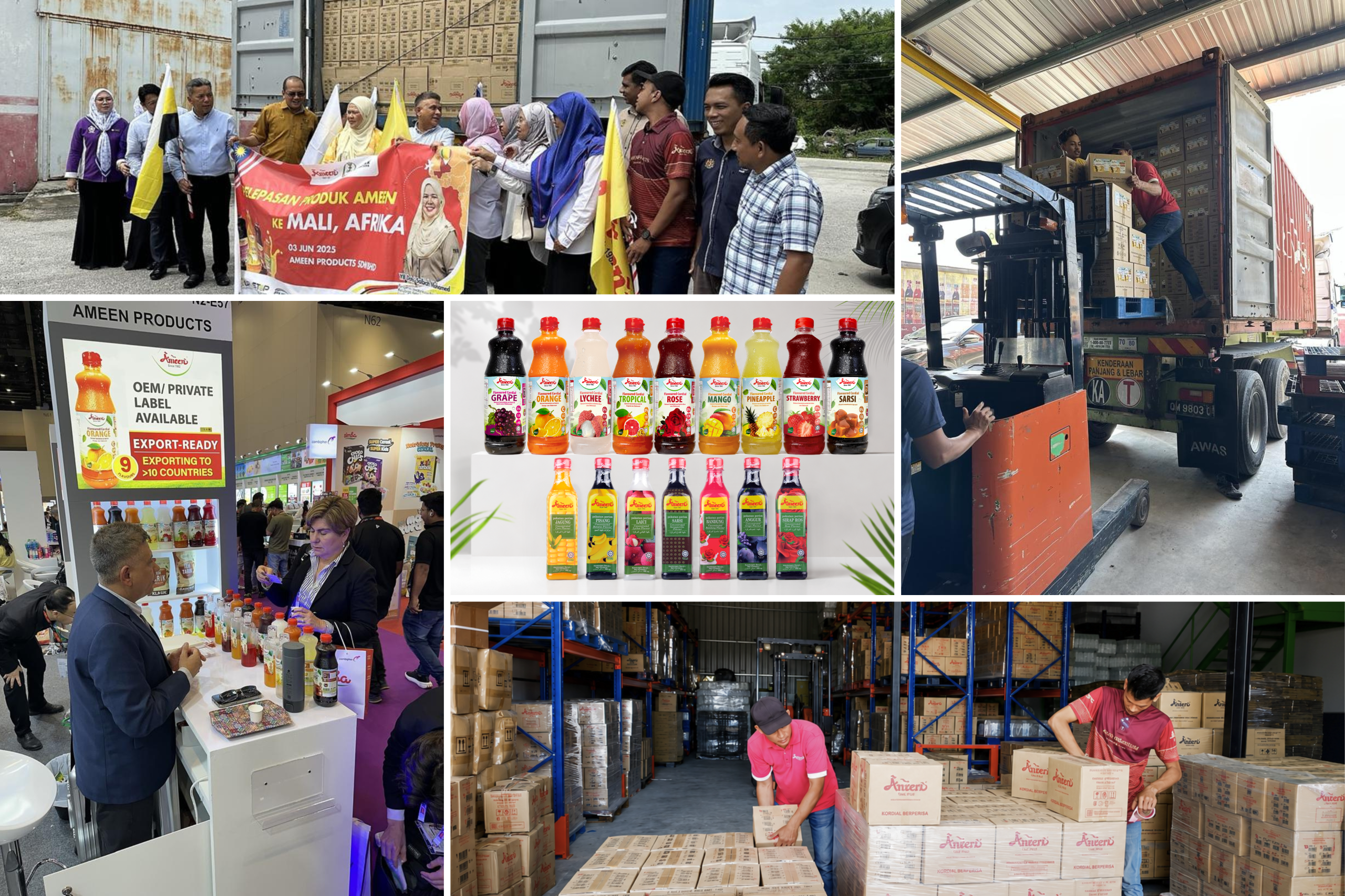
Established in 1982, Ameen Products has grown from serving the local market to building distribution throughout Peninsular Malaysia, while gradually establishing an overseas presence. Its products are now reaching markets including Singapore, Bahrain, Jeddah, the United Arab Emirates, Fiji, Rwanda and Mali.
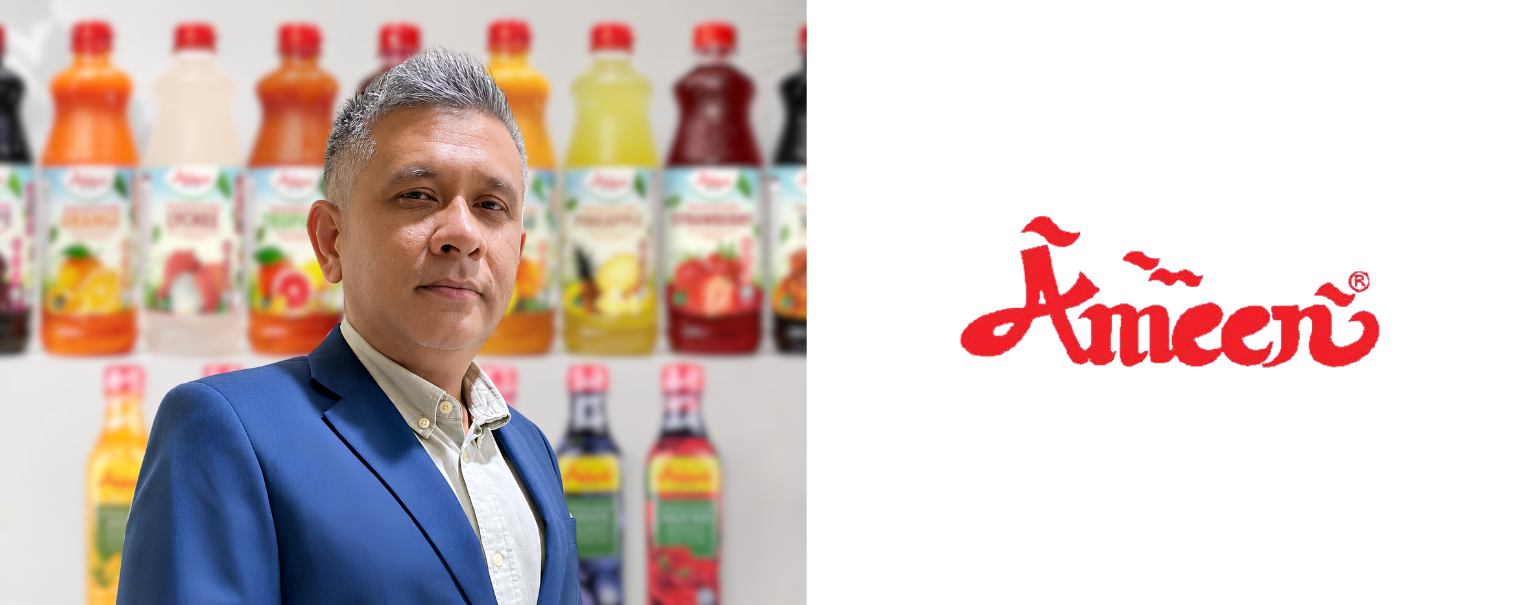
Managing Director and Head of Ameen Products Sdn Bhd – Mohammed Irfan Amanulla Khan.
The expansion comes as the company prepares for a new phase of growth — one that will require greater manufacturing capacity, stronger internal systems and an organisation capable of supporting a broader international footprint.
For Ameen Products, however, the strategy is not to diversify away from the business it knows. Instead, it is doubling down on it.
A Business Built Around Value
Under the Ameen brand, the company specialises in cordial drinks supplied through wholesalers, distributors, retailers and hypermarkets, as well as to food service operators and export customers.
The product serves a practical market.
For households, cordial provides an economical way to prepare beverages in larger quantities. The same economics matter even more for restaurants, caterers, institutions and other commercial operators that need to serve large numbers of people while keeping costs under control.
That value proposition has remained remarkably consistent since Ameen Products began operating in 1982.
At the time, the company identified growing demand for affordable beverage concentrates that could cater to larger households and commercial users. Providing consistent quality at a competitive price became an important part of the business.
The market surrounding that proposition, however, has changed.
Affordability remains important, particularly as consumers and businesses become increasingly conscious of costs, but purchasing decisions are no longer driven by price alone. Expectations surrounding food safety, manufacturing standards, quality assurance, product variety and healthier choices have become more pronounced.
Ameen Products has consequently had to evolve the way it manufactures and develops its products while preserving the accessibility that helped establish the brand.
It is a balancing act familiar to many long-established consumer businesses: modernise the company without losing the attributes that built its customer base in the first place.
Staying Close to the Core
Ameen Products’ plans for expansion are relatively focused.
The company has identified three priorities for its next phase: strengthening its existing cordial business, increasing production capacity and developing its presence in international markets.
Rather than using growth as an opportunity to move into unrelated sectors, management intends to concentrate resources on the beverage category where the company already has decades of manufacturing and market experience.
It is a deliberate decision.
Growth, in Ameen’s view, should not be measured purely by higher sales volumes. A larger business also needs to be more resilient, sustainably profitable and supported by stronger relationships with customers and commercial partners.
This thinking influences how the company allocates capital. Manufacturing efficiency, product quality, customer relationships and market expansion take priority because each contributes directly to the competitiveness of the core business.
The approach may be less dramatic than aggressive diversification, but it reflects a longer-term view of where the company’s advantage lies.
After more than 40 years in the same industry, Ameen has accumulated knowledge of its products, customers, suppliers and distribution channels that would be difficult to reproduce quickly.
The opportunity now is to make that experience work across a larger market.
Scaling Brings a Different Set of Problems
Expansion also changes the demands placed on a business.
Processes that work effectively at one level of production do not necessarily translate smoothly when volumes increase, customer networks become larger and products travel into more markets.
For Ameen Products, maintaining consistency across operations, product quality and customer service has become increasingly important as the organisation grows.
Scaling therefore requires more than additional production.
It means stronger systems, clearer processes and greater use of data to support decision-making. It also requires management to rethink how the organisation is led.
As the business becomes larger, senior leaders cannot remain involved in every aspect of daily operations. Their role increasingly shifts towards building structures, developing teams and establishing the systems that allow decisions to be made effectively throughout the organisation.
That transition will become particularly important if Ameen’s export business accelerates.
International markets add another layer of complexity to manufacturing. Different customers and markets bring different requirements, while supply chains, logistics, quality controls and commercial relationships must all perform consistently across greater distances.
Export growth is therefore as much an organisational challenge as it is a sales opportunity.
The Advantage That Does Not Appear on the Label
One of Ameen Products’ more valuable assets is also among its least visible: the commercial relationships it has accumulated over decades.
The company has longstanding ties with customers, distributors, suppliers and retail partners, with some relationships extending over many years.
For a manufacturer, those relationships can become an important competitive advantage.
Reliability matters when customers depend on consistent supply. Responsiveness matters when market conditions change. Operational flexibility matters when customers encounter unexpected demand or challenges of their own.
Ameen believes its ability to deliver on these less visible aspects of the business has helped sustain relationships beyond individual transactions.
The result is a degree of trust that cannot be created through marketing alone.
It also provides a useful foundation as the company enters new markets. While price and product can secure an initial opportunity, maintaining international business over the longer term requires consistency behind the scenes.
Investing Before the Next Push
Ameen Products is also taking a measured approach to the operational demands created by higher demand.
Over the past 12 to 18 months, the company has prioritised improvements designed to increase manufacturing efficiency, optimise the use of resources, reduce waste and strengthen quality controls.
Not every investment produces an immediate financial return.
But for a manufacturer preparing to increase capacity, improving the efficiency of the existing operation can be as important as simply adding more production.
It also reflects Ameen’s interpretation of responsible growth.
Rather than expanding as quickly as possible, the company is seeking to strengthen the foundations required to support a larger operation. The objective is to increase capacity without allowing efficiency, quality or operational discipline to deteriorate as a consequence.
That philosophy will be tested as the company moves towards a potentially much larger manufacturing footprint.
Looking Beyond Malaysia
Ameen Products’ international presence remains an area with considerable room for expansion.
Having already reached markets spanning Southeast Asia, the Middle East, the Pacific and Africa, the company’s ambition is to establish Ameen as a more recognised Malaysian beverage brand internationally.
Doing so will require capacity.
The company is exploring the development of a larger manufacturing facility as part of its plans to support higher production volumes and future export demand. Alongside physical expansion, it expects to invest further in systems that can support a more scalable operation.
Yet management recognises that increasing factory capacity alone will not be enough.
The organisation itself must scale.
Leadership capabilities will need to deepen. Internal processes will need to become more efficient. Teams will require greater autonomy and accountability, while the company’s systems will have to provide the visibility needed to manage a larger and increasingly international operation.
These are significant changes for a business whose history stretches back to 1982, but they are also part of the natural progression of a company moving from longevity towards a more ambitious phase of expansion.
Ameen Products enters that phase with an advantage that newer businesses cannot manufacture: time.
More than four decades of operating experience have given the company an established domestic market, longstanding commercial relationships and an understanding of the category in which it competes.
The question now is how effectively those strengths can translate beyond Malaysia.
For Ameen Products, the answer is unlikely to come from abandoning the formula that built the company. Its strategy is instead to increase capacity, strengthen the organisation and take a familiar Malaysian product into considerably more markets.
After more than 40 years of building at home, its next opportunity increasingly lies abroad.