For BIG ONION®, food may be at the heart of the business, but its ambitions increasingly extend beyond what is served on the plate.
The Malaysian company is evolving from its traditional catering base towards a broader ecosystem spanning facilities management, franchise development, central kitchen capabilities and hospitality solutions. The shift reflects a market where clients increasingly expect food service partners to deliver not only quality, but also operational efficiency, consistency and the ability to scale.

Managing Director of Big Onion Food Caterer Sdn Bhd – Foo Kuan Liang.
BIG ONION® sees this evolution as a response to a fundamental change in the industry: managing food operations today is as much about people, systems and experience as it is about the meal itself.
Building an Ecosystem Around Food
One of the gaps BIG ONION® identified early was the shortage of reliable food service partners capable of combining quality with operational efficiency at scale.
Clients increasingly needed more than a supplier. They required partners capable of understanding manpower requirements, customer experience, operational consistency and the realities of maintaining service standards across different environments.
Those requirements have become more complex as ESG considerations, technology, workforce management and brand experience play a larger role in corporate decision-making.
BIG ONION® has responded by broadening its capabilities. Through facilities management and franchise development, the company is looking to create food service ecosystems that can address operational challenges while providing a foundation for longer-term growth.
This means thinking beyond individual projects towards systems that can be replicated and scaled.
Growth That Goes Beyond Revenue
That approach is also shaping how the company defines growth.
For BIG ONION®, becoming bigger is not necessarily the same as becoming stronger. Its focus is increasingly on building a business that can create sustainable value for clients, employees, partners and communities.
Operational capability is central to that strategy. As the organisation expands into areas such as facilities management and franchise development, maintaining consistency across a larger network becomes increasingly challenging.
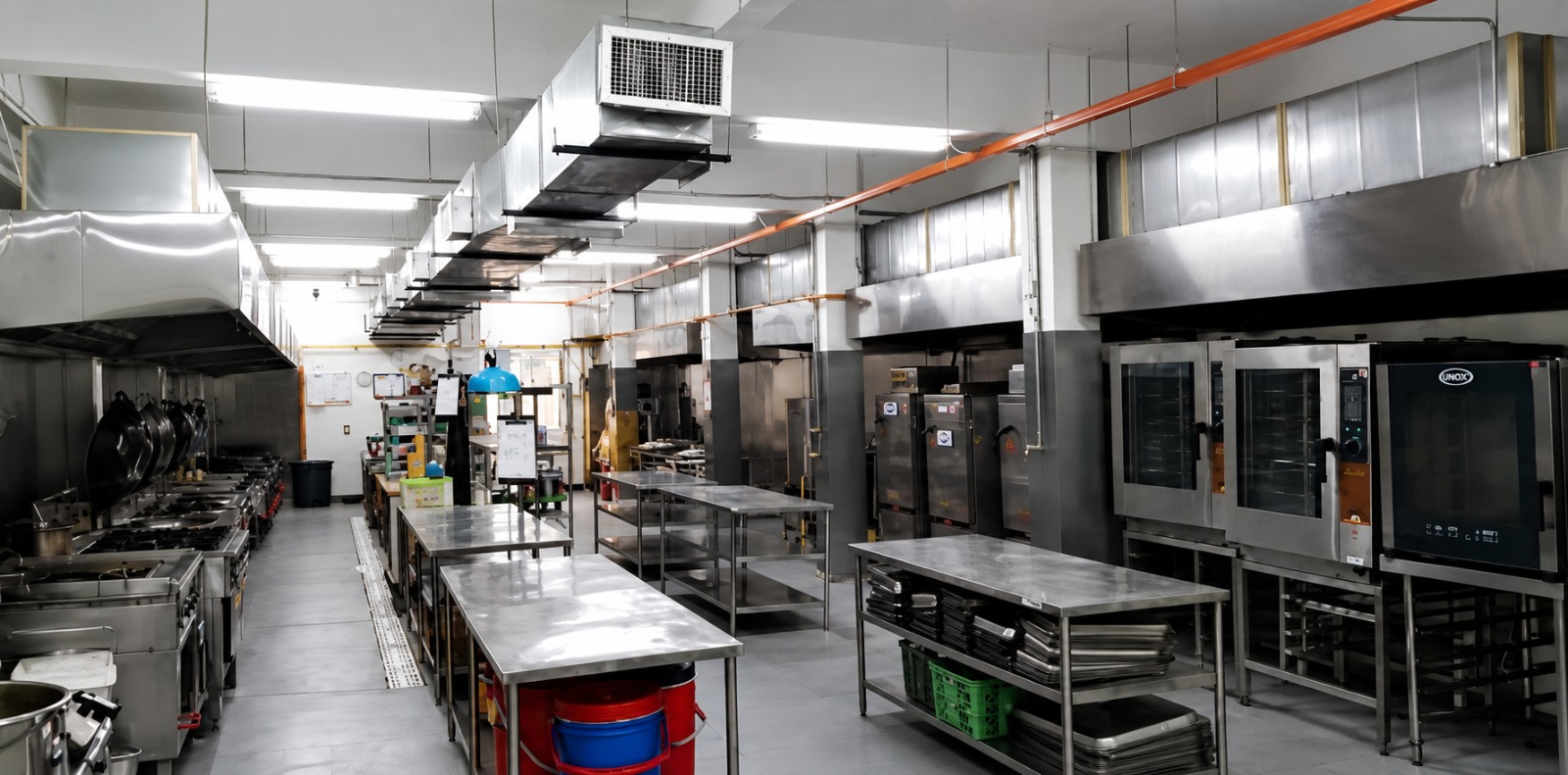
Growth introduces complexity in manpower, communication, quality control and decision-making. It has required the company’s leadership to move from being predominantly hands-on operators towards building stronger structures, clearer processes and teams capable of taking greater responsibility.
The transition is significant. Leadership in a growing organisation is no longer simply about overseeing daily execution; it is about creating an operating model capable of functioning effectively as the business becomes larger and more diverse.
The Work Behind the Experience
Much of BIG ONION®’s competitive strength, it says, happens away from public view.
Behind a catering operation, large-scale event, facilities management contract or franchise business sits considerable coordination. Manpower must be deployed, problems resolved quickly, standards maintained and different operational components brought together.

The company’s emphasis on adaptability and execution has therefore become an important part of its proposition.
Its ability to respond under pressure while maintaining quality and client confidence is supported by the systems, processes and people behind each operation.
In this sense, BIG ONION® views its competitive advantage not simply as the food it produces, but the operational ecosystem surrounding it.
Putting Sustainability Into Operations
Sustainability is becoming another component of that ecosystem.
Over the past 12 to 18 months, BIG ONION® has strengthened ESG practices across its operations, including more efficient resource management, efforts to reduce unnecessary wastage, increased adoption of paperless processes and improvements in operational planning.
The company has also invested in systems, process improvements and employee development despite recognising that such investments may not produce immediate returns.
It reflects a longer-term view of sustainability—one that connects responsible practices with operational resilience rather than treating ESG as a separate corporate exercise.
Building for Regional Potential
BIG ONION®’s next phase will see it work towards becoming a more integrated food, hospitality and facilities management ecosystem with regional potential.
Facilities management, franchise development, central kitchen operations, ESG-driven initiatives and strategic partnerships are expected to form important parts of that expansion.
But the company acknowledges that external growth will require internal transformation.
Greater standardisation, stronger systems, leadership development and digital integration will be necessary if the business is to scale without losing the agility and execution capabilities on which it has built its reputation.
For BIG ONION®, the next stage is therefore not simply about entering more markets or adding more services. It is about creating an organisation capable of supporting them.
As the food and hospitality industry becomes more complex, the businesses positioned to grow may be those capable of looking beyond individual services and building the infrastructure around them.
BIG ONION® is betting its next chapter on exactly that.