Children have never had more entertainment available to them.
It is instant, personalised and almost permanently within reach. Yet as screens occupy a growing share of everyday life, another market is developing around something considerably less technological: getting people out of the house.
Sambill Park is betting on it.
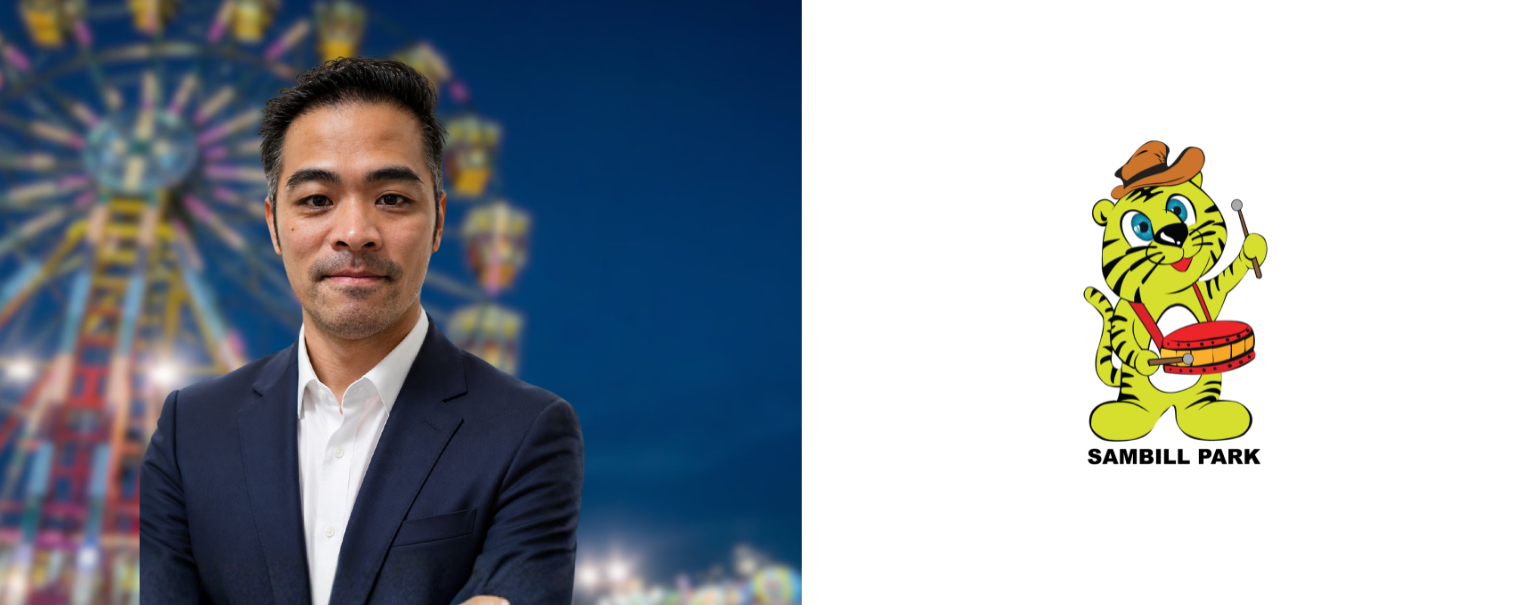
Managing Director of Sambill Park (Malaysia) Sdn Bhd – Wei Chi Wong.
The Malaysian sports, entertainment and family lifestyle company creates physical experiences ranging from youth sports academies and competitions to family attractions, recreational facilities and community events. It is also the company behind Funtopia, recognised by the Malaysia Book of Records as Malaysia’s Largest Inflatable Theme Park.
But management increasingly sees the business as something larger than organising events or operating attractions.
Sambill Park wants to build intellectual property around real-world experiences — and eventually take those concepts across Southeast Asia.
Competing With the Screen
The underlying consumer problem is difficult to ignore.
Children spend significant amounts of their leisure time digitally entertained, while parents are increasingly looking for activities that provide recreation, learning and meaningful family time.
Sambill Park sees an opportunity between conventional sports training and traditional family entertainment.
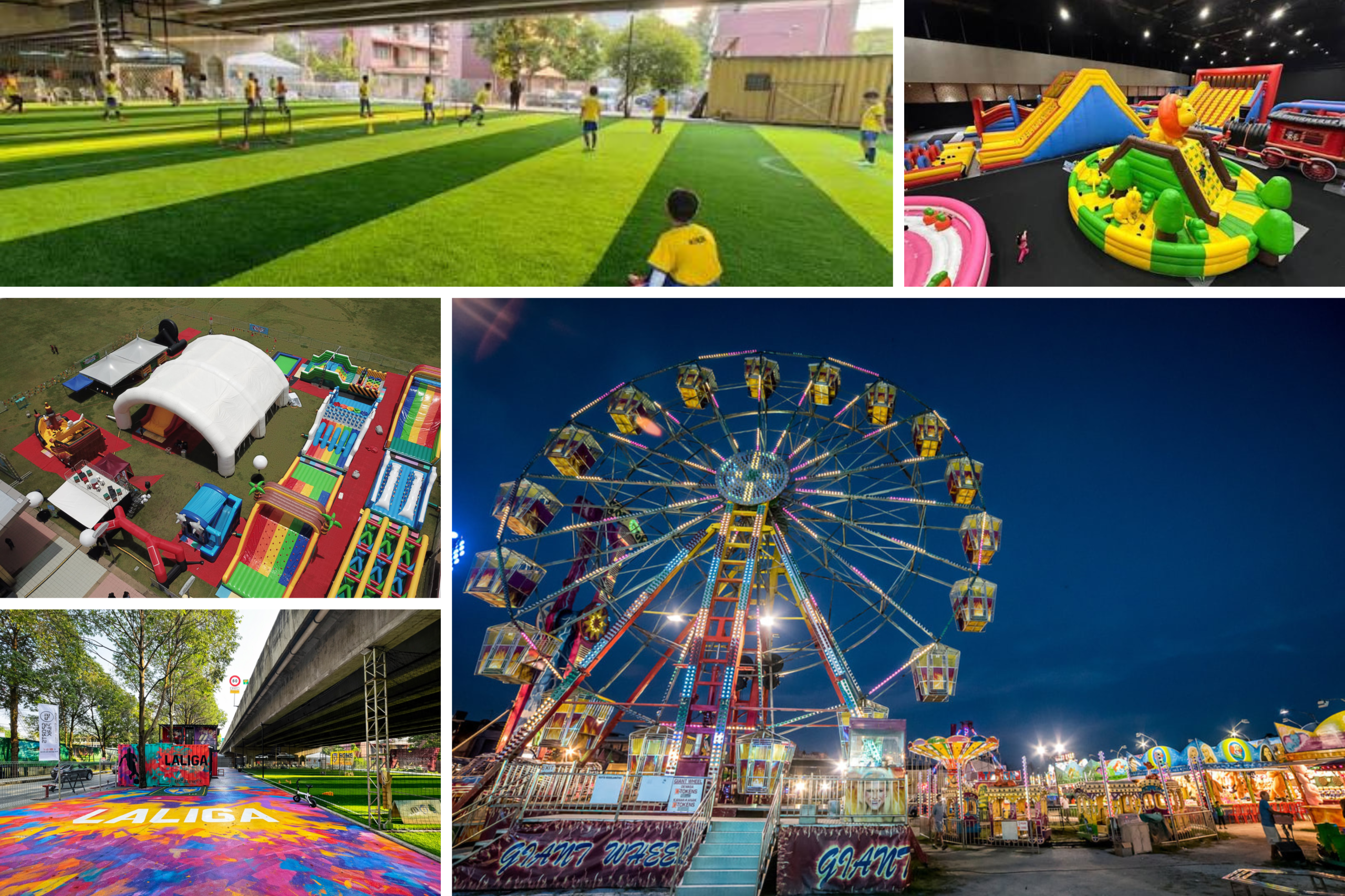
Rather than offering a single activity, it develops concepts combining physical participation, youth development, entertainment and community engagement.
That distinction has become more important as consumer expectations have evolved.
Families are no longer necessarily paying simply for access to an activity. They expect convenience, value and an experience memorable enough to justify their time.
The competition is therefore not always another theme park, sporting programme or event.
Sometimes it is simply staying home.
Turning Experiences Into Intellectual Property
For Sambill Park, that creates an interesting business challenge.
Events are temporary by nature. A successful event may attract thousands of people, but when it ends, so does that particular revenue opportunity.
Intellectual property changes the equation.
The company is increasingly focused on developing proprietary concepts and operating models that can be repeated across different locations rather than continuously building one-off projects from scratch.
When considering new opportunities, Sambill Park asks whether they strengthen its existing ecosystem, whether they can be scaled efficiently and whether they can create sustainable value for customers, partners and shareholders.
That has meant being willing to turn down some shorter-term commercial opportunities.
Instead, resources have been directed towards proprietary brands, recurring community programmes, strategic partnerships and concepts capable of travelling beyond a single venue.
The objective is not simply to organise more events. It is to own more of what makes those events valuable.
The Difficult Part of Getting Bigger
That strategy also changes the organisation required to deliver it.
In a founder-led company, speed can be an advantage. Decisions are made quickly, communication is direct and the person with the vision is often closely involved in execution.
Scale makes that considerably harder.
As Sambill Park has grown, maintaining consistency, accountability and culture across more activities has become a bigger management challenge.
The company’s leadership is consequently moving away from direct involvement in day-to-day operations towards strategy, governance and talent development.
Teams need authority to make decisions. Management processes have to replace informal communication. Future leaders must understand the organisation well enough to operate without constant founder involvement.
Sambill Park describes its next transition as moving from a founder-driven organisation to a systems-driven one.
For many SMEs, that is one of the most difficult stages of growth.
A founder can build a successful business. Building an institution capable of growing independently of that founder is a different achievement.
Why Bigger Isn’t Necessarily Better
Sambill Park is also becoming more selective about what growth means.
Revenue, locations and headcount are obvious measures, but the company increasingly looks at brand equity, customer loyalty, intellectual property and whether its business models can be replicated.
It does not want growth that weakens culture or financial discipline simply to increase scale.
That philosophy has influenced its approach to sustainability as well.
Rather than defining sustainability only through environmental measures, Sambill Park includes the durability of the business and its impact on communities.
Over the past 12 to 18 months, it has prioritised longer-term investment in youth development, family activities and proprietary platforms even where shorter-term projects could have produced faster revenue.
The trade-off is deliberate: slower immediate returns in exchange for assets and programmes that can continue creating value.
Taking the Model Across Southeast Asia
The next test is regional.
Sambill Park wants to evolve from a Malaysian operator into a Southeast Asian platform for sports, entertainment and family experiences.
Rather than merely opening more venues, the ambition is to build a portfolio of concepts, brands and operating systems that can be replicated through strategic partnerships in different markets.
That will require stronger technology, governance, processes and a deeper management bench.
But there is a broader consumer bet underpinning the expansion.
Digital entertainment is unlikely to retreat. Artificial intelligence, gaming, streaming and increasingly immersive technology will continue competing for attention.
Sambill Park is betting that this will not eliminate demand for physical experiences. It may make good ones more valuable.
People still want places to meet. Parents still want their children to move, learn and interact. Communities still need reasons to come together.
The business opportunity lies in turning those needs into experiences people are willing to leave their screens for.
Because the more of life that happens online, the greater the premium may become on experiences that can only happen in the real world.