An approval sits in an inbox. A sales update remains in a spreadsheet. Another department holds the information needed to move a customer’s request forward. For organisations pursuing artificial intelligence, these everyday disconnects present a more immediate challenge: getting the underlying business processes to work together.

Managing Director of Infra Mobile Digital Sdn Bhd (IMD) – Tina Leon.
Infra Mobile Digital Sdn Bhd (IMD) has built its proposition around that problem. Established in 2015, the Malaysian property technology and AI digital transformation company helps organisations connect workflows, data and people, creating the operational foundations on which automation and AI can deliver useful results.
Its principal market is property development, where a single customer journey involves numerous departments and handovers. Lead generation, booking, approvals, billing, construction, vacant possession and defect management each produce information that other teams need. When those functions operate separately, delays and duplicated work can accumulate.
IMD’s ProSales platform, commercialised in 2019, was developed to address this fragmentation within the Malaysian property lifecycle. Together with SERO-AI®, its ecosystem supports connected operations, business intelligence and AI-assisted workflows.
The company’s approach starts with examining how work actually happens. Teams identify where information originates, who authorises decisions and where progress stalls. Workflows are then standardised and relevant data connected before automation is introduced.
That sequence reflects a central conviction: AI cannot compensate for unclear responsibilities, unreliable data or employees who lack confidence in a system.
The Work Behind the Software
For IMD, implementation involves close engagement with sales, administration, finance, project and customer care teams, as well as management. Understanding their interdependencies helps determine how a system should be configured and how its results should be assessed.
The work continues after launch through training, customer support and workflow refinement. This ongoing involvement is central to the company’s definition of responsible growth: ensuring that a technology investment remains useful once the initial deployment is complete.
It also explains why workforce readiness has become a strategic priority. Installing technology can happen relatively quickly; changing established habits and improving data discipline require sustained attention.
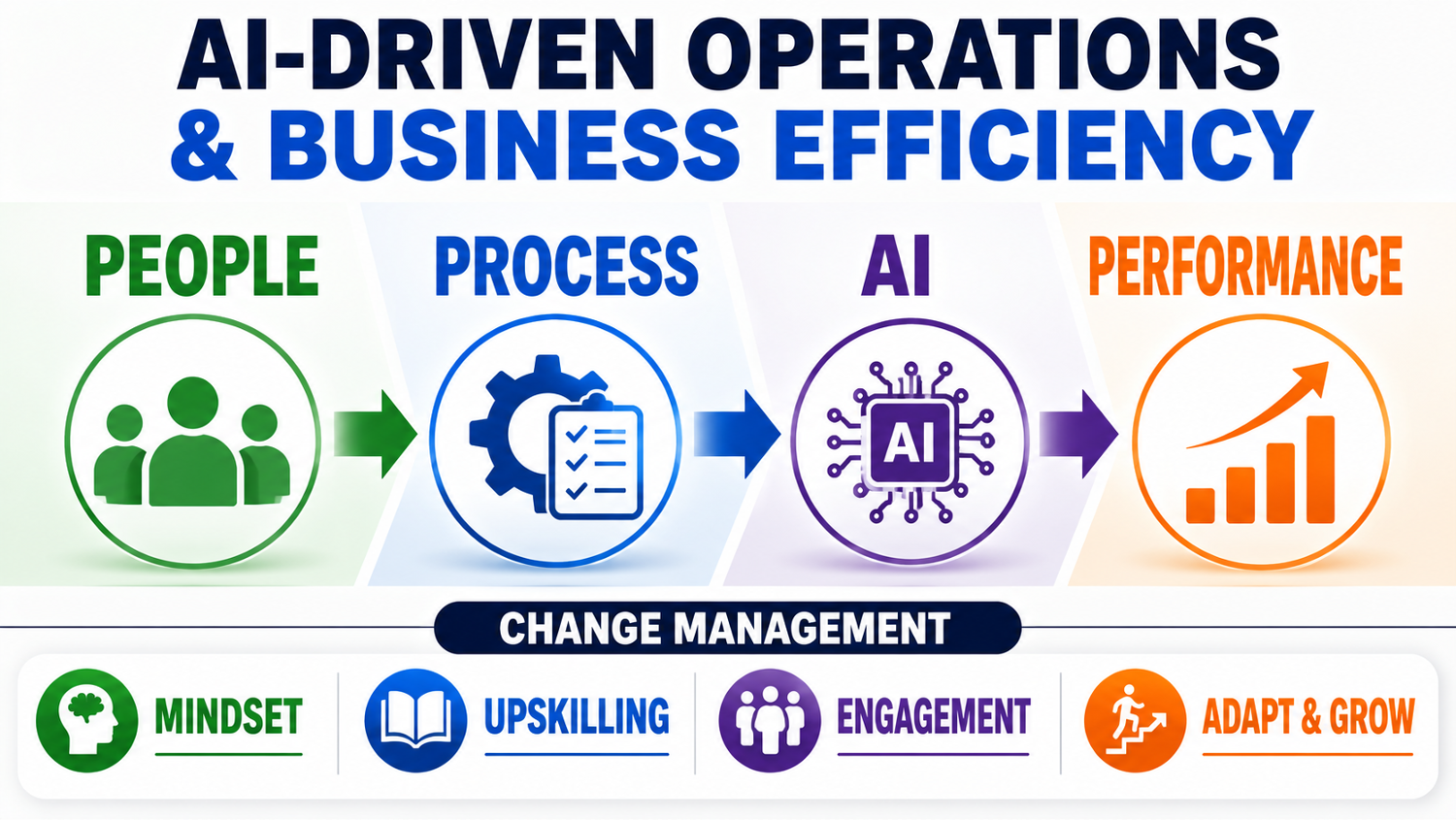
IMD established its Practical Lab to give employees hands-on experience with operational use cases. The environment allows participants to practise connected workflows and develop capabilities in automation, data and AI, linking learning directly to the tasks they perform.
Internally, the company has strengthened responsibilities across product development, implementation, training and customer success to maintain service quality as it expands.
Making Transformation Repeatable
IMD evaluates investment opportunities against three considerations: whether they address a recurring operational problem, can produce measurable improvement and can be scaled across multiple clients.
That directs resources towards research and development, integration, governance and implementation capability. Priority applications include faster customer responses, workflow automation, connected data and better management visibility.
Its growth ambitions extend to SMEs and other businesses with complex operational requirements. The opportunity is to apply methods developed in property technology to organisations facing similar problems of fragmented information and manual coordination.
Doing so requires IMD to make its own delivery model more repeatable. Sector-specific programmes, consistent implementation standards and stronger impact measurement will be necessary as the company moves from individual projects towards broader adoption of its ecosystem.
The commercial objective includes reliable recurring revenue and stronger Malaysian-developed intellectual property. Client outcomes remain the intended measure of progress: employees using systems effectively, management gaining clearer information and operations becoming more productive.
For IMD, the case for AI begins with a practical question about the working day. Where does a task slow down, and what would help it move? Its next phase rests on answering that question consistently, then giving organisations the systems and skills to act on it.