A business expansion can make commercial sense and still struggle to move forward. Regulatory requirements, competing stakeholder priorities and disconnected workstreams can delay implementation, leaving companies to coordinate advisers while managing the investment itself. Gina Integrated Sdn. Bhd. has built its business around addressing that problem.
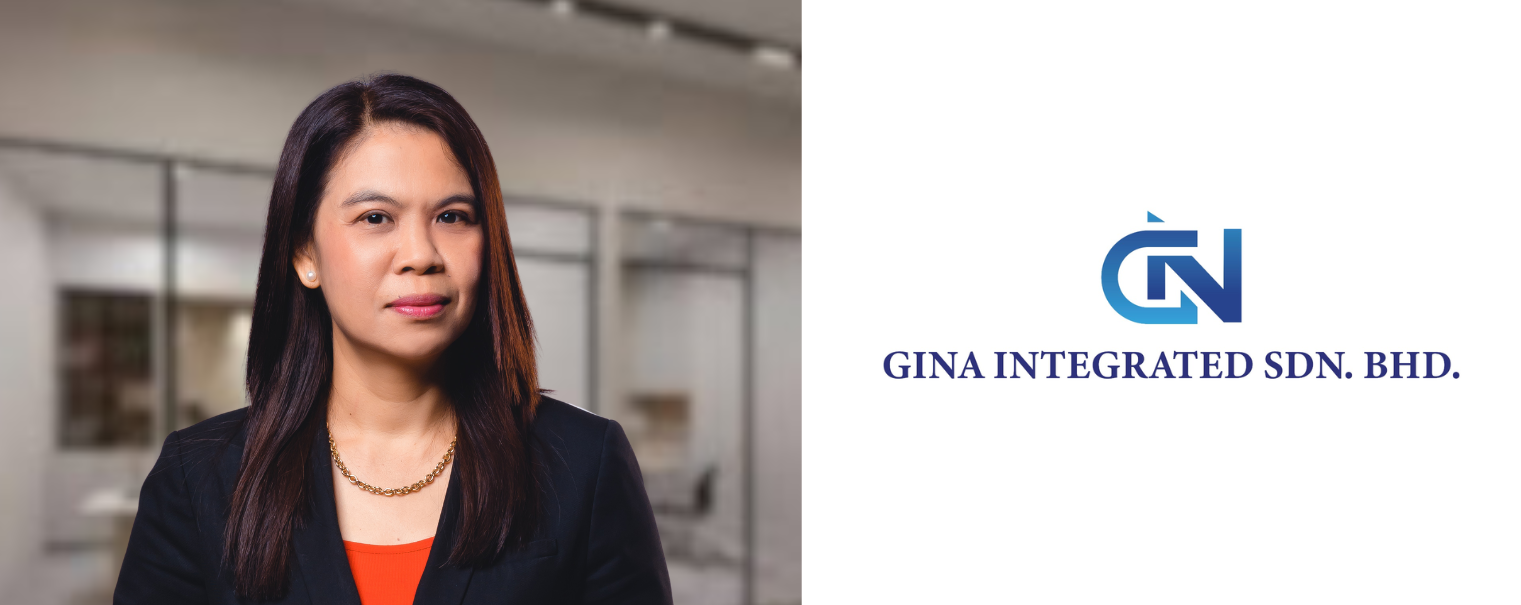
The key leader of Gina Integrated Sdn Bhd is Puan Gina.
The Malaysian business transformation company brings strategy, investment facilitation, regulatory engagement and operational implementation into a coordinated service. Its proposition centres on helping organisations carry decisions through to delivery, with a focus on the practical requirements that determine whether a project advances or stalls.
Its clients include multinational corporations, government-linked entities, small and medium enterprises, family businesses and international investors. Assignments span manufacturing, logistics, technology, infrastructure and sustainability, where investment decisions often involve several disciplines and require coordination between internal teams, external specialists and public-sector stakeholders.
The opportunity Gina Integrated identified was fragmentation. Companies could access strategic, financial, legal and technical expertise, yet remained responsible for connecting those contributions. Without clear coordination, individual workstreams could progress at different speeds, creating duplicated effort, inconsistent decisions and additional costs.
Gina Integrated’s model seeks to address those weaknesses by keeping commercial objectives, stakeholder requirements and implementation aligned throughout an engagement. Its services cover market entry, business expansion, project delivery, organisational transformation and business optimisation. Management positions this continuity as central to its value, particularly when assignments involve complex dependencies.
The company sees demand for this approach growing as businesses address technological change, supply-chain adjustments and sustainability expectations. These developments create decisions that cut across functions. A technology investment, for example, must fit operational needs, governance requirements and the organisation’s ability to implement change if it is to produce lasting value.
For Gina Integrated, the commercial response is to deepen capability before increasing capacity. Investment priorities include multidisciplinary expertise, knowledge management, digital tools and strategic partnerships. The intention is to handle more sophisticated assignments while retaining the responsiveness and direct involvement that clients expect.
That discipline also shapes project selection. Management says it avoids competing solely on price or accepting assignments simply to increase revenue. It prioritises engagements where its involvement can produce meaningful outcomes, accepting that a selective approach may limit immediate commercial opportunities while protecting service quality and client relationships.
Maintaining that standard becomes harder as the organisation expands. An operating model built around close leadership involvement can support early growth, but creates constraints when decisions and expertise remain concentrated among a few individuals. Gina Integrated has therefore been strengthening governance, decision-making frameworks and project management processes.
Knowledge sharing is an important part of the transition. By documenting experience and encouraging collaboration across teams, the company aims to make expertise available beyond individual employees. Digital collaboration platforms and project management tools support this effort by improving communication, visibility and coordination across assignments.
Its approach to responsible growth combines selective client engagement with investment in people and internal efficiency. Professional development and leadership opportunities are intended to strengthen organisational continuity. Paperless workflows and digital collaboration form part of its efforts to reduce resource use, although the company has not provided quantified environmental results.
The next phase centres on broader regional ambitions, including ASEAN, alongside deeper digital capabilities. Gina Integrated is exploring artificial intelligence and advanced platforms to improve decision-making and project execution. These remain areas of development, with management emphasising the continuing importance of professional judgement, relationships and accountability.
Its expansion will depend on whether those investments produce consistent delivery across a larger organisation. For a company whose proposition rests on execution, the challenge is clear: build systems and teams capable of carrying greater complexity while preserving the confidence that brings clients back for their next strategic undertaking.