In business, longevity is often celebrated. Staying relevant, however, is the greater achievement.
Consumer tastes change, lifestyles become faster, retail channels evolve and new brands continuously enter the market. For a family business built around something as deeply personal as food, surviving across generations requires more than preserving old recipes. It requires knowing what should change—and what should never change.
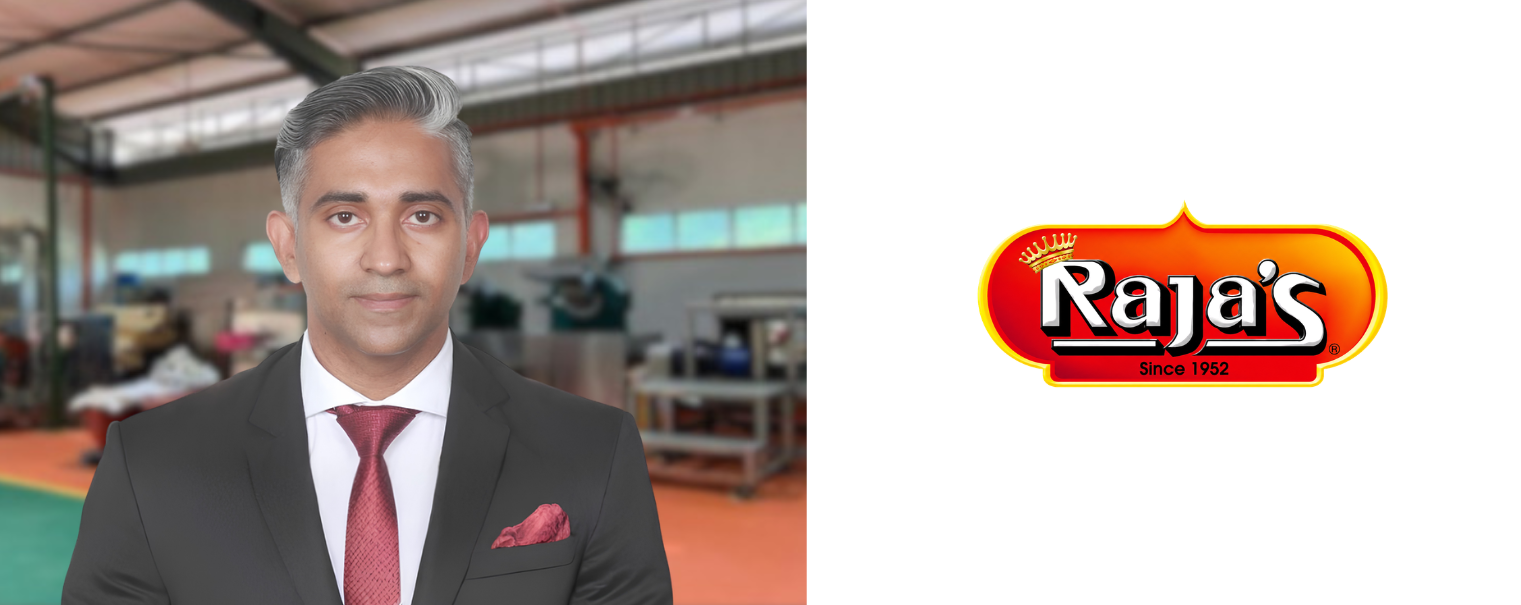
For Rajas Flour Mill Sdn. Bhd., that balance has been more than 70 years in the making.
Established in 1952 as a humble spice and flour mill, Rajas began by serving local communities with freshly ground spices, curry powders and flour. Three generations later, it has developed into a Malaysian food manufacturer serving households, retailers, wholesalers, restaurants, caterers, food manufacturers, OEM customers and increasingly, international buyers.
Yet at the heart of the company remains something remarkably familiar: taste.
Rajas has built its identity around what it calls the “Royal Taste of Tradition”—flavours shaped by generations of knowledge, carefully selected ingredients, traditional roasting techniques and consistent blending. Its portfolio today ranges from meat and seafood curry powders to sambar, rasam, briyani and kurma blends, alongside pure spices, flour products and other food solutions.
For consumers, these may appear to be everyday kitchen staples. For the family behind Rajas, they represent decades of accumulated knowledge.
Understanding how spices respond to roasting, recognising differences in raw ingredients and preserving a familiar aroma from one batch to another are skills developed over time. This “taste memory” has become one of the company’s less visible competitive advantages—particularly in a food industry increasingly shaped by mass production.
Tradition Meets the Modern Kitchen
The modern consumer, however, lives very differently from the customer Rajas served in 1952.
Time has become a luxury. Families cook differently, convenience matters more and younger consumers may not possess the same knowledge of traditional food preparation as previous generations.
For Rajas, this creates both a challenge and an opportunity.
The company is currently researching ready-to-cook products and convenient premixes that make traditional dishes easier to prepare while retaining familiar flavours. Existing and developing solutions span products such as Chicken 65, briyani, fish fry and payasam mixes.
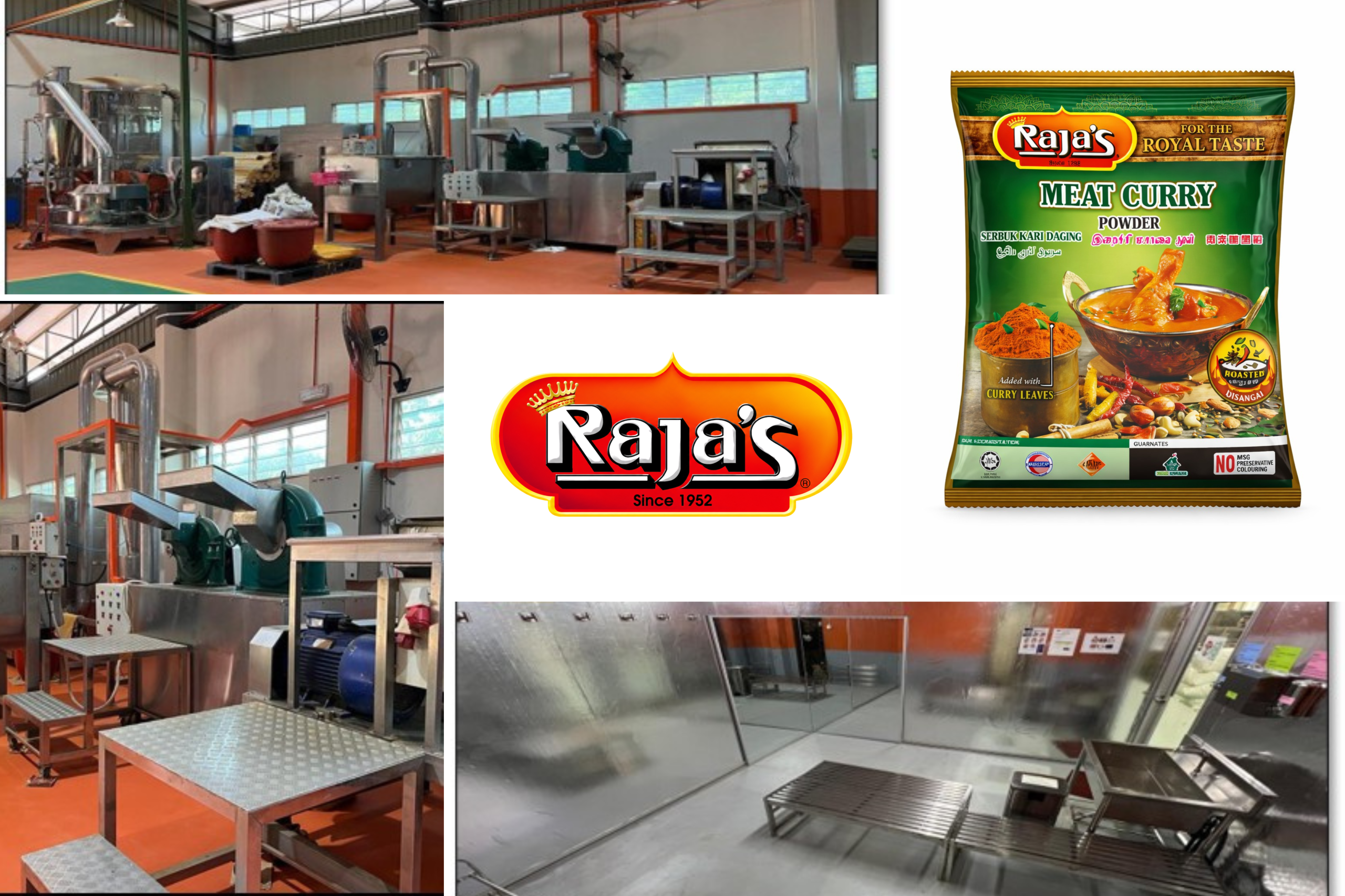
The objective is not to replace traditional cooking, but to make it easier to carry forward.
In that sense, Rajas is solving a distinctly modern lifestyle problem: how do you preserve the taste of one generation within the lifestyle of another?
Its answer lies in combining heritage recipes with convenience, consistency and modern food manufacturing standards. Products are also positioned around changing expectations for food safety, with the company highlighting products certified as free from preservatives, colouring and MSG while strengthening its Halal, hygiene and quality-control practices.
Taking a Family Business Further
Behind the products, an equally significant transformation is happening within the company itself.
Moving from a traditional family operation towards a structured manufacturer has required changes in systems, people and mindset. Processes that may once have relied heavily on experience increasingly require formal SOPs, documentation, quality controls and clearly defined responsibilities.
Rajas has consequently directed investment towards production automation, machinery, certification, laboratory testing, packaging, branding and digital tools. At the same time, employees are being trained to embrace greater discipline around hygiene, food safety and consistent manufacturing.
Leadership has evolved too.
The challenge for the current generation is not simply to inherit the business, but to prepare it for a marketplace dramatically different from the one their predecessors knew. That means becoming more comfortable with corporate buyers, exhibitions, digital commerce, distributors, OEM opportunities and international markets while protecting the authenticity that made the brand valuable in the first place.
It is a transformation many multigenerational businesses eventually confront: professionalising without becoming impersonal.
Growth Without Losing the Recipe
That philosophy influences how Rajas approaches expansion.
The company’s ambition is to become a more structured, scalable and export-ready Malaysian heritage brand, strengthening its presence across retail while pursuing HoReCa, B2B, OEM, private-label and international opportunities.
But growth is not being defined purely by sales.
For Rajas, it also means better systems, stronger people, improved manufacturing capability and greater confidence to enter new markets. Modernisation must strengthen the business without diluting the recipes, relationships and family values accumulated since 1952.
Sustainability forms part of that transition. Solar panels have been installed at its facility to support cleaner energy use, while automation and improved process controls are intended to reduce production errors, packaging mistakes and material waste. The company is also strengthening responsible sourcing, food safety and community initiatives, including food-related contributions during festive periods.
These may appear to be very different priorities, but together they point towards the same objective: ensuring the business is strong enough to be handed to another generation.
Perhaps that is the most interesting aspect of the Rajas story.
The company began in an era before e-commerce, social media, modern supermarkets or today’s sophisticated food manufacturing systems. Seven decades later, the tools of the business may have changed considerably, but the product still ultimately faces the same test it did in 1952.
Someone opens the packet. Someone cooks with it. A family sits down to eat.
And the taste has to feel right.
As Rajas itself puts it: “Grinding spices may be easy, but growing with spices is what defines us.”
For a three-generation business preparing itself for the next chapter, preserving that connection between yesterday’s recipes and tomorrow’s consumer may prove to be its most valuable ingredient of all.