Author name: admin

News

Nazri To Succeed Mohd Zamree At Credit Guarantee Corp

KUALA LUMPUR, Datuk Mohd Zamree Mohd Ishak will step down as president and chief executive officer (CEO) of Credit Guarantee Corp Malaysia Bhd (CGC) on Dec 31, marking the end of his decade-long leadership, the corporation confirmed in a statement on Wednesday. CGC president and CEO Datuk Mohd Zamree Mohd Ishak (left) and his successor Mohamed Nazri Omar. He will be succeeded by Mohamed Nazri Omar, currently managing director of group corporate and investment banking at Bank Pembangunan Malaysia Bhd (BPMB). Nazri is expected to join CGC in October to ensure a smooth handover before formally taking over as president and CEO on Jan 1, 2026. Earlier reported that Mohd Zamree would be leaving CGC, with Nazri lined up as his replacement. “With 36 years in the financial services industry, Datuk Zamree has been instrumental in reshaping CGC since 2015. He spearheaded two consecutive five-year strategic plans that anchored the corporation’s growth,” CGC said. Established in 1972, CGC is majority-owned by Bank Negara Malaysia (78.65%) with the remainder held by commercial banks (21.35%). Its mandate is to assist micro, small and medium enterprises (MSMEs) with limited collateral or credit records in securing financing through guarantee schemes. Nazri, who brings more than 25 years of experience in financial services spanning corporate and investment banking, capital markets and development finance, currently oversees corporate banking, advisory, treasury, business development and product strategy at BPMB. He also sits on the boards of several subsidiaries. Previously, he served as CEO of Danajamin Nasional Bhd from 2014 to 2022, strengthening its role in developmental finance and enhancing its capital markets presence. He has also held senior positions at Kuwait Finance House Malaysia, RHB Sakura Merchant Bankers, Macquarie Bank and Citibank. “We are confident that his wealth of experience across financial institutions and development financial institutions will further strengthen CGC’s capacity to deliver innovative solutions and expand its impact in supporting MSMEs,” said CGC chairman Datuk Mohammed Hussein.

Investment & Market Trends

Five Companies Eye SK Ecoplant’s 30% Shareholding In Cenviro

South Korea’s SK ecoplant Co Ltd is said to be moving ahead with plans to divest its 30% minority stake in Cenviro Sdn Bhd, drawing interest from at least five potential buyers. The bidders reportedly include affiliates of South Korean conglomerate Samsung; French water, waste and energy management giant Veolia Environnement SA; pension fund Kumpulan Wang Persaraan (Diperbadankan) (KWAP) leading a consortium with I Squared Capital and Quantum Capital; private equity house TPG; and Alam Flora Sdn Bhd, a 97.37%-owned unit of Malakoff Corp Bhd, itself 38.45% controlled by MMC Corp Bhd, the flagship of tycoon Tan Sri Syed Mokhtar Albukhary. The bidding timeline remains unclear for now. SK ecoplant has nearly five decades of experience in integrated waste management, energy, engineering and construction. Currently, sovereign wealth fund Khazanah Nasional Bhd holds the controlling 70% interest in Cenviro, which has grown steadily over the past decade as waste management becomes an increasingly critical urban issue. “The strong level of interest is not surprising,” says one source. “Cenviro is a quality asset with a solid controlling shareholder. For any buyer, partnering with Khazanah — a government-linked investment company — brings both stability and good networks. The waste management sector is also seen as having strong long-term growth prospects. Unless the pricing turns out to be unrealistic, the deal should proceed smoothly.” When news of SK ecoplant’s planned exit surfaced in late June, reports indicated the sale could value Cenviro at around US$300 million (RM1.27 billion). Based on this, SK ecoplant’s 30% stake would be worth about RM381 million, excluding any premium. SK ecoplant entered Cenviro in May 2022 as a strategic partner to Khazanah. A subsidiary of SK Group — South Korea’s second-largest conglomerate — the company has over 47 years of expertise spanning integrated waste management, energy, engineering and construction, with a footprint in 15 countries. The Korean firm currently has three board representatives at Cenviro — Hanseung Ok, Heo Kwanyoung and Park Deok Seop — alongside five other directors. Industry observers note that SK ecoplant has been restructuring its portfolio, moving away from waste management. Talk has also surfaced that it may sell two environmental subsidiaries, Renewus and Renewone, to US private equity giant Kohlberg Kravis Roberts & Co (KKR), though this remains unconfirmed. Reports further suggest a potential divestment of SK Oceanplant, its offshore wind substructure business. Cenviro, formerly UEM Environment Sdn Bhd, was acquired by Khazanah in 2014 from wholly-owned UEM Group. At the time, there were plans to list the company on Bursa Malaysia to raise about RM1 billion, but the listing never materialised. Today, Cenviro’s operations are spread across three main subsidiaries: Kualiti Alam Sdn Bhd (wholly-owned): Runs an incineration facility, solidification and treatment plants, a secure landfill, and a clinical waste treatment centre capable of handling more than 100,000 tonnes of hazardous waste annually. Cenviro Recycling and Recovery Sdn Bhd: A licensed resource recovery business covering 13 scheduled waste codes, including full recovery of used oil and solvents, as well as partial recovery of e-waste and specialised waste streams. E-Idaman Sdn Bhd: Provides solid waste collection and public cleaning in Kedah and Perlis with a fleet of over 170 vehicles, handling some 1,450 tonnes of waste daily from more than 350,000 premises. The business employs around 3,650 workers and operates an active recycling division. Financially, Cenviro has remained profitable for several years. For FY2023, it posted RM34.64 million in after-tax profit on RM263.86 million revenue. In FY2022, profits peaked at RM62.78 million on RM284.59 million revenue — the highest in the five-year period between 2019 and 2023, according to filings with the Companies Commission of Malaysia (SSM). As at Dec 31, 2023, Cenviro held total assets of RM794.18 million and liabilities of RM272.42 million, with retained earnings amounting to RM482.51 million.

Property

Alrajhi Family Puts Wisma Mont Kiara On Market With Revised Price

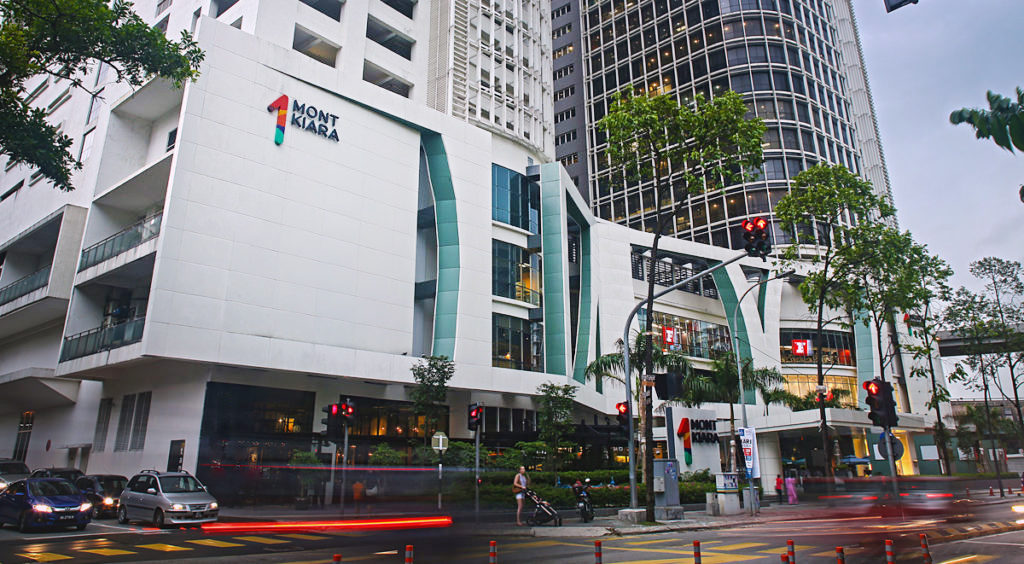
Saudi Arabia’s Alrajhi family is once again seeking a buyer for its Wisma Mont Kiara office building in Kuala Lumpur, with sources indicating that the asking price will be revised from RM150 million to RM130 million to better align with market conditions. Wisma Mont Kiara is located in the affluent Mont’Kiara township and has been on the market since early this year. The 16-storey property, located along Jalan Kiara in the affluent Mont’Kiara township, has a net lettable area of 181,992 sq ft and currently enjoys an occupancy rate of more than 95%. Its tenants include the Malaysian French Chamber of Commerce and Industry, co-working operator Common Ground, and technology firm Concentrix. Rental rates at the building are said to range between RM4.50 and RM5.50 psf. Wisma Mont Kiara forms part of the 1 Mont Kiara integrated development, which also comprises the 30-storey Menara 1 Mont Kiara office suites and the 1 Mont Kiara Mall retail podium. The development was completed in 2010. Rahim & Co International Sdn Bhd has been appointed as the exclusive marketing agent for the transaction. While confirming the appointment, a spokesperson declined to comment further on the family’s divestment plans. At the earlier asking price of RM150 million, the valuation worked out to about RM824 psf — nearly 23% higher than the RM670 psf the family paid when acquiring the building from Singapore-based ARA Asset Management Ltd in 2018 for RM122 million. At the revised price of RM130 million, the valuation comes down to RM714 psf, which a local agent described as “more realistic, given current market conditions and the upgrading required for a 15-year-old building”. The purchase in 2018 was carried out via R J Seven Sdn Bhd, making it the Alrajhi family’s maiden property acquisition in Malaysia. Corporate records show that R J Seven fully owns 1MK Office Sdn Bhd, the holding company of Wisma Mont Kiara, with 11 family members each holding equal stakes of 9.09%. Financial data from CTOS indicates that 1MK Office Sdn Bhd generated RM6.1 million in revenue and RM2.15 million in net profit for the financial year ended Dec 31, 2023. The Alrajhi family is closely linked to Al Rajhi Bank of Saudi Arabia, one of the world’s largest Islamic banks by assets, and its Malaysian subsidiary Al Rajhi Bank Malaysia, which entered the market in 2005 as one of the first Middle Eastern lenders to establish operations here. Strategically located between Kuala Lumpur city centre and Damansara, Wisma Mont Kiara enjoys connectivity via major highways including the Sprint Expressway, NKVE, Penchala Link, Kerinchi Link and Jalan Duta. A mass rapid transit (MRT) station has also been planned adjacent to the site. The Mont’Kiara area continues to attract institutional investors. Just last year, Sunway REIT acquired the seven-storey Sunway 163 Mall (formerly 163 Retail Park), located down the road from Wisma Mont Kiara, for RM215 million from YNH Property Bhd. The mall joins Sunway REIT’s extensive portfolio, which includes Sunway Pyramid Mall, Sunway Resort Hotel, multiple hypermarkets and Sunway Kluang Mall.

Property

GuocoLand Disposes Johor Bahru Hotel To YTL For RM150m

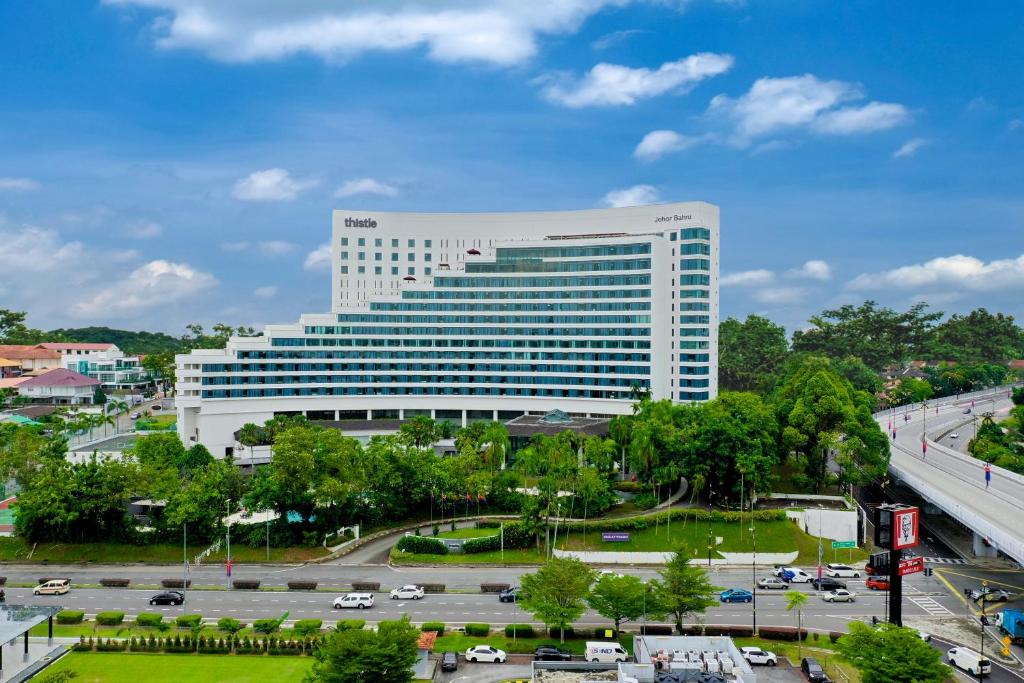
KUALA LUMPUR, Singapore-listed developer GuocoLand Ltd is divesting one of its Malaysian hospitality assets as part of its ongoing portfolio rebalancing. The group announced that it is selling the five-star Thistle Johor Bahru hotel together with the land it sits on to YTL Hotels & Properties Sdn Bhd, a wholly-owned subsidiary of YTL Corp Bhd, for RM150 million. In a filing with the Singapore Exchange (SGX), GuocoLand said the transaction is expected to generate a net gain of RM35 million (US$11 million) upon completion. Proceeds from the disposal are likely to strengthen its balance sheet while unlocking value from its hospitality portfolio. The 381-room Thistle Johor Bahru, located in the city centre near the causeway to Singapore, has long been a key landmark property within GuocoLand’s hospitality assets in Malaysia. The hotel is part of the Thistle brand, which has a strong presence in the UK and Malaysia. This sale, however, may not be GuocoLand’s last move in the sector. According to The Edge Malaysia, the developer is also open to selling its other hotel — the 251-room Thistle Port Dickson Resort, located along the coastal town of Port Dickson. Market sources cited by The Edge indicated that the asking price for the property ranges between RM135 million and RM150 million. The Johor Bahru disposal had been anticipated since mid-August, after The Edge Malaysia reported that GuocoLand was in advanced discussions with YTL Hotels for the asset. The deal is now confirmed, adding another prime hospitality property to YTL’s growing portfolio under its hotels and resorts division. YTL Hotels, which owns and manages luxury properties worldwide, including the Ritz-Carlton in Kuala Lumpur and the JW Marriott in Singapore, is expected to integrate the Johor Bahru hotel into its expanding hospitality business. Meanwhile, GuocoLand continues to focus on its core property development and investment businesses across Singapore, China, and Malaysia, while selectively divesting non-core assets. On the Singapore Exchange, GuocoLand’s shares closed at $1.86 on Aug 29, down 1.06% from the previous day.

Media OutReach

Bosch and Alibaba Group Deepen Strategic Partnership to Advance AI-powered Digital Innovation

Alibaba cloud to dedicate its global capabilities to support Bosch’s technology stack Both intend to deepen collaboration in leveraging Alibaba’s AI strength to facilitate Bosch’s business innovations, such as smart cockpit Bosch to expand its e-commerce presence in Southeast Asia, Spain, and Latin America through Alibaba’s global platforms HANGZHOU, CHINA – Media OutReach Newswire – 2 September 2025 – Bosch, a leading global supplier of technology and services, and Alibaba Group, a global technology company focused on e-commerce and cloud computing, today announced an expanded strategic partnership to accelerate digital transformation through advanced cloud computing and AI technologies. The enhanced collaboration will focus on cloud-based enterprise operations, AI-driven business innovations, and e-commerce expansion. “Our partnership opens up exciting opportunities for both Bosch and Alibaba to expand our offerings in the global market,” said Dr. Tanja Rückert, member of the Bosch board of management and Chief Digital Officer. “By joining forces, we combine Alibaba’s advanced cloud infrastructure, AI capabilities and e-commerce market reach with Bosch’s deep technological expertise in mobility, industrial technology and consumer goods to drive greater efficiency and innovation worldwide. AI has been an innovation booster for Bosch across all business sectors, and cooperation with strong partners like Alibaba is essential for Bosch to realizing its full potential and creating greater value.” “This partnership with Bosch demonstrates our commitment to empowering global businesses with world-class technologies and highlights Alibaba’s strengths in AI and cloud computing,” said Joe Tsai, Chairman of Alibaba Group. “Bosch’s leading expertise in advanced automotive solutions and household appliances, combined with Alibaba’s innovations in cloud, AI and e-commerce, will enable both our companies to bring compelling value propositions to customers worldwide.” Powering Innovation through Cloud Services and AI The expanded partnership – focusing on cloud migration and AI cooperation- marks a significant step further in bolstering Bosch’s digital operations and fostering industrial innovation. As part of Bosch Group ‘s cloud hyperscalers strategy, the collaboration between the two companies covers multiple business areas, such as corporate operations, home appliances and commercial vehicles, to enhance operational efficiency and enable smarter business processes. In addition, the two companies intend to collaborate on exploring the potential of running Bosch’s intelligent driving environment on Alibaba Cloud’s AI infrastructure. The partnership will leverage Alibaba’s AI capabilities to support Bosch’s businesses, boosting operational efficiency and enhancing product intelligence. In the automotive sector, for instance, the two companies plan to evaluate Qwen-based multimodal models to elevate the smart cockpit experience with more intuitive in-vehicle interactions. The two companies also intend to explore the possibility of development of next-generation automated driving solutions powered by Qwen’s visual language model to enhance scene recognition accuracy. Driving Global E-commerce Growth As a key pillar of the expanded partnership, Bosch and Alibaba will further drive growth and innovation in e-commerce through expanded product portfolio, enhanced customer engagement, and optimized brand experience. In 2025, Bosch plans to launch new product categories in China with consumer insights from Alibaba’s e-commerce platform. Alibaba will also support Bosch in reaching a broader consumer base in China through comprehensive omni-channel digital marketing. Based on the framework of collaboration in China, Bosch will extend its e-commerce footprint to Southeast Asia, Spain, and Latin America through Alibaba’s global e-commerce platforms including Lazada, Miravia and AliExpress, to better serve local consumers with innovative, high-quality products. Bosch and Alibaba’s collaboration in e-commerce began in 2017. Bosch has since established a strong presence on Alibaba’s Tmall platform, offering a wide range of consumer-focused products, including home appliances, power tools, heating systems, and automotive aftermarket parts. Joint efforts across marketing, sales, membership programs and online-to-offline services have significantly strengthened Bosch’s digital ecosystem and customer engagement in China. Hashtag: #AlibabaGroup The issuer is solely responsible for the content of this announcement. About Bosch In China, the Bosch Group manufactures and markets automotive original equipment and aftermarket products, industrial drives and control technology, power tools, household appliances, security and communication systems as well as thermotechnology solutions. Having established a regional presence in China in 1909, Bosch employs more than 56,000 associates (as of December 31, 2024). Bosch in China has generated consolidated sales of CNY 142.8 billion in fiscal 2024. Additional information is available online at www.bosch.com.cn. The Bosch Group is a leading global supplier of technology and services. It employs roughly 418,000 associates worldwide (as of December 31, 2024). The company generated sales of 90.3 billion euros in 2024. Its operations are divided into four business sectors: Mobility, Industrial Technology, Consumer Goods, and Energy and Building Technology. With its business activities, the company aims to use technology to help shape universal trends such as automation, electrification, digitalization, connectivity, and an orientation to sustainability. In this context, Bosch’s broad diversification across regions and industries strengthens its innovativeness and robustness. Bosch uses its proven expertise in sensor technology, software, and services to offer customers cross-domain solutions from a single source. It also applies its expertise in connectivity and artificial intelligence in order to develop and manufacture user-friendly, sustainable products. With technology that is “Invented for life,” Bosch wants to help improve quality of life and conserve natural resources. The Bosch Group comprises Robert Bosch GmbH and its roughly 490 subsidiary and regional companies in over 60 countries. Including sales and service partners, Bosch’s global manufacturing, engineering, and sales network covers nearly every country in the world. Bosch’s innovative strength is key to the company’s further development. At 136 locations across the globe, Bosch employs some 87,000 associates in research and development. The company was set up in Stuttgart in 1886 by Robert Bosch (1861–1942) as “Workshop for Precision Mechanics and Electrical Engineering.” The special ownership structure of Robert Bosch GmbH guarantees the entrepreneurial freedom of the Bosch Group, making it possible for the company to plan over the long term and to undertake significant upfront investments in the safeguarding of its future. Ninety-four percent of the share capital of Robert Bosch GmbH is held by Robert Bosch Stiftung GmbH, a limited liability company with a charitable purpose. The remaining shares are held

Media OutReach

Citi Raises Fosun International’s Target Price to HK$6.5 and Reiterates “Buy” Rating

HONG KONG SAR – Media OutReach Newswire – 2 September 2025 – On 29 August, Fosun International held its 2025 interim results presentation, during which management delivered a clear strategic message—highlighting a sharpened focus on core businesses, the deepening of global operations, and sustained investment in innovation to lay a solid foundation for future development. Following the results presentation, both domestic and foreign securities firms have published optimistic research reports, affirming Fosun’s long-term value and promising outlook. Citi and Industrial Securities have reiterated their “Buy” and “Overweight” ratings respectively, expressing their bullish views on Fosun’s “business streamlining, and strategic advancements and exits” strategy and its proactive asset structure optimization. Previously, Citi renewed coverage of Fosun International with a “Buy” rating on 23 July. Following the recent results presentation, Citi issued another research report on Fosun International, reaffirming its “Buy” rating and raising the target price from HK$5.86 to HK$6.50. Citi notes that Fosun is accelerating its “strategic advancements and exits” strategy. By the end of June 2025, Fosun completed the sale of its 99.743% stake in the German private bank HAL, while retaining the asset servicing business HAFS. Citi believes that the capital recycling from asset divestments will enhance shareholders’ returns. The report highlights that Fosun’s share price is currently trading at a 72% discount to its net asset value (NAV). Reflecting the market value of listed investments in the NAV, Citi expects a potential valuation recovery for Fosun International and has therefore raised its target price. Industrial Securities also acknowledges Fosun’s ongoing asset portfolio optimization and clear strategic direction, noting that the Group expanded offshore USD bonds, organized offshore syndicated loan, and issued domestic bonds in the first half of the year, resulting in a financing cost reduction of over 30 basis points compared to the end of 2024. Both Citi and Industrial Securities highlight that Fosun’s core industries, such as innovative drugs, have made significant breakthroughs, while its cultural tourism business, Club Med, has achieved record-high results and insurance operations have showed steady growth. Fosun’s Health segment, particularly biopharmaceuticals, performed exceptionally well, with multiple innovative drugs of Henlius achieving major breakthroughs. HANSIZHUANG (serplulimab), the world’s first anti-PD-1 monoclonal antibody (mAb) approved for first-line treatment of small cell lung cancer (SCLC), recorded a global sales revenue of RMB597.7 million. To date, HANSIZHUANG has been successfully approved for marketing in nearly 40 countries and regions, covering nearly half of the world’s population. HLX43, the world’s first PD-L1-targeting antibody-drug conjugate (ADC) to enter Phase II clinical trials, is undergoing clinical studies for solid tumors such as non-small cell lung cancer (NSCLC) and thymic carcinoma in countries including China, the US, Japan, and Australia. Meanwhile, HLX22, another innovative drug, was granted Orphan Drug Designation (ODD) by the European Commission (EC) for the treatment of gastric cancer, marking it as the first anti-HER2-targeted therapy for gastric cancer to receive ODD approval from both the EU and the US. Industrial Securities also points out that Fosun’s overseas revenue accounted for 53%, representing an increase of 6.6 percentage points year-on-year, demonstrating the effectiveness of its globalization strategy. Club Med’s global performance once again reached a record high, with business volume amounting to RMB9.25 billion in the first half of 2025. The insurance segment also delivered solid performance, with the Group’s insurance business generating revenue of RMB20.89 billion in the first half of 2025. Fosun Insurance Portugal recorded overseas gross written premiums (GWP) of EUR924 million and received an “A” rating from S&P, while Peak Reinsurance achieved GWP of US$1,061 million, reflecting a year-on-year increase of 25.1%, demonstrating strong growth momentum. In addition, Fosun has continued to drive innovation in financial technology. Finloop, independently incubated by Fosun Wealth, has launched the FinRWA Platform (FRP), a comprehensive one-stop solution for Real World Assets (RWA) technology. The company is actively advancing asset tokenization projects. Fosun International Securities Limited and Fosun International Asset Management Limited have respectively obtained upgraded Type 1 and Type 9 licenses from the Hong Kong Securities and Futures Commission (HKSFC), with steady progress in building virtual asset and RWA platforms. Overall, by focusing on its core advantageous industries, optimizing capital structure, and deepening its global operations, Fosun has earned unanimous support from domestic and foreign securities firms, with the market highly optimistic about its future growth prospects. Hashtag: #Fosun #FosunInternational The issuer is solely responsible for the content of this announcement.

Media OutReach

Grey Launches Faster Rupee Payouts for Indians Earning Globally

Y Combinator-backed US fintech expands services to India with minutes-fast transfers that bypass traditional banking delays SAN FRANCISCO, US – EQS Newswire – 2 September 2025 – Y Combinator-backed startup fintech Grey (https://Grey.co/) has expanded its services to India, now offering almost instant rupee payouts to serve Indians earning from international sources—from freelancers and entrepreneurs to students and expats sending money home, receiving support from family and managing cross-border finances. The product expansion positions Grey, a US-licensed fintech, that serves over 2 million users across 50+ countries, as a major player offering comprehensive global banking services specifically designed for India’s digitally connected workforce, providing instant access to USD, EUR, and GBP accounts alongside local rupee conversions. India processes over $125 billion in annual remittances, more than any country globally, yet most recipients still wait 3-5 business days and pay 3-7% in hidden fees for international transfers. “Traditional banks treat international payments like it’s still 1995,” said Idorenyin Obong, Grey’s CEO, who spent time in Bengaluru meeting users “I talked to a freelance designer who was losing ₹15,000 monthly just on conversion fees and delays. That’s serious money.” The timing reflects India’s growing global economic integration. The country has the world’s largest freelance market with over 15 million freelancers and approximately 3 million remote workers employed by foreign companies. Most still rely on traditional payment methods with multi-day delays, despite having clients primarily based in the US, UK, Australia, Europe, and South America. Grey’s approach differs by providing users with actual US, European, and UK bank account details, allowing international clients to pay as if hiring locally, then instantly converting funds to rupees on the recipient’s end. “We’re not just another remittance app,” Obong explained. “We’re giving Indians the same financial infrastructure that Americans and Europeans have which is instant access to global money.” The launch positions Grey directly against established players in India, a market where cross-border payment companies have struggled with regulatory complexity and local banking partnerships. Indian users can sign up immediately at https://Grey.co/. The service supports payouts from 170+ countries and includes virtual USD debit cards and USDC cryptocurrency deposits and payouts. Distributed by APO Group on behalf of Grey. Hashtag: #Grey The issuer is solely responsible for the content of this announcement. About Grey Grey is at the forefront of providing secure and convenient global banking solutions to meet the needs of customers and businesses. Grey holds a Money Service Business license from FINTRAC in Canada, and FinCEN in the USA, and our primary focus is emerging markets. Our range of services enables individuals and businesses to easily own and manage multi-currency accounts (https://Grey.co/Foreign-Accounts). This includes currency exchange (https://Grey.co/Currency-Exchange), sending and receiving payments (https://Grey.co/Money-Transfer) to and from over 170 countries, as well as access to virtual cards (https://Grey.co/Cards).

Media OutReach

Global Anti-Scam Summit Asia 2025 Tackles Escalating Scam Threats In Southeast Asia With Cross-border Collaboration And Technology-Driven Solutions

SINGAPORE – Media OutReach Newswire – 2 September 2025 – At the Global Anti-Scam Summit (GASS) Asia 2025 today, Mr Tan Kiat How, Senior Minister of State for the Ministry of Digital Development and Information and Ministry of Health, and Patron of the GASA Singapore Chapter, announced a series of key initiatives to combat the rising tide of online scams, which have cost Southeast Asia an estimated US$23.6 billion in the past year. The key initiatives include: ● GovTech Singapore joining the Global Signal Exchange (GSE): The Government Technology Agency of Singapore (GovTech Singapore) is the first government agency globally to commit to exchanging scam signals through the GSE for scam disruption. ● Google.org’s US$5 million fund: Google.org is providing US$5 million in funding to The ASEAN Foundation to expand online scam prevention resources to 3 million people across Southeast Asia. ● New report and game: A new report on building resilience against digitally-enabled scams and fraud in Southeast Asia was released by the Tech for Good Institute in partnership with Bamboo Builders. Additionally, an immersive web-game was announced as part of the ScamWISE National Education Programme by Bamboo Builders. ● GASA network expansion: The Global Anti-Scam Alliance (GASA) network has grown, with new operational chapters in Indonesia and the Philippines joining the existing one in Singapore. State Of Scams In Southeast Asia 2025 Report The newly launched “State of Scams in Southeast Asia 2025 Report,” which surveyed 6,000 people across Indonesia, Malaysia, the Philippines, Singapore, Thailand, and Vietnam, revealed the staggering scale of the problem. An average of US$660 is lost per person, with Singapore experiencing the highest per person loss at US$2,132. The report also found that nearly two-thirds of all scams occur within 24 hours of first contact, and an alarming 77% of Southeast Asian adults were exposed to a scam in the past year. Jorij Abraham, Managing Director of GASA, emphasised the urgent need for action. “Online scams are not just a consumer inconvenience, they are a global security challenge undermining digital trust and economic resilience,” Abraham said. “Criminal networks are moving faster than our protections, but it is possible to close the gap. GASA’s mission is to provide the infrastructure and partnership needed to close this gap – uniting efforts across sectors and borders to build a stronger, collective defence.” GovTech Singapore Has Become The First Government Agency To Commit to Exchanging Scam Signals Through The Global Signal Exchange (GSE) The Government Technology Agency of Singapore (GovTech Singapore) has joined the GSE, making it the first government agency globally to commit to exchanging scam signals. Tracking over 400 million threats in real time, the GSE allows member organisations to rapidly share information for scam disruption. Co-founded by Oxford Information Labs Research (OXIL), Google, and the Global Anti-Scam Alliance (GASA), GSE is the first global clearinghouse for the sharing of scams and fraud threat signals, with members including technology giants such as Meta and Microsoft. This collaboration is a major step in strengthening global public-private partnership against online scams. Mr Tan Kiat How, Senior Minister of State for the Ministry of Digital Development and Information and Ministry of Health, and Patron of the GASA Singapore Chapter said, “The rapid advancement of artificial intelligence has introduced powerful new tools, but it’s a double-edged sword. With AI, scammers can create hyper-realistic deepfake videos, generate persuasive and personalised text messages at scale, and automate fraudulent campaigns with unprecedented speed. Combating this requires close collaboration between governments, industry, and civil society, and a strategy of using technology to fight technology. These global summits are vital for sharing lessons and building more coordinated responses across the region.” Google.org Announces US$5 Million In Funding To Support The ASEAN Foundation Google.org, Google’s philanthropic arm, also announced US$5 million in funding to support The ASEAN Foundation, which will work with local partners to expand online scam prevention resources for 3 million people across Southeast Asia. This includes scaling the educational game “Be Scam Ready”, a tool designed by Google to build resilience against online threats by exposing players to common scam tactics in a safe environment, helping them learn how to spot the real thing. Google plans for an October launch in Singapore and aims to roll out the interactive game to more markets in the Asia Pacific region in 2026 by leveraging GASA’s extensive member network. New Report And Web-game Announced At The Sidelines Of The Global Anti-Scam Summit In a separate announcement, the Tech for Good Institute, in partnership with Bamboo Builders and supported by Google.org, released a new report at the sidelines of the Global Anti-Scam Summit Asia 2025. The new report, “Building Resilience Against Digitally-enabled Scams and Fraud in Southeast Asia,” emphasises the critical need for a “whole-of-society” approach to combatting online scams. It advocates for building digital resilience at every stage of a victim’s journey and stresses the importance of localised, relevant strategies. The findings are based on insights from over 70 regional experts, including members of the Global Anti-Scam Alliance. In addition, Bamboo Builders also announced an immersive web-game as part of the SG ScamWISE National Education Programme. “ScamWISE Squad,” by Bamboo Builders with the support of Google.org, is an immersive game that transforms real-life scam case studies from Singapore into an engaging and relatable educational experience for all ages. Scheduled for a full release in 2026, the game aims to equip 100,000 Singaporeans, particularly youth and seniors, with the skills to defend themselves against scams and online threats. GASA Network Expansion in Southeast Asia The recently launched “State of Scams in Southeast Asia 2025 Report” revealed that 63% of Southeast Asian adults claim to have had a scam experience in the last 12 months. To address the growing threat of scams, the Global Anti-Scam Alliance (GASA) has significantly expanded its presence in Southeast Asia, establishing operational chapters in both Indonesia and the Philippines over the past year. These new chapters join the existing one in Singapore, creating a stronger regional network for combating online fraud. By

Media OutReach

New Akamai-Commissioned Research Reveals GenAI is Driving “The Edge Evolution”: 80% of APAC CIOs to Rely on Edge Services by 2027 to Support AI Workloads

Akamai-commissioned research reports future-proofing digital business infrastructure as the top technology initiative for CEOs in Asia-Pacific organizations Leading analyst firm predicts that by 2027, 80% of CIOs will turn to edge services from cloud providers to meet the performance and compliance demands of AI inferencing 31% of enterprises have moved GenAI applications into production, with 64% in testing phase, forcing an infrastructure rethink SINGAPORE – Media OutReach Newswire – 2 September 2025 – As generative AI becomes essential to business operations, organizations are being forced to rethink outdated infrastructure models, finds a new IDC research paper commissioned by Akamai Technologies (NASDAQ: AKAM), the cybersecurity and cloud computing company that powers and protects business online. According to the research paper titled “The Edge Evolution: Powering Success from Core to Edge,” Asia-Pacific (APAC) enterprises are realizing that centralized cloud architecture alone is unable to meet the increased demands of scale, speed, and compliance. It is crucial that businesses rethink and enhance infrastructure strategies to include edge services to stay competitive and compliant, and be ready for real-world AI deployment. According to the IDC Worldwide Edge Spending Guide — Forecast, 2025, public cloud services at the edge will grow at a compound annual growth rate (CAGR) of 17% through 2028, with the total spending projected to reach US$29 billion by 2028. In addition, in the latest research paper, IDC predicts that by 2027, 80% of CIOs will turn to edge services from cloud providers to meet the performance and compliance demands of AI inferencing. This shift marks what is emerging in the paper as “The Edge Evolution.” The research paper further outlines how public cloud–connected systems combine the agility and scale of public cloud with the proximity and performance of edge computing, delivering the flexibility businesses need to thrive in an AI-powered future. The AI infrastructure reality check As generative AI moves from experimentation to execution, enterprises across APAC are confronting the limits of legacy infrastructure. Today, 31% of organizations surveyed in the region have already deployed GenAI applications into production. Meanwhile, 64% of organizations are in the testing or pilot phase, trialing GenAI across both customer-facing and internal use cases. However, this rapid momentum is exposing serious gaps in existing cloud architectures: Complexity of multicloud: 49% of enterprises struggle to manage multicloud environments due to inconsistent tools, fragmented data management, and challenges in maintaining up-to-date systems across platforms. Compliance trap: 50% of the top 1,000 organizations in Asia-Pacific will struggle with divergent regulatory changes and rapidly evolving compliance standards, and this will challenge their ability to adapt to market conditions and drive AI innovation. Bill shock: 24% of organizations identify unpredictable rising cloud costs as a key challenge in their GenAI strategies. Performance bottlenecks: Traditional hub-and-spoke cloud models introduce latency that undercuts the performance of real-time AI applications, making them unsuitable for production-scale GenAI workloads. “AI is only as powerful as the infrastructure it runs on,” said Parimal Pandya, Senior Vice President, Sales, and Managing Director, Asia-Pacific at Akamai Technologies. “This IDC research paper reveals how Asia-Pacific businesses are adopting more distributed, edge-first infrastructure to meet the performance, security, and cost needs of modern AI workloads. Akamai’s global edge platform is built for this transformation — bringing the power of computing closer to users, where it matters most.” Daphne Chung, Research Director at IDC Asia-Pacific, added, “GenAI is shifting from experimentation to enterprise-wide deployment. As a result, organizations are rethinking how and where their infrastructure operates. Edge strategies are no longer theoretical — they’re being actively implemented to meet real-world demands for intelligence, compliance, and scale.” Key findings for APAC: China scales GenAI with edge and public cloud dominance: 37% of enterprises have GenAI in production and 61% are testing, while 96% rely on public cloud IaaS. Edge IT investment is accelerating to support remote operations, disconnected environments, and industry-specific use cases. Japan accelerates AI infrastructure despite digital maturity gap: While only 38% of Japanese enterprises have GenAI in production, 84% believe GenAI has already disrupted or will disrupt their businesses in the next 18 months, and 98% plan to run AI workloads on public cloud IaaS for training and inferencing workloads. Edge use cases like AI, IoT, and operational support for cloud disconnection are driving infrastructure upgrades. India expands edge infrastructure to meet GenAI demand and manage costs: With 82% of enterprises conducting initial testing of GenAI and 16% leveraging GenAI in production, India is building out edge capabilities in tier 2 and 3 cities. 91% of GenAI adopters rely on public cloud IaaS, but cost concerns and skills gaps are pushing demand for affordable, AI-ready infrastructure. ASEAN embraces GenAI with edge-first strategies beyond capital hubs: 91% of ASEAN enterprises expect GenAI disruption within 18 months, with 16% having introduced GenAI applications into the production environment and 84% in the initial testing phase. 96% are adopting public cloud IaaS for AI workloads, while edge investment is rising to support remote operations and data control. Building a cloud-connected future To stay ahead, enterprises must modernize infrastructure across cloud and edge, aligning deployments with specific workload needs. Securing data through Zero Trust frameworks and continuous compliance is essential, as is ensuring interoperability to avoid vendor lock-in. By tapping into ecosystem partners, businesses can accelerate AI deployment and scale faster, smarter, and with greater flexibility. Download the full IDC InfoBrief, commissioned by Akamai, “The Edge Evolution: Powering Success from Core to Edge“, August 2025, IDC Doc #AP242522IB, to explore strategic insights and recommendations for building cloud-connected, AI-ready infrastructure across APAC. Hashtag: #Akamai https://www.akamai.com/https://sg.linkedin.com/company/akamai-technologieshttps://x.com/Akamai The issuer is solely responsible for the content of this announcement. About Akamai Akamai is the cybersecurity and cloud computing company that powers and protects business online. Our market-leading security solutions, superior threat intelligence, and global operations team provide defense in depth to safeguard enterprise data and applications everywhere. Akamai’s full-stack cloud computing solutions deliver performance and affordability on the world’s most distributed platform. Global enterprises trust Akamai to provide the industry-leading reliability, scale, and expertise they need to grow

Property

KSK’s 8 Conlay Faces Sale Following Courtroom Challenges

KUALA LUMPUR, KSK Group’s flagship 8 Conlay project — its first foray into property development after pivoting from insurance — has been officially put up for sale following years of financial troubles and legal battles. Receivers and managers Adam Primus & Co listed the stalled RM5.4 billion mixed-use project in central Kuala Lumpur for sale over the weekend. Interested buyers have until Nov 15 to submit their bids. The move marks the end of a two-year impasse between project owner KSK Land Sdn Bhd and its former main contractor, GDB Holdings Bhd (KL:GDB), which had brought construction to a halt and pushed the venture into receivership. Once marketed as an iconic development featuring the world’s tallest twisted twin towers, 8 Conlay was launched in 2015 on a 3.65-acre site along Jalan Conlay. Plans included three luxury residential towers branded under YOO8, a Kempinski Hotel, retail podium, and other facilities. Work initially progressed, with Tower A reaching structural completion in 2021. But by 2022, disputes over payments triggered lawsuits, suspensions, and ultimately termination of GDB’s RM1.25 billion contract. Attempts to revive the project with a new contractor in 2023 also stalled amid fresh legal claims. GDB later secured multiple court rulings against KSK Land, including orders for unpaid sums exceeding RM140 million. These financial and legal setbacks created a deadlock that culminated in the decision to sell the entire project. KSK Land managing director Joanne Kua. KSK Group, formerly Kurnia Asia Bhd, sold its insurance business in 2012 and shifted into property through KSK Land. The 8 Conlay venture was intended as its bold debut, led by executive chairman Tan Sri Kua Sian Kooi and his daughter, Joanne Kua. Despite the setbacks, market observers note that a sale could pave the way for new ownership to revive the project, offering a potential lifeline after years of delays.

Scroll to Top

Subscribe
FREE Newsletter