Author name: admin

Media OutReach

Asia Pacific Employers Lead in Health, Wellbeing Personalisation and Governance: Aon Study

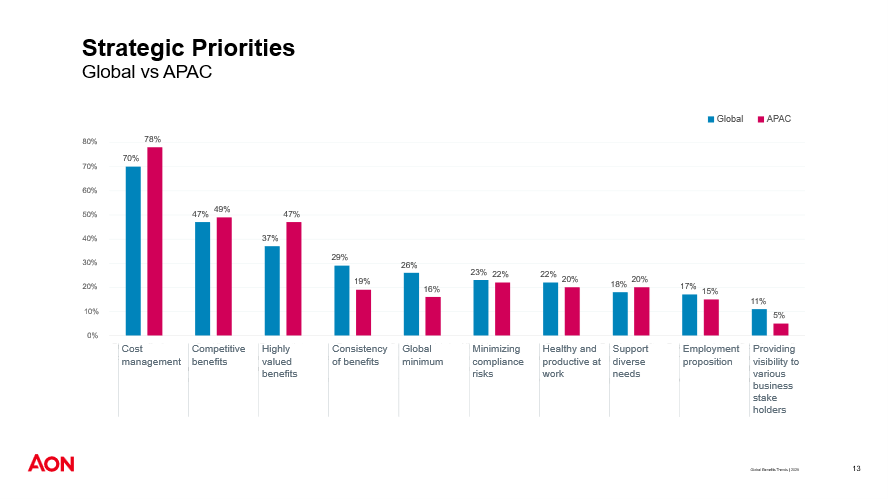
SINGAPORE – Media OutReach Newswire – 19 August 2025 – Aon plc (NYSE: AON) has released its 2025 Global Benefits Trends Study, spotlighting Asia Pacific (APAC) as a region driving innovation in employee benefits strategy. With 518 global HR professionals and 103 APAC-headquartered companies participating, the study reveals a strong regional focus on employee health, personalisation and governance—setting APAC apart from global peers. “As organisations navigate economic uncertainty and rising employee expectations, the ability to deliver personalised, equitable and cost-effective benefits is a strategic differentiator,” said Tim Dwyer, head of Human Capital for APAC at Aon. “Our survey signals APAC is leading the way in aligning benefits strategy with workforce needs. Through innovative, data-driven analytic programmes, businesses are building resilient, future-ready programs for their workforce.” Key Findings for APAC 1. Health and productivity a strategic priority APAC is the only region to rank “health and productivity of employees” among its top five strategic priorities. This reflects the region’s reliance on service labour and the outsized impact of workforce wellbeing on global supply chains. 2. Personalisation gains ground Thirty-two percent of leading multinationals participating in the survey have global guidelines requiring local markets to introduce benefit choice. APAC firms, in particular, are more likely to offer flexibility in annual leave and career development, aligning with employee preferences. Moreover, 65 percent of employees at multinational firms are willing to sacrifice current benefits for better personalisation. 3. Technology-enabled benefits delivery Sixty percent of leading multinationals (that is multinationals who have a global benefits strategy, an effective governance framework that is formally adopted and endorsed by senior management, reviewed and updated on a periodic basis and access to comprehensive data in most countries) rely heavily on technology to deliver personalised benefits experiences. APAC companies are early adopters of artificial intelligence (AI) for benefits selection and wellbeing support, with 28 percent planning to implement AI-driven solutions. 4. Cost containment remains central Thirty-one percent of companies from the global survey are considering remarketing or changing providers, though only 37 percent are investing in wellbeing initiatives, suggesting a gap between strategic intent and execution. 5. Governance and strategy execution Leading APAC organisations are three times more likely to have formal governance committees and senior management endorsement of their global benefits strategy and are 2.5 times more likely to have global benefit guidelines outlining preferred design and financing approaches. “Health and productivity of the workforce are crucial, and the large size of the populations in this region means that small changes can have a large impact,” said Alan Oates, head of global benefits for APAC at Aon. “Prioritising health and productivity of employees reflects the critical importance of workforce in the region to the supply chain for many multinational organisations. Organisations across the region must continue to adapt their employee benefits strategies to meet evolving workforce expectations and economic challenges as they strive to remain competitive. This study underscores the importance of aligning benefits strategy with workforce needs while managing manage rising costs and governance complexity — especially in a region as diverse as APAC.” About the Study: The 2025 Global Benefits Trends Study surveyed HR leaders with global responsibilities across multiple regions. The findings provide a comprehensive view of how multinational companies are evolving their benefits strategies to remain competitive in a complex global environment. Download the full report: Aon 2025 Global Benefits Trends Study Hashtag: #Aon The issuer is solely responsible for the content of this announcement. About Aon Aon plc (NYSE: AON) exists to shape decisions for the better — to protect and enrich the lives of people around the world. Through actionable analytic insight, globally integrated Risk Capital and Human Capital expertise, and locally relevant solutions, our colleagues provide clients in over 120 countries with the clarity and confidence to make better risk and people decisions that protect and grow their businesses. Follow Aon on LinkedIn, X, Facebook and Instagram. Stay up to date by visiting Aon’s newsroom and sign up for news alerts here. Disclaimer The information contained in this document is solely for information purposes, for general guidance only and is not intended to address the circumstances of any particular individual or entity. Although Aon endeavours to provide accurate and timely information and uses sources that it considers reliable, the firm does not warrant, represent or guarantee the accuracy, adequacy, completeness or fitness for any purpose of any content of this document and can accept no liability for any loss incurred in any way by any person who may rely on it. There can be no guarantee that the information contained in this document will remain accurate as on the date it is received or that it will continue to be accurate in the future. No individual or entity should make decisions or act based solely on the information contained herein without appropriate professional advice and targeted research.

Media OutReach

HMLY Marks 16 Years of ISO in Packaging & Logistics Solutions

SINGAPORE – Media OutReach Newswire – 19 August 2025 – HMLY, an established provider of packaging and design as well as warehousing and storage solutions, has announced the renewal and continued attainment of internationally recognised certifications, marking 16 consecutive years of ISO accreditation. This milestone reflects the company’s ongoing adherence to quality, safety, and compliance standards, which are key requirements for clients operating in highly regulated sectors such as food manufacturing and medical devices. The certifications include ISO 22000:2018 for Food Safety Management Systems, ISO 9001:2015 for Quality Management Systems, Good Manufacturing Practice (GMP), SS 620:2016 (2021) Good Distribution Practice for Medical Devices, bizSAFE Level 3, and Sedex membership. Collectively, these credentials demonstrate HMLY’s compliance across packaging, logistics, and distribution activities, confirming its ability to meet international quality and safety benchmarks. HMLY’s ability to maintain these certifications year after year reflects its systematic approach to operational excellence. Meeting the strict requirements of each standard involves detailed process management, regular audits, and a proactive safety culture embedded throughout the organisation. In addition to its packaging service in Singapore, the company offers integrated warehousing solutions, including warehouse storage for rent, ensuring safe handling and compliant distribution for industries with zero tolerance for lapses in safety or quality. Founded in 1993, HMLY began as a provider of packaging and label printing services, quickly evolving to serve diverse industries including food production, healthcare, and consumer goods. Over the years, the company has invested in infrastructure, technology, and training to stay ahead of evolving compliance requirements. Its portfolio includes partnerships with food manufacturers, medical device distributors, and corporations seeking a single, trusted partner with proven adherence to global standards. With its renewed certifications valid through 2026, HMLY continues to deliver packaging, logistics, and storage solutions in line with internationally recognised standards. For more information on HMLY and its range of services, please visit https://www.hmly.com.sg/. For enquiries, please contact [email protected] or call +65 9661 3233. Hashtag: #HMLY The issuer is solely responsible for the content of this announcement.

Media OutReach

Unilink Credit Supports Communities to Redefine Industry Perceptions

SINGAPORE – Media OutReach Newswire – 19 August 2025 – Licensed moneylenders in Singapore often contend with an enduring set of negative stereotypes: predatory practices, exorbitant rates, and a focus on exploiting the vulnerable. But Unilink Credit is quietly working to challenge these perceptions. Instead of publicity drives, the company focuses on ongoing support for corporate social responsibility in Singapore, reaching some of the most vulnerable local communities. A Zeno Group survey of over 7,000 consumers, including 1,000 in Singapore, found that nearly 8 in 10 Singaporeans consider a brand’s engagement with social issues when deciding what to buy or recommend. This highlights the growing business impact of corporate social responsibility. Quiet Contributions to Community Welfare The company has supported initiatives that provide elderly residents and low-income families with practical assistance, such as school materials for children, festive meals, and nutritious care packages during the Lunar New Year. Although these corporate social responsibility contributions are acknowledged by partner organisations in Singapore, Unilink Credit has chosen not to publicise them widely. “We did all these with heart and not for any marketing purpose,” said Daphne, Director of Unilink Credit. “You don’t have to be very wealthy to do charity. Every bit counts, and it doesn’t always need to be monetary. The corporate social responsibility effort comes from the heart.” A Different Side of Lending For Unilink Credit, the connection between lending and giving is not contradictory. Both are guided by the same principles: trust, responsibility, and social impact. The company believes that a licensed moneylender’s role in Singapore extends beyond simply providing loans. It can also involve offering regulated, transparent credit services and channelling resources toward community support. Impact Beyond Numbers The most rewarding outcomes from their corporate social responsibility efforts in Singapore, they say, are the moments that statistics can’t capture: the smiles of elderly residents at a community lunch, the gratitude from families receiving care packs, and the excitement of children awarded for their academic achievements. Looking ahead, Unilink Credit plans to continue supporting causes that serve the elderly and low-income children, even when the organisations fall outside of its cultural or religious background. “We’re open to helping as long as it reaches those who need it most,” Daphne, Director of Unilink Credit added. In an industry where public perception is slow to change, the company hopes its example will offer a more balanced perspective. It aims to show that lending and corporate social responsibility in Singapore can exist side by side. Hashtag: #UnilinkCredit https://unilinkcredit.com.sg/ The issuer is solely responsible for the content of this announcement.

Media OutReach

Three in Four Singaporeans Prioritise Leaving an Inheritance for Future Generations

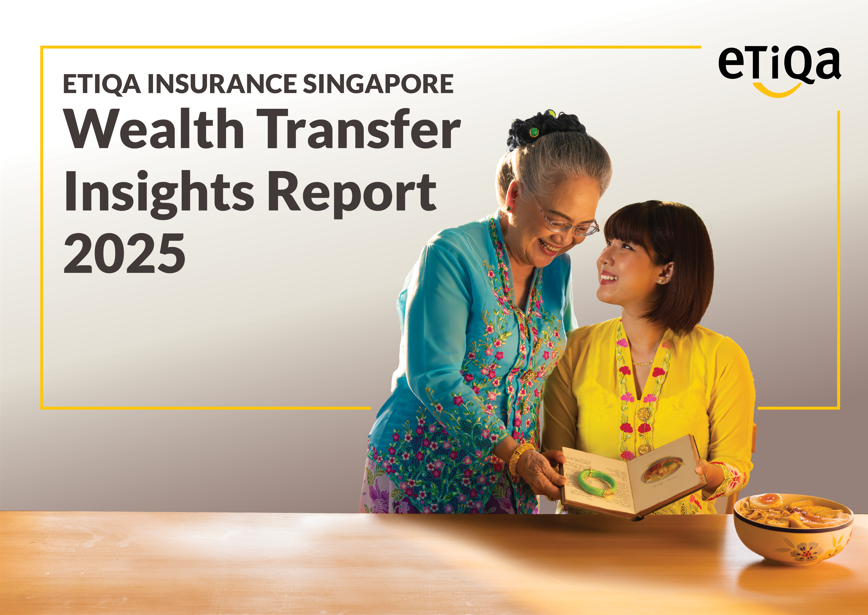
Millennials and Gen Zs lead the charge in proactive wealth planning; Gen Zs also have the highest expectations towards receiving an inheritance SINGAPORE – Media OutReach Newswire – 19 August 2025 – A new report by Etiqa Insurance Singapore spotlights growing trends in intergenerational wealth transfer, with 77% of Singaporeans prioritising leaving a financial legacy to future generations. With two-thirds of Singaporeans having either received, transferred or expect to receive or transfer their wealth, a commitment most pronounced among those aged 55 and above (74%), proactive wealth planning and management for Singaporeans is more crucial than ever. Wealth Transfer Insights Report 2025 78% of Singaporeans aged 55 years and above prioritise the importance of discussing inheritance matters with their families, signalling a clear cultural shift toward open and proactive legacy planning. This reflects a broader societal shift towards greater transparency and responsibility in legacy planning, as older Singaporeans recognise the importance of wealth transfer conversations before one’s passing. Over half of Singaporeans surveyed (53%) have either received or expect to receive an inheritance. This expectation is even higher among younger Singaporeans, with 62% under the age of 24 expecting to receive an inheritance. This indicates the need for early financial literacy and planning to ensure wealth is managed effectively. Among Singaporeans who expect to receive or give an inheritance, one in five anticipate a windfall of $1 million or more. With large sums potentially involved, financial education becomes key, and recipients need financial planning and management to manage this wealth. Among Singaporeans who have received their inheritance, 53% believe the inheritance plays a critical role in their long-term financial stability. In contrast only 35% of Singaporeans who have yet to receive an inheritance see it as critical factor that ensures their long-term financial stability. As the true value of an inheritance often becomes clear only after it is received, proactive financial guidance is essential to help individuals integrate it effectively into their long-term financial goals. Other key findings of the survey include: Nearly half (46%) of Singaporeans have plans to or have already initiated wealth transfers during their lifetime, shifting away from solely relying on transfers upon their passing. About half of Singaporeans surveyed (49%) actively use insurance as an instrument for wealth transfer, recognising it as an effective method for legacy planning beyond basic protection. Most Singaporeans preparing to pass on wealth involve their family in financial planning conversations (42%) and instilling values of responsibility and diligence (41%). A notable 18% still lack a plan for successor readiness. Wealth transfer comes with complexities. Key worries for Singaporeans regarding wealth transfer include family conflict (36%), maintaining their own financial security (34%), and fears of mismanagement of wealth (31%). One in three Singaporeans now involve a financial advisor in their wealth transfer planning, reflecting a growing recognition of the critical need for expert guidance in navigating complex legacy decisions. “Our Wealth Transfer Insights Report findings indicate that wealth transfer is increasingly viewed not just as a financial event, but as a purposeful act of next generation empowerment,” said Raymond Ong, CEO of Etiqa Insurance Singapore. “It is heartening that Singaporeans are having conversations about wealth planning through open family dialogue and meticulous planning, fundamental to ensuring financial well-being of their families.” “While Singaporeans demonstrate a strong commitment to securing their family’s financial future through wealth transfer, potential challenges such as wealth mismanagement and preserving this wealth for next generation need to be addressed,” Mr. Ong emphasised. “More strategic and informed legacy planning to bridge existing gaps and fostering continuous open dialogue are essential steps to ensure that legacies not only endure but truly empower future generations.” Etiqa Insurance Singapore supports the community through financial planning literacy workshops and activities designed to empower individuals across all age groups. These initiatives, that will be rolled out in phases in coming years, aim to equip participants with the essential knowledge to protect, grow, and manage their wealth effectively. Find out more at: www.etiqa.com.sg Etiqa Insurance Singapore Wealth Transfer Insights Report The Etiqa Insurance Singapore Wealth Transfer Insights Report was conducted in collaboration with Kantar in June 2025, surveying 1,008 Singapore citizens and permanent residents across four age groups: Gen Z (18 to 28 years old), Millennials (29 to 43 years old), Gen X (44 to 59 years old), and Seniors (60 and above). This study delves into the attitudes, expectations and strategies around both receiving and passing wealth to the next generation. Hashtag: #EtiqaInsurance The issuer is solely responsible for the content of this announcement. Etiqa Insurance Pte. Ltd. Etiqa Insurance Pte. Ltd. (EIPL) is a life and general insurance company licensed and regulated by the Monetary Authority of Singapore and governed by the Insurance Act 1966. Having protected customers in Singapore since 1961 under the name United General Insurance Co. Sdn. Bhd., the company transitioned into the Singapore branch of Etiqa Insurance Berhad in 2009. Today, EIPL in Singapore stands as the pivotal operating entity of Etiqa Insurance Group, a leading insurance and takaful provider in ASEAN. EIPL offers a comprehensive range of life and general insurance products accessible through its diverse distribution channels, including bancassurance, agents, brokers, financial advisers, partnerships, direct and online sales via Tiq by Etiqa. Etiqa is rated ‘A’ by credit rating agency Fitch for the group’s ‘Favorable’ business profile. EIPL is owned by Maybank Ageas Holdings Berhad, a joint venture combining local market expertise with international insurance knowledge, with 69% ownership by Maybank, the fourth largest banking group in Southeast Asia, and 31% by Ageas, an international insurance group operating across 13 countries.

Media OutReach

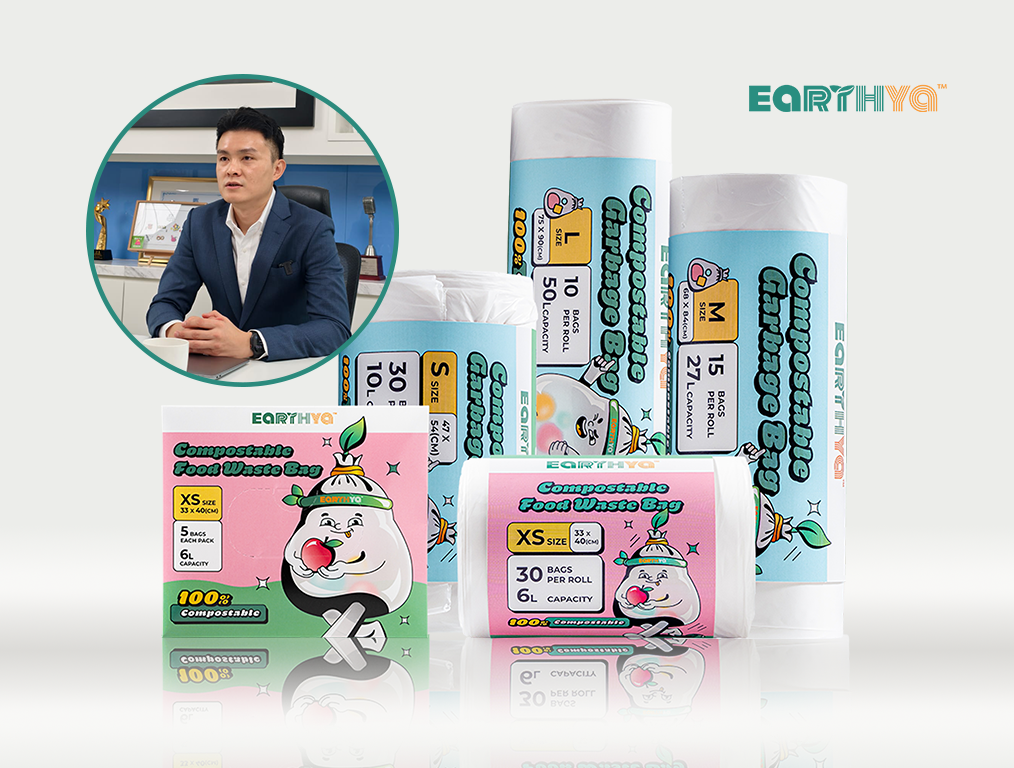
Innovative eco brand Earthya has launched compostable bags, helping Malaysians tackle the challenge of microplastic pollution.

KUALA LUMPUR, MALAYSIA – Media OutReach Newswire – 19 August 2025 – Malaysians use approximately 9 billion plastic bags every year, including trash bags that are difficult to fully decompose. Over time, these break down into microplastics, increasing the risk of microplastic ingestion among locals and making Malaysia the country with the highest intake in the world. Earthya Compostable Bag – product of Zaneco Sdn Bhd. Ivan Chan – CEO of Zantat Holdings Berhad & Zaneco Sdn Bhd To address this issue, local innovative eco brand Earthya has launched the Earthya Compostable Bag, a product developed over three years of dedicated research. Made entirely free of any plastic components, it can fully break down into plant fertiliser in natural conditions or home compost environment, helping to ease Malaysia’s struggle with microplastic pollution. Malaysians Rank First Globally in Microplastic Consumption According to The Straits Times, among 109 countries surveyed for microplastic pollution, Malaysians consume an average of 502.3 milligrams of microplastics per person daily, equivalent to about 494,000 particles. Over 50% of this microplastic intake comes from consuming fish. This is closely linked to Malaysians’ heavy reliance on single-use plastics in daily life, including plastic bags for takeaways, disposable food containers, plastic beverage cups, straws, shopping bags, garbage bags and more. Without a robust recycling and waste management system, these plastics eventually break down into microplastics, which enter the air and waterways, widely infiltrate the human food chain, and ultimately end up in the human body. Earthya Hopes to Reduce Microplastic Pollution with Compostable Bags Founder of Earthya, Ivan Chan Bin luan, expressed his hope that these compostable bags will help ease Malaysia’s microplastic pollution challenge. Therefore, together with the Earthya team, he conducted in-depth research into various biodegradable materials suitable for making plastic alternatives, and discovered that many trash bags are wrongly marketed as eco-friendly, such as those made from Photo-Degradable, Oxo-Degradable, or Bio-Degradable plastics which still release microplastic particles during composition, posing potential risks to the environment. Ultimately, they selected premium calcium carbonate and an internationally certified compostable polyester as the core materials, successfully developing the Earthya Compostable Bag—a truly eco-friendly trash bag that contains no plastic, naturally decomposes into plant fertiliser, and leaves no microplastic residue. 5 Unique Advantages of the Earthya Compostable Bag Compared to conventional trash bags on the market, the Earthya Compostable Bag offers 5 unique advantages: 100% Plastic-Free Contains no traditional plastic components such as polyethylene (PE) or polypropylene (PP). Generates no microplastics during use—safer and more eco-friendly. Naturally Decomposable—No Special Equipment Required Suitable not only for industrial composting but also able to break down in home compost systems or natural soil. Shelf Life of up to Two Years When compared to most cornstarch-based compostable bags with a shelf life of only 6 months, the Earthya Compostable Bag is better suited for long-term storage and everyday use. Strong and Durable, Feels Just Like a Plastic Bag Combines strength and familiar feel, so going green doesn’t mean giving up convenience or changing your habits. Comes in an XS Size, Specially Designed to Fit Most Household Kitchen Waste Bins Offers a hassle-free composting solution for households, while preventing methane emissions caused by sealing food waste in plastic bags. Most importantly, the calcium carbonate added to Earthya bags can be absorbed by the soil, helping to balance pH levels and further improve soil quality, achieving multiple environmental benefits. Certified by Multiple Local and International Authorities Earthya Compostable Bags have obtained the following certifications to date: TÜV Austria OK Compost (Home Compost Certification) The OK Compost is a certification program specifically for compostable products, managed and issued by TÜV Austria. MyHijau (Malaysia’s Official Green Product Certification) The MyHijau certification is one of Malaysia’s most authoritative eco-labelling systems, designed to promote sustainable practices among businesses. BPI Compostable (United States BPI Compostable Certification) The BPI certification mark on a product indicates that it has passed rigorous testing and meets compostability standards such as ASTM D6400 or D6868. These standards assess the product’s ability to break down in industrial composting facilities, a process that typically takes up to 90 days, while ensuring no harmful residues remain. Australia Standard for Industrial Compostability AS4736 (Australia’s Industrial Composting Standard) Australia’s Industrial Composting Standard AS4736 sets clear requirements for compostable packaging materials. It mandates visible decomposition within 12 weeks and complete biodegradation within 6 months. Spreading Awareness on Microplastic Hazards to Inspire Greater Eco Participation Founder Ivan Chan Bin Iuan shared that the inspiration behind developing the Earthya Compostable Bag was to normalise eco-friendly living—proving that sustainability doesn’t have to come at the cost of convenience, and that everyone can easily take part. “We hope that when you pick up an Earthya Compostable Bag, you feel a sense of assurance and trust—knowing that every bag you use will never break down into microplastics, will never become a burden to the planet after disposal, and will never end up as microplastics consumed by you or your children.” He emphasised that no one should underestimate the power of individual action. If just one person chooses a trash bag that doesn’t break down into microplastics, that’s already a reduction in the generation of microplastics. And when 10, 100 people, or even thousands make the same choice, it will help ease Malaysia’s microplastic pollution. Besides that, to further drive environmental awareness, Earthya actively organises environmental talks, participates in exhibitions, and shares educational content on social media to strengthen the public’s understanding of eco-friendly products. If you would like to make a purchase, you can visit: Shopee and search for “Earthya” Find us at all Health Lane Family Pharmacies outlets across Malaysia Hashtag: #Earthya #ForTheEarth #GreenWithEarthya #EcoWithEarthya #ChangeWithEarthya #SustainableFuture #OurEarthOurFuture #SmallStepsBigEarthya #TogetherForTomorrow #sustainability #NoMicroplastic https://zanecosb.com/https://www.facebook.com/Earthya3https://www.instagram.com/earthya.my/https://www.tiktok.com/@earthya3?lang=enhttps://my.shp.ee/Y2dkbzZ The issuer is solely responsible for the content of this announcement.

Investment & Market Trends

Felicity Sets Up Singapore Headquarters To Accelerate Southeast Asia Expansion

Felicity, an AI-powered game-tech company, has established Felicity Labs Pte. Ltd. in Singapore as its Southeast Asia headquarters. The new hub will spearhead acquisitions and regional operations, with a goal of doubling growth by March 2026. From Singapore, Felicity will expand studio partnerships and grow its regional user base to over 2 million players, with Vietnam and Thailand highlighted as priority markets. The company said the move will enhance its access to the region’s game development ecosystem and support its broader global expansion strategy. Over the next 12 to 18 months, Felicity will invest $1 million to build a leadership team, hire key talent, and expand its footprint across Asia-Pacific. With existing operations in India and Türkiye, and now Singapore, the company plans to acquire more gaming IPs, broaden its player base, and strengthen its developer network in the region. Felicity has raised $3.7 million across two funding rounds — a $700,000 pre-seed round backed by DeVC, Swiggy founders, Kunal Shah, and other angel investors, followed by a $3 million seed round led by 3one4 Capital, MIXI Global, and T-Accelerate Capital. “APAC is home to 1.5 billion gamers and a $70 billion market. We see this as an opportunity to engage with local talent, partners and communities in a region that is shaping the future of gaming,” said Anurag Choudhary, founder and CEO of Felicity.

News

Foodpanda Just Launched ‘pandasafe’ & It Might Change Malaysia’s Gig Economy Forever

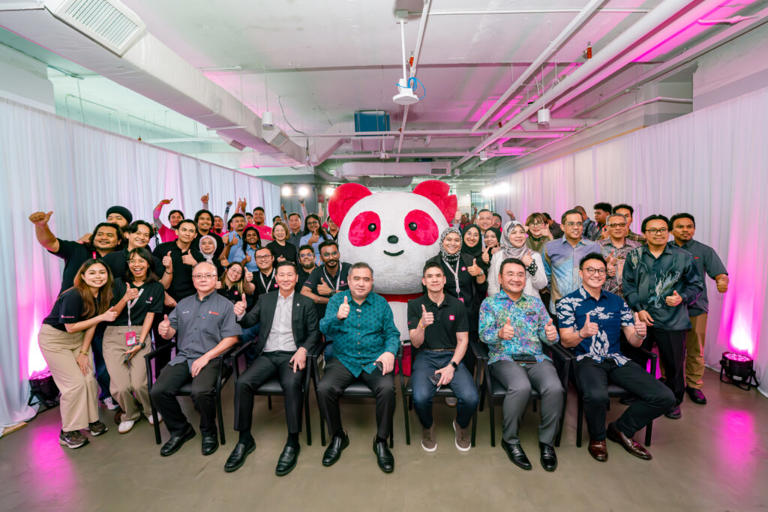
Foodpanda Malaysia has unveiled pandasafe, a pioneering rider safety and wellbeing programme developed in collaboration with leading public and private partners including Allianz Malaysia, Hong Leong Bank, PERKESO, and Hong Leong Yamaha Motor. Foodpanda Just Launched ‘pandasafe’ & It Might Change Malaysia’s Gig Economy Forever. The launch, officiated by Transport Minister Anthony Loke at foodpanda’s headquarters, marks a significant milestone for Malaysia’s gig economy. “The safety of our delivery partners must be treated as a national priority. I applaud foodpanda and its partners for stepping up with a structured programme that goes beyond awareness. pandasafe sets a new benchmark for how companies can take responsibility in making our roads safer for gig workers,” said Loke. Unlike traditional awareness campaigns, pandasafe introduces a permanent, data-driven ecosystem that combines education, technology, behavioural science, and financial literacy to foster a sustainable culture of road safety. Tan Ming Luk, Managing Director of foodpanda Malaysia, stressed that pandasafe reflects a long-term commitment: “Our delivery partners are the heart of foodpanda. Every safely completed order and every rider who gets home safely is a success. pandasafe isn’t seasonal — it’s a permanent shift in how we operate, ensuring the wellbeing of our riders, their families, and the communities we serve.” Key features of pandasafe include: Structured rider training on safe riding practices and defensive techniques. Telematics tools to monitor and improve rider habits. Road safety and first aid modules, with Allianz Malaysia delivering First Response and CPR training. Social protection and safety induction programmes with PERKESO, strengthening riders’ access to Malaysia’s safety net framework. Defensive riding and braking skills training in partnership with Hong Leong Yamaha Motor. Financial literacy initiatives by Hong Leong Bank to support income management and long-term financial wellbeing. These elements work together to create a holistic rider safety framework — reducing risks on the road while improving long-term welfare across Malaysia’s delivery community. “Safety is not just a policy — it’s a culture. pandasafe is about building that culture through the right partnerships and a shared responsibility to ensure riders return home safely,” Tan added. With pandasafe, foodpanda Malaysia is setting a new industry standard, moving beyond short-term campaigns to establish a culture of protection, empowerment, and accountability in the gig economy.

Energy & Technology

Firefly Aerospace To Launch Alpha Rocket In Japan

TOKYO, Firefly Aerospace (FLY.O) is considering launching its Alpha rocket from Japan as the U.S. rocket maker accelerates its global expansion in satellite launch services, according to Space Cotan, operator of the Hokkaido Spaceport. If realized, Japan would become Firefly’s second overseas launch site – and its first in Asia – following an upcoming Alpha mission from Sweden. Firefly, a Texas-based competitor to Elon Musk’s SpaceX, made its Nasdaq debut earlier this month. Firefly Aerospace’s first Alpha rocket lifts off minutes before suffering a catastrophic anomaly during its first launch leading to the loss of the vehicle 2 minutes, 30 seconds after liftoff from Vandenberg Space Force Base, California, U.S. September 2, 2021. Space Cotan said it has signed a preliminary agreement with Firefly to study the feasibility of Alpha launches from Hokkaido, about 820 km northeast of Tokyo. The review will cover regulatory requirements, timelines, and necessary investment for new launch facilities. “Launching Alpha from Japan would allow us to serve Asia’s growing satellite industry and provide greater resiliency for U.S. allies with a proven orbital vehicle,” said Adam Oakes, Firefly’s vice president of launch, in a statement on Space Cotan’s website. However, the plan hinges on a space technology safeguards agreement (TSA) between Washington and Tokyo that would permit U.S. rocket launches in Japan. Negotiations began last year but no deal has been reached. A similar TSA signed with Sweden in June cleared the way for Firefly’s operations in the Arctic. Firefly’s Alpha rocket has faced challenges, with four of six launches since 2021 ending in failure, the most recent in April. Japan has decades of experience with state-led rocket launches, but its private space industry remains in the early stages. Domestic satellite operators continue to rely heavily on foreign providers like SpaceX’s Falcon 9 and Rocket Lab’s Electron. Previous attempts to bring foreign launch players to Japan have had mixed results. Virgin Orbit’s plan to launch from Oita Airport collapsed after the company’s 2023 bankruptcy, while Sierra Space is still pursuing plans to land its spaceplane there after 2027. Last month, Taiwanese firm TiSpace attempted what would have been the first foreign launch from Hokkaido, but the suborbital test failed within a minute. Japan’s government aims to ramp up to 30 domestic rocket launches annually by the early 2030s, offering subsidies to private players such as Space One and Toyota-backed Interstellar Technologies.

News

Tabung Haji Denies Spending RM20m On Rebranding

KUALA LUMPUR, Lembaga Tabung Haji (TH) has dismissed as false and defamatory claims that it spent RM20 million on a rebranding exercise. In a statement, TH clarified that the brand rejuvenation initiative cost RM2 million annually over a three-year period. “Brand strengthening efforts have been carried out periodically as a strategic investment to shift mindsets and encourage Muslims to save systematically in preparation for performing the haj,” it said. According to TH, the rebranding process also included market research and engagement with depositors to better understand their needs, while taking into account demographic changes within Malaysia’s Muslim community. “The claim that Tabung Haji does not need to enhance its brand after 60 years of operation is inaccurate,” the statement added. Currently, TH has 9.6 million depositors — representing about half of Malaysia’s Muslim population. However, over 53% of depositors hold less than RM1,300 in savings, far below the estimated RM15,000 required in 2025 for pilgrims from the bottom 40% (B40) income group to perform the haj. The statement further highlighted that more than 80% of TH transactions are conducted online. To encourage stronger savings habits, TH plans to launch a campaign urging Muslims to save early, consistently, and systematically, while ensuring sustainable investments to maintain the institution’s long-term strength. The board of directors has also decided to review TH’s strategies to remain competitive, provide improved services, and attract younger Muslims to become depositors. The issue of rebranding costs was raised in Parliament last week by Pengkalan Chepa MP Datuk Dr Ahmad Marzuk Shaary during the debate on the 13th Malaysia Plan. Meanwhile, Minister in the Prime Minister’s Department (Religious Affairs) Datuk Dr Mohd Na’im Mokhtar said in a Facebook post that he will address the matter during the winding-up session in the Dewan Rakyat on Monday.

Energy & Technology

Indonesia Partners With UK’s Dataswyft On $5M Smart Agriculture Data Ecosystem

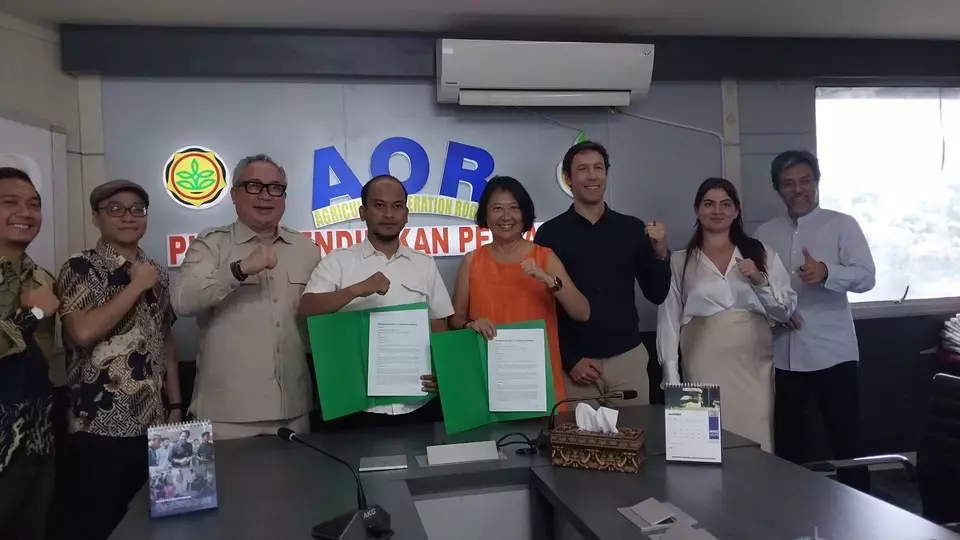
JAKARTA, Indonesia has teamed up with UK-based Dataswyft to establish a nationwide “smart data” ecosystem aimed at strengthening food security, modernizing farming operations, and uplifting rural communities. The agreement, signed Thursday at the Agriculture Ministry in Jakarta, brings together the National Food Brigade and Dataswyft to create a secure, shareable, and user-controlled data platform. The system is designed to address one of the agriculture sector’s persistent hurdles — fragmented data and siloed systems that limit collaboration among government agencies, farmers, and private players. National Food Brigade and Dataswyft sign an MoU at Building D of the Agriculture Ministry Complex in Ragunan, South Jakarta, Thursday, Aug. 14, 2025.  “This collaboration allows us to leverage smart identity and data to better coordinate across agencies, stakeholders, and farmers, thereby advancing food security and rural prosperity,” said National Food Brigade Chairman Ichi Indrawan. He highlighted the project as a core agritech initiative to accelerate President Prabowo Subianto’s food self-sufficiency agenda. Central to the initiative is the Dataswyft Wallet, a privacy-first digital tool that enables users to collect, manage, and share their own data under transparent terms. Through the platform, farmers will gain access to personalized government and private-sector services, receive targeted support, and contribute verified insights to national programs — all while maintaining full control over their data. “Indonesia is showing bold leadership by embracing a cross-border digital public infrastructure that positions the country to leapfrog into the next-generation digital economy,” said Professor Irene Ng, CEO of Dataswyft Group London. As part of the collaboration, Dataswyft will set up Indonesian operations and establish a HATLAB Studio in Jakarta, bringing together experts, technology partners, and investors to foster innovation in smart data markets. The pilot phase, backed by an estimated US$5 million budget, will begin in southern Sumatra, targeting the digitization of data for up to 10 million farmers. Rusmin Lawin, Deputy Chair of the National Food Brigade Advisory Board, emphasized that the initiative will enhance transparency across farming practices, making the sector more appealing to financial institutions and investors. Echoing this, Davide Ceper, Dataswyft’s Senior Director for Global Strategy and Growth, said the platform will serve as a central hub for collaboration across the agricultural value chain, “unlocking growth, efficiency, and prosperity for Indonesia’s farming communities.”

Scroll to Top

Subscribe
FREE Newsletter