Author name: admin

News

Pharmaniaga Set to Exit PN17 On Tuesday

Pharmaniaga Bhd will be lifted from Bursa Malaysia’s Practice Note 17 (PN17) category effective Tuesday (March 17), ending its three-year classification as a financially distressed company. The removal follows Bursa Malaysia Securities’ approval of Pharmaniaga’s application, according to a filing on Monday. The group initially fell into PN17 after recognising a RM552.3 million inventory provision for Sinovac Covid-19 vaccines, which led to a record quarterly net loss of RM664.39 million in 4QFY2022 and a full-year net loss of RM607.32 million. Pharmaniaga’s exit comes after completing its regularisation plan, which included a rights issue, private placement, and capital reduction exercise. In July last year, the group raised RM596.6 million through the issuance of 5.12 billion new shares, marking the largest fundraising in Malaysia’s healthcare sector. This was followed by a RM520 million capital reduction in August 2025 to eliminate accumulated losses. The two-year regularisation plan, launched in November 2023, underwent adjustments, including removing warrants from the rights issue and increasing the capital reduction from RM180 million to RM520 million. As of Dec 31, 2025, Pharmaniaga held RM110.59 million in cash against RM690.43 million in short-term and RM125.53 million in long-term borrowings. For FY2025, the group posted a net profit of RM48.5 million, down 63% from RM131.82 million in FY2024, despite revenue rising 4.5% to RM3.93 billion. Pharmaniaga shares closed one sen higher at 25.5 sen on Monday, valuing the company at RM1.67 billion. The stock has risen 82% over the past year.

Investment & Market Trends

Dialog Group Sells 51% Stake In Dialog Diyou PCR

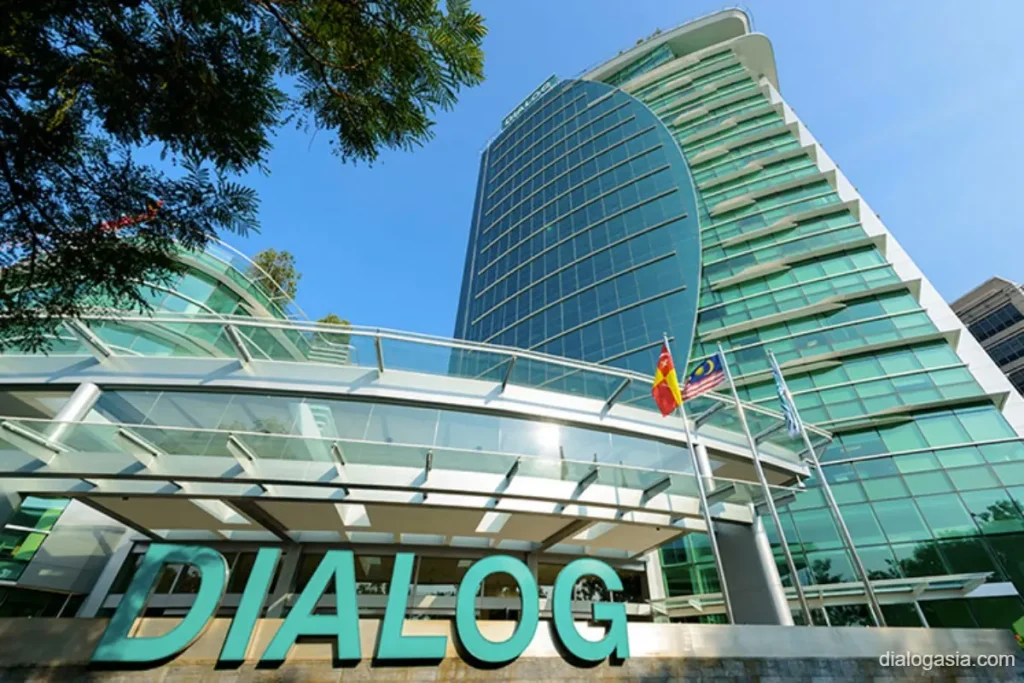
Dialog Group Bhd has announced that its wholly-owned subsidiary, Dialog Chemicals Sdn Bhd (DCSB), together with Diyou PCR Sdn Bhd, will sell their 51% and 49% stakes, respectively, in Dialog Diyou PCR Sdn Bhd (DDPCR) to two companies managed by circular economy investment firm Circulate Capital. In a Bursa Malaysia filing on Monday, Dialog said DCSB and Diyou PCR will receive RM1 each from the purchasers, Ocean Fund Holdings Pte Ltd and Circulate Capital Ocean Fund I-B. Additionally, the buyers will pay US$8.5 million (about RM33 million) directly to DDPCR to fully repay the company’s bank loan. DDPCR, which produces, sells, and markets food-grade recycled polyethylene terephthalate (PET) pellets, has already ceased production. Dialog said the divestment allows the group to strategically refocus on its core energy businesses, supporting long-term growth and resilience. The sale price was determined on a willing-buyer, willing-seller basis, considering DDPCR’s audited total assets of RM33.6 million as of June 30, 2025. The original cost of DCSB’s investment in DDPCR was RM23.02 million, but it had been fully impaired in February 2025, resulting in no gain or loss aside from the RM1 cash consideration. Upon completion of the transaction, expected within 25 business days, DDPCR will cease to be a joint venture of Dialog. The group noted that the disposal will not affect its share capital, major shareholders, or have any material impact on earnings, net assets, or gearing.

Investment & Market Trends

PNB Rejects Sunway’s IJM Takeover Bid Over Low Valuation

Permodalan Nasional Bhd (PNB) has declined Sunway Bhd’s voluntary takeover offer (VTO) for its 13.3% stake in IJM Corp Bhd, citing the offer’s low valuation, small cash component, and IJM’s strong dividend prospects and long-term growth potential. In a statement on Monday, PNB said its board investment committee evaluated IJM’s intrinsic value against Sunway’s RM3.15 offer price and the potential future gains from the new Sunway shares to be issued. After a thorough and independent assessment, the fund concluded the offer did not meet its investment criteria or fiduciary duty to unit holders. PNB noted that IJM’s market price has long undervalued the company’s fundamentals and stressed that the decision should not be taken as guidance for other shareholders, who are encouraged to make their own assessment. Independent adviser M&A Securities also recommended rejecting the offer, highlighting that Sunway’s price represents a discount of up to 51% compared with IJM’s estimated value. The offer includes 10% cash (31.5 sen per share) and 90% new Sunway shares at 0.501 shares per IJM share, totaling around 1.76 billion new shares and RM1.1 billion in cash. Government-linked investment companies collectively hold about 45% of IJM, including the Employees Provident Fund (20.52%) and KWAP (9.64%). Sunway had set a deadline of April 6 for shareholders to accept the offer. Tan Sri Jeffrey Cheah, Sunway’s founder, previously warned the group would abandon the acquisition if it did not secure enough support. IJM shares closed at RM2.31 on Monday, down one sen, valuing the company at RM8.43 billion. Sunway closed at RM5.15, up one sen, for a market value of RM35.05 billion.

Property

Aneka Jaringan Secures RM95.65M Contracts For NPE And Seputeh Projects

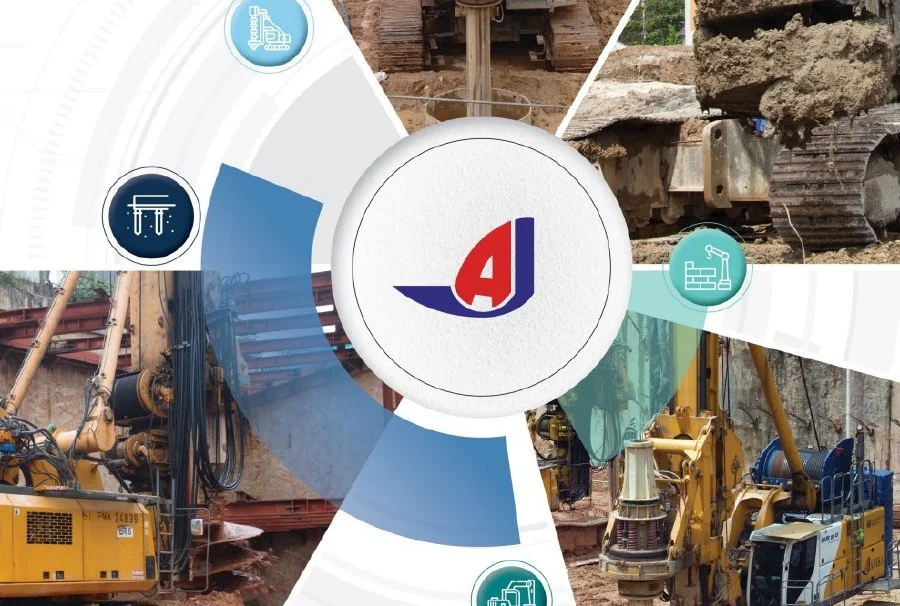
Aneka Jaringan Holdings Bhd, a specialist in basement and foundation construction, has secured two letters of award worth a combined RM95.65 million for projects on the New Pantai Highway (NPE) extension and a high-rise residential development in Seputeh. In a statement on Monday (March 16), the group said the first letter of award was from IJM Construction Sdn Bhd for bored piling and reverse circulation drilling works for Package 1 (Sections 1 & 2A) of the NPE extension. The works will be carried out in line with sectional completion requirements, based on site possession timelines to be advised. The second LOA, valued at RM12.8 million, was awarded by MRCB Builders Sdn Bhd for earthwork, piling, and pile cap works for a proposed 50-storey apartment project. The development includes 11 levels of car parks and facilities, as well as an upgraded riverside landscape reserve. Aneka Jaringan’s shares closed unchanged at 11.5 sen on Monday, giving the company a market value of RM80 million.

Investment & Market Trends

EPF No Longer Major Shareholder In SDS Group

The Employees Provident Fund (EPF) has ceased to be a substantial shareholder in Johor-based SDS Group Bhd (KL:SDS), the operator of a chain of bakeries and cafes, following its latest share disposals. According to a Bursa Malaysia filing on Monday, the pension fund sold 165,000 shares, representing a 0.03% stake, on March 11. This reduced EPF’s total holding to 27.1 million shares, or 4.988%—just below the 5% threshold required for mandatory disclosure as a substantial shareholder. EPF first became a substantial shareholder in SDS in September 2025 with a 5.125% stake (27.84 million shares). The fund has gradually trimmed its position as the stock faced downward pressure, with SDS’ share price dropping more than 33% since EPF’s initial disclosure, closing at 48 sen on Monday, down one sen from last Friday, giving the company a market value of RM262.16 million. Listed on Bursa Malaysia’s ACE Market in October 2019, SDS moved to the Main Market in May 2023. The company has maintained consistent profitability, posting a full-year net profit of RM33.28 million for FY2025, up from RM32.55 million in FY2024.

Investment & Market Trends

Gagasan Nadi Cergas MD Reduces Stake To 57%

Gagasan Nadi Cergas Bhd group managing director Datuk Wan Azman Wan Kamal has sold a 7.44% stake in the property and construction company, lowering his deemed interest from 64.69% to 57.25%. The sale, involving 56 million shares at 43 sen each, was completed on March 13, according to a Bursa Malaysia filing on Monday. The transaction is estimated to have netted Wan Azman approximately RM24.08 million. Last month, Gagasan Nadi Cergas proposed a bonus issue offering one warrant for every two shares held. The issuance could total up to 376.5 million warrants with a five-year tenure and an exercise price of 32 sen per warrant. If fully exercised, the company could raise up to RM120.48 million, intended for working capital, including payments to suppliers and subcontractors for materials and project progress claims. Since listing on Bursa Malaysia’s ACE Market in 2018, Gagasan Nadi Cergas has set its sights on a transfer to the Main Market later this year. The company’s shares are trading at a price-earnings ratio of 4.3 times, well below peers such as Nestcon Bhd (28.4 times), Gamuda Bhd (24.4 times), and Sunway Construction Bhd (24.7 times), according to AskEdge data. Shares closed 42 sen on Monday, down half a sen or 1.18%, giving Gagasan Nadi Cergas a market valuation of RM316 million.

Energy & Technology

Petrobras To Buy PETRONAS’ Offshore Stakes For $450M

Brazilian state-controlled oil company Petrobras announced on Monday that it has decided to exercise its contractual right to purchase Malaysian oil giant Petroliam Nasional Bhd’s (PETRONAS) 50% stake in two offshore fields in Brazil for US$450 million (approximately RM1.76 billion), according to a filing with the securities regulator. The acquisition will give Petrobras full ownership of the Tartaruga Verde field and Module III of the Espadarte field, both located in the prolific Campos Basin. Together, these assets produce an average of 55,000 barrels of oil per day. By acquiring full control, Petrobras will also be able to integrate existing wells in the Tartaruga Verde field with its newly acquired assets, according to sources cited by Reuters. The move comes after Petrobras made a significant discovery in November at the nearby Sudoeste de Tartaruga Verde block, which the company’s head of exploration and production, Sylvia Anjos, described as “marvelous.” Earlier in January, Brazilian oil company Brava had announced an agreement to purchase PETRONAS’ stakes as part of its long-term expansion strategy. However, Petrobras ultimately decided to exercise its option to acquire the assets directly. Brava and PETRONAS did not immediately respond to requests for comment regarding the change in plans. This acquisition strengthens Petrobras’ presence in the Campos Basin and aligns with its strategy to consolidate high-potential offshore assets under full ownership, allowing for greater operational control and potential synergies with existing production.

Investment & Market Trends

Ant Group Gets Green Light In China To Buy Hong Kong Brokerage

Ant Group Co. has received China’s regulatory approval to complete its purchase of Hong Kong-listed brokerage Bright Smart Securities & Commodities Group Ltd, finalizing a deal agreed nearly a year ago. According to a filing with the Hong Kong Stock Exchange on Monday, Ant has completed the required reporting procedures with Chinese authorities for high-value, non-sensitive investment projects, confirming an earlier Bloomberg News report. The transaction is now expected to close on March 30. Bright Smart’s shares surged as much as 82% on Tuesday morning to HK$16.88 (RM8.46), giving the company a market value of roughly US$3.6 billion (RM14.1 billion). Bright Smart chairman Yip Mow Lum conditionally agreed in April to sell his 50.55% stake—about 858 million shares—to Wealthiness and Prosperity Holding Ltd for HK$3.28 per share, totaling HK$2.81 billion. Wealthiness and Prosperity is ultimately controlled by Ant, the fintech giant led by Jack Ma. Yip, nicknamed the “Money Hunter,” founded Bright Smart in 1995 and developed it into a popular online trading platform with low brokerage fees. The company went public in Hong Kong in 2010. Ant’s unit controlling Wealthiness and Prosperity also holds other investments in the digital brokerage sector, including the wealth management platform Ant Wealth Shanghai Yunjin Information Technology.

Investment & Market Trends

Borong Ranked No. 1 Fastest-Growing Company In Asia-Pacific By Financial Times, For The Second Consecutive Year

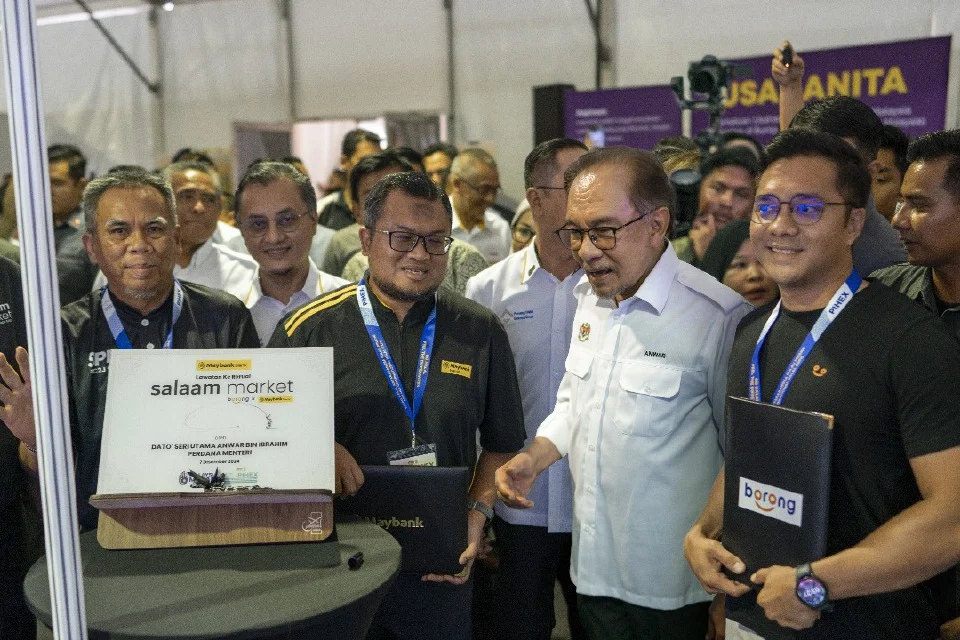
Malaysian B2B technology eProcurement & eMarketplace company Borong (formerly known as Dropee) has once again claimed the top position in the Financial Times High-Growth Companies Asia-Pacific 2026 ranking, compiled in partnership with Statista, this time rising from 2nd place to rank No. 1 across the entire Asia-Pacific region. The ranking, now in its eighth annual edition, identifies the top 500 companies that achieved the highest compound annual growth rate (CAGR) in revenue between 2021 and 2024. Aizat Rahim, Chief Executive Officer of Borong (Dropee) with with YAB Dato’ Seri Anwar Bin Ibrahim launching Salaam Market, a joint-effort between Borong (Dropee) & Maybank Islamic Berhad. Two Years. One Consistent Story of Growth. This is Borong’s second consecutive appearance on the FT High-Growth Companies Asia-Pacific list, and the most emphatic yet. Having ranked 2nd in 2025, Borong now claims the No. 1 position in 2026, making it not only the fastest-growing company in the region this year, but also the most consistently growing. This back-to-back recognition underscores what Borong has always believed: that sustainable, compounding growth driven by genuine enterprise value is not an accident, it is a strategy. Borong remains the highest-ranked Malaysian company on the list and one of only a small number of Malaysian firms featured among the top 500 high-growth companies spanning 13 Asia-Pacific economies, alongside businesses from Japan, South Korea, India, Singapore, Australia, and beyond. Expanding Into New Industries, Deepening Strategic Partnerships Since its founding in 2017, Borong has grown from a bootstrapped startup with US$300,000 in revenue into a regional B2B technology platform funded by prominent Venture Capitalists trusted by thousands of businesses. Beyond its stronghold in FMCG and traditional retail supply chains, Borong has now expanded aggressively into new industry verticals, including: Oil & Gas (O&G) Procurement – Borong has secured an exclusive procurement partnership with Shell, enabling digitised, streamlined supply chain and procurement operations within the energy sector. Semiconductor – Borong is now serving procurement and supply chain needs in Malaysia’s growing semiconductor ecosystem, one of Southeast Asia’s most strategically critical industries. Property & Construction – Borong’s platform now supports procurement workflows for property developers and construction firms, addressing inefficiencies in project-based supply chains that have historically relied on manual, fragmented processes. Banking – framed around digitising internal procurement and vendor management for financial institutions, with a nod to regulatory compliance Defense & Aviation – positioned around mission-critical supply chains with emphasis on compliance, traceability, and reliability These expansions mark a pivotal chapter in Borong’s evolution, from a B2B marketplace for MSMEs into a full-spectrum enterprise procurement and supply chain platform serving Malaysia’s most important industrial sectors. “Ranking No. 1 in Asia-Pacific for the second consecutive year is a testament not just to our growth numbers, but to the trust our clients, partners, and team place in us every single day. We are not growing for growth’s sake, we are building infrastructure that the region needs. From empowering B40 retailers in rural Malaysia to enabling Large Enterprises procurement operations and expanding into semiconductors and construction, Borong is proving that inclusive, technology-driven commerce is the future of this region.” – Aizat Rahim, Chief Executive Officer, Borong (formerly known as Dropee) From MSMEs to Multinationals Fortune 500 Enterprises: A Platform for All Borong’s growth story is uniquely dual-sided. On one end, it continues to serve tens of thousands of micro, small, and medium-sized enterprises (MSMEs), digitising their procurement, credit, and distribution operations to help them compete in a digital economy. On the other, it has become the platform of choice for large multinationals and Fortune 500 companies including Petronas, Shell, and other global brands, enabling them to connect seamlessly with their downline distributors, dealers, and grassroots retail networks. This breadth, from a mom-and-pop shop in rural Sabah to a multinational energy company’s procurement desk, is precisely what sets Borong apart and continues to drive its compounding growth trajectory. A Mission That Extends Beyond Commerce Borong’s ambitions are not merely commercial. The company has consistently championed economic inclusion, helping to narrow Malaysia’s income gap by empowering B40 communities, rural businesses, and traditionally underserved segments with better access to goods, services, and financial tools. This social mandate is embedded in Borong’s DNA and has earned it recognition not only in business rankings but also as a force for positive change in the region. Backed by Y-Combinator (US), Ondine Capital (TW), Brama One Ventures (ID), Vynn Capital (MY), Wide-Growth Investment (HK), HCL Capital (HK), Blawpark Partners (SG), and Colopl Next Inc (JP), Borong continues to attract world-class investors who believe in its mission to become Southeast Asia’s leading B2B commerce infrastructure. Some of Borong (formerly known as “Dropee”) fortune 500 list of clients

Investment & Market Trends

Middle East Crisis Could Affect Visit Malaysia 2026 Targets

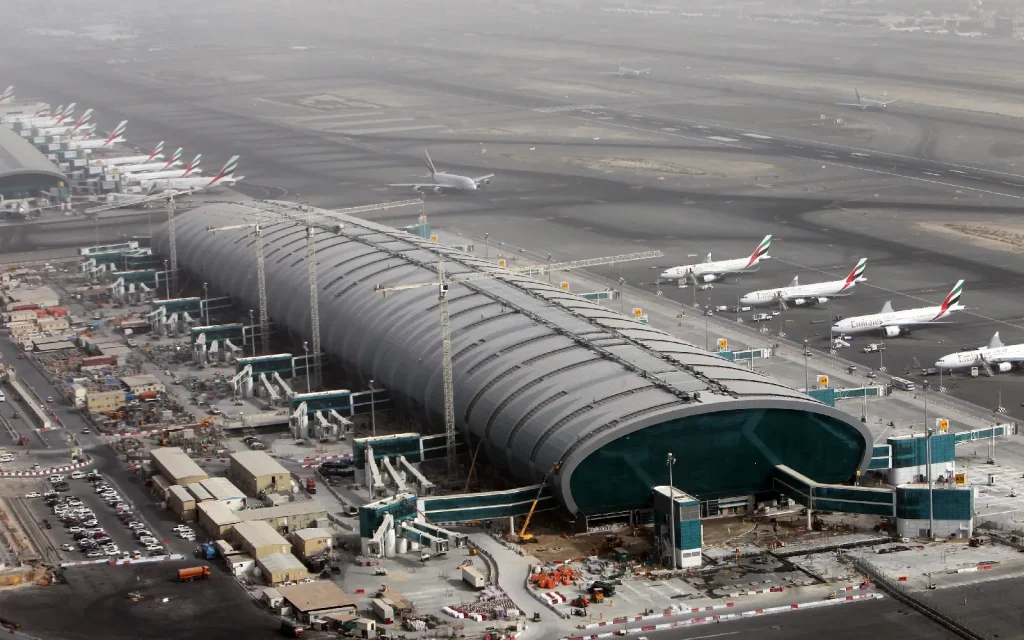
Malaysia’s Visit Malaysia 2026 (VM2026) campaign could face challenges due to escalating geopolitical tensions in the Middle East and shifting global sentiment, according to TA Research. The campaign, which targets 47 million international arrivals and RM329 billion in tourism receipts, may be affected by rising geopolitical risks, softer global demand, and inflationary pressures, particularly impacting long-haul and high-spending travellers. Since US-Israel strikes on Iran began on Feb 28, more than 37,000 flights to and from the Middle East have been cancelled. TA Research noted that although visitors from the Middle East make up only about 0.4% of total arrivals (around 162,000 tourists), disruptions in the region could have wider indirect effects. Key transit hubs in the Middle East are crucial for travellers from Europe and other long-haul markets, and any disruption or higher travel costs could reduce arrivals from these segments. “The potential shortfall of two to three million visitors is likely due to indirect spillover effects rather than the Middle East market alone,” the research house said. It highlighted that past geopolitical events have impacted tourism significantly. During the Iraq War in 2003, Malaysia’s tourist arrivals dropped to 10.5 million from 13.2 million the previous year, contributing to a 17.4% decline in tourism receipts, compounded by the SARS outbreak. Current developments are also affecting travel conditions, including flight cancellations, reduced seat capacity, longer travel routes, and rising airfares. Since late February, more than 37,000 flights to and from the Middle East have been cancelled, removing about 4.4 million seats and disrupting major transit hubs such as Dubai, Doha, and Abu Dhabi. Additionally, travel advisories issued for several Middle Eastern countries have further increased uncertainty, while the closure of the Strait of Hormuz has pushed up jet fuel prices, leading to higher ticket costs. Despite these challenges, TA Research said strong regional demand from **Asia—particularly Singapore, Thailand, Indonesia, China, and India—**along with domestic tourism, is expected to help cushion the impact on Malaysia’s tourism sector.

Scroll to Top

Subscribe
FREE Newsletter