Author name: admin

Investment & Market Trends

Hong Leong Flags Middle East Tensions Could Affect AWC

AWC Bhd may be affected by escalating tensions in the Middle East, Hong Leong Investment Bank warned, flagging potential downside risks to the company’s earnings forecasts. The conflict’s spillover to Saudi Arabia and the United Arab Emirates—where AWC has operations—could delay project execution, the research house said, increasing the company’s reliance on Malaysia and Singapore for revenue. “Given that Middle East projects generally carry higher margins, this shift is likely to keep group profitability relatively lower,” Hong Leong added. As a result, Hong Leong downgraded AWC’s stock from ‘buy’ to ‘hold’ and cut its target price by 21 sen to 56 sen, revising down earnings forecasts by 8%–16% for the financial years ending June 2026–2028. On Wednesday, the stock closed unchanged at 56 sen, after losing nearly 4% earlier in the week. AWC shares have declined almost 38% over the past 12 months, despite record-high jobs on hand, following multiple quarters of missed earnings estimates. The company currently has only one ‘buy’ call among four analysts, with the remaining three recommending ‘hold.’ The consensus target price is 60 sen, based on Bloomberg’s analyst average. “While AWC’s strong order book provides revenue visibility, the anticipated slowdown in the Middle East is likely to weigh on near-term profitability,” Hong Leong said. The research house also noted that ongoing geopolitical uncertainty in the region could reduce investor appetite for stocks with direct exposure to the Middle East.

Investment & Market Trends

Seni Jaya Gets Shareholder Approval For RM57.85M OOH Acquisitions

Shareholders of out-of-home (OOH) media company Seni Jaya Corp Bhd have given the green light for the company to proceed with its proposed acquisitions of Unilink Outdoor Sdn Bhd and Vision OOH Sdn Bhd, valued at a combined total of RM57.85 million. The approval was granted during Seni Jaya’s extraordinary general meeting (EGM), where shareholders reviewed and endorsed the strategic move aimed at expanding the company’s footprint in Malaysia’s OOH advertising sector. From left: Eng Cha Lun (BDO Capital Consultants, independent adviser), Tan Chee Ping (Berjaya Securities, principal adviser), Jason Thong Syn Chun (Seni Jaya, financial controller), Jeff Cheah See Heong (Seni Jaya, CEO), Julian Koh Lu Ern (Seni Jaya, independent non-executive director), Ong Kah Hoe (Seni Jaya, executive director), Datin Lee Nai Yee (Seni Jaya, non-independent non-executive director), Lee Chin Cheh (Seni Jaya, independent non-executive director), and Nicholas Tan (company secretary). Seni Jaya said the acquisitions align with its growth strategy to strengthen its presence in the outdoor advertising market and enhance its service offerings to clients across various industries. By integrating Unilink Outdoor and Vision OOH into its operations, the company expects to broaden its advertising network and improve its competitive positioning. The group did not disclose detailed plans regarding the integration of the acquired companies but emphasized that the move is expected to provide long-term value to shareholders and contribute positively to the company’s future revenue streams. With the approvals in place, Seni Jaya is now positioned to execute the acquisitions, which are expected to support the company’s objective of becoming a leading player in Malaysia’s OOH media landscape. The company also highlighted that the acquisitions will allow it to leverage synergies, optimize operational efficiencies, and tap into new growth opportunities in the outdoor advertising market.

Property

Gadang Completes RM75 Million Land Acquisition

Gadang Holdings Bhd has announced plans to acquire a parcel of freehold land measuring 11.179 acres in Johor Baru, Johor, from Tanahmas Kapital Sdn Bhd for RM75.48 million. The proposed acquisition, which will be executed under the company’s ongoing expansion strategy, is aimed at strengthening Gadang’s property development portfolio in one of Malaysia’s fastest-growing urban centres. According to the company, the land is strategically located in a prime area of Johor Baru, offering strong potential for residential, commercial, or mixed-use development projects. In a statement, Gadang Holdings said the acquisition aligns with its long-term growth objectives, enabling the group to capitalize on Johor’s rising property demand and the development opportunities created by the region’s proximity to key transportation hubs and economic zones. The company did not disclose the specific plans for development on the site but emphasized that the acquisition is part of its broader strategy to expand its land bank and enhance shareholder value. The RM75.48 million consideration reflects the strategic value of the land, which spans over 11 acres, and is expected to provide a platform for future property projects that can contribute to Gadang’s revenue and profitability over the medium to long term. The proposed acquisition is subject to the approval of Gadang Holdings’ board of directors, and the company will provide further updates as the transaction progresses.

Investment & Market Trends

Public Mutual Distributes RM1.9 Million Across Two Funds

Public Bank Bhd’s wholly-owned unit, Public Mutual Bhd, has announced distributions exceeding RM1.9 million for two of its funds for the financial year ended February 28, 2026. In a statement, the unit trust company said the payouts include 0.46 sen per unit for the Public Regular Savings Sequel Fund and 0.10 sen per unit for the PB ASEAN Dividend Sequel Fund. Public Mutual is Malaysia’s largest private unit trust company, managing more than 180 funds. It is also an approved Private Retirement Scheme (PRS) provider, offering nine PRS funds and operating 31 branches and customer service centres nationwide. The distributions reflect Public Mutual’s ongoing commitment to delivering returns to unit holders while maintaining a diverse portfolio of investment products across Malaysia.

The Executives

MRT Corp Chairman Saripuddin Resigns

Datuk Seri Saripuddin Kasim has officially stepped down from his position as chairman of Malaysia Rapid Transit Corp Sdn Bhd (MRT Corp), effective March 1, to focus on other personal and professional interests. In a statement issued yesterday, MRT Corp expressed its sincere appreciation to Saripuddin for his leadership, guidance, and contributions during his tenure as chairman. The company wished him well in his future endeavours, highlighting his role in steering the organisation through key milestones and strategic initiatives. Saripuddin was appointed as chairman of MRT Corp on November 19, 2025, and during his tenure, he played an instrumental role in overseeing the company’s operations, governance, and long-term development plans. His leadership was pivotal in strengthening MRT Corp’s position as a key player in Malaysia’s public transportation and urban rail infrastructure sector. MRT Corp’s board and management expressed confidence that the company will continue to advance its strategic objectives and maintain operational excellence under new leadership, ensuring the continued growth and development of Malaysia’s rapid transit system.

Investment & Market Trends

Da Nang Airport Expansion Plan Approved Until 2030

Vietnam’s Ministry of Construction has approved a master plan to develop Da Nang International Airport through 2030, with a long-term vision extending to 2050, the Vietnam News Agency reported on Tuesday (March 3). Located in the Hoa Cuong and An Khe wards of Da Nang City, the airport will continue to serve as a major aviation hub for central Vietnam while retaining its dual-use function for both civil and military operations. Under the plan, the airport’s annual capacity is expected to reach around 20 million passengers and 100,000 tonnes of cargo by 2030. Passenger volumes are projected to remain stable through 2050, while cargo capacity is set to increase to 330,000 tonnes per year. The development will retain the airport’s two runways, expand apron space to accommodate 52 aircraft parking positions, and add new taxiways to improve operational efficiency. Currently, Da Nang International Airport operates 24 direct air routes, including 16 international connections, with approximately 112 flights daily. The expansion plan is designed to support future growth in passenger traffic and cargo throughput while enhancing the airport’s operational capabilities.

Investment & Market Trends

Healthcare Giant Plans RM2.9 Billion IPO

Sunway Healthcare Holdings Bhd (SHH), the healthcare arm of Sunway Bhd, is confident that investors will see value in its initial public offering (IPO) despite concerns that its proposed pricing may be relatively high compared to industry peers. SHH launched its IPO prospectus last Friday, revealing plans to raise up to RM2.86 billion through the offering. The healthcare group is targeting a maximum IPO price of RM1.45 per share, which, if achieved, would give the company an estimated market capitalisation of RM16.68 billion, based on 11.5 billion shares. The company is scheduled to list on the Main Market of Bursa Malaysia on March 18. According to SHH, the IPO will support its growth initiatives and further strengthen its position in the Malaysian healthcare sector. Market analysts have noted that while the pricing may appear elevated relative to peers, the company’s track record, market position, and growth potential make the IPO an attractive opportunity for investors seeking exposure to the healthcare sector. Sunway Healthcare Holdings operates a broad network of hospitals, medical centres, and ancillary healthcare services, making it one of the largest private healthcare providers in Malaysia. The funds raised from the IPO are expected to support expansion plans, enhance infrastructure, and improve service offerings across its healthcare network. The IPO also marks a significant milestone for Sunway Bhd, reinforcing its commitment to strengthening its healthcare segment while providing retail and institutional investors an opportunity to participate in the company’s growth story.

The Executives

SD Guthrie Names Shahrizal Suhainy As New CFO

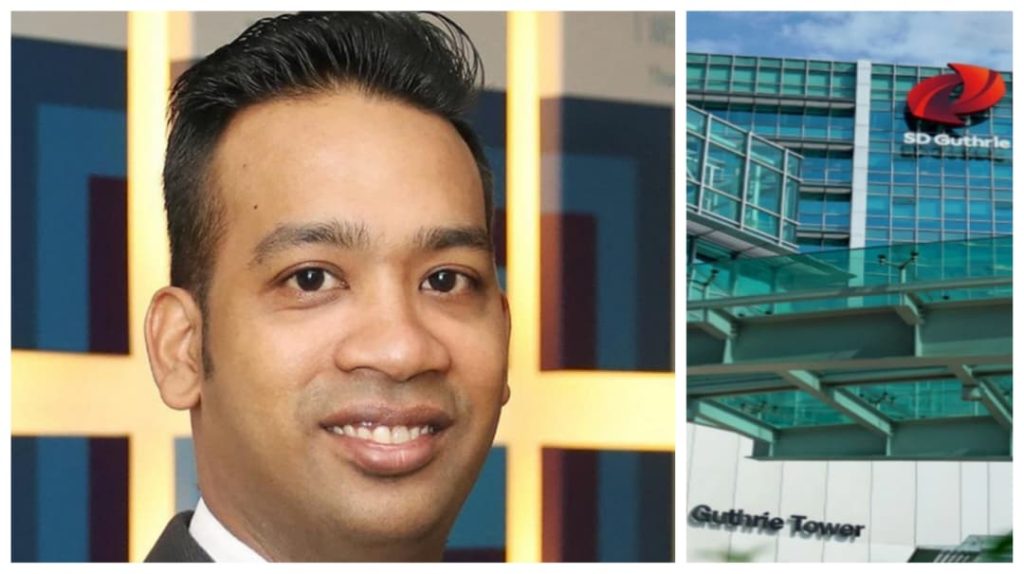
SD Guthrie Bhd has announced the appointment of Shahrizal Suhainy as its new chief financial officer (CFO), effective May 1, 2026. He will succeed Renaka Ramachandran, who will step down as CFO on April 30 following her appointment as SD Guthrie’s chief executive officer of land and renewable energy, effective January 1. In a filing with Bursa Malaysia, the company highlighted Shahrizal’s extensive experience and expertise in finance and corporate leadership. At present, Shahrizal, 41, serves as head of special projects under SD Guthrie’s group finance division, where he oversees strategic initiatives, including the transformation of the group’s procurement operating model. Shahrizal brings a wealth of industry experience to his new role. He previously held the positions of chief financial officer and regional chief executive officer for SD Guthrie’s upstream operations in Indonesia. He also served as CFO of TH Plantations Bhd, further demonstrating his track record in financial management and operational oversight within the plantation and agribusiness sectors. Before joining the plantation industry, Shahrizal spent 14 years with KPMG Malaysia, including a tenure as an audit partner, providing him with a strong foundation in financial reporting, audit, and corporate governance. Shahrizal holds a Bachelor of Accountancy (Hons) from Universiti Teknologi Mara and is a fellow chartered accountant of the Association of Chartered Certified Accountants. He is also a chartered accountant and a member of the Malaysian Institute of Accountants, reflecting his professional qualifications and commitment to high standards of financial practice. The transition in leadership comes at a strategic time for SD Guthrie, as the company continues to focus on strengthening its financial operations and expanding its land and renewable energy initiatives. Renaka’s shift to CEO of the land and renewable energy division allows the group to leverage her extensive experience while ensuring continuity and strong leadership in its finance function with Shahrizal’s appointment. The company expressed confidence that Shahrizal’s appointment as CFO will support SD Guthrie’s long-term growth objectives and enhance financial governance, operational efficiency, and strategic planning across the group’s diverse business segments.

The Executives

Shangri-La Malaysia Managing Director Phong Resigns

Shangri-La Hotels (Malaysia) Bhd announced that its managing director, Christopher Phong, will be stepping down from his role, effective May 31, 2026. In a filing with Bursa Malaysia, the company expressed its gratitude to Phong for his contributions during his tenure, noting the positive impact he has had on the group’s operations and development. “The board would like to record its sincere thanks and appreciation to Mr. Phong for his dedication and service to the group and wishes him every success in his future endeavours,” the statement read. The company added that it is actively working on a smooth and orderly leadership succession to ensure continuity in management and maintain operational stability across its hotel portfolio. Phong was appointed managing director of Shangri-La Malaysia on March 1, 2024. Prior to this role, he served as head of investment and asset management at Shangri-La Asia Ltd., where he was responsible for overseeing business operations and monitoring the financial performance of the group’s hotels in Malaysia. His experience and leadership in investment and asset management have been instrumental in supporting the growth and strategic direction of Shangri-La Malaysia. The company’s announcement highlights its commitment to strong governance and continuity in leadership, ensuring that the transition will be seamless and that operational excellence across its properties will be maintained. Phong’s tenure, though relatively brief, coincided with key initiatives and operational milestones for Shangri-La Malaysia, and his leadership has contributed to strengthening the company’s position in the competitive Malaysian hospitality sector.

News

Five Step-Ups For Boosting Board Performance Self-Awareness

When making investment decisions, investors tend to give primacy to who the CEO is and who may be the successor, not to who sits on the company’s Board of Directors (the “Board”). Typically, the CEO is perceived as more determinative for company success than the Board or any of its members. At the same time, who serves on the Board is far from inconsequential. First, in many jurisdictions the Board plays a final or at least a critical role in selecting and dismissing the CEO. Wrong decisions here could lead to a low-achieving or even value-destroying CEO being chosen or tolerated. Second, with the duty to provide oversight, the Board has to perform a daunting ongoing balancing act, often under shifting business conditions. It has to monitor the CEO closely enough to detect early any signs of underperformance or mismanagement. But it has to do this in a way that does not unduly curtail the CEO’s operational latitude or stifle entrepreneurial initiative. Third, in the task of looking after the company’s long-term interests, Board members enjoy a privileged vantagepoint. This derives not simply from their independence, experience, or healthy distance from the company’s daily ups-and-downs. It also relates to the often-longer office tenure of Board members compared to CEOs. Fourth, as the company’s highest organ, the Board has ultimate accountability for company strategy and performance. When a company fails – even when the failure may be more attributable to actions by executives – investors and regulators are prone to ask, “Where was the Board?” Paradoxically, when a company succeeds, few are those who applaud the Board’s contributions. Own-Work Cognition Given these formidable Board accountabilities, investors and other stakeholders have an interest not only in how a company chooses its Board members. They also care about how well these Board members deliver once in office. In light of this, it should also matter to stakeholders how self-aware a Board is of how good a job it is doing and how it evaluates its progress. Shortcomings in this regard could result in the Board recognizing too late a  particular weakness or misjudging the overall quality of its work. Yet this angle of corporate governance continues to be insufficiently explored. Post-mortems of company failures typically point to Board deficits such as inadequate oversight of management, misguided decisions, or poor Board composition.  But the analyses rarely probe deeply enough into the degree of self-cognition by the Board of the caliber of its work or the robustness of the methodology it employs to monitor and appraise its actions and accomplishments. For example, following the 2019 WeWork scandal commentators criticized the Board for having failed to challenge the CEO sufficiently on his financial assumptions, to recognize his conflicts of interest, and to bring members with more diverse experiences onto its ranks. But the analyses did not explore the extent of Board performance self-awareness  or the nature and quality of the Board assessment process. Might WeWork Board members have thought they were doing a good job? More rigorous approaches in this area can also aid a Board to deal timelier with internal differences. This can prevent disruptive outcomes such as in a real scenario playing out at the time of the writing of this article. In this case, a Board member of a major company carried out in effect a “noisy withdrawal”, accusing fellow Board members of ignoring serious problems at the enterprise. Some reports suggest that personal interests may also be involved. But once the dust settles, it will be revealing to see what the Board had been doing to identify and address any own-performance weakness areas. The Five Step-Ups The author’s work with Boards around the world suggests five essential “step-ups” when the Board is looking to elevate its performance self-awareness and earnestly answer the question, “How do we know how well we are doing?” 1. Make the Sporadic Regular Boards of regulated or quoted companies in many jurisdictions are required to conduct periodic own assessments. How often and in what depth can differ. Even where no such rule exists, a Board eager to enhance its own-work cognition recognizes the value of regular assessments. In some instances, carrying out the exercise every two years suffices,9 while in others a yearly process is de rigueur. Factors that support higher frequency include: A higher company risk profile Material new business challenges Changes in the company’s strategic direction Frictions in the Board-Management relationship Significant alteration in Board composition such as a new Board Chair or investor representative Evidence of unresolved Board internal tensions Evidence of any Board members not carrying their own weight Company or market changes requiring new skills or experience on the Board Need to increase Management or Board succession readiness One effective practice for bringing discipline to the self-assessment cycle is to define it in the Board’s operational rules, multi-year plan, or similar Board document. This has the advantage of securing a place for assessments on the Board’s calendar. To bring more value, the timing of assessments is aligned with other major Board activities. For example, if the tenure of one or more Board members is expiring, it is sensible to hold the assessment well in advance of such expiration. The findings can help inform what qualities and expertise to look for in the search for a new Board member. Another benefit of regularity in Board assessments is that it permits multi-year tracking of Board progress. In this regard, it is important for the Board to establish the means to preserve each year’s findings, learnings, and methodology employed. This will ensure that the company’s future Boards will also benefit from the insights. 2. Pivot to Active Performance Management Board assessments traditionally have been positioned as an assurance check that the Board is meeting its legal and other prescribed obligations. Some call this a hygiene or boundary condition test. But this approach detracts from the equally important question, “How much added value is the Board’s work generating?”.  Thus, a fundamental mindset shift is needed, from mere duty fulfillment to

Scroll to Top

Subscribe
FREE Newsletter