Author name: admin

Uncategorized

Sometime by Asian Designers Celebrates Asian Creativity

Some people are content with following the conventional career path, but not Stan Chooi. The co-founder of Sometime by Asian Designers felt something was missing in his life while working in the marketing and branding world. He wanted to create something bigger, something that had meaning. That ‘something’ turned into Sometime, a brand that has redefined designer bags in Asia.  Caption: Stand Chooi, Co-Founder and CEO at Sometime By Asian Designers  A Leap of Faith  Stan didn’t come from a fashion design background. In fact, he knew nothing about making bags. What he did know, however, was branding and business. Over a casual conversation with his friend, now business partner and wife, Nicole Wong, an idea began to take shape. What if they could create high-quality designer bags that were not limited to the elite? What if they could offer designer craftsmanship at a fraction of the traditional cost?  That idea turned into reality in 2012 when Sometime was born as an online-only business. With no physical stores and no middlemen, they could sell beautifully crafted designer bags at a price that was accessible to many, not just a select few.  Redefining Designer Bags  Stan was never interested in just another luxury brand. Instead, he wanted to prove that you don’t need a big logo or an inflated price tag to own a well-designed, high-quality bag. By handling their own production, Sometime cut out unnecessary markups, allowing them to focus purely on craftsmanship and affordability.  The result? A designer bag without the “luxury” markup, making it possible for fresh grads buying their first ‘grown-up’ bag or young professionals looking for a stylish yet practical accessory to indulge in high-end designs without guilt.  One of the things that makes Sometime so unique is its unwavering commitment to Asian designers. From day one, Stan and his team have sought out talented creatives to collaborate with, providing a platform where designers’ names are just as important as the brand itself.  They’ve worked with Malaysian icons like Sazzy Falak, Vivy Yusof, Rizalman, Alia Bastamam, and Kamwei Fong. They even partnered with internationally renowned designer Jason Wu, who has dressed celebrities like Jessica Alba, Meghan Markle, and Lady Gaga. Each collaboration is a testament to Sometime’s mission which is to celebrate and elevate Asian creativity on a global stage.    Proposed Images:      Source of Images: Sometimes by Asian Designers   Growing a Brand, Sustainably  In an era where fast fashion dominates, Sometime is doing its part to be kinder to the planet. While achieving full sustainability is tough, they are making conscious efforts to reduce their environmental impact. Their heavy-duty collection is made of 90% recycled plastic and grosgrain, and from the beginning, they made the choice to stay away from animal leather. Instead, they invested in high-quality synthetic leather with microfiber, also known as vegan leather.  Their commitment to sustainability doesn’t stop there. The brand also sources natural cotton canvas from organic fields, avoiding chemical processing. While it’s impossible to be perfect, Sometime is constantly looking for ways to be more eco-conscious without compromising on quality or style.  From Online-Only to a Thriving Business  What started as a small online business has grown into something much bigger. In 2019, Sometime opened its first physical showroom at The Gardens Mall, Kuala Lumpur. Today, they have six showrooms across major locations, including One Utama, IOI City Mall Putrajaya, KL East Mall, Setia City Mall, and IOI Mall Puchong. In 2024, they moved into their 60,000 sq. ft. headquarters, complete with a production facility and warehouse, marking a new chapter of growth.   Despite this success, Stan maintains a “first-day” attitude, constantly learning, evolving, and never becoming complacent.  Lessons from the Toughest Years  Every entrepreneur faces challenges, and for Stan, 2022–2023 tested him in ways he never imagined. With family members battling cancer, he had to split his time between personal responsibilities and running the business. For the first time, he had to step back and trust his top management team to make the big decisions. It was a difficult adjustment, but one that ultimately strengthened the company.  “I learned to let go,” Stan admits. “Now, the top management team plans and presents strategies, and I just need to give the green light. It’s a better way to run a business.”  By now, he estimates that 80% to 90% of operations run smoothly without his direct involvement. Over time, his team has developed strong strategies, and most of the solutions they propose are already complete and ready to be implemented, his role is simply to give the final approval. This shift has reinforced one of the biggest lessons in leadership: trust. Trusting employees to take responsibility and execute their roles well is what allows a business to grow beyond its founders.  His leadership philosophy is simple but powerful, trust your people. Empower them. And always, always invest in the next generation of leaders.    What’s next for Sometime?   International expansion. While the brand already has global visibility thanks to its online presence, the next step is making its mark in new markets, starting with Indonesia.  Looking back, would Stan do it all over again?  “Maybe,” he says with a smile. “If I knew then what I know now, I would have thought things through a lot more. It would have taken me longer to start. But at the end of the day, the sacrifices, the long nights, the lessons, they were all worth it.”  From a simple idea to a brand that champions Asian designers and makes luxury accessible, Sometime by Asian Designers is proof that success isn’t just about fast growth. Sometimes, the best journeys are built on steady, meaningful progress.     

News

Sabah’s first EV assembly plant to be built in Sandakan

KOTA KINABALU: Sabah is set to strengthen its position in the electric vehicle (EV) industry with the establishment of its first assembly plant at the Palm Oil Industrial Cluster (POIC) Sandakan. Maxland Auto Sdn Bhd, which secured its federal manufacturing licence from the Malaysian Investment Development Authority (Mida) last year, plans to invest RM100mil in the project by 2028. The project is expected to generate up to 500 jobs by its third phase, which includes a manufacturing plant. “This milestone aligns with the state government’s vision for industrial diversification and sustainable economic growth,” state Industrial Development and Entrepreneurship Minister Datuk Phoong Jin Zhe said during a recent site visit. His ministry and other agencies have pledged their support for this and other similar investments. “The government is committed to fostering industrial growth and ensuring Sabah becomes a key player in the green technology sector,” Phoong said, stressing the importance of clean energy transportation in driving economic progress. Accompanying the minister on the visit were ministry permanent secretary Datuk Thomas Logijin, Sandakan Municipal Council president Walter Joseph Kinson, Industrial Development and Research Department director Rodolfo Blantocas, Sabah Mida director Joseph Benjamin, and Invest Sabah Berhad deputy chairman George Wong. With this development, Sandakan is poised to emerge as a hub for EV innovation, reinforcing the state’s commitment to sustainable industrialisation and economic transformation.–THE STAR

News

Petronas to decommission Sabah-Sarawak Gas Pipeline

KOTA KINABALU: Petroliam Nasional Bhd (Petronas) has taken a pragmatic approach in deciding to shut down the Sabah-Sarawak Gas Pipeline (SSGP), according to Sabah Finance Minister Datuk Seri Masidi Manjun. Masidi explained that Petronas is reassessing its priorities due to persistent challenges affecting the 500-kilometre pipeline that connects Kimanis to Bintulu. “My understanding is that there are two key reasons for this decision. First, from the very beginning, the pipeline has been plagued by leakages, requiring costly repairs. “From a financial standpoint, it simply isn’t sustainable. Repairing a pipeline of this scale every time an issue arises costs hundreds of millions of ringgit, making it impractical for Petronas to continue,” he told reporters after attending the Sabah state-level Chinese New Year celebration at the Sabah International Convention Centre. Petronas recently announced in its 2025-2027 Activity Outlook that it will decommission the RM4.6 billion SSGP, which has been in operation since 2014. Masidi, who also serves as chairman of state-owned SMJ Energy Sdn Bhd (SMJE), noted that Petronas is now focusing on a new initiative—building the largest near-shore liquefied natural gas (LNG) facility in Sabah at the Sipitang Oil and Gas Industrial Park. “The Bintulu LNG facility is one of the largest in the world. That’s why, historically, all gas—including Sabah’s—was transported there. But this shift presents a significant opportunity for us. “In fact, keeping the gas in Sabah will benefit the state even more, as it can directly support local industries and spur economic development,” he said.

News, Property

Temasek-backed Cuscaden moves to privatise Paragon Reit at S$0.98 per unit

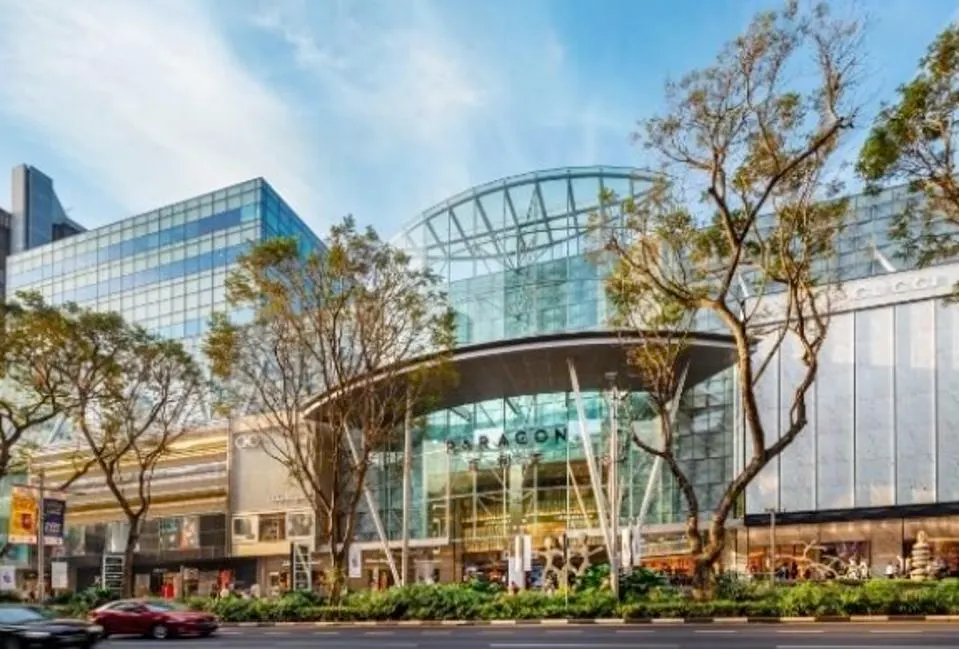
TIMES Properties, a wholly owned subsidiary of Cuscaden Peak Investments, is looking to take Paragon Real Estate Investment Trust : SK6U 0% (Reit) private by way of a trust scheme of arrangement, for S$0.98 per unit. The offeror is looking to acquire all units in Paragon Reit held by unitholders other than Cuscaden Peak and its subsidiaries. The offer values the Reit at S$2.8 billion. Cuscaden Peak Investments is wholly owned by Cuscaden Peak, which is in turn owned equally by Adenium, a wholly owned subsidiary of CLA Real Estate, and Mapletree Fortress, an indirect wholly owned subsidiary of Mapletree Investments. Both CLA and Mapletree are part of the Temasek stable. Ong Beng Seng’s Hotel Properties Limited : H15 0%, which was originally a part of the consortium, announced last month that it no longer holds any stake in Paragon Reit. In 2022, investment vehicle Cuscaden Peak acquired the then listed Singapore Press Holdings (SPH) Reit, which was mainly a property business after spinning off its media assets. SPH was then renamed Cuscaden Peak Investments. Cuscaden Peak acquired about a 61 per cent stake in SPH Reit as part of a chain offer following the privatisation of SPH. SPH Reit was renamed Paragon Reit with effect from Jan 3, 2023. As at the joint announcement date on Tuesday (Feb 11), Times Properties held directly and indirectly approximately 21.5 per cent of the issued units of Paragon Reit. The directors of Times Properties include Gerald Yong, who is also the chief executive and a director of Cuscaden Peak, as well as Chin Yean Cheng, chief financial officer of CapitaLand Development. The offer price represents a 10.1 per cent premium to the counter’s last transacted price of S$0.89 on Monday. It also represents a premium over the volume weighted adjusted price – of 10.9 per cent for one month, 11.6 per cent for three months and 12.8 per cent for 12 months. Long-term competitiveness Cuscaden Peak Investments and Paragon Reit said the scheme would allow unitholders “to realise their investment in cash at an attractive valuation with no trading costs”, and enable them “to immediately reinvest proceeds into other opportunities”. They noted that Paragon Reit has one of the lowest free floats among its retail Singapore Reit (S-Reit) peers, and has historically experienced low trading liquidity. Its total assets have grown 1.3 times since its initial public offering in 2013, compared to the average of 2.9 times for other retail S-Reits, they added. The offeror believes that Paragon Reit “faces trading conditions that will continue to constrain its potential for sustained growth and long-term value creation”. The Reit’s portfolio comprises three assets and it depends “heavily” on Paragon, which accounts for 72 per cent of the portfolio value. However, the mall’s premier status is being challenged, with increased competition from upcoming retail malls in the surrounding catchment as well as existing malls undergoing major upgrades. Rival malls include voco Orchard, Forum The Shopping Mall and Tanglin Shopping Centre. “In addition to these competitive pressures, a persistent slowdown in luxury spending post-pandemic, with international luxury spending at 74 per cent of its 2019 peak, has also weighed on Paragon’s performance,” the statement said. The Reit also owns Clementi Mall in Singapore, and in Australia, a 50 per cent freehold interest in Westfield Marion Shopping Centre. The offeror believes that a major asset enhancement initiative (AEI) is necessary for Paragon “to maintain its long-term competitiveness”. The mall, which opened in 1986, last went through a major AEI in 2009 at a cost of S$82 million. At the time, 42,000 square feet of space was added to the mall. However, the offeror pointed out that given the execution risks associated with a significant potential AEI, such as uncertainties around cost and timing, this would be “more suitably carried out in a private setting”. The proposed AEI would potentially take up to four years to complete, and may include upgrades to Paragon’s facade and interiors, reconfiguration of its spaces and improvements to connectivity, among others. The mall is likely to retain its position as an upscale one, said Yong of Cuscaden Peak during a media briefing on the offer on Tuesday. He estimates that the capital expenditure for Paragon’s AEI would range between S$300 million and S$600 million, or between 10 and 21 per cent of Paragon’s FY2024 appraised value. The estimation is based on the capital expenditure per square foot of precedent AEIs by other Reits and Paragon’s gross floor area. Based on these parameters, and had the AEI occurred in FY2024, Paragon Reit’s pro forma FY2024 adjusted distribution per unit (DPU) would have fallen to between S$0.0163 and S$0.0355. This represents a drop of between 21.4 and 64 per cent from the FY2024 adjusted DPU of S$0.0452. On whether unitholders should have the option to partake in the AEI, Yong reiterated that there are many uncertainties involved in the asset enhancement plans. These include the time frame of the AEI and market considerations, such as rental cycles. “Because of all these uncertainties, it is very difficult for the sponsor and offeror to give a very precise underwriting… We just don’t feel it’s suitable for the Reit unitholders to come along with us,” he said. He noted that the proposed scheme of arrangement would be submitted to the unitholders of Paragon Reit for voting, with the offeror and its concert party group abstaining from the vote. In the event that the scheme is not approved by unitholders, the offeror said it hopes to continue engaging with Paragon Reit to consider an appropriate plan, as it believes that an AEI “is critical for Paragon to remain competitive”. On whether this was the final offer, Andy Neo, the director for Asia-Pacific real estate investment banking at Citigroup Global Markets – the financial adviser to the offeror – declined to speculate. He noted that he hoped unitholders will be supportive of the offer put forth for consideration. Yong added, in response to another question, that while it was possible for Paragon Reit to return to the public market down the road, it was “premature”

News

Bursa Malaysia Fines WAJA RM200,000 for Violations

Bursa Malaysia Securities Berhad has taken enforcement action against Waja Konsortium Berhad (WAJA) and two of its directors for violating the ACE Market Listing Requirements (ACE LR). The company received a public reprimand, while Managing Director Peh Lian Hwa and Executive Director Peh Jia Yau were each fined RM100,000. Failure to Make Timely Disclosures WAJA breached Rule 8.04(3)(b) of the ACE LR, read alongside paragraph 4.1(a) of Guidance Note 3 (GN3), by failing to promptly issue a First Announcement after releasing its quarterly financial report for the period ending June 30, 2023 (QR 30/6/2023) on August 24, 2023. This report indicated financial distress under paragraphs 2.1(b) and 2.1(c) of GN3, requiring immediate public disclosure. However, WAJA delayed the announcement until October 10, 2023—1.5 months later—only making the disclosure after engagement by Bursa Malaysia Securities. Directors Held Accountable The two directors were found liable under Rule 16.13(b) of the ACE LR for allowing the breach, resulting in the following penalties: Director Position Penalty Peh Lian Hwa Managing Director Public Reprimand, RM100,000 Fine Peh Jia Yau Executive Director Public Reprimand, RM100,000 Fine Impact of the Breach Bursa Malaysia Securities emphasized the seriousness of the infraction, stating that timely disclosure of financial distress is crucial for shareholder and investor decision-making. Being classified under GN3 could lead to potential suspension or delisting if WAJA fails to regularize its financial position within the timeframe prescribed under Rule 8.04 of the ACE LR. Key financial red flags from WAJA’s report included: A loss of RM44.032 million for the 18-month period ending June 30, 2023, exceeding its shareholders’ equity of RM37.198 million, which was also less than 50% of its RM113.357 million share capital. Consecutive losses totaling RM68.59 million over two financial years, with the latest loss surpassing 50% of the previous year’s deficit. Bursa Malaysia Securities noted that WAJA failed to provide a reasonable justification for the delay in disclosure. Lapses in Leadership Oversight The Managing Director and Executive Director had a fundamental duty to ensure regulatory compliance, particularly concerning financial reporting and disclosures. Despite prior warnings from external auditors about WAJA’s financial distress, they neglected to act decisively, resulting in regulatory penalties. This enforcement action underscores the importance of corporate governance, transparency, and adherence to Bursa Malaysia’s listing requirements, serving as a stern warning to other listed companies and their leadership teams.

Experts

The Value of Education in a Waging War

By Prema Ponnudurai, Director, Education For All Impact Lab, Taylor’s University & Dr Joseph Malaluan Velard,  Deputy Director of the Education For All Impact Lab, Taylor’s University.

Property

Asia-Pacific Logistics Rents Stall at 0.2% in 2024

SINGAPORE: The Asia-Pacific logistics sector is navigating shifting tides as rental growth slowed sharply to just 0.2% in 2024, a steep decline from 7.0% in 2023, according to Knight Frank’s latest Asia-Pacific H2 2024 Logistics Highlights report. The slowdown underscores widening disparities across the region, with China grappling with oversupply while Southeast Asia emerges as a bright spot for growth. Diverging Market Trends: China vs. Southeast Asia While 14 out of 17 tracked cities posted stable or increasing rents, the overall pace of growth masked stark regional contrasts. Beijing and Shanghai saw rents plummet by 14% to 15% amid a surging supply pipeline set to exceed 4 million sqm in 2025. Vacancy rates in both cities are projected to reach nearly 30%, putting sustained pressure on rents. Conversely, Southeast Asia bucked the trend, with Greater Kuala Lumpur leading the region in half-yearly rental growth of 5%. The city benefited from an influx of high-quality industrial spaces and strong e-commerce demand. Melbourne also outperformed with a 6.7% rental increase, fueled by land scarcity in key submarkets. Geopolitics and Supply Chain Realignments in 2025 The logistics sector faces further headwinds as global trade dynamics shift. With the potential for increased tariffs under a second Trump administration, supply chains are expected to realign more aggressively within Asia-Pacific and beyond. “As the world braces for Trump 2.0, manufacturers are doubling down on China-plus strategies,” said Tim Armstrong, Global Head of Occupier Strategy & Solutions at Knight Frank. “Southeast Asia and India are emerging as prime alternatives for companies looking to diversify their manufacturing and logistics footprint.” The Road Ahead: Stability Amid Market Adjustments Despite ongoing fluctuations, the Asia-Pacific logistics sector is expected to find equilibrium in 2025, with leasing volumes keeping pace with new supply. Prime logistics spaces—particularly those in well-connected hubs—are projected to maintain steady demand. “A flight-to-quality trend will continue to shape the sector, with occupiers focusing on modern, well-located logistics facilities,” said Christine Li, Head of Research, Asia-Pacific at Knight Frank. “Beyond China, most markets will experience balanced demand-supply conditions, supporting moderate rent growth of up to 2%.” Key Market Trends for 2025 Market dynamics shifting from landlord-favorable to neutral conditions Leasing volumes expected to match new supply, stabilizing vacancy rates Strategically located logistics hubs to benefit from geopolitical shifts As Asia-Pacific’s logistics landscape continues to evolve, well-connected industrial hubs with proximity to major trade routes will be best positioned to weather uncertainty and sustain long-term demand.

News

Alibaba becomes China’s new AI darling with US$87 billion rally

The frenzy over Chinese artificial intelligence is turning Alibaba Group Holding into an investor favourite again, injecting new life into an e-commerce giant that had nearly sunk into obscurity following a years-long regulatory crackdown. Alibaba’s Hong Kong-listed shares have surged 46 per cent since hitting a 2025 low on Jan 13, expanding its market value by nearly US$87 billion and exceeding the Hang Seng Tech Index’s 25 per cent gain in the same period. That makes the stock by far the best performer in China’s Big Tech universe in the new year, outshining rivals Tencent Holdings, Baidu and JD.com. It marks a surprise reversal of fortunes for Alibaba, which had fallen out of favour among investors after its business suffered from Beijing’s clampdown on the country’s tech behemoths and a post-Covid consumption slump. Behind the rally is optimism about Alibaba’s efforts to develop its own AI services and platform, which gained traction after Chinese AI startup DeepSeek unveiled technologies that caused a rout on Wall Street. Alibaba’s shares got another shot in the arm on Wednesday (Feb 12), after the Information reported that Apple is working with the e-commerce pioneer to roll out AI features in China. “The emergence of DeepSeek has sparked a new AI-related catalyst for Chinese tech stocks,” said Andy Wong, investment and ESG director for Asia-Pacific at Solomons Group. “Within this space, we see Alibaba as having more tangible and well-established earnings growth prospects in the medium term.” Alibaba’s 2025 bounceback is the culmination of a year-long turnaround spearheaded by two of Jack Ma’s oldest lieutenants: Joe Tsai and Eddie Wu. The chairman and CEO, part of the original founding team that created Taobao in Ma’s lakeside apartment, took the helm in 2023 right after years of Beijing-led regulatory investigations and a post-Covid downturn gutted its cloud and consumer businesses. They took the company back to basics, initially focusing on consolidating and streamlining the fragmented core commerce business. They also decided to go big in AI. Since the advent of ChatGPT, Alibaba has invested in a clutch of China’s most promising startups, including Moonshot and Zhipu. And it prioritised the expansion of the cloud business that underpins AI development, slashing prices to win back the customers that fled to rivals during the turbulent years. It also decided to spend on AI, joining a race led by Baidu at the time. In January, that effort yielded initial fruit. Alibaba published benchmark scores showing its Qwen 2.5 Max edition scored better than Meta Platforms’ Llama and DeepSeek’s V3 model in various tests. The company is now considered a leading player in AI alongside big names from Tencent to ByteDance and startups including Minimax and Zhipu. But it’s still early days. A key hurdle facing Chinese AI firms has been the slower adoption and lack of willingness to pay for services among domestic consumers and businesses. “Many hedge funds and long-only investors see AI as a potential inflection point for Alibaba, with some expressing interest in understanding the valuation of Alibaba’s cloud business and any upside from large language models,” JPMorgan Chase analysts including Alex Yao wrote in a note. “The AI narrative is seen as a driver for potential re-rating, but there are concerns about the monetisation of AI capabilities.” In addition, cloud business growth for Chinese hyperscalers has lagged that of major US peers so far. Analysts estimate cloud revenues for the December quarter rose 9.7 per cent from a year ago at Alibaba and 7.7 per cent at Baidu, compared with 19 per cent at Amazon.com and 31 per cent at Microsoft. Alibaba’s financial results scheduled on next Thursday are expected to offer investors a fresh opportunity to learn about the company’s progress on its AI models and outlook for its cloud services. Despite the lingering question marks, Alibaba’s valuations remain attractive to some investors even after the latest rally. Its shares are trading at 12.2 times forward earnings, below its five-year average of 14.6 times. “Despite the rally, Alibaba’s stock is still undervalued compared to its US tech peers, considering its growth potential and market position,” said Manish Bhargava, chief executive officer at Straits Investment Management in Singapore. “The company is expanding its overseas marketplaces, which could reduce its reliance on the domestic Chinese market and drive future growth.” BLOOMBERG

News

KWAP achieves record-high investment income of RM18bil for 2024

KUALA LUMPUR:  Retirement Fund Inc (KWAP) recorded its highest-ever investment income of RM18 billion, for 2024, with an overall return of 12%. The fund said domestic investments generated returns of 12.9%, while the international portfolio delivered returns of 9%. “These results stem from public equity, which generated a total return of 21.9%, with domestic equity attaining 23.2% and international equity achieving 16.9%,” it said in a statement. KWAP’s fund size grew by RM15.8 billion to RM185.6 billion in its unaudited results for the financial year ended Dec 31, 2024, reflecting a 9.3% increase from RM169.8 billion in 2023. Prior to accounting for RM5 billion in withdrawals to partially finance the government’s pension obligations, the gross year-on-year increase of RM20.8 billion underscores the continued success of KWAP’s disciplined investment strategy and its focus on sustainable long-term growth. Since its establishment in 2007, KWAP’s fund size has quadrupled, with an average growth of 9.1% per annum. The fund’s asset allocation strategy remains diversified and resilient, with 74.6% of its portfolio invested domestically and 25.4% internationally. As of Dec 31 last year, the portfolio was allocated as 51.7% equity, fixed income (32.4%), private equity (5.4%), real estate (5.2%), and infrastructure, with a balance in cash management for liquidity purposes (2.2%). “This strategy has enabled the fund to optimise its investment returns amid varying market conditions,” it said. In terms of retirement services, KWAP served more than 810,000 pension recipients throughout Malaysia as of Dec 31, 2024, reflecting a 2.4% increase, or more than 19,000 additional pension recipients compared with 2023. KWAP maintained a 99.8% service level agreement performance score, well above the 95% threshold. Its chairman, Johan Mahmood Merican, said these results underscore the fund’s ongoing efforts to ensure the long-term financial sustainability of the pension ecosystem. “We are confident that our continued focus on strategic investments and sustainability will further strengthen KWAP’s contributions to Malaysia’s pension ecosystem for generations to come,” he said.–FMT

ESG, News

CIMB Pledges RM3.6 Million to Empower 9,000 PPR Residents

KUALA LUMPUR: CIMB Group has reaffirmed its commitment to community empowerment with a RM3.6 million pledge over two years, aimed at improving the livelihoods of 9,000 residents across several People’s Housing Projects (PPR) in the Klang Valley. Through a comprehensive approach, the initiative focuses on education, skills training, and sustainable economic opportunities to create lasting social impact. Under CIMB Foundation, the initiative seeks to enhance literacy, numeracy, and graduation rates among students from B40 families by providing free tuition. By removing financial barriers to education, CIMB is ensuring that more children have the opportunity to excel academically and secure brighter futures. To drive economic empowerment, CIMB Islamic has introduced various programmes to nurture entrepreneurship and self-sufficiency. Program Keusahawanan 7.0, iTEKAD Rider Entrepreneur, MicroBizReady, and Sewing Skills Upskill Training equip aspiring business owners with the knowledge, tools, and financial resources needed to establish and grow their ventures, particularly in the gig economy and micro-business sectors. Recognising the immediate needs of vulnerable communities, CIMB is also providing essential aid through the Food Basket Programme, ensuring low-income households have access to nutritious meals. Furthermore, the Back to School programme supports students by supplying school essentials and uniforms, easing financial burdens on families as they prepare for the academic year.   As part of its mission to inspire and motivate, CIMB also organised KITA BAGI JADI, a motivational sharing session featuring Malaysia’s cycling legend, Dato’ Azizulhasni Awang, aimed at instilling resilience and ambition among young Malaysians. By addressing both immediate needs and long-term development, CIMB continues to drive meaningful change, reinforcing its role as a catalyst for social progress and economic resilience within underserved communities.

Scroll to Top

Subscribe
FREE Newsletter