
Uncategorized
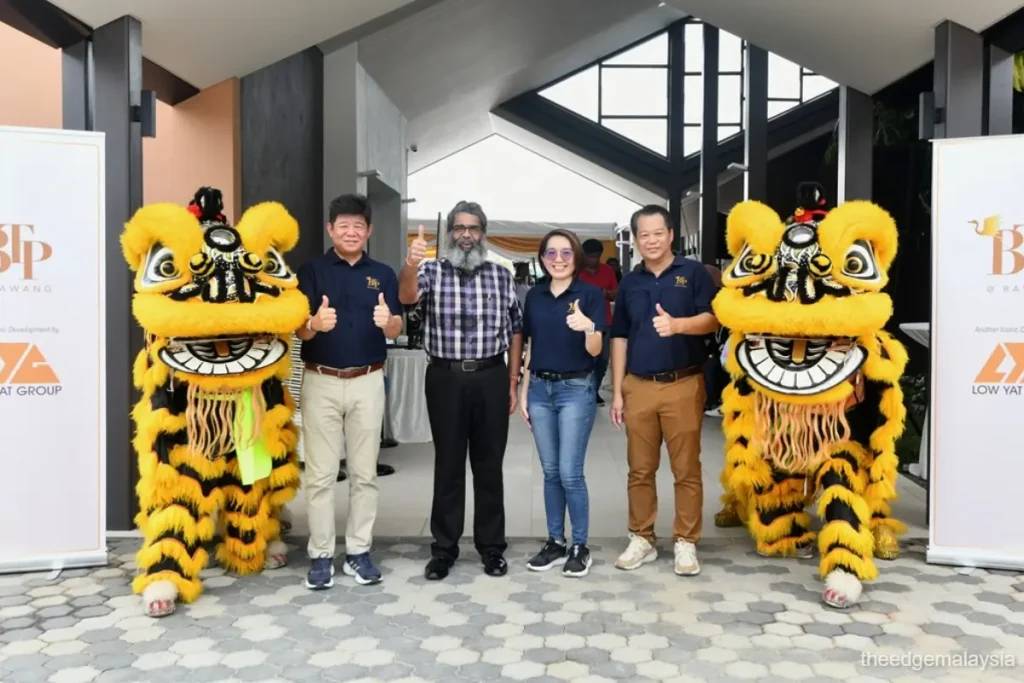
Low Yat Group Launches RM212m Armanee homes in Rawang
Low Yat Group has officially launched its latest residential development, Armanee, within the 2,670-acre Bandar Puteri Tasik township in Rawang. The leasehold, gated, and guarded project has a gross development value (GDV) of RM212 million and will feature 258 double-storey terraced homes. Unit sizes range from 1,810 to 2,254 sq ft, with land sizes between 18ft x 75ft (intermediate units) and 20ft x 75ft (corner units). Each home will include four bedrooms and four bathrooms, with prices starting at RM690,000. Maintenance fees are estimated at 16 sen per sq ft per month. (From left): Rawang Lakes Sdn Bhd area property (development and management) general manager Andrew Goh; alongside Low Yat Group director of operations, business development and special projects Vivekananda, deputy general manager for property development Chia Gah Mei, and executive manager, area architectural and project management Chong Kiat Moon, at the Armanee launch event on Sunday. At the launch, 140 units (Phase 1) are available for booking, with completion expected in 36 months, while the remaining units will be released later. “Our goal with Armanee is to provide families with affordable homes that offer lasting value in a township designed for sustainable growth,” said Andrew Goh, General Manager of Rawang Lakes Sdn Bhd, a Low Yat Group subsidiary. “We aim to create spaces that encourage families to build roots and enjoy a balanced lifestyle in a connected community.” Armanee follows the success of Low Yat Group’s Amaya project, which saw all 387 units fully sold. Together, Amaya and Armanee represent a combined RM470 million in GDV, forming a thriving gated residential enclave. Residents will have access to an exclusive clubhouse with a swimming pool, barbecue area, outdoor fitness equipment, pickleball and basketball courts, alongside the township’s landscaped parks, playgrounds, and jogging trails.
Uncategorized
Pos Fulfill: Reinventing Fulfilment For Malaysia’s E-Commerce Future
In a landscape where speed, flexibility, and customer experience are paramount, Pos Malaysia has boldly redefined its legacy with the launch of Pos Fulfill—a fully integrated e-commerce logistics and fulfilment solution tailored for the modern age. From legacy postal operator to future-ready logistics partner, Pos Malaysia is scripting a powerful new chapter, and at its heart is Pos Fulfill. Rohit Gunavanthe, Head of Fulfilment, Pos Malaysia Launched in 2022 as part of Pos Malaysia’s strategic transformation plan, Pos Fulfill offers end-to-end supply chain solutions spanning warehousing, order processing, real-time inventory management, pick-and-pack, returns, and seamless last-mile delivery. Built on Pos Malaysia’s unmatched nationwide network and backed by its last-mile giant, Pos Laju, Pos Fulfill is a logistics solution created for scale and service certainty. “What makes Pos Fulfill unique is how we bring together all the pieces—from storage to delivery—under one integrated platform. It’s fulfilment, powered by reliability,” says Rohit Gunavanthe, Head of Fulfilment at Pos Malaysia. A Backbone for Businesses of All Sizes Pos Fulfill currently serves 25 clients across seven major industries, including FMCG, healthcare, cosmetics, automotive, electronics, and retail. Their offering spans both B2B and B2C segments, giving brands—whether a global corporation or a growing Malaysian SME—the tools to deliver better, faster, and smarter. With eight strategic fulfilment centres and over 170,000 square feet of warehouse space, Pos Fulfill empowers businesses to position inventory closer to their customers, significantly reducing lead times and shipping costs. This capability is particularly vital for businesses with a nationwide customer base across Peninsular and East Malaysia. “We recognised early on that the future of e-commerce in Malaysia hinges on regional accessibility. By activating fulfilment hubs in Kuching and Kota Kinabalu, we’ve removed bottlenecks and helped businesses reduce fulfilment times and costs dramatically,” adds Rohit. Tech-Driven, Customer-Focused At the heart of Pos Fulfill’s operations is a robust Warehouse Management System (WMS), integrated not only with major marketplaces but also with customer ERP systems. This allows the seamless flow of orders, automatic airway bill generation, and real-time visibility—key in maintaining service consistency, even during peak periods. The results speak for themselves: fulfilment speed, accuracy, and customer satisfaction have seen measurable improvements, with Pos Fulfill’s tender invitations growing fourfold in 2025 compared to 2023. Built with Sustainability at Its Core True to Pos Malaysia’s broader ESG ambitions, Pos Fulfill’s operations are guided by the Sustainability Roadmap 2023, with a commitment to net-zero emissions by 2050. Their facilities incorporate solar energy, LED lighting, lithium-ion handling equipment, and the reuse of recycled packaging materials. These initiatives have already cut parcel-related emissions by nearly 17%. Enabling SME Growth Pos Fulfill is especially focused on democratising access to fulfilment services for Malaysian SMEs. By offering high-quality infrastructure typically reserved for larger players, SMEs can now tap into the same logistical muscle, strategically placing their inventory across the country. Pos Fulfill also acts as a growth enabler, helping SMEs expand into new markets and elevate their delivery experience. Navigating Challenges, Building Trust Despite its success, the early days of Pos Fulfill weren’t without challenges. From establishing brand awareness to choosing the right backend systems, the team faced an uphill climb. But by leveraging the trusted Pos Malaysia brand and assembling a team with deep industry experience, they successfully overcame the learning curve. The Road Ahead Looking to the next three to five years, Pos Fulfill has a clear vision: to be Malaysia’s leading fulfilment partner. With plans to expand in East Malaysia and the northern and southern Peninsular regions, the brand is also eyeing regional collaborations, particularly with other postal operators in Southeast Asia. With a focus on tech investment, client growth, and sustainable operations, Pos Fulfill is not just reshaping how orders are packed and shipped—it’s redefining what fulfilment means for Malaysian businesses in a digitally connected economy. Takeaways for Business Leaders: Certainty of Service – Fulfilment that scales with confidence, whether for everyday orders or seasonal spikes. Brand Trust – Powered by Pos Malaysia’s legacy, Pos Fulfill brings credibility, capability, and continuity to the logistics space. As Malaysia’s digital economy continues its upward surge, Pos Fulfill is proving that with the right strategy, infrastructure, and ambition, even a legacy brand can lead the charge into the future of fulfilment.

Meta Collaborates with Singapore Banks to Launch Anti-Scam Intelligence Platform
Meta is set to roll out a shared intelligence platform with local banks in Singapore, marking a significant step forward in the company’s efforts to disrupt scam syndicates operating across digital platforms. This strategic initiative follows Meta’s ongoing efforts to forge deeper partnerships with Singapore’s law enforcement agencies, aiming to collectively dismantle organised scam operations that have caused considerable financial harm to victims. The intelligence platform, known as the Fraud Intelligence Reciprocal Exchange (Fire), was first introduced in the United Kingdom and Australia in 2024. Fire enables banks to share scam-related threat intelligence directly with Meta, the parent company of Facebook, Instagram and WhatsApp. In return, Meta can use this data to improve the detection and removal of fraudulent accounts and activity across its platforms. Clara Koh, Meta’s Head of Public Policy for Singapore and ASEAN, confirmed during a media briefing on 12 June that the company is preparing to expand the programme globally. The rollout will be facilitated through the Financial Services Information Sharing and Analysis Centre, a consortium that promotes cross-sector intelligence collaboration. Currently, scam victims on Meta’s platforms report incidents directly to the company. The implementation of Fire changes this dynamic, allowing financial institutions to provide Meta with intelligence on fraudulent actors and victims. This reciprocal exchange enhances Meta’s ability to proactively identify and dismantle scam operations through improved data analysis and AI-driven detection. Koh stated that several local banks in Singapore are already in discussions to join the programme, with further details expected in due course. She emphasised the platform’s value in enhancing Meta’s AI capabilities by leveraging behavioural signals and scam patterns to pre-empt fraudulent activity. A six-month pilot of Fire in the United Kingdom, in partnership with NatWest and Metro Bank, resulted in the takedown of approximately 20,000 scam accounts across 185 fraudulent web domains. The announcement was made during an anti-scam awareness event hosted by Meta at its Marina One office, where Koh participated in a panel alongside Superintendent Rosie Ann McIntyre from the Singapore Police Force’s Scam Public Education Office and Nicholas Khoo of the National Crime Prevention Council. The event also featured a collaboration with local content platform Eyeyah!, bringing together creators, police representatives and Meta to explore strategies for educating the public about online scams. A fireside chat discussed the role of digital content in promoting scam awareness and highlighted key red flags consumers should be alert to. Superintendent McIntyre advised the public to take a cautious approach when dealing with unsolicited communications, stressing the importance of not rushing to click links or transfer funds. She reiterated that hesitating and evaluating the legitimacy of a message can often prevent financial loss. Singapore saw a record loss of $1.1 billion to scams in 2024, with over $3.4 billion lost since 2019. E-commerce scams were the most prevalent scam type last year, with 11,665 reported cases resulting in losses of at least $17.5 million. Job scams and phishing scams were also major concerns, with losses totalling $156.2 million and $59.4 million respectively. Koh noted that while certain scams—such as those linked to major events or ticket sales—can be anticipated and pre-emptively addressed, others evolve too rapidly to predict. She cited evergreen scams, such as romance fraud and impersonation scams, as particularly challenging due to their ability to morph quickly in response to enforcement measures. Meta’s commitment, Koh said, extends beyond the digital sphere. She highlighted the human trafficking elements associated with scam compounds run by organised crime syndicates, adding that Meta aims to support real-world enforcement efforts. “As a platform, we want to do our best to tackle the issue as it manifests, but equally, we also want to take real-world action on the criminal syndicates that are operating these compounds,” Koh said. She stressed that a coordinated, cross-sector approach is essential to effectively counteract the ongoing threat of scams, noting that only by working collectively can meaningful progress be achieved in curbing these crimes. -The Strait Times
Uncategorized
Strong Early Commitments Set Momentum for DSA and NATSEC Asia 2026 at LIMA
LANGKAWI: With nearly a year to go before its return, the Defence Services Asia Exhibition and Conference (DSA 2026) and National Security Asia (NATSEC Asia 2026) have already garnered strong early backing from industry leaders, setting the tone for what organisers anticipate to be the most impactful edition yet. At a contract exchange ceremony held on the sidelines of the 17th Langkawi International Maritime and Aerospace Exhibition (LIMA 2025), nine companies formalised their participation in DSA and NATSEC Asia 2026. The event was witnessed by Malaysia’s Minister of Defence, YB Dato’ Seri Mohamed Khaled Nordin; Secretary General of the Ministry of Defence, YBhg. Datuk Lokman Hakim bin Ali; Chief of Defence Force, YBhg. General Datuk Mohd Nizam Jaffar; Chief of Army, YBhg. General Tan Sri Dato’ Wira Muhammad Hafizuddeain bin Jantan, among other dignitaries. “This milestone sets the stage for what is shaping up to be the most ambitious edition of DSA and NATSEC Asia to date,” said Nadzeem Abdul Rahman, Executive Director of DSA Exhibition and Conference Sdn Bhd. “These early signings reflect the stature of our events on the international stage, and the trust that key players place in our platform to deliver meaningful engagement and tangible outcomes.” He added that in the face of rapidly evolving threats and technological disruption—especially in AI and advanced computing—defence and security stakeholders are increasingly seeking platforms that deliver relevance, credibility, and actionable insights. Among the early confirmed exhibitors are Ada Vinci Global Sdn. Bhd. (AVG), Advance Defence Systems Sdn. Bhd., Cendana Auto Sdn. Bhd., IDC Technologies Sdn. Bhd., Mega Arms Sdn. Bhd., Nizra Group, Rohde & Schwarz, Weststar Defence Industries Sdn. Bhd., and VR Universal Sdn. Bhd. Welcoming the strong start, Defence Minister YB Dato’ Seri Mohamed Khaled Nordin said: “For over three decades, DSA has remained a cornerstone of the global defence calendar. NATSEC Asia, though newer, has rapidly grown in reach and relevance. Their continued success underscores Malaysia’s role as a trusted regional hub for defence and security collaboration.” He commended the participating companies for their early commitment, noting that their involvement is a vote of confidence in Malaysia’s strategic position and the event’s growing global influence. DSA and NATSEC Asia are held biennially with the support of Malaysia’s Ministry of Defence and Ministry of Home Affairs. The 2024 edition recorded unprecedented participation—1,324 companies from 60 countries and 588 foreign VVIP delegations from 45 nations. The 2026 edition, scheduled for 20–23 April at the Malaysia International Trade and Exhibition Centre (MITEC) in Kuala Lumpur, will carry the theme “Enhancing Capabilities and Resilience Through Technology.” A key highlight will be the return of the CBRNE Arena—a purpose-built, fully integrated exhibition and networking space dedicated to the Chemical, Biological, Radiological, Nuclear, and Explosives (CBRNe) sector. Officially launched today by the Chief of Army, the segment will showcase live demonstrations, cutting-edge exhibits, and panel discussions aimed at strengthening global crisis preparedness and response. Organisers are encouraging companies interested in connecting with decision-makers, unveiling innovations, and shaping the future of defence and national security to confirm their participation early. For more information, visit www.dsaexhibition.com.
Uncategorized
In an increasingly digital and cost-conscious environment, the alliance between Chief Financial Officers (CFOs) and Chief Information Officers (CIOs) is no longer a luxury—it is a strategic imperative. According to Han-Tiong Law, Regional CTO for ASEAN and Greater China at Rimini Street, this growing synergy is shaping the future of enterprise investment strategies, driving smarter IT decisions and enhancing long-term business resilience. The Rise of the CFO–CIO Partnership The digital economy demands that technology not only supports operations but propels growth. In this landscape, CFOs and CIOs are aligning more closely than ever before. A Rimini Street 2024 global survey revealed that 86% of CFOs and CIOs say their relationship has strengthened, with CFOs playing a more influential role in IT decision-making. This mirrors findings from Deloitte’s 2023 Global CIO Survey, which highlighted that increased collaboration between CIOs and other C-suite executives is among the top three enablers of digital transformation (Deloitte, 2023). Han-Tiong attributes this trend to increasing scrutiny on IT spend, the rising complexity of digital ecosystems, and the growing need to demonstrate measurable returns. “By working together,” he explains, “CFOs and CIOs can ensure that technology initiatives not only meet budgetary targets but also deliver outcomes that drive enterprise value.” Case Studies: Where Finance Meets IT Innovation Han-Tiong points to clients like Malaysia’s Sunway Group, which shifted to Rimini Street’s third-party support model and reallocated savings from software maintenance into AI development initiatives. According to the Rimini Street survey, 49% of CFOs reported that closer partnerships with CIOs led to improved business results. These findings reflect a broader shift in enterprise strategy. A Gartner report noted that CIOs are increasingly expected to act as business leaders, not just technology stewards, and to drive cost optimisation and revenue growth simultaneously (Gartner, 2023). What’s Driving CFOs to Take the Lead on IT? Rimini Street’s survey also found that 66% of CFOs feel directly responsible for setting their organisation’s technology investment budgets. This marks a notable shift in internal dynamics. A McKinsey & Company report from 2023 observed that CFOs are becoming central figures in technology decision-making by leveraging real-time analytics and performance measurement tools (McKinsey, 2023). “CFOs are increasingly using financial data to track ROI and ensure IT projects contribute directly to strategic business goals,” says Han-Tiong. This includes cost predictability, scalability, and alignment with long-term transformation agendas. Rimini Street’s Value Proposition: Innovation Through Efficiency Rimini Street offers third-party enterprise software support for platforms such as Oracle, SAP, VMware, and Workday. The model enables clients to reduce software maintenance costs by up to 90%, according to internal customer data, and avoid vendor lock-in or forced upgrades. This in turn frees up capital for innovation. But Rimini Street’s model goes beyond basic cost reduction. “Our support includes custom code support, performance tuning, root cause analysis, and proactive security guidance,” Han-Tiong explains. This holistic model aligns with trends noted in Forrester’s 2024 IT Spending Outlook, which highlighted a sharp increase in companies moving away from traditional vendor support to regain control over IT budgets (Forrester, 2024). Unlocking the Value of AI and Data Artificial intelligence and real-time analytics are now central to digital competitiveness. Yet many companies aren’t ready for large-scale AI deployment. Rimini Street’s survey shows that 94% of CIOs believe their data still requires significant cleanup and restructuring before it can support AI effectively. This aligns with findings from PwC’s 2024 AI Business Survey, which revealed that while 73% of executives plan to implement AI at scale, only 27% feel their data infrastructure is AI-ready (PwC, 2024). Han-Tiong advises companies to prioritise data orchestration and focus on use cases that yield measurable outcomes, such as process automation, enhanced customer service, and smarter decision-making. “Without a strong data foundation, AI initiatives are likely to stall or underperform,” he cautions. Managing the Complexities of Application Outsourcing Application outsourcing remains a challenging proposition, especially for companies with deeply customised ERP environments. “A common concern is the risk of knowledge loss and disruptions during transition,” Han-Tiong explains. Rimini Street addresses this by offering dedicated support engineers and a proactive service model focused on long-term system health. Their approach includes patented monitoring and alerting tools designed to reduce downtime and eliminate unnecessary upgrades—capabilities cited in IDC’s 2023 research on third-party support as key to improving IT resilience (IDC, 2023). Transitioning to Third-Party Support: What to Consider For organisations considering alternatives to traditional vendor support, Han-Tiong recommends evaluating three main criteria: Proven Expertise: Select a provider with extensive experience in your ERP ecosystem. Cost Transparency: Fixed, predictable pricing models help manage long-term budgets. Innovation Alignment: Ensure the provider can support strategic objectives, not just legacy maintenance. As digital transformation accelerates across Asia, companies are recognising the need for greater flexibility and smarter spending. Rimini Street’s model offers a path toward both, enabling CIOs and CFOs to invest in tomorrow while managing the realities of today. Final Thoughts: Collaboration is the New Currency Han-Tiong Law believes that in today’s enterprise environment, collaboration—not just technology—is the real differentiator. “With tighter budgets and increasing complexity, every dollar and decision counts. That’s why CFO–CIO collaboration isn’t just important—it’s essential.” The message is clear: by breaking down silos and jointly leading the technology agenda, CFOs and CIOs can drive better ROI, reduce risk, and prepare the enterprise for a digital-first future.
Uncategorized
ESGAM and RHB Equip SMEs for the ESG Revolution
KUALA LUMPUR: The ESG Association of Malaysia (ESGAM), in collaboration with RHB Bank, hosted the SustainAbility Connect: Financing the Future of SMEs event at the Tropicana Golf & Country Club. The event highlighted the growing importance of Environmental, Social, and Governance (ESG) practices for Malaysian SMEs and how they can leverage sustainable financing to drive growth, innovation, and global competitiveness. Prof Cheah Kok Hoong, in his opening remarks, stressed the urgency of ESG adoption, urging businesses to move from discussions to concrete actions. “While many are talking about ESG, the real challenge is in taking steps to integrate it into business models,” he said. “The opportunity is here, but businesses must make the commitment now to incorporate sustainability into their operations.” The event also featured Damian Santosh Samson, Deputy Director at MATRADE, who discussed how Malaysia’s export landscape is evolving, particularly in sectors like electronics, where sustainability is becoming a key market driver. “Sustainability is now a driving force in international markets, especially in the electrical and electronics sectors. Almost 40% of Malaysia’s exports in this space are linked to sustainable electronics,” he explained. He also spoke about MATRADE’s role in facilitating market access for SMEs, particularly in Europe, where demand for sustainable products is on the rise. Kelvin Chen, Head of SME Business Development at RHB Bank, highlighted the pivotal role of RHB Bank in supporting SMEs through their ESG transformation. “Sustainability is no longer a trend—it’s a strategic imperative for businesses. As a bank, we see our role not only in financing but in enabling our clients to transition towards a sustainable future,” said Mr Chen. “The businesses that will thrive in the coming years are those that embrace ESG principles and take proactive steps to integrate them into their business models.” RHB Bank’s efforts align with Malaysia’s national agenda to achieve net zero by 2050. The bank offers tailored solutions for SMEs, from renewable energy financing to green property loans, helping businesses reduce their environmental impact while ensuring long-term growth and profitability. As part of the ongoing efforts to support SMEs, ESGAM and RHB Bank announced the upcoming launch of a new ESG platform for SMEs, designed to provide the tools, resources, and connections needed to integrate sustainability practices more effectively. The platform will be launched on 30th June 2025. RHB Bank’s Commitment to Sustainable SME Transformation RHB Bank has been a key player in helping SMEs transition toward a more sustainable future. The bank’s commitment to ESG practices is reflected in its comprehensive support for SMEs, from financing renewable energy projects to helping businesses secure green certifications. Mr Chen emphasised that sustainability is no longer optional, but essential for businesses looking to stay competitive. “As the regulatory landscape tightens and market expectations evolve, businesses that fail to adapt may face risks, including financial penalties and lost opportunities. However, those who embrace ESG practices will not only mitigate these risks but also unlock new growth prospects and improve long-term profitability.” The event showcased ESGAM’s ongoing role in empowering SMEs to adopt sustainable strategies, with both ESGAM and RHB working together to create an environment where sustainability leads to profitability and positive societal impact. For more information about the upcoming ESG platform or RHB’s SME financing solutions, please visit www.esgmalaysia.org.
Uncategorized
Kuala Lumpur, 30th April 2025 — The ESG Association of Malaysia, in partnership with RHB Bank, hosted the SustainAbility Connect: Financing the Future of SMEs event at the Tropicana Golf & Country Club. This gathering aimed to highlight the growing importance of Environmental, Social, and Governance (ESG) practices for Malaysian SMEs and how they can leverage sustainable financing to drive growth, innovation, and global competitiveness. The event featured a diverse panel of experts discussing key ESG trends, with an emphasis on practical applications for SMEs. Mr. Damian Santosh A/L Samson, Deputy Director at MATRADE, shared insights on the increasing demand for sustainable products in international markets. “Malaysia’s export landscape is evolving, especially in the electronic manufacturing and consumer goods sectors. A growing number of our exports, especially in the electrical and electronics sector, are tied to sustainability practices. In fact, almost 40% of Malaysia’s exports in this space are directly linked to semiconductors and other sustainable electronics,” Mr. Damian explained. He also spoke about the pivotal role MATRADE plays in facilitating market access, particularly for SMEs, through international exhibitions and trade events. “We bring buyers to events like MIHAS and NPOC, where sustainable products are gaining traction. As Malaysian companies diversify their export markets to include Europe and beyond, we are seeing an uptick in interest for products manufactured sustainably.” Prof. Cheah Kok Hoong, in his opening remarks, stressed the urgency of ESG adoption, citing the global shift towards sustainability. He highlighted how many businesses are still “sitting on the sidelines,” despite the vast potential in ESG practices. “While there are many conversations around ESG, action is still lacking. It’s essential that we move from discussions to concrete steps to integrate ESG into business models,” Prof. Cheah emphasized. The event also explored challenges in sustainable financing, with panelists discussing how SMEs can align their business models with the EU’s sustainability reporting standards to unlock financing opportunities. “It’s crucial for businesses to embrace universal standards such as GRI and SASB to stay competitive, especially as we look to expand into European markets. ESG isn’t just about compliance; it’s about positioning your business for long-term growth,” said Mr. Kelvin Chin Wen Jye, an industry expert in sustainable finance. The event culminated in an invitation to attendees to join the upcoming launch of a new ESG platform aimed at providing SMEs with the tools, resources, and connections needed to integrate sustainability practices more effectively. The platform is set to launch on 30th June 2025. As ESG practices continue to reshape the business landscape, events like SustainAbility Connect play a pivotal role in empowering SMEs to adopt sustainable strategies that drive both profitability and positive societal impact. For further information on the ESG platform launch or to get involved with the ESG Association of Malaysia, please visit www.esgmalaysia.org.
Uncategorized
CARSOME Appoints Lynn Dhia as New Regional Head of Marketing
KUALA LUMPUR: CARSOME, Malaysia’s leading online used car trading platform, has appointed Lynn Dhia as its new Regional Head of Marketing. Dhia’s appointment follows a successful track record in corporate communications, digital marketing, and brand strategy across several prominent organisations. Prior to joining CARSOME, Dhia served as Lead of Corporate Communications and Employer Branding at Averis, a multinational business services provider specialising in finance, HR, IT operations, and more. Dhia held this position for nearly three years, further enhancing her reputation in the marketing and communications sector. From 2019 to 2022, Dhia was the Marcomm and Digital Lead at F&N Holdings, where she was responsible for shaping communications and executing key marketing strategies. She also held multiple roles at AirAsia BIG Loyalty, including Head of Digital Marketing and Social Media Manager, further honing her digital expertise. Earlier in her career, Dhia was the Acting Head of Marcomm at Berjaya Air, a role she held from 2013 to 2015. In her new role at CARSOME, Dhia’s leadership will play a pivotal role in the company’s marketing strategy and expansion across Southeast Asia. Under her guidance, CARSOME recently announced a two-year partnership with the Football Association of Malaysia (FAM), worth nearly RM2 million. This collaboration aims to support FAM’s mission to strengthen both the men’s and women’s national football teams as they prepare for their upcoming seasons. It also aligns with CARSOME’s broader commitment to nurturing local talent and promoting the development of Malaysian sports. The partnership marks a significant milestone for CARSOME under Dhia’s leadership, reinforcing the company’s presence in both the automotive and sports sectors. In March 2024, CARSOME’s Chief Marketing Officer (CMO), Ravi Shankar, stepped down after two years in the role, following his successful tenure overseeing branding, marketing, and customer experience across the region. Shankar’s departure marked a transition for CARSOME, as Dhia now takes charge of advancing its marketing initiatives.–MARKETING INTERACTIVE
