Author name: admin

Investment & Market Trends

Anta Sports Bids For Pinault Family’s 29% Stake In Puma

China’s Anta Sports Products has made an offer to acquire a 29% stake in struggling German sportswear brand Puma from France’s Pinault family, according to sources familiar with the discussions. The offer was made several weeks ago, and Anta has already secured financing for the potential acquisition, two of the sources said. However, negotiations have since stalled, one source added. All sources spoke on condition of anonymity as the talks are private. The Pinault family’s investment vehicle, Artemis, is said to be seeking a price of more than €40 per share for its Puma stake, a separate source told Reuters. Artemis is led by François-Henri Pinault, chairman of luxury group Kering. The Pinault family acquired the stake in 2018, when Kering divested Puma as part of its strategy to become a pure luxury-focused group. Both Artemis and Puma declined to comment, while Anta did not immediately respond to a request for comment. Puma’s market capitalisation stood at €3.3 billion (US$3.85 billion or RM15.6 billion) at Wednesday’s close, roughly half its value a year earlier, as the company grapples with declining sales and weak consumer demand. The sportswear group appointed Arthur Hoeld as chief executive officer in October, unveiling a turnaround plan after recent sneaker launches, including the Speedcat, failed to gain traction. Sales have also suffered as consumers shifted towards competitors such as Adidas, On and Hoka. Hong Kong-listed Anta, known for acquiring and revitalising Western sports and lifestyle brands, has previously explored a bid for Puma. In 2019, Anta led a consortium that acquired Amer Sports, the owner of brands including Wilson and Salomon. A senior source close to Artemis said in September that the Pinault family viewed its Puma stake as non-strategic, but was unwilling to sell at the company’s then-prevailing valuation. Puma shares have since rebounded by about 15%. Artemis, which controls Kering, auction house Christie’s and talent agency CAA, has faced investor scrutiny over rising debt levels built up as the Pinault family diversified beyond luxury amid a slowdown in global luxury demand.


Investment & Market Trends

China Reviews Meta’s US$2B AI Start-Up Purchase

Chinese regulators are examining whether Meta Platforms Inc.’s US$2 billion acquisition of AI start-up Manus violates national security or technology export rules. The early-stage review could potentially delay or complicate the deal if officials find any wrongdoing. Although Manus is now headquartered in Singapore, Chinese authorities are focusing on AI technology developed by the company when it was still based in China. The start-up’s agentic AI system can perform tasks such as booking flights, screening resumes, creating itineraries, and analyzing stocks, but it is unclear whether Beijing considers this technology critical to national security. The review, first reported by the Financial Times, remains preliminary, and regulators may ultimately choose not to intervene. However, similar reviews in the past have led to formal investigations, penalties, or conditions being imposed on deal approvals. China has previously scrutinized other high-profile transactions, such as ByteDance Ltd’s sale of TikTok US, which has yet to receive full approval from authorities. Meta’s acquisition marks a rare US purchase of an Asian tech company and represents CEO Mark Zuckerberg’s latest multi-billion-dollar bet on AI. Manus’ parent company, Butterfly Effect Pte, was founded in China before relocating to Singapore over the past year. The start-up has mainly focused on international markets, and its products have never been offered in China. The move comes amid Beijing’s push to strengthen domestic technology capabilities and reduce reliance on US software and semiconductors. The acquisition has drawn scrutiny in the US as well; in 2025, venture firm Benchmark faced criticism from lawmakers and investors for backing AI companies with links to China.

Energy & Technology

China May Replace Venezuelan Oil With Iranian Crude

Chinese independent refiners, often called “teapots,” are expected to switch from Venezuelan crude to heavy oil from other sources, including Iran, in the coming months, according to traders and analysts. The shift comes after Venezuelan shipments to China slowed following the US capture of President Nicolas Maduro and a new US-Venezuela agreement to export crude to the United States. Analysts say the reduction in Venezuelan supply will affect teapots that rely on discounted heavy barrels, but ample supplies from Russia and Iran mean refiners can maintain operations without paying higher prices. In 2025, China imported around 389,000 barrels per day of Venezuelan crude, about 4% of its total seaborne imports. Venezuelan crude already en route to Asia is enough to cover roughly 75 days of Chinese demand, providing some short-term buffer. Traders expect teapots to begin switching to Russian and Iranian crude in March and April, with additional alternatives available from Canada, Brazil, Iraq, and Colombia. Iranian Heavy crude, priced about US$10 below ICE Brent, is seen as the cheapest option. Other potential replacements include Middle Eastern grades such as Iraqi Basrah, while Canadian crude discounts have widened recently due to lower expected demand from China.

Investment & Market Trends

China’s AI Firm Zhipu Rises On Debut But Trails Hardware Peers

Shares of Knowledge Atlas Technology JSC Ltd, better known as Zhipu, gained in their Hong Kong debut following a US$558 million (RM2.27 billion) initial public offering (IPO), making it the first major Chinese generative artificial intelligence (AI) start-up to go public. The stock closed at HK$131.50 (RM68.57) on Thursday, up 13.2%, after opening weaker. Zhipu offered 37.4 million shares at HK$116.20 apiece last week, with retail allocations oversubscribed by more than 1,159 times. Zhipu is the first of China’s so-called “AI tigers” — start-ups developing large language models (LLMs) to rival OpenAI and Anthropic — to list publicly. However, its initial gain is modest compared with the strong debut of Chinese hardware firms, highlighting the tougher market environment for software developers. Analysts note that hardware companies, such as chipmakers, are seen as more central to Beijing’s push for technological self-reliance, while AI software faces fierce competition, price pressures, and limited access to advanced chips due to US export controls. “Investor preference at this stage is still skewed towards tangible infrastructure,” said Gary Tan, portfolio manager at Allspring Global Investments. “Hardware plays offer clearer visibility on government support and a more quantifiable total addressable market.” Zhipu co-founder and chairman Liu Debing acknowledged the challenges of a competitive domestic market, but highlighted the company’s international ambitions. “As we expand globally, users will recognise the value of our models,” he said. The IPO proceeds will be largely allocated to research and development, with 70% earmarked for general-purpose AI model development. The Beijing-based company, founded in 2019 by Tsinghua University researchers, reported revenue of 312.4 million yuan (RM181.42 million) in 2024. Its backers include Alibaba, Tencent, and local government funds, which have helped Zhipu secure contracts with state-owned enterprises seeking customised AI infrastructure. Despite the modest debut, analysts remain positive. Douglas Kim of Smartkarma assigned Zhipu a valuation of HK$223 per share, about 30% below its peer average. Sanford C Bernstein analysts noted that China’s AI sector is only months behind global leaders, predicting continued growth through 2026. The IPO comes amid a broader surge in Chinese tech listings, particularly in semiconductors and AI-related hardware. Recent debuts by Shanghai Iluvatar CoreX, Shanghai Biren Technology, Moore Threads, and MetaX Integrated Circuits have recorded strong first-day gains, underscoring investor appetite for tangible tech assets over software ventures. Zhipu’s current market capitalisation of US$6.6 billion based on the issue price remains lower than many of its chipmaking peers, reflecting the market’s current preference for hardware-focused investments over generative AI software companies in China.

News

Datuk Poh Yang Hong Appointed As Group Managing Director Of Iris Corp

Iris Corp Bhd, a provider of digital identification solutions, has appointed Datuk Poh Yang Hong as its group managing director (MD), the company announced in a filing with Bursa Malaysia. Poh, 53, brings a wealth of leadership and management experience spanning the financial services, property, and investment sectors. He began his career with the Hong Leong Group in 1994 and over the years has held several key strategic positions, including managing director of Hong Leong Group Securities Bhd, managing director of Guocoland (Malaysia) Bhd, and managing director of the group investment office of HL Management Co Sdn Bhd. Notably, Poh previously served as president and group managing director of Iris Corp from June 14, 2018, to March 1, 2021, giving him direct experience in leading the company’s operations and strategic initiatives. He is also the son of Dr Poh Soon Sim, Iris Corp’s executive chairman, further strengthening continuity in the company’s leadership team. The appointment is expected to bolster Iris Corp’s efforts to expand its presence in the digital identification and technology solutions sector, as Poh leverages his extensive experience in corporate strategy, investment management, and operational leadership to drive growth and innovation across the group.

Energy & Technology

Vantris Energy Secures RM1.4 billion In Work Orders

Vantris Energy Bhd, through its indirect wholly owned subsidiary Sapura Offshore Sdn Bhd, has secured offshore transportation and installation (T&I) work orders in Malaysia from PETRONAS Carigali Sdn Bhd with a total contract value of RM1.4 billion. In a filing with Bursa Malaysia, the group — formerly known as Sapura Energy Bhd — said the awards cover T&I services for offshore facilities under the Sepat integrated redevelopment project and the Belud South greenfield development project, in line with its existing offshore facilities T&I contract. Vantris said it is well-positioned to continue strengthening operational excellence across all its businesses. The work orders are expected to begin in the first quarter of 2026. The Belud South scope is targeted for completion by the fourth quarter of 2027, while the Sepat project is scheduled to be completed by the third quarter of 2029. Vantris said the projects will be carried out by its engineering and construction (E&C) division, reflecting the group’s continued focus on strengthening the segment through disciplined execution of its core competencies and a strategic shift towards lower-risk contracting structures. Group chief executive officer Muhammad Zamri Jusoh said the contract wins highlight Vantris Energy’s offshore T&I capabilities and its commitment to delivering sustainable performance across its core businesses. “These awards reinforce our strategy of pursuing opportunities that align with our technical strengths, regional presence and risk appetite,” he said. Following the completion of its restructuring in September 2025, Vantris noted that its improved balance sheet places the group in a stronger position to enhance operational excellence and maintain momentum in project execution and delivery.

Investment & Market Trends

Pioneer Heat Eyes ACE Market Listing

Pioneer Heat Holdings Bhd is planning to list on the ACE Market of Bursa Malaysia as part of its growth and expansion strategy. The group is mainly engaged in providing mechanical engineering services, as well as undertaking civil engineering works for the construction of industrial and supporting facilities across various sectors. In its prospectus exposure, Pioneer Heat said its initial public offering (IPO) will involve the issuance of 86.7 million new ordinary shares. The proceeds raised from the IPO will be channelled towards strengthening the group’s operational capabilities and expanding its footprint. A significant portion of the funds will be used to establish a new headquarters in Sendayan, Negeri Sembilan, alongside the setup of a new office in Sarawak. The company also plans to allocate part of the proceeds for the purchase of additional machinery and equipment to support its project execution capacity. According to the prospectus, the new Sendayan headquarters will feature a total built-up area of 42,790 square feet, comprising a three-storey office building, a one-storey workshop and a one-storey warehouse. The facility is expected to enhance operational efficiency and provide a centralised base for the group’s administrative and engineering activities. Malacca Securities Sdn Bhd has been appointed as the sponsor for Pioneer Heat’s proposed ACE Market listing.

Property

Paramount To Buy Putrajaya Land For RM40mil

Paramount Corp Bhd is strengthening its land bank with the acquisition of a 2.62-acre freehold parcel in Putrajaya, as part of its ongoing land replenishment strategy that prioritises well-located sites with strong fundamentals, excellent connectivity and readiness for development. In a statement, the property developer said its wholly owned subsidiary, Phoenix Blanc Sdn Bhd, has entered into a sale and purchase agreement with Cahaya Nusantara Sdn Bhd to acquire the land for RM40 million in cash. The acquisition will be financed through a combination of internally generated funds and bank borrowings. The land is situated within the Putrajaya Sentral masterplan area, a key growth zone in the administrative capital. It enjoys close proximity to Putrajaya Sentral Station, a major integrated transportation hub that connects the MRT Putrajaya Line, the ERL KLIA Transit and various bus services. The strategic location provides direct access to Putrajaya, Cyberjaya, Kuala Lumpur city centre and Kuala Lumpur International Airport, enhancing its appeal for residential development. Paramount plans to develop a high-rise residential project on the site, with an estimated gross development value (GDV) of RM323 million. Subject to approvals, the project is expected to be launched approximately one year after the completion of the sale and purchase agreement. The group said the acquisition aligns with its disciplined growth strategy, allowing it to secure quality land in established and well-connected urban locations to support future developments and long-term value creation.

News

Tune Group Exits As Substantial Shareholder Of AirAsia X

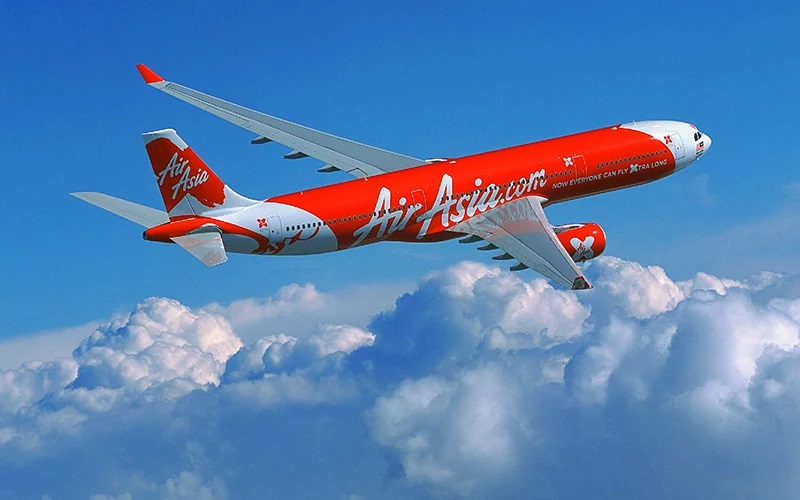
AirAsia X Bhd has announced that Tune Group Sdn Bhd is no longer a substantial shareholder after disposing of 66.83 million ordinary shares, the company said in a statement. AirAsia X said that as part of the final stages of AirAsia’s aviation business consolidation exercise, the cessation is a result of the disposal of shares via a direct business transaction. The move is part of the final stages of AirAsia’s aviation business consolidation exercise and was executed via a direct business transaction, the company noted. The disposal aligns with Capital A Bhd and its concerted parties’ plan to reduce their collective shareholding in AirAsia X to below 33%, thereby avoiding any mandatory takeover obligations under the Rules on Takeovers, Mergers and Compulsory Acquisitions issued by the Securities Commission Malaysia. “The disposal of shares by Tune Group is in line with the conditions set out in the circulars to shareholders dated Sept 20 and Sept 24, 2024, relating to AirAsia X’s proposed private placement and Capital A’s proposed distribution, respectively,” AirAsia X said. Following the transaction, co-founders Tan Sri Tony Fernandes and Datuk Kamarudin Meranun will remain as substantial shareholders, retaining their direct and indirect interests in AirAsia X. This is part of a broader restructuring plan that includes the proposed acquisition of 100% equity interest in AirAsia Aviation Group Ltd and AirAsia Bhd, as well as the planned private placement and distribution by Capital A. AirAsia X said the share disposal reflects its ongoing efforts to streamline shareholding structure, enhance corporate governance, and facilitate strategic consolidation within the AirAsia group. The move is expected to strengthen the company’s operational flexibility and support its future growth initiatives within the aviation sector.

Investment & Market Trends

ES Sunlogy Wins RM15 Million Contract

ES Sunlogy Bhd’s wholly owned subsidiary, Savelite Engineering Sdn Bhd, has secured a RM15.22 million contract for a project located in Johor, the company announced in a Bursa Malaysia filing. The contract involves the supply, delivery, installation, testing, commissioning, and maintenance of electrical services as a sub-contractor at Lot 156682 along the Johor Bahru–Pasir Gudang Highway, near Plentong, Johor. The project has been awarded by Parkland Southern Sdn Bhd, the main contractor for the development. ES Sunlogy noted that the sub-contract work is based on a firm price arrangement, which covers all associated costs, including transport, lifting, hoisting, packing, freight, insurance, payroll, taxes, import duties, and any other applicable charges, such as fees, royalties, and exchange rate adjustments. No price adjustments will be made for any future fluctuations. Savelite Engineering also confirmed that it will bear all increases in import duties, tariffs, and taxes that may arise during the contract period, and any such increases will not be recoverable from the main contractor or employer. The award of this contract strengthens ES Sunlogy’s track record in the electrical and engineering services sector, particularly in Johor, and reflects the group’s ongoing capabilities in managing mid-sized infrastructure projects with comprehensive electrical services. This contract is expected to contribute positively to the group’s revenue and earnings once execution is underway, further supporting ES Sunlogy’s strategic growth objectives in the region.

Scroll to Top

Subscribe
FREE Newsletter