Author name: admin

Investment & Market Trends

Swing & Pillows Got Bigger with the Acquisition of 5 Hotels in Bukit Bintang

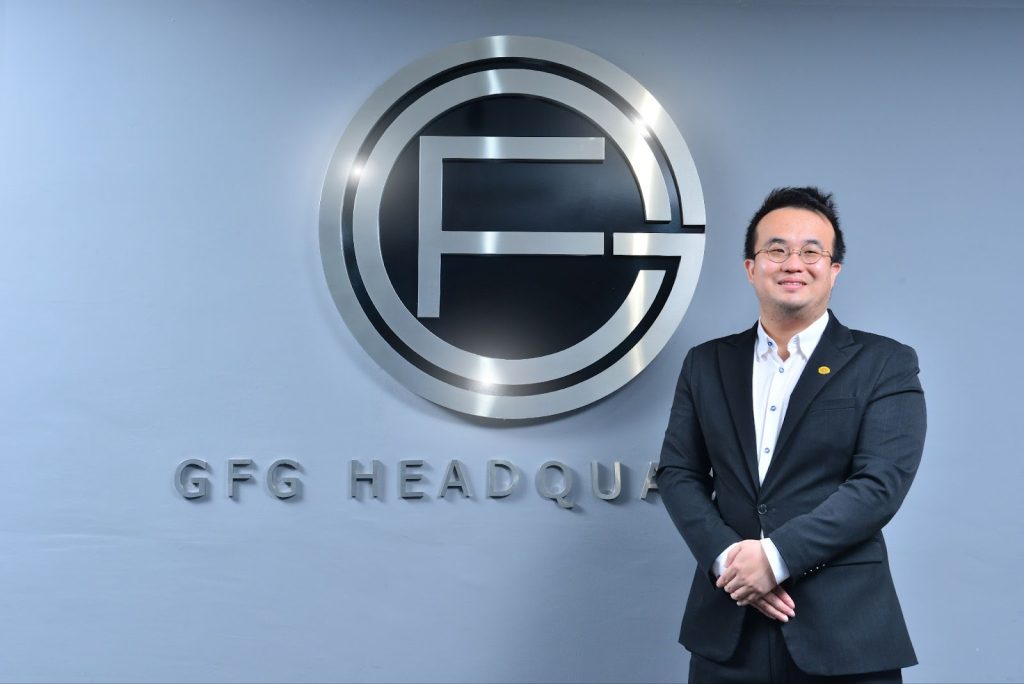
Swing & Pillows, Malaysia’s leading and largest co-living and hotel chain operator, is unpacking new opportunities as they announce a strategic expansion into the Bukit Bintang area. Marking a significant milestone in their growth journey, the expansion, paired with the acquisition of five hotels under the new Kingston brand, consolidates their aim of solidifying their presence in key strategic locations and expanding their reach to serve multiple market points from entry-level to premium. “This expansion marks a major move for us, and we’re looking forward to seeing the opportunities it brings,” shares Ken Lee, Chief Executive Officer of Swing & Pillows. “Traditional hospitality and housing as we used to know it has changed— with the rise in remote work, cost of living and the general changing sentiment around home ownership, there is a growing need for accommodations that offer flexibility and comfort. It’s a whole new world out there, and one that we intend to cater to as best as we can. As we expand into the Bukit Bintang area, we’re looking to go over and above our ongoing commitment to raising the bar in hospitality, in alignment with our core values of innovation, quality, and customer satisfaction.”  Co-living is a modern housing trend where individuals share living spaces and resources within a community-oriented environment, blending private and communal living arrangements to cater to the needs of those who seek both personal space and social interaction. This concept provides numerous benefits, including affordability, convenience, flexibility, and community-building opportunities. Recent data highlights positive growth in the global co-living market, with the market valued at approximately USD 13 billion in 2022, and expected to expand at a CAGR of 29.9% during the forecast period, reaching USD 63 billion by 2028.  On the local front, co-living is shifting from a niche market to a mainstream option as the concept gains popularity with the rise of digital nomads and the growing preference for flexible living arrangements. Recognising the sectors’ potential, Swing & Pillows, powered by iBilik, was established in May 2022 and has since rapidly expanded to become Malaysia’s largest co-living and chain hotel operator, boasting a portfolio of over 120 hotels and 3 resorts in major city centres, including Kuala Lumpur, George Town, Johor Bahru, Malacca, Subang Jaya, Petaling Jaya, and Shah Alam.  Initially founded to help smaller chain hotels recover from the economic slowdown post-pandemic, Swing & Pillows co-living model instead allows a portion of unused rooms to be repurposed into long-term rental units, maximising asset utilisation and creating steady alternative revenue streams. In doing so, Swing & Pillows redefines the local hospitality landscape as it caters to the evolving needs of modern travellers, expatriates, and working professionals by offering innovative and flexible accommodation solutions.  The brand’s latest expansion into Bukit Bintang, coupled with the previously mentioned hotel acquisition marks a notable shift as they seek to cater to customers within the premium market as well — locals, expatriates, and tourists alike. A literal star in Kuala Lumpur’s urban jungle, Bukit Bintang’s popularity among locals and tourists alike, thanks to its vibrant mix of entertainment, shopping, and business opportunities, makes it the ideal location from which to kick off their expansion plans.  This acquisition also reinforces Swing & Pillows commitment to providing exceptional living experiences characterised by quality and convenience. With the introduction of the Kingston sub-brand, they seek to elevate the accommodation experience, offering luxurious amenities and top-tier services to meet the expectations of discerning guests, a move that enhances their ability to serve a premium clientele while placing themselves as a dominant player in the district, and the sector as a whole.  The recent acquisitions are anticipated to significantly boost Swing & Pillows revenue, with projections indicating potential earnings of over RM 60 million by the end of 2024. Meanwhile, the brand’s focus on strategic growth and market penetration positions them for continued success and leadership in Malaysia’s hospitality sector.  As Swing & Pillows stands poised to become the biggest player in the co-living area, they remain committed to providing exceptional living experiences for their guests. For more information about them, please visit https://swingandpillows.com/ 

Investment & Market Trends

Sik Cheong Berhad to Raise RM 17.8 Mil in ACE Market IPO for Product and Market Expansion

Sik Cheong Berhad (“Sik Cheong”), a prominent player in the repackaging, marketing, and distribution of RBD palm olein oil products, has launched its prospectus today for an initial public offering (IPO) on the ACE Market of Bursa Malaysia Securities Berhad. The company, operating through its subsidiaries, specializes in refined, bleached, and deodorized palm oil products marketed under brands such as “Sawit Emas,” “Vitamas,” and “Pingat Emas,” alongside third-party products like margarine upon customer demand. With over three decades of experience, Sik Cheong serves a diverse clientele including retailers, wholesalers, hospitality sectors, and food manufacturers, with notable long-term relationships such as The Chicken Rice Shop Restaurant Sdn Bhd and NSK group of companies. Managing Director Mr Wong Hing Ngiap highlighted the essential role of RBD palm olein cooking oil in Malaysian cuisine, noting its dominant market share in the country’s vegetable oil consumption, which accounted for 76.7% in 2023. Anticipating further growth, Sik Cheong plans to leverage IPO proceeds to expand its operations significantly. This includes rebuilding Factory No. 9 to enhance packaging capabilities, particularly for a new high oleic soybean oil product line, and acquiring modern machinery and equipment. Strategically, Sik Cheong aims to broaden its market reach beyond Kuala Lumpur and Selangor into neighbouring states such as Perak, Negeri Sembilan, Melaka, and Pahang, supported by an expanded fleet of delivery trucks to ensure efficient distribution. The IPO targets to raise RM17.8 million, with allocations earmarked for facility expansion (40.3%), new delivery trucks (5.0%), working capital (33.4%), and listing expenses (21.3%). The public offering comprises 66.0 million new shares (24.8% of enlarged share capital) and 20.0 million existing shares (7.5%), including private placements. Financially, Sik Cheong reported robust revenue growth from RM42.6 million in FYE 2021 to RM79.6 million in FYE 2024, with a compound annual growth rate (CAGR) of 23.2%. Profit after tax also demonstrated strong growth, achieving a 50.6% CAGR over the same period, totalling RM6.3 million in FYE 2024. Applications for the IPO are open until 30 July 2024, with Sik Cheong scheduled for listing on 13 August 2024. TA Securities Holdings Berhad serves as the Principal Adviser, Sponsor, sole Underwriter, and Placement Agent for the IPO exercise, underlining confidence in Sik Cheong’s market debut.

ESG

Solarvest, Swinburne and CENTEXS Achieved Malaysia’s First at SEMA 2024

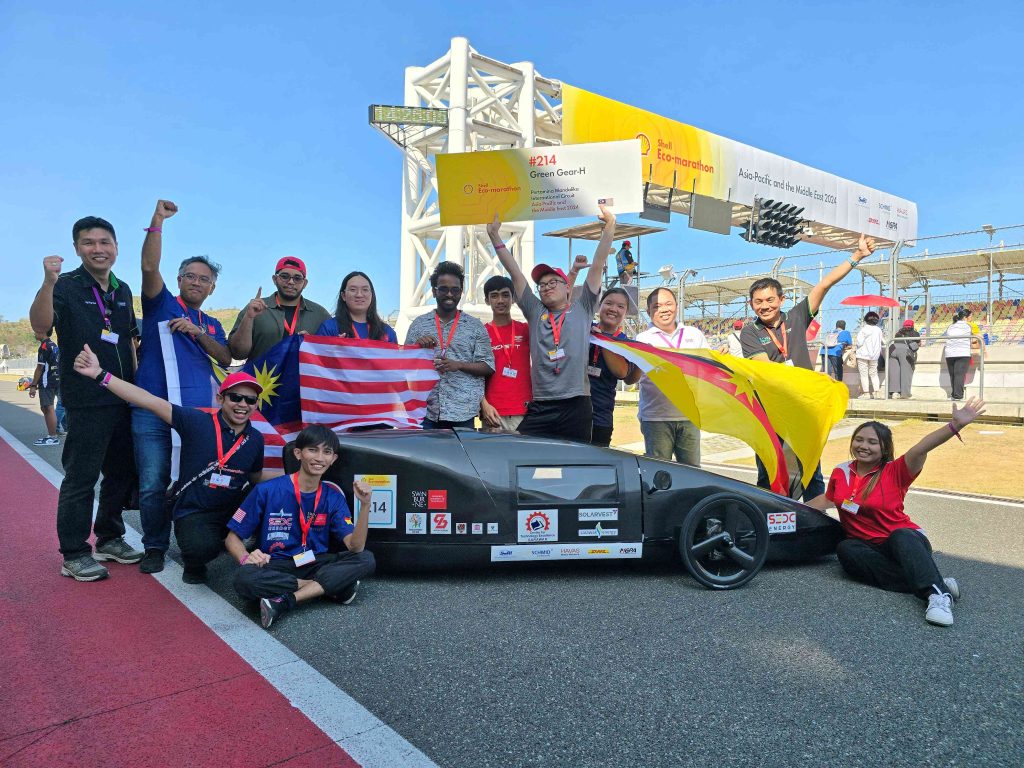
KUCHING: Solarvest Borneo Sdn Bhd (Solarvest), Swinburne University of Technology Sarawak Campus (Swinburne Sarawak) and the Centre of Excellence for Technology (CENTEXS) Sarawak, through their collaborative Team Green Gear-H, have achieved a remarkable fourth-place finish at the Shell Eco-Marathon Asia Pacific & Middle East (SEMA) 2024, marking a first for Malaysia. SEMA 2024 held at the Pertamina Mandalika International Street Circuit in Lombok, Indonesia, from July 2 to 6, 2024. The competition aims to construct the most energy-efficient ultra-lightweight car, provides an invaluable platform for high school and university students to demonstrate their skills in design, technology, engineering, and project management. Team Green Gear-H is the first Malaysian team to pass the rigorous technical inspections at SEMA. Competing against over 80 teams from 11 countries, including China, India, and Indonesia, they secured fourth place in the hydrogen fuel cell prototype category with a remarkable fuel efficiency of 185 km/m³. The team’s success is a testament to their exceptional engineering capabilities, demonstrated Malaysia’s potential in the field of sustainable transportation.   The innovative vehicle drew inspiration from the side profile of a bird in flight. Its lightweight design is key to its efficiency, and features the largest single piece of carbon fiber made in Sarawak. This is the only hydrogen powered vehicle fully designed and built in Sarawak, with its locally-produced carbon fiber bodywork crafted using advanced techniques like carbon fiber textile and resin layup, and its curing done by vacuum infusion. Sponsored by Solarvest, the team comprised students from Swinburne Sarawak’s Faculty of Engineering, Computing and Science, and the Faculty of Business, Design and Arts. Each member brought their unique skills and dedication to the project, guided by Project Chief Advisor Ts. Dr. Muhammad Rafiq Mirza Julaihi and distinguished academics in mechanical and electrical engineering. On behalf of the Team, Dr Muhammad Rafiq extends his gratitude to the sponsors: “We are immensely grateful for the support and contributions from all our sponsors. Their unwavering and continuous support of team Green Gear-H not only help the team apply the knowledge and skills acquired to real-world situations but have also garnered recognition from industry experts who serve as judges in the competition.”   Solarvest’s Executive Director and Chief Strategy Officer, Leon Liew expressed that, “Having been born and raised in Sarawak, I am deeply grateful for the supportive community that has shaped my journey. Our investment in talent and technology aims to advance human capital and improve the environment for the next generations. At Solarvest, we are commited to nurture people, preserve planet and foster progress. We’ve taken account the ESG impact on the construction and development for every investment. The achievement of this green hydrogen car signifies the great potential for low-carbon transportation, which we believe will become a reality within the next few years, making a real difference in all our lives.” Leading the Sarawak delegation at SEMA 2024, Deputy Minister of Education, Innovation, and Talent Development, YB Datuk Dr Annuar Rapaee emphasised the importance of collaboration between institutions and businesses. He stated that this competition serves as a platform to elevate Sarawakian expertise and skills on a global level. SEMA 2024 brought together 80 teams from 11 countries, including Saudi Arabia, Brunei Darussalam, the Philippines, India, Kazakhstan, South Korea, Qatar, Thailand, China, and Vietnam. The competition served as a platform for young minds to showcase their innovation and pave the way for a more sustainable future. Team Green Gear-H’s success is a testament to the collaborative spirit and dedication of Swinburne Sarawak, CENTEXS, and Solarvest.

News

OpenAI enters Google-dominated search market with SearchGPT

OpenAI is venturing into a territory long dominated by Google with the selective launch of SearchGPT, an AI-powered search engine with real-time access to information from the internet. The move, announced on Thursday, also places the AI giant in competition with its largest backer Microsoft’s Bing search and emerging services such as Perplexity — a search-focused AI chatbot firm backed by Amazon founder Jeff Bezos and semiconductor giant Nvidia. Shares of Google’s parent company Alphabet ended 3% lower on Thursday, after OpenAI’s announcement. OpenAI said it has opened sign-ups for the new tool, which is currently in the prototype stage and is being tested with a small group of users and publishers. The company plans to integrate the best features from the search tool into ChatGPT in the future. “AI-powered search tools from OpenAI and Perplexity re-affirm search as a content engagement model but pressure Google to be better at its own game,” Canaccord Genuity analyst Kingsley Crane said. Google dominates the search engine market with a 91.1% market share as of June, according to web analytics firm Statcounter. SearchGPT will provide summarized search results with source links in response to user queries, OpenAI said in a blog post. Users will also be able to ask follow-up questions and receive contextual responses. The company will give publishers access to tools for managing how their content appears in SearchGPT results. SearchGPT signals a closer collaboration between publishers and OpenAI, following content licensing agreements with major organizations like Associated Press, News Corp, and Axel Springer. “Newer AI-powered search providers could face challenges of their own, with Perplexity already facing pending legal action from publishers like Wired and Forbes, and Condé Nast,” said Crane. Major search engines have been trying to integrate AI into search since ChatGPT first launched in November 2022. Microsoft, through its early investment, adopted OpenAI technology for its Bing search engine, while Google rolled out AI-powered summaries for the wider public at its developer conference in May. Google did not respond to a Reuters query on the potential impact of SearchGPT on its business. Reuters had earlier reported on OpenAI’s plans around AI search in May. (Reporting by Yuvraj Malik in Bengaluru; Editing by Tasim Zahid)–Reuters

ESG, News

MITI Introduces Initiative to Ensure Women Entrepreneurs Are Not Marginalised

KUALA LUMPUR: The Investment, Trade and Industry Ministry (MITI) will ensure that women entrepreneurs are not marginalised through the introduction of the Women in Trade and Industry (WITI) initiative. Its minister Tengku Datuk Seri Zafrul Abdul Aziz said WITI – the result of a collaboration between MITI and the Women and Family Affairs Association of Malaysia (HAWA Malaysia) – is aimed at boosting women’s skills and capabilities in the industrial and export sectors. “This initiative is in line with that we (Malaysia) plan to do as ASEAN chair next year in promoting women’s economic participation at the ASEAN level,” he said. He added that efforts to elevate Malaysia to a developed and highly regarded country on the global stage also include the MADANI Government’s commitment to make Malaysia a conducive, investor-friendly and viable investment destination. “The National Investment Council (MPN) chaired by Prime Minister Datuk Seri Anwar Ibrahim will remain committed in planning the national strategic policies and investment agenda, while the Investment Trade Coordination Action Committee (JTPPP) chaired bu me will continue to ensure the speedy and first-rate implementation of investments. “Various important decisions have been approved at the MPN level, including the National Semiconductor Strategy, Green Investment Strategy and Artificial Intelligence Data Centre Strategy,” he said. According to him, these are the manifestation of the MADANI Government’s policies to expedite the national economic recovery and develop a resilient, inclusive and sustainable economy. On the WITI initiative, Tengku Zafrul said a WITI steering committee, to be chaired by the MITI secretary general, will be formed to ensure a better-structured workflow. “A new paradigm shift is required in the efforts for the empowerment of women and families to achieve the goals of the Malaysia MADANI Policy, National Policy for Women and other national development policies. “Women in particular, and society in general, must think pragmatically, be prepared to explore new knowledge, and dare to speak up and give their views,” he said. Tengku Zafrul said International Monetary Fund (IMF) research suggests that narrowing the gender gap in labour markets could increase gross domestic product (GDP) in emerging markets and developing economies by nearly 8% and lift GDP by 23% on average. “That is why when I was at the Finance Ministry, I started gender-based budgeting efforts whereby we analysed and proposed various measures through the lens of women empowerment. “The emphasis on women’s empowerment has been continued at MITI, where women make up 69% of the top management,” he added. — BERNAMA

Investment & Market Trends, News

Banle Group Completes Bunkering Service at India’s Mundra Port

INDIA: CBL International Limited (CBL), the listing vehicle of Banle Group (Banle), recently completed its inaugural bunkering service at Mundra Port, Gujarat, one of India’s largest and most strategically important ports. According to a statement, this achievement marks a significant step forward in Banle’s expansion strategy and underscores its commitment to enhancing operational capabilities and market presence in key global regions. “We are thrilled to include our operations in the Indian market with our inaugural bunkering service at Mundra Port. This achievement reflects our strategic vision and dedication to growth in key regions. “We look forward to building on this success and enhancing our service offerings to meet the evolving needs of our global clients,” said Banle Chairman & Chief Executive Officer, Teck Lim Chia. Renowned for its pivotal role in India’s maritime logistics, Mundra Port serves as a critical export-import gateway, facilitating approximately 33% of India’s container traffic with its advanced infrastructure, including the capability to handle large vessels. The successful bunkering service provided to a global integrated logistics and shipping company at Mundra Port highlights the group’s operational excellence and commitment to delivering high-quality services in key strategic locations. Establishing a footprint in India’s rapidly growing maritime market enhances Banle’s ability to expand network and increase market share, whereby the successful operation at Mundra Port strengthens relationships with key clients, driving sustainable growth. — BERNAMA

Uncategorized

ServiceNow and Boomi announce strategic commitment to elevate customer experiences through AI-powered self-service

KUALA LUMPUR: ServiceNow (NYSE: NOW), the AI platform for business transformation, and Boomi, a leader in intelligent integration and automation, today announced a strategic commitment to jointly elevate customer experiences through AI-powered self-service with solutions including ServiceNow Technology Provider Service Management (TPSM). In addition, as a key customer of ServiceNow, Boomi will use ServiceNow App Engine to deliver streamlined customer support and improved self-service. ServiceNow will also integrate Boomi’s next-generation and industry-leading Application Programming Interface (API) Management capabilities with Automation Engine for complete visibility across a user’s API landscape and enhanced governance. Enterprises today struggle with time-consuming manual processes and a patchwork of isolated systems, creating data silos, slowing down innovation, and impacting customer experiences. According to IDC, only 12 percent of organizations connect customer data between departments; however, AI is proving to be a catalyst of connection and collaboration to improve and accelerate operational efficiency at scale. Boomi’s use of the Now Platform and ServiceNow’s AI-powered TPSM offering will transform its customer support and expand self-service. Through ServiceNow’s unified platform, Boomi will eliminate silos and simplify internal processes to drive better, faster, and more efficient collaboration while helping reduce manual work through intelligent automation. Boomi will also use ServiceNow’s App Engine to build workflows into its Master Data Hub, its cloud-native data management platform, for a simplified, more intuitive user experience. “As customer expectations evolve, businesses require simple, agile, and easy to use solutions to meet those needs,” said Paul Fipps, president, global industries and strategic growth at ServiceNow. “We’re thrilled to be working with Boomi to help them revolutionize their customer experience with the Now Platform and to collaborate on innovations that will advance business automation. By combining Boomi’s industry-leading API Management with ServiceNow’s suite of intelligent automation solutions, we’re also bringing an even more robust toolset to creators and app developers.” “Simplifying and streamlining complex business processes is at the core of what Boomi aims to achieve for our customers,” said Steve Lucas, CEO at Boomi. “By integrating our intelligent Integration and Data Hub platform with ServiceNow’s powerful automation solutions, we’re able to deliver self-service workflows, eliminate silos, enhance collaboration, and drive operational efficiency. This collaboration not only empowers Boomi and ServiceNow customers to harness the full potential of AI and automation but also sets the stage for a new era of seamless, personalized business transformation, all built on reliable and trusted data.” ServiceNow will also bring Boomi’s advanced, lightweight API Management (APIM) solution to its customers, to help deepen ServiceNow’s suite of intelligent automation solutions. Purpose-built to streamline experiences for application creators, Boomi’s modern APIM platform provides a centralized view across a user’s API landscape, empowering creators with complete visibility to quickly discover, provision, and secure their APIs no matter where they reside. The new offerings are expected to be available later this year.

Energy & Technology, News

TNB to Benefit From the Increased Number of Data Centres in Malaysia

KUALA LUMPUR: Tenaga Nasional Bhd (TNB) is expected to increase its capital expenditure (capex), particularly in its transmission and distribution division, to accommodate technology companies’ setting up data centre facilities in the Klang Valley and Johor. In a note, Public Investment Bank Bhd (PIVB) said Telekom Malaysia Bhd (TM) is seen as the prime beneficiary in the telco space, and the thirst for more energy should lead to an unprecedented surge in TNB’s power demand. “We estimate that its partnership with Singtel to establish a greenfield data centre in Iskandar Puteri could potentially result in an earnings uplift of about 24% beyond the financial year 2026 (FY2026). “Hence, a higher tariff would be justifiable to capture adequate return on investment,” it said. PIVB noted that TNB is expected to roll out about RM90 billion in capex for 6 years until 2030 to support energy transition initiatives and system upgrades. It also said more infrastructure development such as power connectivity, internet exchange points, cable landing stations and fibre optic cables is expected to be laid to cater to the expanding information technology (IT) workloads. “Currently, the total IT load in Malaysia is estimated at about 900 megawatts (MW) in 2024, but this is expected to balloon to about 1,400MW by 2029, translating to a compound annual growth rate (CAGR) of 8%” it said. PIVB raised the target price (TP) on TNB to RM16 with an ‘outperform’ call from RM13 previously. The investment bank said other beneficiaries from the increased data centre investments in Malaysia include construction sector players such as Gamuda Bhd (TP: RM9.20) and IJM Corporation Bhd (RM4.20) for their track record in securing more data centre jobs. “Their next-generation industrial building system would help shorten the construction period as the speed of deployment is crucial to these data centre operators,” it said. PIVB added that key risks to its recommendation include competition from regional data centres, power and water scarcity, an oversupply condition in the domestic market, and environmental impact due to overconsumption of natural resources, as well as heat and wastewater generation. — BERNAMA

Investment & Market Trends, News

HSBC Forecasts Malaysia’s 2024 GDP at 4.5%, Ringgit Outperforming

KUALA LUMPUR: HSBC has forecast Malaysia’s gross domestic product (GDP) growth at 4.5% for 2024, slightly above consensus with an upside risk. Its co-head of Global Research Asia and Chief Asia Economist, Frederic Neumann said the forecast was supported by the country’s robust economic performance and the incoming inflows of foreign investments. “We also expect a pickup in trade over the second half (2H) of this year, benefitting mainly from consumer electronics,” he said in the HSBC 2H 2024 Asian Outlook webinar. Neumann said Southeast Asian countries, including Malaysia, have continued to perform well in their economies, with no sign of financial stress despite rising interest rates. He also noted that Malaysia’s exports were doing quite well, which was surprising given the global backdrop of weaker growth. “Besides, the GDP forecast will also be bolstered by the gradual turnaround in the trade cycle and an additional boost from the tourism sector. “With the global demand from consumers for electronics accelerating notably, this should also help countries in ASEAN, particularly Malaysia and Vietnam. We remain quite positive on trade going forward,” he said. HSBC has forecast Asia’s economy to grow 4.9% for the full year of 2024. Neumann said HSBC believes that the US Federal Reserve (Fed) cutting interest rate will occur this September, which will be a shallow easing cycle for most central banks in the region. It also maintained its view that BNM is likely to hold its policy rate at 3% in 2024, and recently, it removed its call for a 25 basis point rate cut in the first quarter (1Q) of 2025. “For Malaysia, the possibility of a rate hike is higher than a rate cut, although neither is our central case,” he said. Meanwhile, HSBC head of Asian FX Research Joey Chew said the ringgit has been an outperformer and has been trading stable since February this year, although other Asian currencies continue to weaken against the US dollar. “Something that may help the ringgit later is the ongoing change to the fuel subsidy programme. This is important for fiscal sustainability. “For the ringgit too, there could be a direct impact if higher prices help to curb consumption. Malaysia’s trade deficit in petroleum products is not at an all-time high,” she said, adding that the ringgit is forecast to be at 4.68 for year-end. Currently, the ringgit is trading around 4.67 to 4.68 against the greenback. HSBC’s Head of Equity Strategy (Asia Pacific), Herald van der Linde said the Malaysian stock market has also performed better than initially anticipated. “To a larger extent, the story of Malaysia is the new supply chain that is being built up and the data centres being developed. So we are seeing strong performance for the utility stocks,” he said. Van der Linde said Malaysia is well positioned to benefit from the rise in data centres amid increased demand for cloud and AI services, as large tech giants already invest heavily in the market. “Overall, this means that Malaysia’s performance has been quite specific to certain sectors, such as small-cap and semiconductor segments. To us, it is an alright market,” he said. Van der Linde added that HSBC forecasts the FBM KLCI to be at 1,680 level by the end of 2024. — BERNAMA

News

Minister pushes for Singapore-like arbitration rules

JAKARTA: Coordinating Maritime Affairs and Investment Minister Luhut Pandjaitan has proposed creating a legal framework that includes arbitration rules like those enforced in Singapore to help attract more investment, including family offices, to Indonesia. Speaking at the launch for the Mineral and Coal Information System (Simbara), Luhut claimed that making arbitration, where disputes between parties from different countries are resolved outside of the jurisdiction via an impartial third party, final or non-appealable was “simple” and would bring legal certainty. “When the arbitrator – an international, certified one that comes from abroad – in the arbitration court has decided A, then A is the final decision, no more appeal. If there are appeals, that creates room for foul play,” said Luhut, adding he had conveyed this to President Joko Widodo. In a press conference following the ceremony, the senior minister said final arbitration was practised in Singapore, Abu Dhabi and Hong Kong, which were three of Asia’s main hubs for family offices, hence his proposal to put something similar in place in the archipelago. “Implementing this will bring about legal certainty in our country, and there are so many people who want to put their money in Indonesia,” claimed Luhut. A family office is an organisation or firm responsible for managing the wealth of ultra-rich individuals or families. The entity differs from typical asset managers since it is built solely for managing the assets and investments of a small group of individuals or families. Luhut said an “abundant” amount of “family office and family business” money wanted to enter Indonesia. Indonesia does not have its own international arbitration court, but the country did ratify the United Nations Convention on the Recognition and Enforcement of Foreign Arbitral Awards, also known as the 1958 New York Convention, in 1981, which makes it subject to decisions in international courts, known as arbitral awards. International arbitration is a method of resolving disputes between parties from different countries outside of the jurisdiction, where an impartial third party, the arbitrator, makes a binding decision. It is often used in commercial disputes, offering a private, flexible, and neutral forum for conflict resolution. Arbitration cases are handled by the Indonesian National Board of Arbitration for both domestic and international disputes in the country. However, arbitral awards can be appealed in Indonesia through the Supreme Court, in accordance with the 1999 Arbitration Law. — The Jakarta Post/ANN

Scroll to Top

Subscribe
FREE Newsletter