Author name: admin

Energy & Technology, News

NETR Expected to Attract RM60.7 Bil Investments

KUALA LUMPUR: The latest estimates on the effectiveness of the National Energy Transition Roadmap’s (NETR) flagship projects and initiatives show investments involved will be worth RM60.7 billion instead of the initial projection of RM25 billion when the roadmap was launched on 29 August 2023. The Economy Ministry said this was based on the March 2024 progress report, which also shows that 84,544 job opportunities would be created (development and post-project) compared with the initial forecast of 23,000 jobs. Furthermore, the reduction in greenhouse gas (GHG) emissions is now estimated at 24,264 gigagrams of carbon dioxide equivalent (Gg Co2eq) per year compared with 10,000 Gg co2eq per year that was initially forecast, the ministry said in a written reply posted on the Parliament website. This was in response to Datuk Seri Dr Shahidan Kasim’s (PN-Arau) request for a status report on the NETR and the New Industrial Master Plan (NIMP) 2030. The ministry added that the government is committed to ensuring the energy transition management is based on the whole-of-nation approach encompassing the Federal Government, state governments, general public and international community for a unified policy planning and implementation in balancing the energy trilemma of security, affordability and sustainability. “The effectiveness in the NETR implementation is expected to increase the contribution to the national gross domestic product, create job opportunities, enhance the people’s socioeconomic status and ensure energy security and environmental sustainability,” it added. — BERNAMA

News

SME broad turnaround paves way for GDP growth

SINGAPORE: A rebound in the fortunes of small and medium enterprises (SMEs) helped the economy to grow by the fastest pace in one and a half years, notes a quarterly survey. OCBC Bank polled about 800 business owners and used the data to predict the pace of economic growth for the second quarter to be around 3% – surpassing economists’ gross domestic product (GDP) growth estimates. The Monetary Authority of Singapore survey of professional forecasters had synthesised a median consensus forecast in June that tipped growth of 2.7%. Notably, the OCBC SME Index posted its first – albeit marginal – expansion, at 50.2 points, after shrinking for the five previous quarters, according to the report out yesterday. Similar to the purchasing managers’ index, any reading above 50 represents an expansion and anything below is a contraction. At the same time, overall SME collections – or the inflows of cash – grew by 1.4% year on year in the three months to March 31, while payments – or outflows – dropped by 1.3%. Seven of the 11 industries making up the index were in the black, with notable turnarounds by resources, transport and logistics, and wholesale trade, as well as healthcare – which was wavering between growth and contraction during that period. Said OCBC head of global commercial banking Linus Goh: “There is clearly a shift, a significant and broad-based turnaround after six quarters of contraction by industries in the export-oriented sectors. They contributed to the overall improvement in the SME Index.” By comparison, performance has been consistently positive for industries exposed to the domestic sector, he noted. These industries, such as education, food and beverage and retail, had been keeping the economy somewhat on an even keel, “despite intense competition for manpower and rising cost pressures”, the report said. The education sector extended its gains to reach 50.8 points, with double-digit collections of 16% and payments of 11.9%. “Notably, early childhood and recreation classes were the joint primary drivers for the sector, even as training centres shrank. Goh said: “This demand for education, especially those at the top of consumers’ hierarchy of needs, tends to be rather sticky.” The index is likely to remain relatively flat and range-bound for the rest of 2024. “While underpinned by positive drivers, such as the global recovery in electronics that bodes well for manufacturing and wholesale trade, there are also downside risks, said Goh. He noted that the big known uncertainties include supply chain disruptions, cost pressures and geopolitics. “Each of these has the potential to significantly affect final demand,” he added. For example, geopolitical tensions could derail disinflationary momentum, which, in turn, would hamper domestic demand. However, Goh is hopeful that there was sufficient impetus in the domestic sector to compensate for these challenges. Among the other positive developments that could counterbalance these risks include a more stable China and the impact of visa-free travel between it and other countries in the region, while intra-regional trade between South-East Asian markets should remain healthy and resilient. Goh also felt that SMEs can cope with the perennial bugbears of wages, employment and inflation that cut across all the sectors. “It comes with the territory,” he said, adding that “in the absence of negative drivers, they should have a good second half”. — The Straits Times/ANN

News

Acclime promotes Pornpun Maksirivilai to Thailand Country Manager

BANGKOK: Acclime, partnering businesses with corporate, governance and advisory services globally, promoted Pornpun Maksirivilai to the position of Thailand Country Manager. With over 10 years of experience in the Acclime Thailand office, Pornpun has demonstrated exceptional leadership and commitment to the company’s values. In her new role, Pornpun will lead an all-woman management team in Thailand, underscoring Acclime’s dedication to diversity and inclusion. This promotion highlights the company’s ongoing efforts to elevate leaders within its ranks. Acclime CEO Izzy Silva expressed his enthusiasm for this development, stating, “I am excited about Thailand’s growth under Pornpun’s leadership and pleased with our efforts in elevating female leaders. Her dedication and vision make her the perfect fit for this role. Her extensive experience and deep understanding of our operations in Thailand make her an invaluable asset to our team.” Meanwhile, Pornpun Maksirivilai also shared her thoughts on the promotion, saying, “I am honoured to take on this new role and look forward to driving further success for Acclime in Thailand. My appointment and our all-female management team is a testament to the company’s commitment to diversity and empowering female leaders.”

Investment & Market Trends, News

Malaysia’s Halal Exports Reach RM54 Bil in 2023, Minister Reports

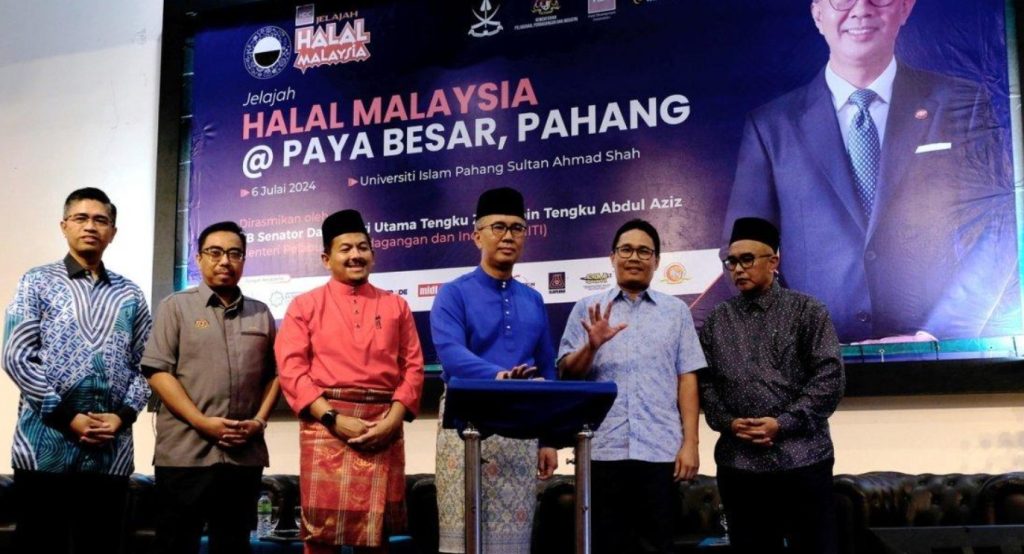
KUALA LUMPUR: The value of Malaysia’s halal exports reached RM54 billion in 2023, according to Minister of Investment, Trade and Industry Tengku Datuk Seri Zafrul Abdul Aziz. He said the industry plays a vital role as a catalyst for the country’s economic growth and the sector has tremendous potential to grow as the global halal industry, including both products and services, is expected to hit US$5 trillion by 2023. The minister said that the government is committed to increasing the number of entrepreneurs producing halal products and several approached have been taken, including the Jelajah Halal Malaysia (JHM) programme carried out by its agency, the Halal Development Corporation Bhd (HDC). “JHM aims to help MSMEs gain exposure to opportunities to penetrate domestic and export markets in the halal industry. “Since the JHM programme’s inception in 2022, more than 1,800 MSMEs have successfully participated in the programme,” he said in his speech at the JHM@Paya Besar event, which was also attended by Paya Besar Member of Parliament Datuk Mohd Shahar Abdullah. Tengku Zafrul said the HDC assisted 15 entrepreneurs in placing their products at the Mydin Tunjong Hypermarket through a business matching session at a previous JHM programme in Kota Bahru, Kelantan. Commenting on Pahang’s halal sector, he said the Department of Islamic Development Malaysia (JAKIM) has informed him that 158 companies in the state hold halal certification as at 1 July 2024. “Nevertheless, I am certain the (Pahang) state government and the Pahang Islamic Religious and Malay Customs Council (MUIP) have initiated various programmes to elevate food and beverage companies so that they can obtain halal certification,” he said. Tengku Zafrul also acknowledged that several locations have the potential to be developed and contribute to the economic development of their residents; the Ministry of Investment, Trade and Industry (MITI) is prepared to offer its services to improve the local economy, especially in the halal industry. Meanwhile, HDC chairman Khairul Azwan said Paya Besar is the first JHM event this year, and the following events will be held in Sabah at the end of July and Penang in October. He said the JHM programme is part of HDc’s responsibility to prepare entrepreneurs to expand their businesses until they are able to export their products to the global market. “This (JHM programme) is a platform for local MSMES to obtain the information and skills to expand their capabilities as a company that can grow beyond their current scope,” he said. More than 200 participants attended the JHM@Paya Besar, and local entrepreneurs were provided with the latest information on opportunities in the halal industry. They also received assistance in Islamic banking and takaful products, as well as information on halal certification and halal development and training. — BERNAMA

Energy & Technology, News

ICPT Mechanism to Have No Impact on Business Operations

KUALA LUMPUR: The implementation of the Imbalance Cost Pass-Through (ICPT) mechanism will be neutral and not affect the company’s business operations and financial positions.   In a filing with Bursa Malaysia, Tenaga Nasional Bhd (TNB) said that the Ministry of Energy Transition and Water Transformation’s (PETRA) recent announcement follows the government’s decision to continue the ICPT mechanism from 1 July to 31 December 2024. “The decision was made to address the additional generation costs due to higher fuel prices used for electricity supply from 1 January to 30 June 2024. “To date, the government has successfully implemented 20 cycles of ICPT since the mechanism’s introduction in 2015,” TNB said. On 29 June, PETRA announced that there would be no increase in electricity tariffs for all users in Peninsular Malaysia from 1 July to 31 December 2024. Commercial and industrial users will experience a reduction in the ICPT rate of 1 sen per kilowatt-hour during this period, PETRA said. — BERNAMA

News, Property

ECRL Project Work Progress Status in Kelantan at 79.81%

KELANTAN: The progress status of the East Coast Rail Link (ECRL) project in Kelantan has reached 79.81% as of May 2024. According to the Ministry of Transport, the progress of the work involved the bridge structures where 428 out of 468 beam launching spans had been installed on the main line and construction work for both stations in Kelantan had also started. “In addition, track installation work in Kelantan is expected to begin in the fourth quarter of 2024 (4Q2024) using a track laying machine,” the ministry said in response to a query regarding the state of Kelantan and the plans of ensuring the positive impact of the project to provide an economic spillover to the local population when operations begin. The 665km ECRL project is a rail infrastructure development that will connect the states of the East Coast with the West Coast of Peninsular Malaysia, namely Kelantan, Terengganu, Pahang and Selangor. The ministry also mentioned that PLANMalaysia, through the East Coast Rail Line Integrated Land Use Master Plan (PeGTaECRL), will map out the land use development along the ECRL alignment and around the station including the development of the Economic Accelerator Project (EAP) investment. “The detailed proposed plan in the PeGTaECRL for Kelantan involves 2 ECRL stations, namely the Kota Bharu and Pasir Puteh stations. “Among the main proposals for the ECRL stations in Kelantan are the development of Bandar Baru Tunjong which is a new township for the Ketereh area, while in Pasir Puteh is the proposed development of logistics hub as well as the proposed land port in Bandar Baru Tok Bali, which will strengthen the Pasir Puteh station as a cargo hub for Kelantan and northern Terengganu,” the ministry added. — BERNAMA

Uncategorized

Govt does not expect major cost increases until completion of RTS Link construction period

KUALA LUMPUR: The government does not anticipate any significant cost increases for the Rapid Transit System Link (RTS Link) infrastructure project until the end of the construction period, as the project is in its final phase. Deputy Finance Minister Lim Hui Ying said that the construction phase of the RTS Link project is expected to be completed by December this year, except for the facade construction works at Bukit Chagar station in Johor Bahru, which will continue until 2026. “All work contracts have also been awarded,” she said while wrapping up the motion on the Auditor-General’s Report debate in the Dewan Rakyat today. Lim also said the RTS Link operations will be commercially managed by RTS Operations Pte Ltd, a joint venture company between Prasarana Malaysia Bhd and Singapore’s SMRT. The deputy minister said the fare for RTS travel needs to be set at a reasonable and affordable rate, subject to the users’ ability to ensure operational route requirements are met. According to the Auditor-General’s Report Series 2/2024 released on July 4, the estimated infrastructure cost for the RTS Link project increased by 29.9 per cent, or RM1.207 billion, to RM5.245 billion as of December 31, 2023, compared to the original estimated cost of RM4.038 billion in January 2018. The RTS Link project is a 4km shuttle train network connecting Malaysia with Singapore, covering the route between two stations: Bukit Chagar and Woodlands North in Singapore.– The Star  

Energy & Technology

Siemens Malaysia Transforming Industries Across the Nation

Being at the forefront of technological innovations within the country, Siemens Malaysia has made significant headway when it comes to supercharging the transformation of industries and infrastructure. The tech giant has collaborated with the federal and state governments, businesses, SMEs and even the education sector to effectively align company strategies with initiatives like the New Industrial Master Plan (NIMP) and the 12th Malaysia Plan. Recently, Siemens established a partnership with the Selangor government to become the technology advisor responsible for accelerating digitalisation and automation technologies across industries like agrotechnology, communication, transportation, engineering and machinery, sustainability, education segments and many more. According to Siemens Malaysia President and Chief Executive Officer Tindaro Danze, the company offers advisory and consultancy services for the state government to bolster Selangor’s economic position and attract more investments to the state. “For example, the NIMP’s goal to create a ‘Smart Factory’ landscape for Malaysia is a sweet spot for us to get involved. With our portfolio of cutting-edge automation technology and software applications, we can support the government in reaching its ambitious NIMP 2030 goals,” Danze explained in an exclusive interview with The Exchange Asia. The Literal Backbone of Technology Elaborating further, Danze said that a highly skilled workforce is crucial to fostering such ambitious digitalisation and economic growth targets. Hence, Siemens has been working closely with institutes of higher education throughout ASEAN to provide training for students and industry professionals alike. Earlier in April, Siemens’ low-code app development business, Mendix partnered with Orangeleaf Consulting and Selangor Technical Skills Development Centre (STDC) to elevate Selangor’s digital landscape and nurture a skilled workforce that’s capable of driving technological advancements. “Through the collaboration, we transcend localised efforts by sharing globally-utilised syllabi and concepts across ASEAN countries, facilitated through knowledge exchange,” he said. Siemens also engaged with Universiti Malaysia Perlis (UniMAP) to lead and conduct relevant training courses for undergraduates pursuing a Bachelor of Technology in Industrial Electronic Automation degree with Industry 4.0 skills. “We will conduct product update workshops related to the latest trends in factory automation for UniMAP faculty members as the university has also purchased Siemens training-related hardware and software for these training courses,” informed Danze. Ease of Digital Utilisation Regarding industrial and technological advancements, Siemens offers solutions that integrate artificial intelligence (AI) into its software to efficiently predict faults, optimise data analytics and make human-machine interface safer and more intuitive, which will lead to better decision-making, saving resources and increasing output at the same time. An example of such a solution is developing smart, data-driven power grid management that will allow companies to better handle the volatility of renewable energy sources. Additionally, Danze mentioned that the partnership that Siemens has with NVIDIA allows it to create an industrial metaverse for its customers, enabling users to solve industry challenges collaboratively across borders and time zones. However, with the rapid evolution of the Internet of Things (IoT) and its application within Industry 4.0, there is a pressing need for scalable technology to effectively tackle issues involving global megatrends like globalisation and the shift towards net-zero initiatives. Optimising Energy for the Future In the topic of sustainability, Siemens’ innovative and green solutions allow users to significantly reduce energy usage and seamless energy monitoring and management. When it comes to grids, Siemens has conducted comprehensive studies on incorporating renewable energy into Malaysia’s power grid by digitalising the grid through its analysis, design and meter data management software. “Digitalisation enables us to optimise power distribution, ensuring it reaches where it’s needed most without over-generating power. This leads to operating closer to its limits, resulting in higher efficiency and enabling us to manage the growing energy demand effectively,” he added. Apart from optimising power usage, Siemens is also a Registered Energy Manager (REEM) after receiving the certification from the Energy Commission, officially recognising Siemens as an Energy Service Company (ESCO) and allowing it to conduct energy audits for businesses. “This can help us expand our energy portfolio in the market and align our business strategy with the National Energy Transition Roadmap (NETR),” Danze said, highlighting that Siemens is also working closely with local SMEs. “We partnered with one of the largest solar energy companies in Malaysia, Progressture Solar, to collaborate with industry players and deliver seamless energy solutions that facilitate substantial emissions reduction,” he stated. Jumping on the EV Shift Meanwhile, in the electric vehicle (EV) scene, Siemens is having ongoing conversations with the utility and local authorities, providing them with updated studies from Siemens’ best practices across the globe to adequately prepare Malaysia for the imminent shift towards EV adoption. “We are also actively engaged with industry groups, namely the Master Builders Association Malaysia (MBAM) and Zero Energy Vehicle Association (ZEVA), to advance this agenda. “This includes addressing fire safety concerns associated with lithium-ion batteries in EVs, as well as ensuring the requisite power distribution infrastructure, including sub-stations, for the deployment of fast chargers,” Danze said. To further amplify Siemens’ contributions to the industry, the tech giant shares these initiatives with local governments and agencies via multiple channels. In addition, Siemens is supporting its customers in their digital transformation journey through its Siemens Digital Enterprise Experience (DEX) Centers in Penang and Kuala Lumpur. Customers can gain access to cutting-edge technologies, a network of industry experts and a supportive ecosystem that fosters innovation and growth. “The mission of these centres is to empower manufacturing companies in Malaysia to embrace advanced manufacturing practices and remain at the forefront of industry advancements,” he concluded.

Energy & Technology

Xiaomi to Elevate the AIoT Market in Malaysia

Global Chinese tech giant Xiaomi Corporation continues to strengthen its positioning in the Southeast Asia market by targeting to launch a total of 200 artificial intelligence of things (AIoT) products within the Southeast Asia (SEA) region and specifically, Malaysia. According to Xiaomi Country Manager for Malaysia and Singapore, Eddie Huang, this target was mainly driven by the region’s young demographic, their high purchasing power and their hunger for more sophisticated offerings, especially for the higher-end market. “We want to focus primarily on smartphones but at the same time, we also want to emphasise our artificial intelligence of things (AIoT) products, as consumers tend to prefer more technologically advanced products in the premium market,” he said. However, Huang stressed the need to keep high-end products at affordable prices to enable the medium market with accessibility to cutting-edge Xiaomi products. “The competition among smartphone companies continues to remain strong within the region, which is why we have to set Xiaomi apart from the rest of its competitors. That is evident in the products that we offer for the premium market,” Huang opined. Premium AIoT Products He said two years ago, Xiaomi started collaborating with Leica by becoming its exclusive partner, and in 2023, the tech giant introduced its first premium product in Malaysia. Earlier in February 2024, Xiaomi launched its second premium product line, namely the Xiaomi 14 series which features the Xiaomi 14 Ultra Photography Kit that can be attached to the smartphone and transformed into a smart camera. “When consumers look for a smartphone to purchase, we notice that the camera is one of the main features that could tip the balance between whether they should buy it or not. Realising this, we introduced the Photography Kit that could be fitted to Xiaomi smartphones to target the higher-end market. “This would be more attractive to younger consumers with high purchasing power. Hence, we believe that products like these would do very well in the Malaysian market,” Huang commented. When the brand finally launched the Xiaomi 14 series in mid-March, the first-day sales experienced a 400% increase compared to the launch of its previous version. “This significant growth boosted our confidence, demonstrating the consumers’ desire for better products,” he told The Exchange Asia in an exclusive interview. However, Huang noted that in order to cater to a diverse target audience, Xiaomi provides a variety of product offerings to consumers from the younger generation as well as those within the middle- and higher-end market with the Redmi and POCO products. While Xiaomi products cater to the higher-end market, Redmi offers attractive specs at affordable prices, while POCO is more known for its gaming capabilities. According to Huang, many other smartphone brands are also implementing a similar brand positioning strategy, which is why Xiaomi is now focusing on introducing a line of smart home products that would make the brand stand out from its competition. Integrated Smart Home Ecosystem With its headquarters located in China, Huang said that the Xiaomi brand is also synonymous with a whole line of smart home solutions that can be interconnected to enable users to have total control of other Xiaomi products within the home. Some of the products include humidifiers, air purifiers and televisions. “Because many other brands tend to offer a number of standalone smart home products, consumers would end up having numerous products from a variety of smart device companies scattered around in their home. “In Hong Kong, we offer the full range of smart home products in our stores that can be integrated with each other, which is what we are hoping to bring to consumers in the Malaysian market,” Huang said, adding that the brand plans to have a 40% increase in its AIoT segment. He revealed that currently, Xiaomi has about 170 AIoT products introduced in SEA countries, including Malaysia, and it plans to add many more before the end of the year. Huang also noted that Xiaomi is looking into the possibility of setting up service centres around Malaysia to better serve the consumers within the region, as the country has been a significant market for the brand for the past 10 years. “The SEA market represents a huge chunk of Xiaomi’s market share, so we believe it would be advantageous to develop Xiaomi centres here as the country has a large number of talent with multilingual capabilities, which will provide ease of communication with China companies like Xiaomi. “In terms of gross domestic product (GDP), Malaysia is one of the highest-performing in SEA, making Malaysia the perfect testing ground to introduce new business models or when bringing success business cases from China. Tapping Into the EV Market On another note, Huang highlighted Xiaomi’s venture into the electric vehicle (EV) sector, which was based on the public’s growing interest in renewable energy solutions. “Xiaomi is indeed strong in smartphones and AIoT products, but we also see that the market is getting bigger and bigger as our consumer base grows more diverse. So that is why we started to venture into the EV segment 3 years ago, and recently, we managed to get our SU7s out to the market,” Huang commented. According to a news report, the entry-level SU7 from Xiaomi costs around US$4,000 (RM18,808) less than Tesla’s Model 3 base model in China. Following the sale of over 7,058 units of the SU7 in April, Xiaomi became the 8th largest EV upstart in Malaysia. The company is targeting more than 100,000 deliveries this year, corresponding to monthly average sales of 11,618 units for the remainder of this year. Moving forward, Huang reveals that the Southeast Asia region is expected to remain one of the strongest markets over the next 2-3 years, globally. This is mainly due to its relatively young population, strong purchasing demand, and continuous influx of foreign direct investments. “Having that in mind, we remain optimistic and, from Xiaomi’s perspective, we are aiming to increase our average selling price (ASP) and improve our market share in the region,”

Scroll to Top

Subscribe
FREE Newsletter