Author name: admin

Investment & Market Trends, News

MNRB’s Net Profit Reaches Best-Ever Performance in 50 Years

KUALA LUMPUR: MNRB Holdings Bhd recorded a jump in net profit to RM428.34 million for the financial year ended 31 March 2024 (FY24) from RM142.64 million in FY23, marking the best-ever financial performance in the company’s 50-year history. This was mainly driven by strong business expansion, underwriting results and investment returns. Revenue increased to RM3.6 billion from RM2.97 billion in the previous year, it said in a filing with Bursa Malaysia. Revenue from the insurance and takaful businesses rose 21.1% to RM3.6 billion from RM3 billion in FY23. It also noted that its profit after tax (PAT) for FY24 surged by 200.4% to RM428.4 million, surpassing the RM400 million mark. “This was mainly due to the results of the reinsurance/retakaful business amounting to RM362.4 million, primarily fuelled by strong underwriting results coupled with robust investment performance. “Overall, the group’s profitability was further strengthened by the takaful segment’s solid business fundamentals and operational efficiencies,” MNRB said. Despite challenges in the domestic and global capital markets from the macroeconomic headwinds, MNRB’s investment income and yield reached a five-year record high, with investment results touching RM588.3 million up 61.3% from FY23. With a yield of 5.64%, MNRB’s investment performance was in line with the strong returns delivered by larger institutions in Malaysia. “This purposely designed growth, with more than 80% concentration in the Malaysian market, was mainly attributable to favourable returns, following a strategic alignment of the investment portfolio, trading strategies and asset allocation model,” it noted. Additionally, the group’s reinsurance/retakaful subsidiary, Malaysian Reinsurance Bhd achieved a record-breaking RM2.5 billion gross written premiums and gross written contributions (GWP/GWC) in FY24, surpassing the RM2 billion mark for the first time. As of 31 March 2024, Malaysian Reinsurance secured the top place among Asean’s reinsurers for its GWP. For the fourth quarter ended 31 March 2024 (Q4 FY24), MNRB’s net profit rose to RM232.63 million against RM94.94 million a year ago, while revenue rose to RM816.79 million versus RM637.97 million in Q4 FY23. The group’s insurance and takaful revenue increased 30.6% to RM707.2 million in the period from RM541.3 million recorded in Q4 FY23. MNRB President and Group Chief Executive Officer Zaharudin Daud said the sukuk issuance has also helped to bring down the cost of capital and provided the company with the flexibility to execute the group’s transformation effectively. It also enabled strategic diversification into international markets and facilitated strategic partnerships, he added. Meanwhile, MNRB Chairman Datuk Johor Che Mat said the key to the company’s success was the rollout of strategic initiatives across all business lines. The significant improvements in FY24 were strategically planned with an ongoing commitment to prioritising stakeholders’ interests and championing good governance. “We noted that investors’ interest in the group has increased, reflecting the market’s confidence in the company throughout the financial year. “We continue to look beyond Malaysian shores and are leveraging current opportunities in the hard market while preparing to surmount challenges in the upcoming soft market,” he added. — BERNAMA

Investment & Market Trends, News

Rich Baby Boomers Pass On US$1.9 Tril Wealth to Future Generations

KUALA LUMPUR: Malaysia is set to draw more foreign inflows as Asia’s largest intergenerational wealth transfer is on the cards, said Securities Commission Malaysia (SC) Chairman Datuk Seri Dr Awang Adek Hussin. He said that according to HSBC Bank, Asia’s wealthy baby boomers are expected to pass on about US$1.9 trillion (RM9.01 trillion) of wealth to future generations in the coming years. “The financial planning industry is well placed to capitalise on this opportunity due to long-term relationships built over the years,” he said at the Financial Planning Symposium 2024 that was organised by the Financial Planning Association of Malaysia (FPAM). Moreover, this opportunity not only promises to elevate the quality of financial planners’ services but also broadens their client base. Furthermore, Awang Adek pointed out the growing interest in sustainability among millennial investors, something which financial planners could potentially tap into. A survey by the Institute of Capital Market Research revealed that more than 70% of millennials and Gen X are likely to invest in options that also promote sustainability. “While many investors have good intentions, they may lack knowledge about sustainable investments like environmental, social and corporate governance (ESG) or Sustainable and Responsible Investment (SRI) Funds, which we in the capital markets industry may be used to. “As such, financial planners must increase their understanding and develop capabilities in this area,” he said. To facilitate this, the SC and the Federation of Investment Managers Malaysia will issue a comprehensive guide to assist planners and consultants in navigating the complexities of SRI Funds. This guide aims to ensure that SRI considerations become a routine component of financial advice. According to Awang Adek, the financial planning sector has seen a notable improvement in the number of firms, with an increase of more than 32% since 2015. “In this regard, the release of the firm’s operating standard by FPAM is a positive step towards professionalising the industry. “It serves as a guide to support firms in establishing a solid foundation and promoting good conduct that prioritises client needs,” he said. Awang Adek said on the regulatory side, the SC has issued revised Guidelines on Conduct for Capital Market Intermediaries to elevate standards of professionalism and integrity, which will assist firms in attracting and retaining long-term clients. The revised guidelines will come into effect on 1 October 2024, allowing sufficient time for capital market intermediaries to make preparations to meet the new requirements. “Financial planners should thoroughly review and take necessary steps to ensure compliance, especially with regards to personal advise obligations,” he said. He also called financial planners to protect their clients, ensuring that they do not fall prey to unlicensed schemes and activities. Between 2019 and 2023, the SC reviewed over 3,000 complaints and inquiries related to unlicensed activities and scams, a 321% rise from under 800 complaints in 2019. He said the SC also recognises that smaller firms may struggle with market profiling. “Hence, I am pleased to announce that Capital Markets Malaysia, the SC’s promotional arm, will work in tandem with the SC to provide a platform to profile financial planning firms further. “This will serve as a contact point for prospective investors to connect with firms for various financial planning needs,” he said. — BERNAMA

Investment & Market Trends, News

Bursa’s RM2 Tril Market Cap Signals Good Trading Prospects, Says MIDF Research

PETALING JAYA: MIDF Research has forecasted “good prospects for trading activities in Bursa Malaysia this year from a corporate earnings and valuation point-of-view”. “This follows the local bourse hitting RM2 trillion in market capitalisation for the first time yesterday, with the key index at a two-year high,” it said. The research firm said it also anticipates robust economic growth, which consequently drives corporate earnings. “We also anticipate that the expectations of US interest rate cuts will lead to positive sentiment, especially among foreign investors, and this will drive better market valuations,” it said in a research note. MIDF said it has seen better trading activities thus far this year on the back of the expectation of US Federal Reserve (Fed) interest rate cuts, adding that Bursa is well-positioned to continue developing the marketplace and make further progress in its strategic plans. In the short-term though, MIDF said the ongoing global and local developments would continue to influence the volatility and performance of the securities and derivatives markets, “which at the current juncture we are sanguine.” “Hence, we are maintaining our ‘buy’ call on the stock exchange with an unchanged target price of RM8.20, pegging financial year 2025 (FY 2025) earnings per share (EPS) to a price-earnings ratio (PER) of 25 times,” it added. On the index performance, the FTSE Bursa Malaysia KLCI (FBM KLCI) saw year-to-date (YTD) (as at May 7, 2024) gains of 10.4%, making it the best-performing index in Asean thus far. “Compared to peers, only Japan’s Nikkei has outperformed with a 16% gain,” it said. MIDF noted that the support provided by local investors and the return of foreign funds in May has lifted sentiment. “Although we observed a foreign funds net outflow of RM4.25 billion between March and April, there has been a net inflow of RM1 billion in May thus far. “We are sanguine on the prospect of foreign funds returning to the Malaysian market on the back of expected US interest rate cuts and the subsequent expectation of the US dollar to weaken in light of this,” it added. Yesterday, the FBM KLCI rallied for a fourth straight day to close above the 1,600 level for the first time in two years, closing at 1,605.68, its highest close since April 8, 2022.–BERNAMA

Cover Stories, Energy & Technology, ESG

NanoMalaysia: Breaking the Stigma of the Hydrogen Economy

KUALA LUMPUR: The topic of renewable and clean energy has been making headway in recent months, with automotive companies racing to roll out their EV cars, trucks and buses, as global acceptance continues to increase. In Malaysia, the government launched the Hydrogen Economy and Technology Roadmap (HETR) in October 2023, highlighting the country’s plans and aspirations to become a regional leader in the renewable energy (RE) industry. Spearheading this mission behind the scenes is NanoMalaysia Bhd, an agency operating under the Ministry of Science, Technology and Innovation (MOSTI) to develop innovative technologies revolving around the hydrogen economy. According to NanoMalaysia Bhd Chief Executive Officer, Dr Rezal Khairi Ahmad, there has always been an interest in hydrogen energy solutions, going back as early as the 60s. However, the usage of fossil fuels as a source of energy was already rising at the time and has remained a widely used commodity to this day since it is ‘faster and easier’ to get. “Fossil fuel was considered cheap back then. When it’s cheap, people don’t care about the pollution it causes,” Dr Rezal commented. This caused the hydroeconomy to experience several false starts. But now, the interest is back – so much so that the HETR launched by the government estimates that the industry will be worth over US$189.19 billion (RM824 billion) by 2050. Dr Rezal revealed that NanoMalaysia drafted its own hydrogen roadmap that predated the one launched by the government. Because of this, the company was appointed as the lead consultant who engaged with various stakeholders to create the HETR – a subset of Malaysia’s National Energy Transition Roadmap (NETR). “We were given the mandate because the government recognised one of our early investments in hydrogen technology in 2016, demonstrating that NanoMalaysia has the competency, the commercial know-how and market insights for us to draw up a comprehensive roadmap,” Dr Rezal explained. The Energy Trilemma According to Dr Rezal, the hydrogen economy revolves around the philosophy of the energy trilemma: accessibility, affordability and sustainability. “Hydrogen checks all the boxes. It’s accessible because it is a resource that is available everywhere in everything around us (including biomass, domestic waste, hydrocarbon from fossil fuels, etc.) It is truly the people’s fuel,” Dr Rezal said. He explained that while solar power is a non-solid energy that can be stored and utilised through solar batteries and solar panels, hydrogen typically comes in the form of gas that can also be harnessed and stored for long-term use through fuel cell technology, similar to fuel cell electric vehicle (EV) batteries. “This could be an opportunity for the government to democratise access to energy. By doing so, we could mitigate the risks that could affect fuel prices, like geopolitical crises, which would end up victimising people like us,” Dr Rezal continued. “We want to give the people the ability to generate hydrogen anytime, anywhere and store it for a long time right in your backyard, which you can’t do with fossil fuels,” he added. Having that in mind, NanoMalaysia is working on developing the technology that could achieve just that, known as the electroliser (looks and functions similar to a water filter system) to decentralise hydrogen for personal use. “We’ll first seed the idea of innovation of the hydrogen economy and we’ll bridge industry players with academic researchers to turn the idea into a commercial technology to benefit the people at large at an affordable price. “The government, through us, will provide the catalytical nudge, allowing us to develop prototypes for us to make demonstrations to make the idea/technology investable for the private sector to take up,” Dr Rezal went on. Currently, the hydrogen being widely produced is known as ‘dirty hydrogen’, which is extracted from fossil fuels and emits carbon dioxide (CO2), globally priced at US$1.5 (RM7.15) per kg. He explained that the cleanest version of hydrogen is categorised as ‘turquoise hydrogen’ and can be produced through the process of pyrolysis, which is what Dr Rezal believes Malaysia should be looking into. With further research and development, NanoMalaysia aims to provide turquoise hydrogen at only US$1 (RM4.75) per kg. Through pyrolysis, NanoMalaysia can produce hydrogen without emitting CO2, turning it into a sustainable energy source. “As it is now, the domestic waste being decomposed in landfills and dumping grounds produces biomethane where hydrogen can be extracted from. If we can leverage these sites and turn them into small-scale heavy production centres in various locations, it could cater as a sustainable energy source to the mass public, even in rural areas,” Dr Rezal opined. The Hydrogen Hyper Reactor Another one of NanoMalaysia’s innovations for the hydrogen economy is its patent-pending ‘hyper reactor’, which is hydrogen that has been transformed into a solid state. Dr Rezal revealed that the hyper reactor has already been integrated into many of NanoMalaysia’s transportation prototypes to be used as demonstrations, to successfully commercialise this innovation in Malaysia. “We are working with companies like Prasarana to allow them to plug a hyper reactor ‘battery’ into the testing vehicles to replace their fossil fuel engines. By doing this, we’re hoping to create more demand for this innovation,” Dr Rezal said. He also mentioned that NanoMalaysia will be given 3 Toyota Mirai from BMW Mobility to conduct test runs on the car model for the next 2 years, demonstrating to the public how safe and economically viable hydrogen fuel is. Additionally, the company is also communicating with numerous bus and truck companies to adopt fuel cell EVs (that utilise hydrogen) as early as October this year. When asked about how hydrogen energy will disrupt the EV industry, Dr Rezal commented, “We are not rivalling the EV battery industry – we are supporting it. Our overarching target for EV is to reach 14% of total industry volume by 2030 and 38% by 2040.” However, one of the main concerns that would significantly affect the success rate of hydrogen adoption is the public’s level of acceptance. “There needs to be a gradual wean of processes and how

News

Southern Score: Exploring Synergistic Acquisition to Further Fuel Growth

KUALA LUMPUR: Southern Score Builders Berhad, a leader in construction management for high-rise residential buildings and civil infrastructure, has garnered shareholder approval for a strategic move to maximize growth potential. The shareholders greenlit a proposal to extend the utilization timeframe of proceeds from a prior private placement, signaling the Group’s proactive stance towards enhancing its market position. The Group, having raised RM108.6 million from a private placement in November 2022 and with RM46.0 million still untapped as of February 2024, has decided to reallocate RM21.8 million towards potential acquisitions. These acquisitions are carefully chosen to complement the Group’s existing business, particularly in the mechanical and electrical (M&E) construction domain. This strategic reallocation aims to infuse Southern Score with fresh avenues for growth while bolstering its earnings. Mr. Gan Yee Hin, Executive Director and Chief Executive Officer of Southern Score, emphasized the Group’s deliberate approach, stating, “We are actively pursuing acquisitions that align with our core business, focusing on M&E construction. With robust discussions underway and a solid financial standing, we are well-positioned to seize these opportunities.” He highlighted the potential within high-tech industries, driven by significant foreign direct investments in Malaysia, as key areas for expansion. The extended timeframe, ranging from 18 to 24 months, provides the Group with ample room to execute its strategic acquisitions and capitalize on emerging prospects within the M&E sector. Furthermore, this move is anticipated to diversify revenue streams and deliver enhanced value to stakeholders. In a separate development, the Group declared an interim dividend of 1.0 sen per share for the financial year ending 30 June 2024, underlining its commitment to shareholder returns amidst strategic growth initiatives.

Investment & Market Trends, News

BRI Showing Strength, Launches Buyback Amidst Stock Price Corrections

JAKARTA: PT Bank Rakyat Indonesia (Persero) Tbk (BRI) announced the commencement of a share buyback process for its shares, which comes in response to significant adjustments in BRI’s share price following the release of the Q1 2024 financial report. The buyback programme that was approved at the Annual General Meeting (AGM) on 13 March 2023, allows BRI to repurchase up to Rp1.5 trillion (RM442.2 million) worth of BBRI shares within 18 months from the date of the AGM approval. In response to significant adjustments in BBRI’s share price following the financial report, BRI has initiated a share buyback process to signal the company’s robust position compared to market perceptions. BRI President Director, Sunarso, emphasised that the buyback is intended to signal the company’s stronger position compared to market perceptions. Meanwhile, BRI Finance Director, Viviana Dyah Ayu RK underscored that management is focused on ensuring the long-term growth and health of the company, even if it requires minor corrections in the short term. “For long-term shareholders, the enhancements and improvements we’re making should yield greater benefits,” she added. In terms of BRI’s performance, amidst the dynamic global economic and geopolitical challenges, BRI has managed to achieve positive profit growth. By the end of the first quarter of 2024, BRI’s consolidated profit reached Rp15.98 trillion (RM4.71 billion), as revealed by Sunarso at the Q1 2024 Financial Performance press conference. As of March 2024, BRI has successfully disbursed loans totaling Rp1,308.65 trillion (RM386.04 billion), representing a double-digit growth of 10.89% year-on-year (YoY). Of these loans, 83.25% amounting to Rp1,089.41 trillion (RM321.42 billion) were allocated to the micro, small and medium enterprise (MSME) segment. “BRI believes that the continuous empowering of the MSME segment can contribute to the national economic resilience, considering that MSMEs account for about 97% of job creation and about 61% of Indonesia’s GDP,” Sunarso explained. The double-digit loan growth has contributed to the company’s asset increase, with BRI’s total assets reaching Rp1,989.07 trillion (RM586.85 billion), up 9.11% YoY. “With the positive performance in the first three months of 2024, BRI is optimistic about sustainable growth, prioritising prudent banking principles and effective risk management amid the evolving global economic and geopolitical landscape. BRI will focus on addressing domestic challenges, particularly through MSME empowerment,” Sunarso concluded.

News

Citi appoints Damien Tan as Head of Corporate Bank for Singapore

SINGAPORE: Citi today announced the appointment of Damien Tan as Head of Corporate Bank for Singapore, effective May 1, 2024. In his capacity, Damien will spearhead Citi’s corporate banking endeavors in Singapore, focusing on enhancing business performance and refining strategic directions. His responsibilities encompass overseeing client relationships with top-tier local corporates, public sector entities, financial institutions, and multinational firms in the nation. Reporting to K. Balasubramanian, Head of Corporate Bank for Asia South, and Tibor Pandi, Citi Country Officer and Head of Banking for Singapore, Damien will also serve as a key member of the Singapore Management Committee. Having commenced his journey with Citi in 2003 as a Management Associate within the Corporate and Investment Bank, Damien has amassed a wealth of experience across various roles. Noteworthy among his past positions include serving as an Investment Product Manager at Citi Singapore’s offshore banking arm – International Personal Bank, and contributing to the Asia Fixed Income Syndicate Team in Hong Kong, facilitating bond issuances for Citi’s Asian clientele. With over two decades of banking experience under his belt, Damien brings to the table profound industry insights and a keen understanding of the evolving needs of local corporate clients. Prior to assuming his current role, he held the position of Head of Local Corporates for Singapore, where he steered several significant deals for Citi. His purview included managing relationships with top-tier local corporates across diverse sectors such as Real Estate, Aviation, Shipping, Industrials, Healthcare, and Agribusiness, while also driving overall business strategy, client acquisition, lending activities, product collaborations, and deal execution. K. Balasubramanian expressed confidence in Damien’s ability to leverage Citi’s global network and suite of products to meet clients’ dynamic requirements, acknowledging the pivotal role played by large corporates in driving growth across Asia and beyond. Tibor Pandi emphasized the significance of nurturing local talent within Citi, citing Damien’s journey from the Management Associate program to his current leadership role as a testament to the firm’s commitment to fostering a diverse talent pool. Damien Tan is an alumnus of the London School of Economics & Political Science, holding a Bachelor of Science in Economics (Hons).

News

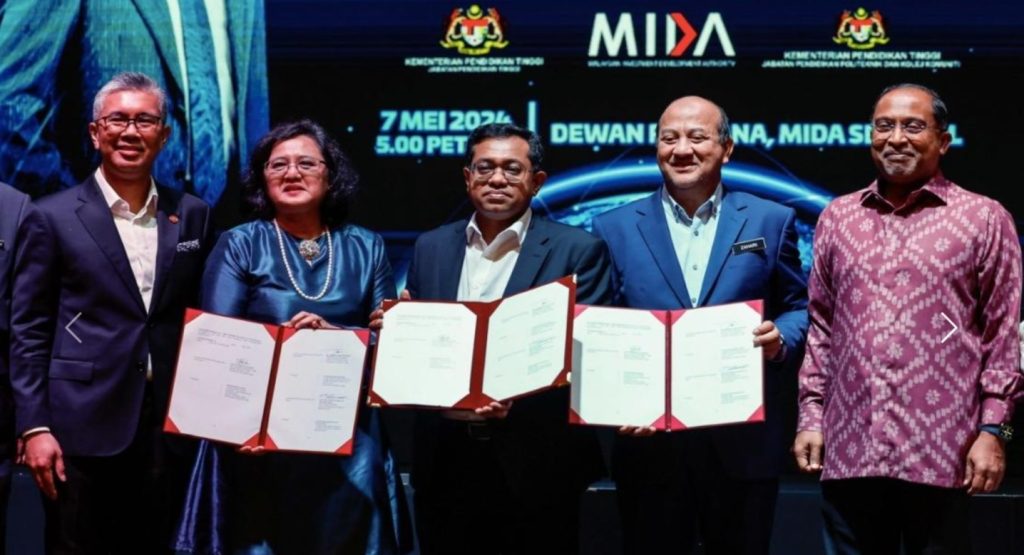
MIDA-MOHE Collaboration to Develop More Skilled Talent for Global Market

KUALA LUMPUR: The cooperation between the Malaysian Investment Development Authority (MIDA) and the Ministry of Higher Education (MOHE) can catalyse the country’s industrial growth, especially in supporting the development of more talent globally. Minister of Investment, Trade and Industry (MITI) Tengku Datuk Seri Zafrul Abdul Aziz said a trained and competitive workforce is key to the success of the New Industrial Master Plan (NIMP) 2030. “The shortage of skilled talent became a constant issue among our investors, both domestic and foreign. “Without a holistic solution on talent development and supply, Malaysia can never achieve the economic complexity, high-tech industrial ecosystem, net-zero target or the economic security envisaged by the NIMP 2030,” he said at the Memorandum of Understanding signing ceremony between MIDA and MOHE, to which the Minister of Higher Education Datuk Seri Zambry Abd Kadir was also present. According to Tengku Zafrul, the collaboration is in line with the aspirations of the MADANI Economy framework that aims to create graduates and skilled talent to crown Malaysia among the 30 largest economies in the world by 2033. He said that investment in the industrial sector is one of the most stable job creators for a country. “This is the kind of steady and enduring capital that Malaysia needs,” he said. Between 2021-2023, he noted that as many as 150,000 job opportunities were created through 2,386 approved manufacturing projects. Out of this, over 81% have already been implemented and most of those opportunities are for high-income skilled talents for Malaysians. “For manufacturing projects that were approved for that period, a total of 3,678 (over 83%) have been implemented, while 612 (14%) projects are at the planning stage,” he stated. Tengku Zafrul said that in 2023 alone, the project implementation rate shows that more than 63% (559 projects) have been implemented, covering projects in the production stage, factory construction or machine installation. “Typically, each project takes 18 to 24 months to implement. Almost 35% (309 projects) are at the planning stage including activities such as location determination and discussions with developers and consultants. “Only 1.25% (11 projects) have yet to be implemented and 4 other projects that cannot take place for certain reasons, including changes in investor strategy,” he explained. He added that the current rate is encouraging as this investment is unlike the capital market where funds can go in immediately, but can also be withdrawn in just a few hours. “When we ensure a robust talent pipeline, we will strengthen Malaysia’s industrial capacity and this is where we can push value proposition that Malaysia is where global starts,” Tengku Zafrul said, adding that Malaysia is where global companies can situate their regional hubs and where homegrown companies can grow into global champions. — BERNAMA

News

Shell Committed to Malaysia Mobility Ops

BENGALURU: Shell reaffirms its dedication to the mobility sector in Malaysia despite recent reports suggesting discussions with Saudi Aramco regarding the potential sale of its petrol stations in the country. According to Reuters, discussions commenced in late 2023, with a potential deal valued at up to US$1 billion, as per four industry sources. With approximately 950 fuel stations in Malaysia, Shell ranks as the second-largest operator following state-owned Petronas. In addition to its retail presence, Shell engages in the sale of industrial lubricants, offshore crude oil and natural gas extraction in Sarawak and Sabah, and participation in two liquefied natural gas joint ventures within the nation. This purported divestment aligns with CEO Wael Sawan’s strategy to prioritize the most profitable segments of the company. As part of this initiative, Shell aims to divest 500 fuel stations within the current and following fiscal years. Furthermore, the company is in the process of selling its Singapore refinery and petrochemical complex. —REUTERS

Investment & Market Trends, News

Malaysia to Engage in Deeper Collaboration with China

KUALA LUMPUR: Malaysia foresees significant potential for deepened collaboration with China, mainly in industries such as infrastructure, digital economy, green development, new energy vehicles and the rare earth, said Deputy Prime Minister Datuk Seri Fadillah Yusof. He noted that Malaysia’s MADANI initiative aligns with the values and principles of the Community Shared Future (CSF) advocated by President Xi Jinping since 2013. “Both concepts advocate and promote innovation, care and compassion, inclusiveness and mutual respect. The MADANI economic framework aims to strengthen national competitiveness by focusing on fiscal sustainability, excellent governance and effective service delivery. “The two countries can translate these concepts into reality for the benefit of their people,” Fadillah said during his keynote speech at the Malaysia-China Commemorative Forum, which was presented by Deputy Energy Transition and Water Transformation Minister, Akmal Nasrullah Mohd Nasir. Fadillah also emphasised on Malaysia’s leadership in promoting renewable energy through its partnership with China, considering that both nations are heavily investing in clean technologies such as solar, wind and hydroelectric power. He said that the Malaysia-China collaboration has expanded beyond technology, with both countries actively participating in knowledge-sharing initiatives to harness the immense potential of green energy. “Through these initiatives, we strive to reduce greenhouse gas emissions and mitigate the impacts of climate change. By prioritising innovation and sustainable development, Malaysia and China are making significant contributions. “We are addressing global climate challenges while also unlocking new economic opportunities. This dual approach promotes growth while ensuring environmental stewardship,” he added. China has remained Malaysia’s largest trading partner for the past 15 years, with total trade between the 2 countries reaching US$98.8 billion (RM450.84 billion) in 2023, with imports from China amounting to US$56.69 billion (RM258.63 billion). These imports predominantly consist of electrical and electronics products, machinery and chemicals, underscoring the robust economic relationship between the two nations. Meanwhile, Malaysia-China Business Council Executive and Acting Director Datuk Alvin Tee Guan Pian highlighted an increasing interest among Chinese investors, particularly in the data centre industry. “Malaysia is among the earliest countries in the region to venture into the digital economy. We established the Multimedia Super Corridor to accelerate the industry’s growth. As we open our doors to investors, we need to ensure that we meet the local content requirements. “We must ensure that wherever investors from China come in, the local content contribution is reasonable. We don’t want to close our doors, but it must genuinely be a win-win situation,” he added. — BERNAMA

Scroll to Top

Subscribe
FREE Newsletter