Author name: admin

Investment & Market Trends, News

EWOG ‘Acknowledges and Respects’ SSM’s Decision to Freeze Trust Account Funds

KUALA LUMPUR: The Companies Commission of Malaysia (SSM) issued an order letter to freeze funds in the trust accounts of East West One Planter’s Scheme, East West Horizon Planter’s Scheme and East West Planter’s Scheme 1 on 28 April, to which the East West One Group (EWOG) responded that it acknowledges and respects the decision. According to SSM, the move was a follow-up to the investigations it conducted on the companies under EWOG. “The order letter was sent to Pacific Trustees Bhd – the trustee for EWOG – on 5 April 2024, aimed at safeguarding the interests of investors in the schemes. It is a follow-up to the proposal by EWOG as the main holding company to carry out a recovery and restructuring plan for the schemes by utilising funds in the trust accounts,” SSM said. Through the directive, SSM said Pacific Trustees is required to maintain funds in the Trust Account, Reserve Fund Trust Account and Sinking Fund Trust Account, wherein the said funds are prohibited from being withdrawn and transferred to the management company in line with the provisions of Section 48(4)(a) of the Interests Scheme Act 2016. “However, this fund freeze is subject to a recovery and restructuring plan for the schemes, upon approval by a majority of investors in the investors’ meeting,” it added. Meanwhile, in a statement by EWOG, the company said, “EWOG is fully committed to cooperating with SSM and all regulatory bodies. We are taking necessary steps to ensure compliance and facilitate a thorough and transparent review process.” According to the company, the management of EWOG has sought to bring the ongoing issues to the planters through the organisation of planter’s meetings as provided by the trust deeds and the Interest Scheme Act 2016. However, those attempts have been disrupted by a minority group of planters through court actions.  The latest was an ad interim injunction that halted the meetings scheduled on 5 April 2024. Regrettably, the interim injunction also interrupted ongoing rehabilitation efforts, which commenced early last year. “This disruption in rehabilitation work poses a significant challenge to safeguarding and enhancing the investment interests of the majority of our stakeholders. The delay in rehabilitation has severely affected the yield of our plantations, making it increasingly difficult to restore and maintain the health and productivity of our biological assets, ultimately impacting the value of our investors’ holdings,” the company said. To this end, EWOG urges all planters to come together to support the rescheduling of the planter’s meeting. “It is vital that the voices of all the Planters are heard, and a decision is reached to path the way forward for all our schemes,” it added.
News

Optimise Flight Operations to Mitigate on Middle East Volatility, Say Experts

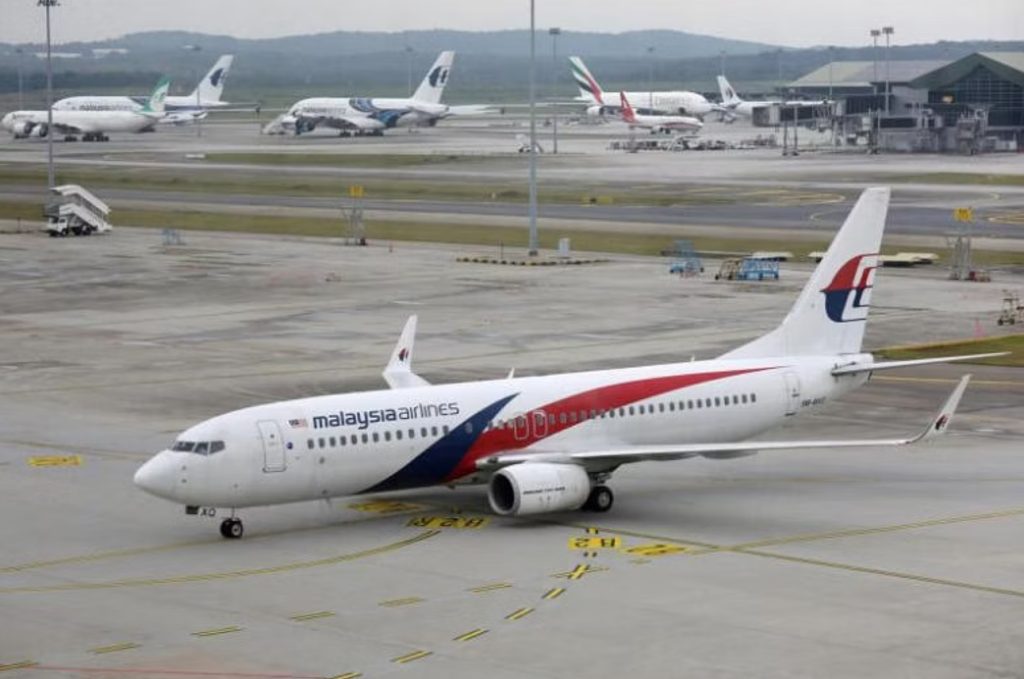
KUALA LUMPUR: Airport operators should be proactive in leveraging and applying suitable measures to address changes in flight departures and arrivals to reduce any chaotic scenarios at the airports if the Middle East conflict continues to escalate further, said aviation experts. Following the recent development in Iran-Israel tensions, the Iranian airspace was closed temporarily for a few days before reopening yesterday, whereas several airlines around the globe had been avoiding the airspace, including Malaysia Airlines. Universiti Kuala Lumpur Malaysian Institute of Aviation Technology economist (aviation and aerospace) associate professor Mohd Harridon Mohamed Suffian said the shutdown of airspaces would partially affect passenger traffic, particularly for destinations located in Iran. “Furthermore, the shutdown entails the diversion of flights from their nominal routes, hance the financial economics of flights are not optimum. “There would be an increase in the utilisation and burning of fuel, an increase in the duration of flights and (multiple) rescheduling of departures and arrivals,” he said. Harridon stressed that airport operators should be proactive by compartmentalising sections of their operations and utilising several mathematical models to extract functionalities of these sections. “With this, several solutions can be effectively produced and applied in order to dampen any rise in cost and to (lessen) any financial implications,” he opined. He also said that rescheduling flights should consider factors such as minimising delays in the arrivals and departures, reducing time to prepare the aircraft and utilising optimum manpower at the gates. “This is important so that the process of loading and unloading of passengers would be swift and efficient and gates can be prepared in a shirt amount of time for the next incoming and outgoing flights,” he added. As for airlines, he said carriers could perform optimisation of their flight operations via numerous mathematical modelling such as Monte Carlo simulation, resources modelling and others to mitigate the issue. Harridon posited that these methodologies could aid in the reduction and depreciation of costs, which would otherwise increase as a result of the shutdown of the Iranian airspace. “Since Iran is also an oil-producing country, the airspace shutdown has political implications where logistical supply of oil and its production from Iran would be altered, thus affecting crude oil prices,” he pointed out. Meanwhile, Endau Analytics Founder and Aviation Analyst Shukor Yusof said airport operators such as Malaysia Airports Holdings Bhd (MAHB) are at the mercy of geopolitics. “It is out of their hands. They need to quickly come up with a strategy to mitigate losses as this conflict might worsen. “I am sure they have the people who are adept at risk management. If not, they would need help from experts,” he said. Shukor believed that the war of attrition in the Middle East would cause considerable harm to airlines, especially intercontinental flights between Southeast Asia and Europe, as fuel and insurance costs would likely rise if the conflict is not resolved soon or worse, escalates further. “It will affect the entire aviation industry as it relies heavily on global interconnectivity and no doubt it will impact Malaysia and the region,” he added. — BERNAMA

Investment & Market Trends, News, Uncategorized

South Korea Export Growth ccelerates

SEOUL: South Korea witnessed a surge in export growth last month, signaling the potential for sustained economic momentum following a faster-than-expected expansion in the previous quarter. Adjusted for working-day differences, shipments increased by 11.3% compared to the previous year, as per data released by the customs office yesterday. Unadjusted figures showed headline exports rose by 13.8%, with overall imports also experiencing a 5.4% increase, resulting in a trade surplus of US$1.5 billion. South Korea, a significant player in global trade, has seen demand for its goods rebound since late last year. The economy expanded by 1.3% in the first quarter, surpassing even the most optimistic estimates, largely driven by exports. Despite ongoing Middle East tensions and elevated global interest rates, semiconductor sales have seen a resurgence. Major companies like SK Hynix Inc and Samsung Electronics Co have reported better-than-expected earnings, benefiting from increased demand for memory chips. “Export growth is expected to continue driving growth this quarter, especially fueled by strong demand for semiconductors,” noted Dave Chia, an associate economist at Moody’s Analytics, prior to the release of trade figures. South Korean exporters have particularly benefited from robust demand in major economies like the United States. The International Monetary Fund predicts a growth pickup in advanced economies this year, while emerging markets may experience a slight slowdown. “While Asian exports, especially semiconductors, are likely to remain robust, caution is warranted regarding the broader outlook for external demand,” said Sheana Yue, an economist at Oxford Economics. A major concern for policymakers is the weakening value of the won against the US dollar. While some companies like Hyundai Motor Co have seen improved earnings due to this, smaller firms and importers are grappling with higher costs of raw materials and energy. Additionally, the outlook for demand from China remains uncertain. The second-largest economy is struggling to recover from a domestic spending slump, as highlighted by a surprise decline in industrial profits in March. Exports to China in April totaled US$10.5 billion, marking a 9.9% increase from the previous year, while exports to the United States amounted to US$11.4 billion, a 24% rise, according to the Trade Ministry. — BLOOMBERG

Microsoft CEO Satya Nadella
News

Microsoft’s $2.2 Bil Investment Propels Cloud and AI Services in Malaysia

KUALA LUMPUR: In a statement on Thursday, Microsoft announced its commitment to invest $2.2 billion in Malaysia over the next four years, aimed at bolstering the nation’s digital transformation. This significant investment marks Microsoft’s largest in Malaysia since its inception 32 years ago. CEO Satya Nadella’s visit to Kuala Lumpur as part of his Southeast Asia tour underscores the company’s dedication to promoting its innovative artificial intelligence (AI) technology in the region. Prior stops in Indonesia and Thailand set the stage for this pivotal announcement. Microsoft’s investment will encompass the development of cloud and AI infrastructure, as well as the provision of AI training opportunities for 200,000 individuals, thereby nurturing Malaysia’s burgeoning developer community. Furthermore, the tech giant pledges collaboration with the Malaysian government to establish a national AI Center of Excellence and fortify the nation’s cybersecurity capabilities, signaling a strategic partnership geared toward advancing Malaysia’s digital landscape.–REUTERS

ESG, News

Yayasan Hasanah Changing the Game in Community Development

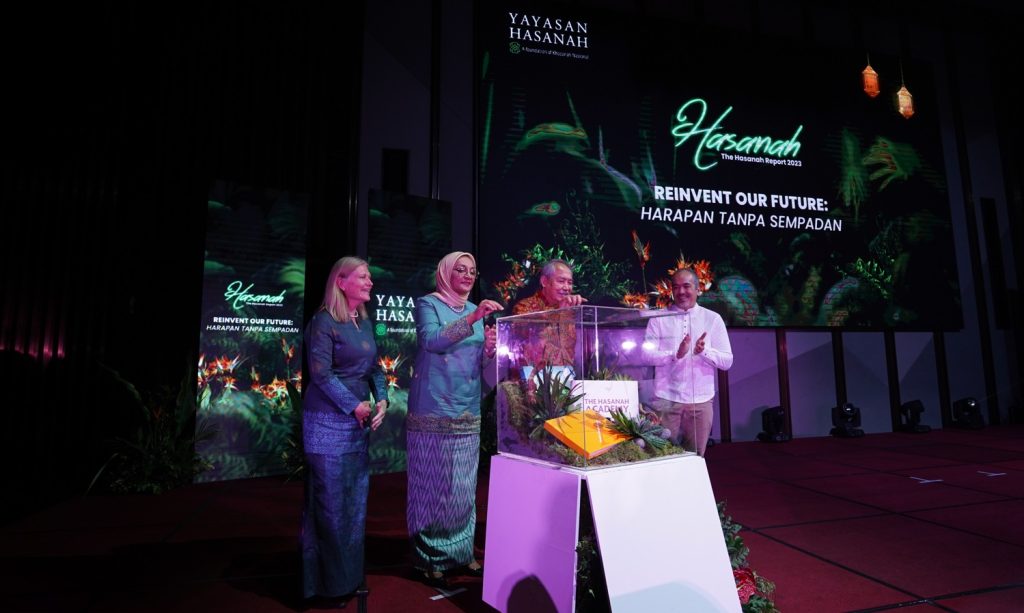
KUALA LUMPUR: Impact-based foundation of Khazanah Nasional Bhd, Yayasan Hasanah launched its 10th edition of The Hasanah Report (THR) 2023, revealing a total of RM223 million worth of funds disbursed in 2023 with a reach of 2.9 million people in Malaysia across all layers of society. According to the report, a total of RM1.6 billion worth of funds have been disbursed to date since 2015, across core areas of education, community development, arts, heritage and culture (AHC) as well as environment and knowledge. The report marks a decade of Yayasan Hasanah being the leading foundation in Malaysia’s philanthropic sector, going beyond charity but anchored in the concept of social justice for the rakyat. “When we look back at the milestones achieved by our partners, a unifying theme emerged: the inspiring stories of trailblazers, stereotype-breakers and courageous dreamers. These are the people who are forging new possibilities and shaping our collective future narrative, which is what inspired the theme of our report this year of ‘Reinventing our Future: Harapan Tanpa Sempadan’,” said Yayasan Hasanah Trustee and Managing Director Dato’ Shahira Ahmed Bazari. In the report, Hasanah highlighted one of the many livelihood programmes supported by the Ministry of Finance, namely the Blind Planters Programme in Terengganu which offers training for visually impaired individuals to become planters, cultivating the Terengganu Sweet Melons to generate income, successfully harvesting a collective total of 387kg of the fruit to date. This initiative not only challenges the stigma surrounding blindness but also broadens the horizons of career options for the visually impaired as well as inspiring new perspectives in empowering other vulnerable communities, especially the B40 community. The foundation also recognised the exponential growth of numerous community leaders who have emerged through programmes supported by Hasanah, such as the Temiar Orang  Asli community in Perak, who – with the leadership of the Tok Batin – have transformed their village into an ecotourism destination, creating sustainable income opportunities, generating close to  RM 40,000 in revenue within seven months from its launch. Within the environmental sector, Hasanah has been steadfastly supporting Roots & Shoots Malaysia since 2019 which began with a handful of dedicated youth volunteers and has grown into a movement empowering 317 young individuals. The volunteers are allowed to collaborate with a diverse array of NGOs, amplifying their impact and contribution to environmental causes. Emphasising the power of the Public-Private-Philanthropy partnership model, Shahira added, “We’re excited to see the involvement of youth across various impact areas – from education to community development – underscoring their potential to shape Malaysia’s future.”

Investment & Market Trends, News

Dagang Net, a Subsidiary of DNeX, Achieves CMMI Maturity Level 3 Appraisal

CYBERJAYA: Dagang Net Technologies Sdn Bhd (“Dagang Net”), a wholly-owned subsidiary of Dagang NeXchange Berhad (“DNeX”), has achieved an impressive milestone by attaining Maturity Level 3 of the CMMI Institute’s Capability Maturity Model Integration (CMMI)® Version 3.0 for its Technology and Human Resource functions. The CMMI framework serves as a guide for organizations aiming to enhance their operational efficiency by improving their capabilities. This appraisal signifies Dagang Net’s adherence to well-defined processes, as per established standards, procedures, tools, and methods. Valid until 12th April 2027, this recognition underscores Dagang Net’s continuous refinement and enhancement of its standard operating procedures over time. Tan Sri Syed Zainal Abidin Syed Mohamed Tahir, Executive Chairman of DNeX, expressed pride in this achievement, emphasizing the company’s unwavering dedication to quality output. He highlighted how this milestone not only strengthens customer trust but also underscores Dagang Net’s commitment to delivering innovative solutions and exceeding customer expectations. In line with their dedication to continual improvement, the company actively solicits feedback from customers to identify areas for enhancement. This proactive approach ensures that their products and services remain competitive and relevant in the ever-evolving market landscape. Tan Sri Syed Zainal Abidin Syed Mohamed Tahir affirmed the company’s belief in the journey of continuous improvement, stating their commitment to reviewing product performance, identifying opportunities for enhancement, and implementing improvements based on data-driven insights and customer feedback.

News

ICAP Shares Outperform MSCI Malaysia, S&P500, and Nasdaq in 1- and 3-Year Periods in USD

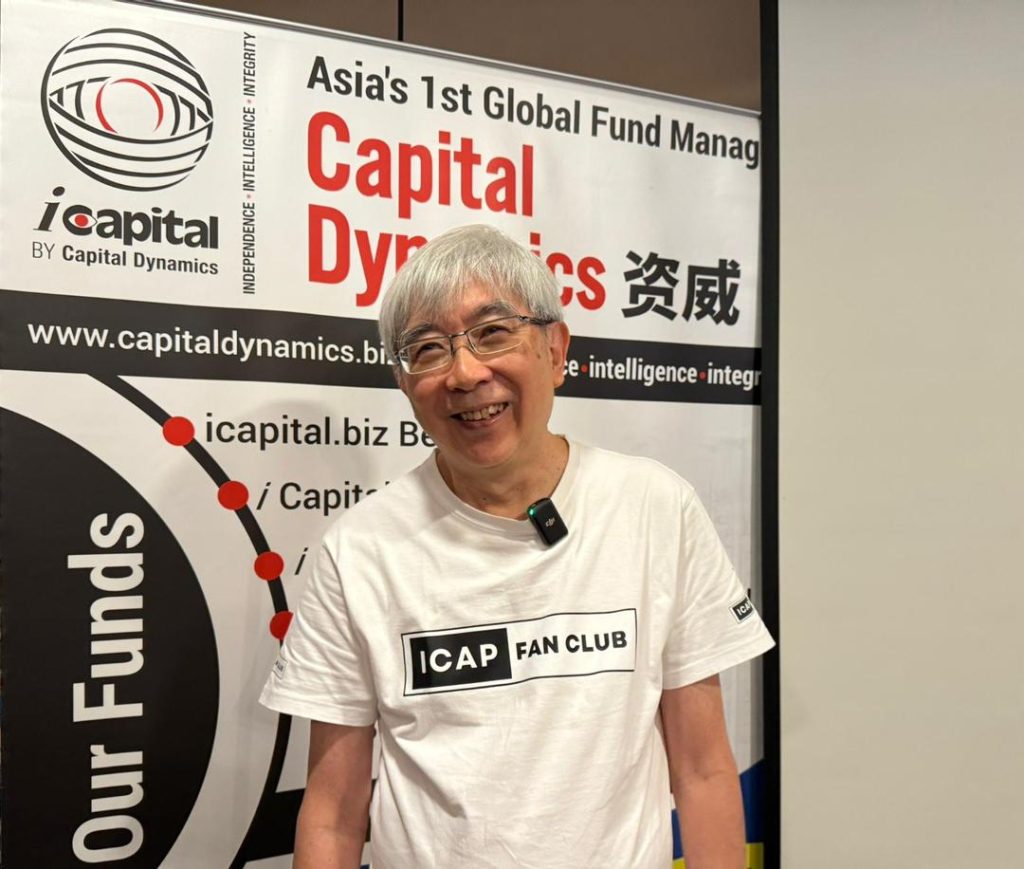
KUALA LUMPUR: In the realm of investment performance, icapital.biz Berhad (ICAP, 5108), Malaysia’s sole listed closed-end fund, has unequivocally surpassed major benchmarks – the MSCI Malaysia Index, the S&P500, and Nasdaq – in the span of a year, measured from April 1, 2023, to March 29, 2024. During this twelve-month period, ICAP’s share price surged by 47.75%, while the MSCI Malaysia returned (-0.98%), and the S&P500 and Nasdaq yielded returns of 27.86% and 34.02% respectively. Extending the horizon to three years, ICAP continued to demonstrate superior performance, achieving a return of 49.34%. In contrast, the MSCI Malaysia index, S&P500, and Nasdaq yielded returns of (-17.58%), 32.26%, and 23.65% respectively over the same period. As of March 29, 2024, ICAP’s total net asset value (NAV) stood at RM536 million or RM3.82 per share, based on its 140 million shares outstanding. Tan Teng Boo, the Designated Person of ICAP, confidently stated, “Whoever doubts Malaysia’s potential as an investment haven hasn’t looked closely enough. It can even outshine Nasdaq given the right Malaysian asset. Investing in ICAP shares not only secures robust returns but also shields against currency fluctuations,” he emphasized. Tan, recently appointed as Adjunct Professor of University of Technology Sydney (UTS) in Australia, expressed optimism about the Malaysian market during Investor Day on November 5, 2023, citing favorable macroeconomic conditions. He anticipates a sustained bullish trend in the Kuala Lumpur Composite Index (KLCI) over the next three to five years, driven by overarching macroeconomic factors. Tan forecasts the KLCI index to range between 2,500 to 3,000 points over the next three to five years. In light of these projections, Tan envisions two scenarios for ICAP’s share price if the KLCI reaches 3,000 points. Firstly, Tan anticipates ICAP’s NAV to double to RM7.86. Assuming ICAP’s share price mirrors the NAV at RM7.86, this implies a surge of RM4.81 or a 158% increase from RM3.05. In the second scenario, Tan notes that historically, ICAP’s NAV has outperformed the KLCI by an average of 6% annually. Consequently, if the KLCI doubles in five years, ICAP’s NAV would reach RM10.19. Assuming a 10% premium to NAV, ICAP’s share price would be RM11.21, translating to a rise of RM8.16 or 267% from RM3.05. Tan underscores that these performance scenarios exclude the impact of ICAP’s innovative dividend policy, which aims to narrow the gap between ICAP’s share price and its NAV per share. Introduced on September 29, 2023, this innovative dividend policy comprises a Base Rate of 1% of ICAP’s NAV per share, plus 8% of the difference between ICAP’s share price and NAV, referred to as the Top-up Rate. In essence, this policy amalgamates the 1% Base Rate and the 8% Top-up Rate to enhance returns for shareholders.

Investment & Market Trends

PublicInvest positive on Farm Price Holdings’ expansion, earnings outlook

KUALA LUMPUR: Public Investment Bank Bhd (PublicInvest) is seeing a positive outlook for Farm Price Holdings Bhd’s (FPHB) expansion plans, particularly its enlarging operational facilities to expand its market coverage for business growth and enhance its supply chain in fresh vegetables. In a report, PublicInvest highlighted several developments that are expected to fuel FPHB’s growth in the near future. These include building more facilities in Senai, Johor, expanding areas for value-added processing, buying new machinery and equipment, increasing their transportation fleet, setting up an additional regional distribution centre, and establishing a sales and marketing office in Singapore. Further, PublicInvest noted that FPHB also has several competitive advantages, which include an established track record, a broad range of products along with value-added services, well-developed supporting infrastructure, a wide network of suppliers to reduce the risk of supply disruptions, a dual-channel distribution system, and an experienced management team. The bank-backed research firm said as of March 27, 2024, FPHB had about 980 stock-keeping units (SKUs) of fresh vegetables. This inventory includes around 510 SKUs of whole fresh vegetables, 320 SKUs of pre-packed vegetables, and 150 SKUs of fresh-cut vegetables. The pre-packed vegetables are mostly sold under FPHB’s brands, Farm Price and TLC Fresh, along with some brands owned by customers. Fresh-cut vegetables are primarily sold to foodservice operators and wholesalers. A small amount of these are also marketed under the Farm Price brand, but none under third-party brands. PublicInvest said that as of March 27, 2024, FPHB’s Senai Centralised Distribution Centre spans 78,721 square feet, including 24,066 square feet of cold room facilities for storage, processing, and packing, alongside areas for ambient temperature storage. The company plans to expand this centre by building additional structures on a 1.9-acre plot purchased in 2023, directly behind the existing facilities. The planned expansion includes a 2-storey operational building with office and cold room facilities, a 4-storey accommodation block for workers, and a covered workshop. When completed, the expanded area will be approximately 84,790 square feet, which includes an extra 4,000 square feet of cold room space. This will increase the centre’s capacity from handling 29,669 pallets per year to about 40,000 pallets per year by 2026. On the same date, an architect was hired to prepare the building plan submission, and the new operational building is expected to start operations by the first quarter of 2026. Additionally, FPHB intends to grow its processing capabilities by adding around 4,000 square feet of floor space at the Senai Centre, particularly to enhance its range of value-added products such as pre-packed and fresh-cut vegetables. The related renovations, which will expand the processing area and the cold room facilities, are set to start in the third quarter of 2025 and should be completed by the end of the fourth quarter of 2025. Touching on earnings forecast, PublicInvest said while FPHB’s current facility is operating at full capacity, the research firm anticipates that the company’s growth will be supported by new distribution centres in Cameron Highlands and Nilai. These centres are expected to start operating in the fourth quarter of 2024. Additionally, FPHB can increase its production capacity by adding extra processing shifts and making more delivery trips if needed. “As a result, we are projecting that FPHB’s core net profit will grow by an average of 18 per cent in the financial years 2024-2025. “This growth is expected to come from better economies of scale, expansion into new geographical areas, and improvements in the supply chain with the start of the new distribution centres,” PublicInvest noted. “FPHB’s net gearing ratio currently stands at 0.4x. We expect the company to be in a net cash position after IPO,” the firm noted.

ESG

Frangipani Langkawi Accelerates Path to Sustainability, Sets Target to 2030

KUALA LUMPUR: The tourism and hospitality sector is strongly emerging as a pivotal player in shaping a more environmentally conscious future as the world increasingly prioritises sustainability in all aspects of businesses. However, key industry stakeholders face challenges that demand strategic attention and action to effectively contribute to the United Nations (UN) Sustainable Development Goals (SDGs). While many prominent players in the tourism and hospitality sector openly declare their dedication to corporate sustainability, the prevailing understanding within the industry prioritises business goals, streamlined operations, and saving money rather than genuine sustainability concerns. One local hospitality player has been moving strongly towards achieving sustainability in its businesses and operations. The Frangipani Langkawi Resort And Spa group managing director Anthony Wong said the resort achieved accolades from two UN bodies, the United Nations Development Programme (UNDP) and the UN Sustainable Development Solutions Network (SDSN), in 2022, declaring it the centre of excellence (CoE) in sustainable hospitality. “Our book, which is 270 pages long, offers over 200 ways to practice sustainability. We envision achieving carbon neutrality by 2030 instead of 2050 and showing others how to accomplish this. “From the start of our resort operations, we have considered sustainability, and when the UN introduced the concept of sustainability, we used it as a benchmark. “Over the past 18 years, we have dedicated ourselves to this endeavour, successfully attaining all 17 SDGs. Our team, comprising three full-time members solely dedicated to environmental, social, and governance (ESG) initiatives within the resort and two external team members, receives unwavering support from all department heads in our pursuit of sustainable goals. “We have full-time officers recording our water, energy, food and green practices, and documentation is compulsory where we produce academic papers to teach local higher learning institutes on sustainability practices,” Wong told The Exchange Asia. The resort is allocating approximately RM5 million to enhance its facilities, particularly water and food security. Additionally, more investments will be made in energy-saving equipment such as solar panels, wind turbines, and electric vehicles (EVs). Furthermore, there are also plans to increase tree planting to serve as carbon sinks. Note that the current best practices in sustainable hospitality involve the hospitality industry’s better waste management and reduction. This means hotels must take initiatives to use less plastic and disposable items, waste less food, and explore innovative recycling solutions. Secondly, water conservation, whereby water-efficient fixtures, rainwater harvesting systems, and greywater recycling technologies are adopted to reduce water consumption without compromising guest comfort. Finally, sustainable sourcing, local partnerships, and how leading hotels should prioritise procuring goods and services that meet ethical and environmental standards, including organic and locally produced items. Hotels can reduce their carbon footprint by fostering local partnerships and supporting nearby businesses and communities. When asked to elaborate on various sustainability initiatives, Wong said the resort is currently upgrading every room to have a larger internal garden with the edible landscape around the villas, watering from grey water and more rainwater harvesting, and underground tanks and most villas have rainwater harvesting tanks. “We are producing more organic food and creating more education programmes focusing on the environment and sustainability, especially for children. We are also planting more flowers and making our landscape more colourful. “Our resort boasts 115 villas along a spacious 350-meter beachfront, set within an expansive 11.3-acre estate. “We prioritise family education and provide healthy dining options. Unlike targeting the mass market, we cater to a more intimate experience,” Wong said. When asked how the leadership philosophy influences the resort’s management, Wong said leadership is needed as sustainable concepts are still new in Malaysia. “We train everyone on why and how. We recognise internal green champions. We have the training, documents, and videos to learn, and most importantly, I am teaching staff myself on the ground. “Our main challenge is recruiting skilled staff who can grasp the principles of sustainable hospitality and possess a warm, friendly attitude. “We are open to offering higher wages to incentivise productivity. Therefore, the ability to multitask is essential for survival and success in our industry,” Wong pointed out. “My journey in greening and sustainability started nearly 50 years ago, and I pioneered ecotourism in the Asia Pacific. “We are now partnering with the UN to spread our sustainable green practices and discoveries so more countries can learn from our work globally. The best way for capacity building. “Our goal to be a sustainable green hotel school is almost there. We can show over 200 ways to save involving architecture, bioengineering, chemistry, natural science, biology and continuous research,” Wong said.

Microsoft chief executive officer, Satya Nadella
Investment & Market Trends, News

Microsoft Plans to Invest US$1.7 Bil in Indonesia

JAKARTA: In a significant move, US tech titan Microsoft has declared a substantial investment in Indonesia during the visit of its CEO to Jakarta for discussions with governmental representatives. The company has revealed plans to inject a hefty sum of US$1.7 billion over the next four years into the country’s infrastructure for cloud computing and artificial intelligence (AI), alongside initiatives to provide AI training for 840,000 individuals and bolster support for the burgeoning developer community. Highlighting the importance of this investment, Communications and Information Minister Budi Arie Setiadi emphasized its crucial role in Indonesia’s digital progress. He remarked that Microsoft’s commitment signals recognition of Indonesia’s significance within the global digital landscape. The establishment of a research and development center, slated for either Bali or the new capital city being developed in Kalimantan, aims to cultivate AI expertise within the nation. Minister Setiadi underscored the transformative potential of AI technology in enhancing productivity across various sectors, including agriculture and fisheries, thereby driving economic growth. Microsoft’s projections suggest Indonesia’s leading role in AI’s contribution to the national GDP by 2030 within the Southeast Asian region, contingent upon overcoming challenges such as digital proficiency gaps and data governance issues. Microsoft’s CEO, Satya Nadella, reiterated the company’s commitment to empowering individuals and organizations in Indonesia to leverage the upcoming AI advancements. Nadella announced ambitious training targets, aiming to equip 2.5 million individuals across the ASEAN region by 2025, with a significant portion allocated to Indonesia. This investment represents a milestone in Microsoft’s nearly three-decade presence in the country, marking a significant step towards fostering digital innovation and economic growth.

Scroll to Top

Subscribe
FREE Newsletter