Author name: admin

Property

Pelaburan Hartanah Attains AAA Rating From RAM Ratings

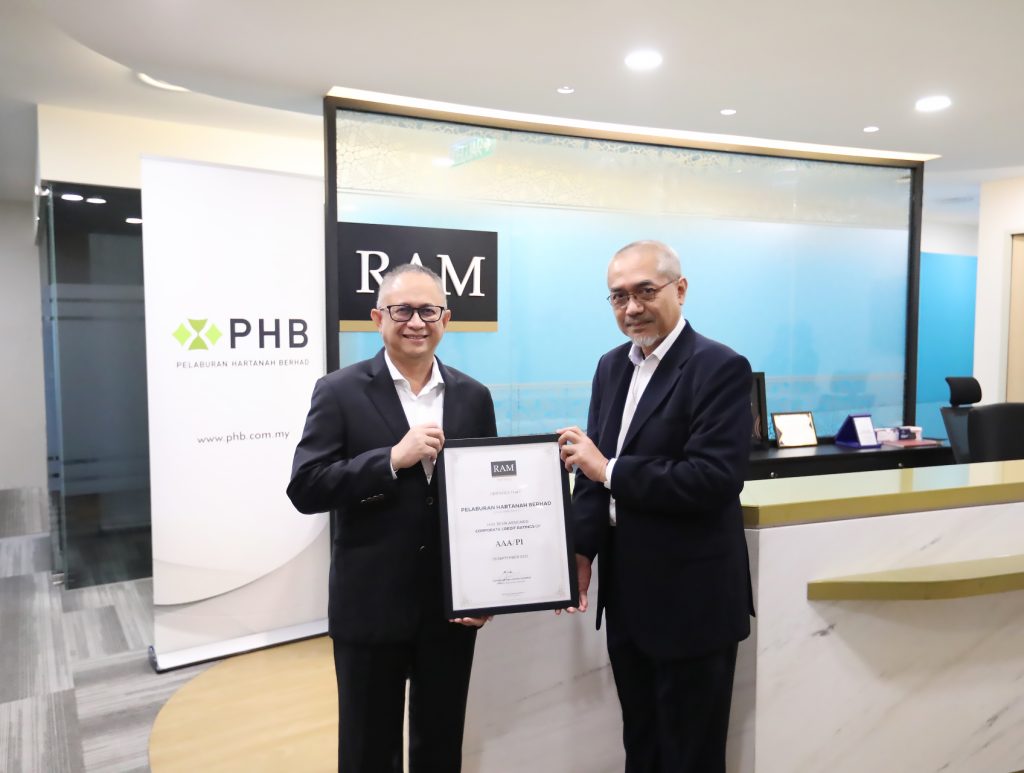
KUALA LUMPUR: Pelaburan Hartanah Bhd (PHB), the operational arm of Yayasan Amanah Hartanah Bumiputera, attained long and short-term corporate credit ratings of AAA and P1, respectively, from RAM Rating Services Bhd. The assigned ratings, accompanied by a stable outlook, reflect PHB’s robust financial health in meeting its financial obligations, supported by its strategic role in carrying out the government’s mandate to increase Bumiputera ownership and participation in the country’s commercial real estate sector. PHB group managing director and chief executive officer Mohamad Damshal Awang Damit said PHB’s success stems from acquiring commercial real estate in strategic locations around Malaysia. “This is achieved by maintaining financial discipline and balancing rapid expansion with prudent financial management, as seen in our robust balance sheet and optimal liquidity position, to carry out our mandate successfully,” he said in a statement. Since its incorporation in 2006, PHB has grown its real estate portfolio exponentially, reaching RM11 billion by the end of October last year and is on track to reach RM25 billion by 2030. PHB’s commitment to enabling ownership participation by the Bumiputera is realised through the injection of the beneficial ownership of its real estate assets into the Shariah-compliant Amanah Hartanah Bumiputera (AHB) unit trust fund. Further, PHB’s financial position is strong, with a healthy gearing ratio of 0.28 times and significant financial flexibility in the form of a large available credit line as of December 2022 to meet its short and long-term obligations. Tangible government support through monetary and non-monetary assistance, e.g., tax exemption schemes and grants, helps fund PHB’s property acquisitions and development projects and supplement its operational cashflows. RAM Ratings chief executive officer Awang Za’aba Awang Mahmud said as the government prioritises more prudent financial management, the agency believes the domestic capital market can be a good alternative source of funding for other similar government agencies to contribute to nation-building. “PHB’s commendable credit standing demonstrates its dedication to transparency, enabling the company to expedite its expansion ambitions and provide diversification benefits to investors while also helping advance Bumiputera economic wellbeing, in line with the broader national development agenda,” he said. The AHB is currently valued at RM4.85 billion, benefiting over 70,000 Bumiputera investors in Malaysia with a stable stream of yearly dividends ranging from 4.7 per cent to 7.5 per cent between 2011 and 2023.

Experts

Accelerate Construction Time Through Innovation: The Story Of The Self-Climbing Elevator

In the dynamic landscape of the Malaysian construction industry, where challenges like rising building costs persist, the need for innovation has never been more urgent. A 2022 study by The Redha Property Industry highlighted an annual increase in building costs, emphasising the importance of exploring innovative solutions to accelerate construction time and ensure long-term sustainability. The importance of the construction industry in Malaysia The construction sector has proven durable in Malaysia’s economic landscape and withstood downturns in past years. An overview of this journey was shared in the Economic Outlook 2023 by the Malaysian Ministry of Finance, highlighting the industry’s capacity to overcome obstacles and come out stronger. This industry is a dynamic force that creates jobs and increases productivity. The construction sector showcased growth, boasting a 5.8 per cent in the third quarter of 2023, according to the Department of Statistics Malaysia (DOSM). It also recorded a 6.2 per cent growth rate in the preceding quarter. These numbers signify the industry’s role in steering Malaysia’s economic momentum. Challenges faced by Malaysian main contractors Growth comes with challenges, and the construction industry in Malaysia is no exception. We need to understand some of the following challenges and look at how they can be improved through innovative technologies: Fluctuating raw material costs:  The Construction Industry Development Board (CIDB) highlights the constant flux in raw material costs. These costs, constituting a substantial portion of overall development costs up to 60 per cent of the gross development value (GDV), are a significant determinant of project viability. Land acquisition pressures:  The surge in demand for land, driven by a growing economy, poses a twofold challenge. Main contractors face increased landbank costs, and decisions on land acquisition are often based on future expectations rather than current circumstances. Accelerating construction time through innovation and technology The journey to accelerate construction time emerges as a strategy driven by the need to navigate challenges. This pursuit necessitates a shift towards adopting advanced technologies and streamlined construction practices, all aimed at amplifying productivity, cutting costs, and fortifying the overall development and growth of the industry. In an environment where construction expenses make up a substantial portion of overall development costs, completing projects at a swifter pace protects against potential cost increases during the construction phase. Looking beyond the nuts and bolts of construction, the acceleration of construction time plays a pivotal role in the broader context of efficiency improvement. This translates into a tangible advantage for developers – bringing projects to market faster. In an industry where timing can make or break success, the expeditious completion of projects equates to a competitive edge. Main contractors can capitalise on innovation. This aligns seamlessly with the ever-evolving demands of a dynamic market, where speed is synonymous with success. Despite the countless innovative solutions in the construction industry today, this article will narrow its focus to delve into the specific realm of construction elevators. The self-climbing elevator as a solution The self-climbing elevator emerges as an innovative solution. Construction projects grapple with external elevators, constantly dismantling and reinstalling as the building ascends. This not only leads to delays but disrupts the seamless flow of construction. Enter the self-climbing elevator with a temporary machine room that autonomously ascends within the building’s permanent elevator shaft as construction progresses. The innovation lies in its ability to ‘jump’ upwards, eliminating the need for constant adjustments that have long been a bottleneck in traditional construction practices. A hallmark of the self-climbing elevator is its contribution to accelerating construction timelines. With fewer external lifts required, main contractors can expedite the completion of building facades. Unlike external types, the elevator operates within the building, ensuring the safe transportation of people and materials in all weather conditions. This autonomy allows for scheduled jumps that harmonise with other construction activities, enhancing overall efficiency and expediting the construction schedule. KONE takes pride in presenting its own self-climbing elevator, known as JumpLift. With a focus on speed, smooth operation, safety, and cost-efficiency, the JumpLift stands as a beacon for a new era of construction methodologies. Instead of the standard speed of 0.5m per second, the JumpLift impresses with improved speed, reaching between 3.5m/s and 4m/s. This increased speed accelerates the vertical transportation of personnel and materials within the construction site. It also offers main contractors flexibility as it operates 24 hours a day. Its implementation aligns with local council regulations, effectively mitigating noise pollution during nighttime hours. Approved by local authorities, it is deemed efficient and safe, providing a dual assurance for project developers and stakeholders. KONE’s JumpLift has been used in key projects in Malaysia, such as the iconic Merdeka 118, where its innovative implementation facilitated a quicker handover for the main contractors, enabling them to achieve faster project handovers with efficiency and innovation. For main contractors, the elevator seamlessly complements and sometimes entirely replaces external hoisting systems, expediting the construction process. They will find that it accelerates the construction schedule, translating to faster returns on investment, lower interest payments, and various indirect cost savings. With JumpLift, less time is spent waiting, and workers no longer need to compete for space with building materials, revolutionising on-site logistics and enhancing the overall working environment. Time for a change To revolutionise the Malaysian construction industry, the time is right for main contractors to embrace smarter construction practices, exemplified by innovations like the self-climbing elevator, which leverages advanced technologies to transform traditional construction practices. Accelerating construction time requires swift adoption of advanced methods, efficient regulatory processes, and collaboration within the industry. By embracing innovation and efficiency, we can reshape how we build our homes, infrastructure, and communities. The story of the self-climbing elevator is not just about innovation but a narrative of progress, efficiency, and resilience in the face of industry challenges. As the construction industry in Malaysia evolves, adopting innovative solutions will be a defining factor in shaping a more sustainable future.

Energy & Technology

ACO Tech, Geno Group And MARii Collaborate To Accelerate Malaysia’s EV Ecosystem

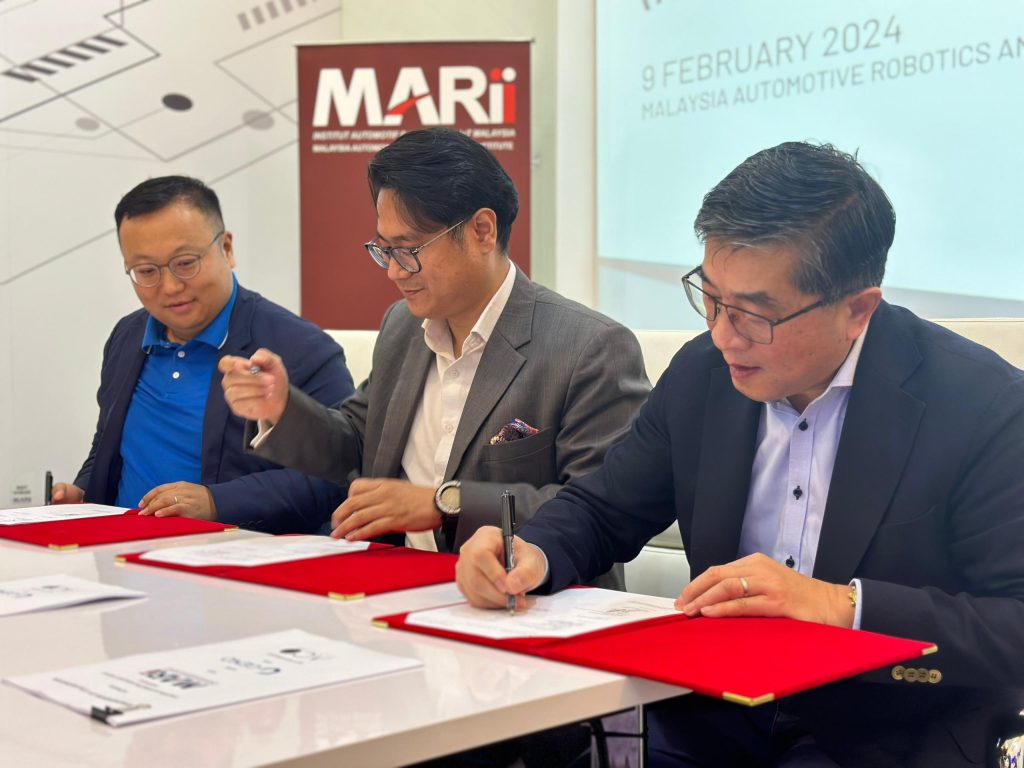
KUALA LUMPUR: Smart mobility provider ACO Tech Sdn Bhd (ATSB) has signed a memorandum of collaboration (MoC) with United Kingdom-based Geno Group Ltd and the Malaysia Automotive, Robotics & IoT Institute (MARii) to explore the use of blockchain solutions for Malaysia’s electric vehicle (EV) infrastructure. Among the blockchain solutions explored are smart contracts, digital traceability management of supply chain, tokenomics solutions and privacy protection technologies to complement ATSB’s solutions for e-mobility service platform (EMSP). This initiative can ensure data privacy and ownership, enable data monetisation, and ultimately benefit strategic investors through long-term sustainable investments. Present at the MoC signing were ATSB chief executive officer Li Pu, MARii chief executive officer Azrul Reza Aziz and Geno Group chief executive officer Zhang Yi Ian. Li Pu said the growth prospects of the mobility sector in Malaysia are positive, thanks to the government’s support and progressive national policies. “As a leading smart mobility solutions provider, ATSB is ready to share our knowledge and expertise and support all stakeholders in achieving national goals. “We are confident collaborations such as ours with MARii and Geno Group are the way forward in accelerating and expediting a comprehensive and conducive EV ecosystem for Malaysia, with an emphasis on security. “By addressing challenges and capitalising on opportunities, Malaysia can position itself as a leader in the EV revolution in Southeast Asia,” he said in a statement. The EMSP is the foundational layer of the government’s overarching connected mobility vision, which will help accelerate the development of EV infrastructure in the country. The collaborative expertise and capabilities of ATSB, Geno Group and MARii will effectively address concerns associated with owning an EV, such as the scarcity of charging ports and inconsistent charging rates. The utilisation of blockchain technology solutions empowers EV manufacturers, service providers, owners and users to engage more interactively through a tamper-proof decentralised ledger system. This approach aims to reduce costs, enhance user experience and confidence, and establish seamless tracking and maintenance records. Additionally, it facilitates peer-to-peer energy and charger-sharing, ensuring transparency throughout the entire lifecycle of products and services. This alliance is in line with the New Industrial Master Plan (NIMP) 2030 as well as the National Energy Transition Roadmap (NETR). The government aims to achieve 20 per cent of electrified vehicles (xEV) by 2030, 50 per cent by 2040 and 80 per cent by 2050. This agreement paves the way for the sector to become the first to leverage blockchain technology industry-wide in Malaysia. It will also assist the Government in realising the National Automotive Policy (NAP) 2020 by laying a solid foundation for the industry to be able to scale through the development of next-generation vehicles (NxGV), including EVs. It will also help create a national EV-ready infrastructure through Mobility as a Service (MaaS) and Blockchain as a Service (BaaS). Azrul Reza said MARii’s collaboration with ATSB, a joint venture between Proton Holdings Bhd, ECARX Holdings, Altel Communications Sdn Bhd, and Geno Group, marks a significant step forward in shaping the future of Malaysia’s EV ecosystem. “By exploring blockchain solutions, we are not only addressing current challenges in the EV sector but also laying the groundwork for a secure and scalable infrastructure aligned with the National Automotive Policy 2020. “By synergising our capabilities, we aspire to set new industry standards, promoting sustainable practices and user-centric innovations,” he said. Geno Group chief executive officer Zhang Yi Ian said this initiative signifies the first industrial-grade application of a blockchain solution. “The primary goal is to facilitate a transformative shift for participating enterprises towards a service-focused model. “This strategic move is aimed at enhancing engagement with end-user customers, enabling earlier, deeper, and more enduring interactions,” he said. ATSB, Geno Group, and MARii are committed to the active exploration of viable technologies towards the national connected mobility vision.  

Cover Stories, Experts

Ringgit, Why The Long Face?

It’s often cited that dollar strength is driving ringgit weakness, which bears some assessment given that the dollar is currently 2.17 per cent off its peak in October 2023 while the ringgit is again revisiting last year’s weakest levels. What, then, is the reason for its underperformance? Often cited are falling exports, political stability, economic fundamentals, consumer sentiments and perhaps because Coldplay only had one concert here. The lack of compelling domestic investments and the ease of moving capital overseas have also been cited. Periods of strength are seen as an opportunity to sell the ringgit. This, amidst relatively thin market conditions, can cause a rush for the exit, resulting in a price jump in reaction to large overnight moves. Or is it something else? A farewell to cheap money Over the past 5 years, the ringgit has moved from around RM4.02 at its strongest to where it is currently. Large trend moves can be explained by the dollar’s move, especially in 2022, in anticipation and the subsequent delivery of significant fed hikes. Driving this was soaring inflation driven by supply chain disruptions and revenge spending by consumers who had not only missed out on spending for over two years but were also buoyed by government handouts. The dollar’s rise was also due to better economic conditions juxtaposed with the continued zero-Covid lockdowns in China, which had negative knock-on effects on the region. The dollar came off its peak after markets reassessed further Fed rate hikes along with a string of weaker-than-expected US data. This should have seen the ringgit return to RM4.40, but it is trading closer to RM4.75. This divergence can be attributed to where ringgit peers are trading and, more importantly, how global bond yields have moved. Misery loves company The yen and the yuan are equally weak, as are their regional peers. Their respective movements mirror the ringgit’s, with the yen again visiting its weakest levels over the past year, similar to the ringgit. The Yuan is suffering from economic fears, and should it turn into reality, it would mean significant negative consequences for the region. Perhaps reflecting this, both the baht and rupiah have also been similarly weak, with the rupiah exceeding its weakest level last year. The yen is weak due to the persistently easy monetary policy, and the Bank of Japan (BoJ) is showing no concrete signs of shifting away from it. We can expect the ringgit to gain should the BoJ dial back its stance. China, showing real signs of improvements in the property and equity market, will also be helpful. It is best to be with the one who pays The rise in global yield driven by US treasuries has also been detrimental. The US 10-year treasury yields have risen significantly from around 0.60 per cent in mid-2020 to move ahead of 5.00 per cent last year. Observations of market movements show that periods of yield increases can drive the ringgit weakness or push back against the ringgit strength. While the dollar index has turned lower from 112 and is currently in a holding pattern between 101 and 105, yields have continued to tilt upward. Looking over the past 5 years, the 10-year Malaysian yields have exceeded those of the US, and this reversed in the middle of 2023, which is now yielding 0.55 per cent lower. This negative spread is also evident across the bond yield curve, with the 2-year US treasury and fed funds rate higher than those of its Malaysian counterparts. Higher US yields and a weakening ringgit deter significant foreign fund flows into local bond markets and weaken the ringgit bid, causing an imbalance in currency demand and supply. Fret not and carry on with local holidays Putting together the weaker ringgit is rather less a reflection of domestic troubles than one that is global. A move not in isolation but in lockstep with other currencies. As such, for the ringgit to turn and become stronger, we will have to see the dollar turning lower, yields falling, BoJ shifting its policy stance, China’s economic prospects improving, weaker US data or more acts booking their shows in Malaysia. What are domestic factors? Little out there indicates a radical shift in domestic fortunes, both positive and otherwise. Keep calm and carry on comes to mind here. Malaysia has a steady economic trajectory, well-functioning financial markets with strong institutions and little prospect of significant financial market losses. What of the political front? Is it any different from the upheavals seen in the rest of the world? So, as long as the bureaucracy remains well functioning, a more dynamic political front is now a feature here and worldwide. ‘Kita jaga kita’, but the fate over the intermediate term, it seems, is left to factors outside our borders.

ESG

Hong Leong Bank Collaborates With Refiller Mobile To Encourage Adoption Of Zero-Waste Lifestyle

KUALA LUMPUR: Hong Leong Bank Bhd (HLB) has collaborated with Refiller Mobile to encourage Malaysians to embrace a zero-waste lifestyle. Refiller Mobile becomes the seventh social enterprise on board HLB Jumpstart, the bank’s entrepreneurship-focused corporate social responsibility (CSR) platform dedicated to supporting social enterprises on their missions to uplift communities and contribute positively to society. Through HLB Jumpstart, the bank will facilitate the digitalisation of Refiller Mobile’s business operations and provide guidance on social media strategies to expand brand visibility and customer reach. HLB will also provide digital banking and payment solutions such as DuitNow QR codes and all-in-one payment terminals to enable seamless cashless payments. Additionally, HLB will also support Refiller Mobile in business and financial management through tailored advisory. HLB chief marketing and communication officer Zalman Zainal said the bank’s approach to environmental, social, and corporate governance (ESG) commitments and community investment in many different ways, one of which is by actively supporting social enterprises and aspiring entrepreneurs who are making a difference in their communities through creating social impact. “Through HLB Jumpstart, we look to support entrepreneurs and socially-driven businesses through digitalisation and industry-level guidance, helping them build a financially stable business and amplifying the positive impact they have in their communities. “We see our partnership with Refiller Mobile as a win-win situation for both parties, encouraging the adoption of a zero-waste lifestyle amongst Malaysians whilst helping to grow a small, local business with a noble cause. “With this, we hope to expand our ESG portfolio and capabilities even further, enabling a truly holistic adoption of sustainability practices in all layers of operations,” he said in a statement. HLB chief sustainability officer Chow Sheng Wai said the partnership is aligned with the bank’s sustainability-driven DNA as it looks to embed ESG values into its operations, extending even to its corporate collaborations. “We believe in the power of collaboration to drive positive change, and we want to work with brands and businesses that help us drive our ESG initiatives forward. “Refiller Mobile is the perfect partnership for us because it marries our passion for entrepreneurship with our commitment towards long-term sustainability. “We hope that this partnership will be mutually beneficial for all parties as we look to implement ESG-focused practices in our operations further while supporting our customers in their sustainability journeys towards a greener future for all,” she said. Founded by Oh Sok Peng, a former media producer, Refiller Mobile is Malaysia’s first zero-waste store on wheels. Her van, refurbished to carry products such as eco-friendly cleaning agents, personal care products like toothpaste and shampoo, dried fruits and nuts, and even dog treats, allows customers to stock up on essential household products right at their doorstep, eliminating wastage of non-recyclable containers. In their commitment to supporting local businesses and reducing environmental impact, Refiller Mobile sources all their products locally, mostly from stores and brands that have an eco-friendly DNA. Oh said a big part of their business is being mindful of their own carbon footprint. She runs her operation on an appointment-only basis and makes it a priority to source her products from local, zero-waste suppliers. Commenting on the genesis of Refiller Mobile, she cited her own challenges with living a zero-waste lifestyle and her passion for promoting responsible consumption. “Through going on-ground and engaging with the community, I learned that many want to reduce the waste they produce but do not know where to start. “There are also not many zero-waste, eco-friendly stores that provide a wide variety of products at an affordable price. “Hence, I thought of starting my own mobile ‘refilling’ store, filling a gap in the market whilst helping others on their zero-waste journeys,” she said.

Energy & Technology

Proton Sets New Sales Record In Brunei With X50 Taking The Lead

KUALA LUMPUR: National automaker Proton Holdings Bhd (Proton) is experiencing positive sales growth in Brunei, jumping 87 per cent with 789 Proton vehicles sold in 2023 from 422 units in 2022. In a statement, the automaker said the positive performance pushed the brand up to fifth overall in the sales table and garnered a market share of 5.4 per cent in Brunei, up one spot and an increase of 2.2 per cent over the previous year. Total industry volume (TIV) for the country closed at 14,640 units for 2023, up from 13,000 units for 2022. The Proton X50, the B-segment sports utility vehicle (SUV), leads sales for all Proton models in Brunei, with 476 units sold in 2023, making up approximately 60 per cent of total Proton vehicle sales and driving the model up to third overall in its market segment. To note, the Proton X50 has been the best-selling Proton X-series model since its introduction in October 2020. Over 100,000 units have rolled off the assembly line at Proton’s modern factory in Tanjong Malim, which is a testament to its popularity with customers both in Malaysia and overseas. Proton director of international sales division Steven Xu said the popularity of the Proton X50 in Brunei can be attributed to clear communications about its value, features, and brand equity. “Proton worked closely with our importers, PAD Motors, to promote the model’s competitive price and features over its rivals while offering finance packages to make ownership easier. “This was then bolstered by our on-ground activities to promote the Proton brand, which was assisted by the success of the X50 in Malaysia that helped build the confidence of Brunei customers,” he said. Other Proton models were also ranked in the top 10 of their respective segments in Brunei in 2023 due to their promotional and branding efforts. The Proton Persona and Proton Iriz were ranked sixth and eighth for B-segment cars, while the Proton X90 was ranked seventh for D-segment SUVs despite having been on sale for less than half a year. Using the success of 2023 as a platform, both Proton and PAD Motors are confident of achieving more than 1,000 units for Brunei in 2024. Key to achieving the goal is the introduction of the all-new Proton S70, which is due to occur before the end of February. The country is the first international market to receive the model, and 15 units were shipped there last month ahead of its official launch. “For 2024, Proton is confident of achieving more growth in Brunei. “With continued strong interest in the Proton X50 and other models, as well as the introduction of the Proton S70, we target breaking through the 1,000-unit barrier at the end of the year,” Xu said.

News

Malaysia Airlines Doubles Flights KL-Trivandrum Following Uptick In Demand

KUALA LUMPUR: National carrier Malaysia Airlines will be doubling the frequencies for its Trivandrum – Kuala Lumpur route following positive load factor performance and increasing demands starting 2 April 2024. This decision follows the recent increase in frequency between Amritsar and Kuala Lumpur from January 15, 2024. The airline commenced its inaugural flight to Trivandrum in November 2023, operating four flights weekly. With the amplification of Malaysia Airlines’ services from Trivandrum, this will bring the airline’s connectivity into India to 71 flights weekly. Currently, the airline offers flights from nine major hubs in India, including New Delhi, Mumbai, Bengaluru, Chennai, Hyderabad, Kochi, Ahmedabad, Amritsar and Trivandrum. Malaysia Aviation Group (MAG) chief commercial officer Dersenish Aresandiran said India remains an integral part of Malaysia Airlines’ global network. “With the introduction of the additional frequencies into Trivandrum, we will be strengthening our connectivity into India with 71 weekly flights from nine key hubs. “Furthermore, we are thrilled to introduce special fares for Indian travellers, providing them enhanced flexibility and travel options to explore the beauty of Malaysia, strengthening our position as the gateway to Asia and beyond. “As we aim to capture the growing demand from India, we are committed to ensuring that customer experience remains our top priority driven by our inimitable Malaysian Hospitality,” he said in a recent statement. Malaysia Airlines is offering special promotional fares for Indian travellers, particularly from Trivandrum and Ahmedabad from now until February 11, 2024, for travel up to May 12, 2024.

News

2024 Could Be A Great Year For Travel, Says Agoda CEO

KUALA LUMPUR: While 2023 proved to be a successful year for the travel industry, particularly in Asia, the first month of the year has set a positive tone, suggesting that 2024 could be a great year for travel. In a recent presentation at the ASEAN Tourism Forum 2024 (ATF) in Laos, Agoda chief executive officer Omri Morgenshtern  expressed optimism about the prospects of the travel industry in 2024. He noted significant year-on-year growth, attributing it to Asia’s rapid recovery post-Covid. “Asia was last out, but fast out post-Covid, leading to the highest percentage of year-on-year growth across booking holding brands like Agoda,” Morgenshtern said. He pointed out the success stories of Japan gaining popularity as an international destination and South Korea and India emerging as outbound travel forces. Building on the positive momentum from 2023, Morgenshtern sees even greater potential for 2024. He emphasised the active involvement of markets spearheading tourism campaigns for the year and discussions surrounding how travellers are leveraging innovative technologies amid fewer travel restrictions. Morgenshtern outlined five trends that he predicts will shape the travel industry in 2024, reflecting the evolving landscape of travel and tourism. These are visa-free travels that are gathering pace, more impetus for connected travel bookings, greater assistance from artificial intelligence (AI), a further rise of business-to-business (B2B) loyalty programs and travel fintech making its mark. He said as the industry continues to recover, these trends are expected to play a pivotal role in shaping the way people travel and experience destinations in the coming year. In a bid to revitalise tourism and attract diverse travellers, destinations worldwide are adopting visa easements, sparking optimism for the travel industry in 2024. Notably, Malaysia’s recent removal of restrictions led to a four-fold increase in searches from India and China. Morgenshtern predicts a broader trend of relaxed visa requirements, envisioning visa-free access for Indian travellers to destinations like Thailand, Sri Lanka, and Malaysia. This strategic move aims to enhance global travel accessibility and boost inbound tourism. In simplifying travel planning, providers are integrating flights, hotels, experiences, and activities into a seamless booking experience. Recognising that 3 out of 4 travellers book tours and activities within a week of arrival, there’s a growing demand for convenient pre-booking options. Agoda encourages this trend by offering extra discounts when flights and accommodation are booked together. Morgenshtern envisions a user-friendly, one-stop solution for travel needs, from trip planning to the return journey. As travellers increasingly expect a unified interface, providers are urged to step up and offer a comprehensive ‘one-source’ travel concierge. This shift responds to a higher demand for flexibility and personalised, localised services, enhancing the overall travel experience. “Fueled by more frictionless visa experiences, travel continues to gain pace. “With technology playing an even bigger role in how people choose, book and pay for travel, 2024 promises to be a watershed year. “From fintech and AI innovations to connected booking experiences, Agoda is at the forefront of this incredible, transformative journey,” Morgenshtern said.  

Energy & Technology

Minetech Resources Bags RM230mil Renewed Contract For Selinsing Gold Mine Project

KUALA LUMPUR: Minetech Resources Bhd’s (MRB) wholly-owned subsidiary, Minetech Construction Sdn Bhd (MCSB), has extended the contract with Able Return Sdn Bhd (ARSB) and Damar Consolidated Exploration Sdn Bhd (DCE) for waste removal, ore delivery, and associated works for the Selinsing gold mine project. This renewal extends the partnership for an additional 36 months, starting from January 1, 2024, to December 31, 2026, with a contract value of RM230.0 million. MRB executive chairman Abang Abdillah Izzarim said this contract with ARSB and DCE is a significant milestone for the company. “It not only reaffirms our leading position in the industry but also aligns with our strategic vision for growth and excellence. “We are committed to leveraging our expertise and capabilities to further contribute to the success of the Selinsing gold mine project, ensuring value creation for all stakeholders involved,” he said in a recent statement. MRB is a civil engineering specialist, bituminous products manufacturer and an emerging player in the solar energy space. To note, the Selinsing gold mine’s operations and the extended contract align with MRB’s commitment to environmental, social, and governance (ESG) principles. This alignment underscores the company’s dedication to sustainable mining practices, community engagement, and governance standards that not only ensure compliance but also aim to positively impact the surrounding environment. Nestled in Malaysia’s central gold belt, the Selinsing gold mine spans 150.3km, encompassing the Selinsing, Buffalo Reef, Felda Land, Peranggih, and Famehub properties, located 158km north of Kuala Lumpur. The mine boasts a gold processing plant and essential infrastructure, readily accessible from all properties. As of January 31, 2024, MRB’s share price closed at RM0.14, signifying a market capitalisation of RM258.7 million.

Energy & Technology

DPS Resources Partners Sunview To Develop Green Energy Projects

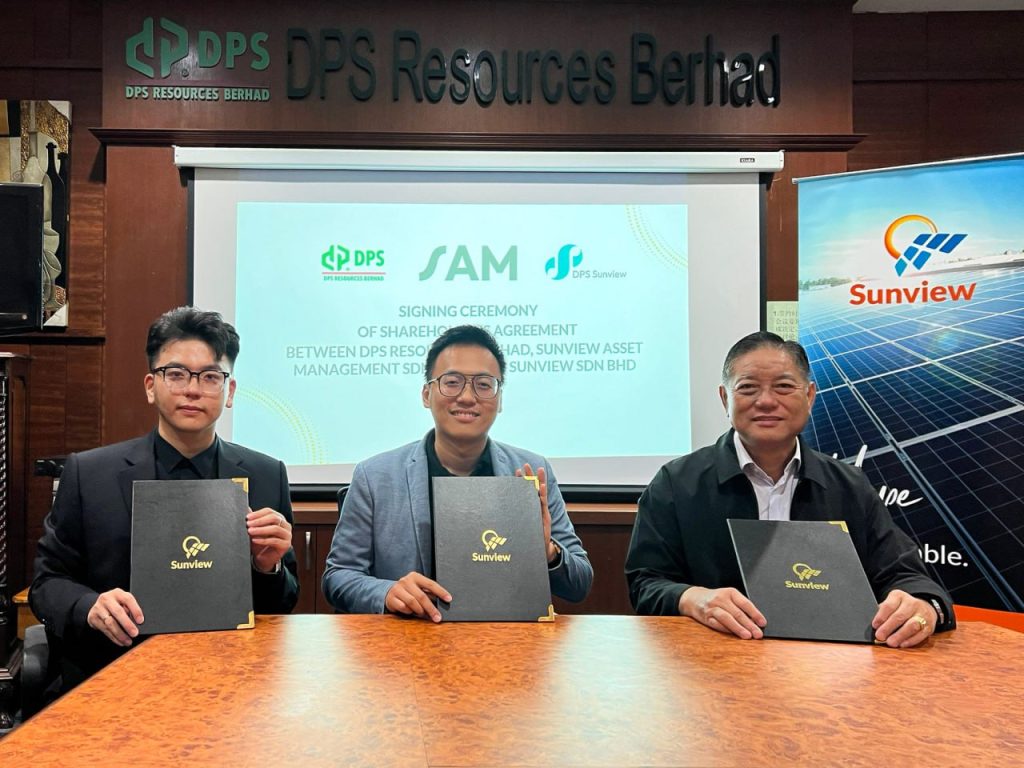
KUALA LUMPUR: Main market listed company DPS Resources Bhd’s (DRB) wholly-owned subsidiary, DPS Sunview Sdn Bhd (DSSB), recently signed a shareholders agreement with Sunview Asset Management Sdn Bhd (SAM). This collaboration entails the subscription of 199,900 ordinary shares in DSSB at RM1.00 each. Further, this move marks DRB’s entry into the green energy space, leveraging its track record in civil and structural work including infrastructure and earthwork and SAM’s expertise in solar photovoltaic (PV) systems, engineering, procurement, construction and commissioning (EPCC), mechanical and electrical (M&E) engineering. DRB executive chairman Tan Sri (Dr) Sow Chin Chuan said this partnership aligns strengths and expertise of the company. “With our wholly-owned subsidiary Shantawood’s Construction Industry Development Board (CIDB) G7 qualification and our proven track record in construction and civil engineering, coupled with SAM’s exceptional capabilities in solar PV systems, we believe this collaboration is strategic and highly synergistic,” he said in a recent statement. DRB is a key player in the construction, housing development, manufacturing and trading of home furniture. SAM is a wholly-owned subsidiary of ACE market-listed end-to-end solar photovoltaic system construction player Sunview Group Bhd (SGB). SGB is a leading expert in EPCC, solar PV construction, installation services, and power generation, which perfectly complements DRB’s construction prowess and commitment to sustainable development. A recent filing with Bursa Malaysia shows that upon completion of the agreement, DRB will hold 60 per cent and the balance will be by SAM in DSSB. With its extensive landbank of more than 1,000 acres, DRB provides a solid foundation for large-scale solar energy projects. “The synergistic alliance between DRB and SGB is poised to drive our financial growth and substantially impact environmental sustainability and social development,” Sow said. With a steadfast commitment to environmental, social, and governance (ESG) goals, this collaboration aligns with DRB’s broader initiative to champion clean energy, foster job opportunities, and reduce carbon footprint. In November 2023, DRB, through its wholly-owned subsidiary DPS Energy Sdn Bhd, signed a joint venture agreement (JVA) with Mutiara Mahajuta Sdn Bhd (MMSB) for a piece of land measuring 190.09 acres in Mukim of Bukit Apit II, Daerah Alor Gajah, Melaka. This collaboration involves a pioneering project encompassing agro-tourism, crops, bio-farms, renewable energy, solar farms, and aqua-phonics. This land, free from encumbrances and boasting an agriculture land use category, is poised to become a cornerstone of sustainable development in the region. The joint venture is a significant component of the DRB’s overarching strategy to enhance the value of its accumulated landbanks.

Scroll to Top

Subscribe
FREE Newsletter